





 Portuguese
  English
  Spanish
  4 min of reading
  0 comments


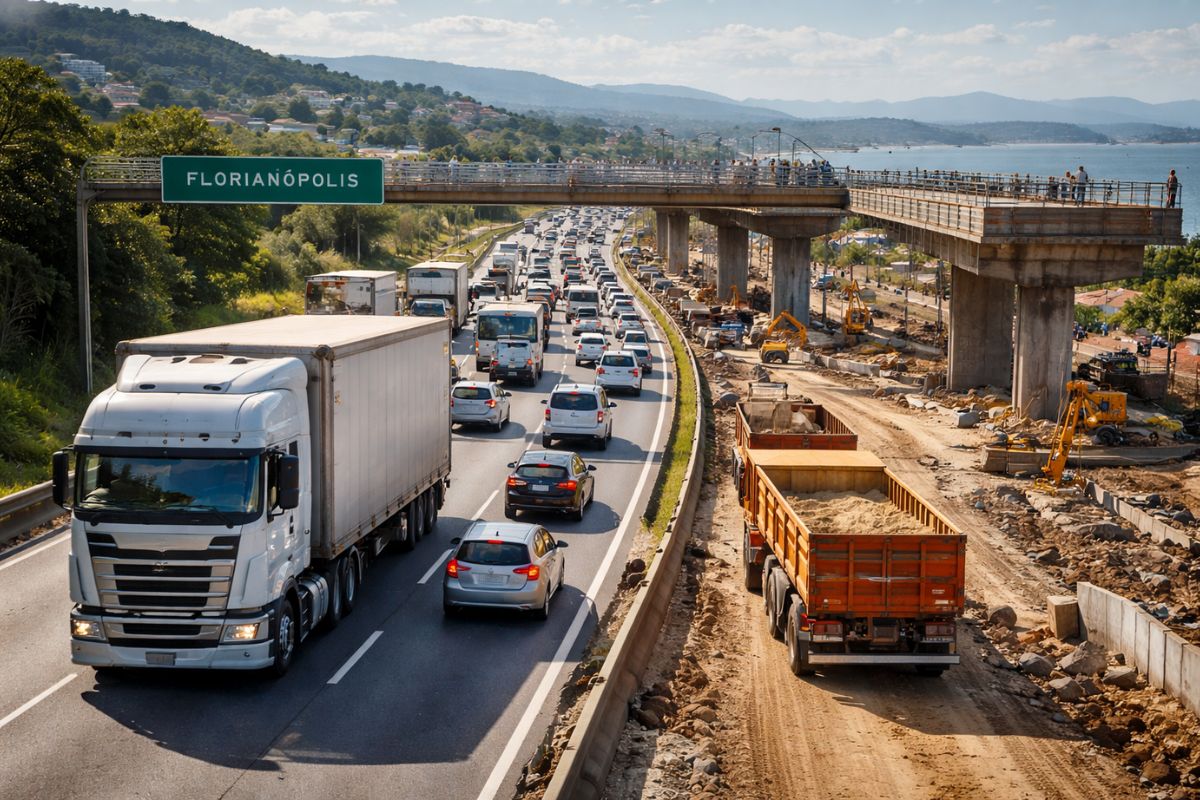
Ended on February 22, the restriction on SC 401 again allowed heavy vehicles in the North Center direction, after being in effect since December 15 during peak hours from 7 AM to 11 AM and 4 PM to 8 PM, while night works continue to keep sections in transformation for residents, truck drivers, and workers throughout the day
SC 401 in Florianópolis resumed circulation of heavy vehicles over 23 tons during peak hours after the end of the restriction that was lifted on Sunday (22). The release places trucks back into the routine of those crossing the North Center axis, precisely when night works still occupy the lane.
The measure was created to alleviate congestion during the high season and was in effect since December 15. Now, with the return of heavy vehicles, the practical question is whether SC 401 can handle the flow without delays, while overpasses, pedestrian bridges, and marginal lanes remain incomplete.
What Changed on Sunday and Where the Rule Applied

The release was applied to the stretch where the restriction primarily affected trucks, since buses and minibuses were exempt from the rule.
-
Inflation in March reaches 0.88% according to IBGE and pressures the Brazilian economy, impacting family budgets and requiring more strategic decisions to maintain financial control.

-
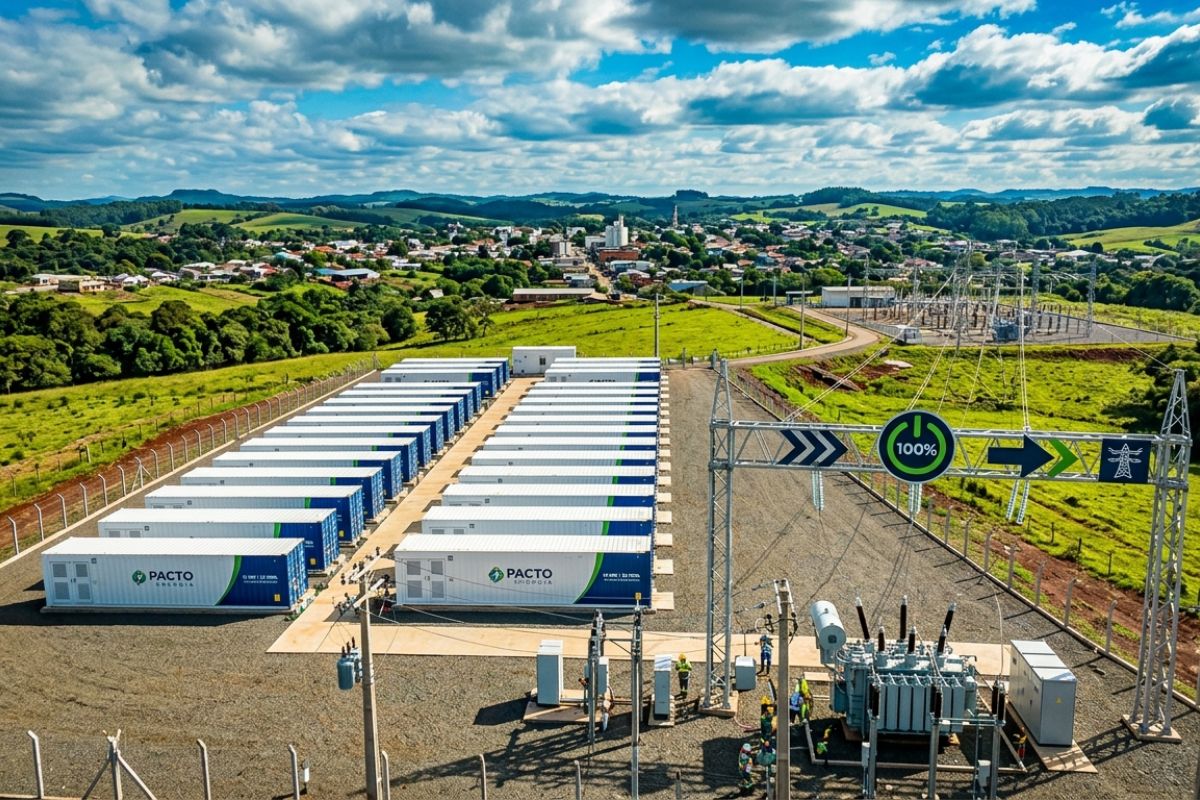
In Paraná, distributor Pacto connects 100% of the load in Coronel Vivida to batteries: a BES of 10 MW and 20 MWh costs just over R$ 30 million and lowers the local tariff now.
-
With a dependence of up to 80% on gas imported from the United States, Mexico is responding with a robust energy strategy, betting on shale gas, creating a scientific committee, and preparing to expand natural gas production to reduce vulnerability and strengthen its energy security in the coming years.

-
The United States proposes to Brazil a critical minerals agreement with a minimum price to combat Chinese dumping and priority for investment, but the Planalto is blocking the signing out of fear of upsetting China and due to electoral calculations in a year of competition.

In practice, the end of the prohibition returns to the traffic of SC 401 the volume of cargo that typically competes for space with cars, motorcycles, and public transport in Florianópolis.
The focus of the restriction was the North Center direction of the Island.
The blockage was concentrated between km 19+130 and km 16+870, in the direction from the center to the neighborhood, a sensitive point when time is tight and the two-way flow becomes a bottleneck.
How the 23-Ton Limit Worked and Why It Was Chosen
The rules were published on December 5 in the Official Gazette and prohibited the transit of vehicles with a Gross Vehicle Weight over 23 tons on SC 401, exempting buses and minibuses.
The approach was straightforward: keep heavy vehicles off the roads during peak hours when the highway is already operating at capacity in Florianópolis.
The defined peak times were from 7 AM to 11 AM and from 4 PM to 8 PM, always in the North Center direction.
It is during this interval that the impact becomes most pronounced, because a heavy vehicle reduces average speed and amplifies the accordion effect, especially when nighttime works interfere with lane markings and access.
Night Works and Why the Highway Still Looks Like a Construction Site
The interventions on SC 401 were suspended between December 19 and January 11 to minimize impacts during the year-end festivities.
Work resumed on January 12, with night works concentrated between 11 PM and 5 AM, during times of lower traffic and less chance of congesting Florianópolis in the middle of the night.
In the current phase, the package includes the construction of overpasses and pedestrian bridges, as well as adjustments to signage and preparation of sections that will be connected to access points.
Night works reduce conflicts with traffic, but do not eliminate the effects the following day, when drivers encounter detours, narrowings, and changes in entry and exit points.
Marginal Lanes Halfway and What This Changes in Local Traffic
The State Department of Infrastructure and Mobility points out that the current phase also focuses efforts on marginal lanes, which serve to organize local traffic and reduce direct interferences on SC 401.
The logic is to separate those entering and leaving commercial areas, neighborhoods, and returns from those just passing through the main corridor.
According to the department, about 50% of the marginal lanes still need to be implemented, especially in the North direction.
When half of the marginal lanes are still lacking, local maneuvers continue to compete with the main lane, and this weighs more particularly during the period when heavy vehicles return to circulate in Florianópolis.
Third Lane, Pedestrian Bridges, and the Real Test with Heavy Vehicles Back
The execution of the third lanes is proceeding according to the technical planning informed by the government, but the impact becomes clear only when daily operations return to the full standard.
With heavy vehicles again during peak times, SC 401 becomes a gauge of fluidity, because cargo responds differently to acceleration, braking, and lane changing.
The pedestrian bridges and walkways, along with bike lanes, serve as a layer of safety for pedestrians and cyclists but depend on continuity for users to trust the route.
In a corridor that mixes work and tourism displacements, the work only ends when behavior changes, not when the asphalt is merely laid.
The return of heavy vehicles over 23 tons ends a 69-day experience in which SC 401 tried to gain breathing room during the high season in Florianópolis.
The release returns logistical normality, but it also brings back the risk of worsening average travel time precisely where the highway is already weakest.
What will define perceptions in the coming weeks is the combination of actual flow and the progress of night works, with overpasses, pedestrian bridges, and marginal lanes still being implemented. Would you prefer SC 401 with heavy vehicles allowed during peak times for supply reasons, or should the restriction return while nighttime works and marginal lanes are not ready in Florianópolis?










-

Uma pessoa reagiu a isso.