





 Portuguese
  English
  Spanish
  4 min of reading
  0 comments


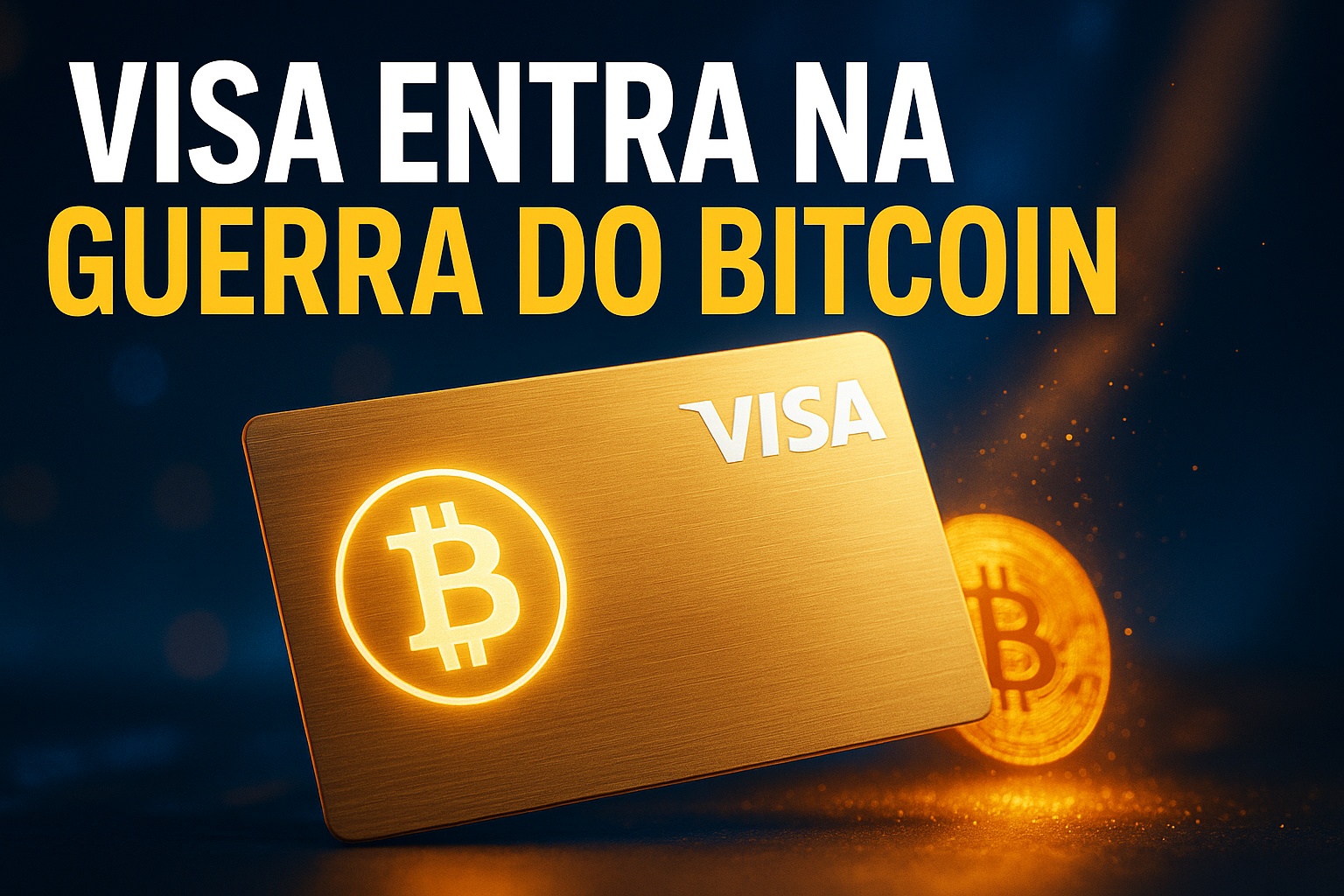
Visa Launches Credit Card Offering Up to 3.5% Cashback in Bitcoin, in Partnership with Stripe and Fold, Marking a New Era in the Integration of Consumption and Digital Investment.
What once seemed like a distant move has become a reality: Visa, one of the largest payment companies on the planet, has fully entered the cryptocurrency race. In partnership with the fintech Fold and the payment platform Stripe, the company is launching a credit card that offers up to 3.5% cashback in Bitcoin, a product that combines consumption and investment in a single gesture. The news, revealed in September 2025, promises to reshape the global financial market and directly challenge traditional banks that still resist integrating with digital assets.
A Card That Turns Every Purchase into Digital Investment
The new card, issued on the Visa network and operated by Stripe, gives 2% automatic cashback in Bitcoin on all purchases made.
The difference lies in the possibility of increasing this bonus: those who pay the bill through a qualified account on the Fold platform can receive an additional 1.5%, totaling 3.5% cashback in cryptocurrencies.
-
The institute that trained the greatest aerospace engineers in Brazil has just opened its first campus outside São Paulo after 75 years: ITA Ceará will have R$ 445 million, new courses in energy and systems, and classes are expected to start in 2027.

-
Luciano Hang, owner of Havan, goes to Juiz de Fora after the tragedy in February, brings R$ 1 million, hands out R$ 2,000 cards, and donates up to R$ 15,000 to victims in the region.

-
The Brazilian passport allows legal residence in dozens of countries without the need for a prior visa, and most Brazilians are unaware that they can apply for residency directly upon arriving in nations in South America, Africa, and even Europe.

-
Petrobras sends a message to Brazilian truck drivers after fuel collapse and reveals plan to have 100% domestic diesel.




This structure is radically different from conventional points or miles programs. Instead of rewards tied to airlines or specific products, the customer accumulates satoshis — the fractions of Bitcoin directly in their account, converting everyday consumption into automatic digital investment.
According to Fold, there are no spending categories, token staking, or brokerage account requirements. The focus is on simplifying access to Bitcoin as a store of value and bringing the average user closer to the crypto ecosystem.
“We want people to earn Bitcoin simply by living their normal lives, without having to worry about volatility or technical processes,” stated the company’s CEO, Will Reeves, in an official statement.
The Strategy Behind Visa
Visa’s entry into this market is more than symbolic; it is strategic. The company processes over 260 billion transactions annually and moves trillions of dollars worldwide.
By allowing its partners to issue cards linked to cryptocurrencies, the company aims to occupy a space that traditional banks and regulators still regard with caution.
The project emerges at a time when Bitcoin has appreciated nearly 40% just in 2025, surpassing US$ 85,000, driven by institutional purchases and expectations of interest rate cuts in the U.S.
For analysts, Visa’s move is not just a response to this cycle, but a natural step in the consolidation of cryptocurrencies as payment instruments and stores of value.
Deutsche Bank had already projected in a recent report that Bitcoin could be recognized as a global reserve asset by 2030, alongside gold, and the new card reinforces this thesis, making the use of cryptocurrency more commonplace.
The Role of Stripe and the Advancement of Fintechs
The partnership with Stripe, a giant in digital payment infrastructure, ensures scalability for the project and reduces issuance costs. The company, valued at over US$ 65 billion, is responsible for integrating payments between merchants and the Visa network, ensuring compatibility with international payment systems.
This trio: Visa, Stripe, and Fold — represents a new generation of financial products that combine traditional banking infrastructure, crypto innovation, and direct rewards in digital assets, a format that experts are already calling “hybrid finance”.
According to analysts from CoinDesk Research, the success of the product could inspire other financial institutions to develop similar models with Ethereum, stablecoins, or even carbon tokens.
The goal is to transform financial rewards into automatic investment vehicles, creating a real bridge between consumption and wealth.
Effects on the Global Market and Brazil
Although the card is still in the early distribution phase in the United States, the impact is already being felt globally. Experts point out that Visa’s move could accelerate the institutional adoption of cryptocurrencies and pave the way for regional versions of the product.
In Brazil, the company maintains partnerships with fintechs such as Nubank, Alter, and Binance Card, which already offer cashback in Bitcoin or stablecoins, but with much lower percentages (usually between 0.1% and 1%).
If the Fold model with 3.5% cashback expands, the country could become one of the first markets in Latin America to receive the technology, especially considering the exponential growth of transactions via Pix and the integration between digital wallets and crypto exchanges.
Brazil already holds a prominent position in the sector: according to the Chainalysis 2025 report, the country is the 9th largest cryptocurrency market in the world, with over 5 million active users on digital platforms and a transaction volume exceeding US$ 120 billion annually. The arrival of a global product like this tends to increase competition and pressure banks to modernize their loyalty systems.
The Beginning of a New Financial Dispute
Visa’s initiative symbolizes a new dispute between the traditional financial system and the decentralized universe of cryptocurrencies.
Banks still rely on interest, fees, and intermediation; fintechs, on the other hand, bet on transparency, autonomy, and direct returns to users.
The “race for everyday Bitcoin” promises to change consumer behavior, as each purchase, coffee, or trip can represent a small automatic investment.
For investors and consumers, the new card is an opportunity to turn spending into profitability — but also a reminder that the boundary between the banking world and the digital realm is disappearing.










-

-

-

-

-

23 pessoas reagiram a isso.