Astronomers watched two stars in the Andromeda galaxy merge into one, and NASA’s James Webb Space Telescope observed the aftermath only 47 days after the eruption peaked.
The pair, nicknamed Bao and formally catalogued as AT 2025abao, sat on the outskirts of Andromeda. A star slightly less massive than the Sun spiralled into a swollen supergiant and was destroyed.
NASA calls it a first of its kind. The findings were published in Nature on Wednesday, November 18, by a team led by Viraj Karambelkar, a NASA Hubble Fellow at Columbia University in New York.

Why a merger is so hard to catch
“Stellar mergers are very, very difficult to observe in real time because they are hard to predict,” Karambelkar said. “However, we noticed something unusual was going on in 2023 and continued to monitor the system.”
-
Brazilian University Installs Giant 3D Printers Up to 9 Meters Long for Construction of Walls in 45 m² Homes

-
Paleontologist Yingqi Zhang has crawled through about a thousand caves in southern China, and eight teeth from two of them show Homo erectus lived in rainforest there until about 184,000 years ago, up to 200,000 years longer than thought.

-
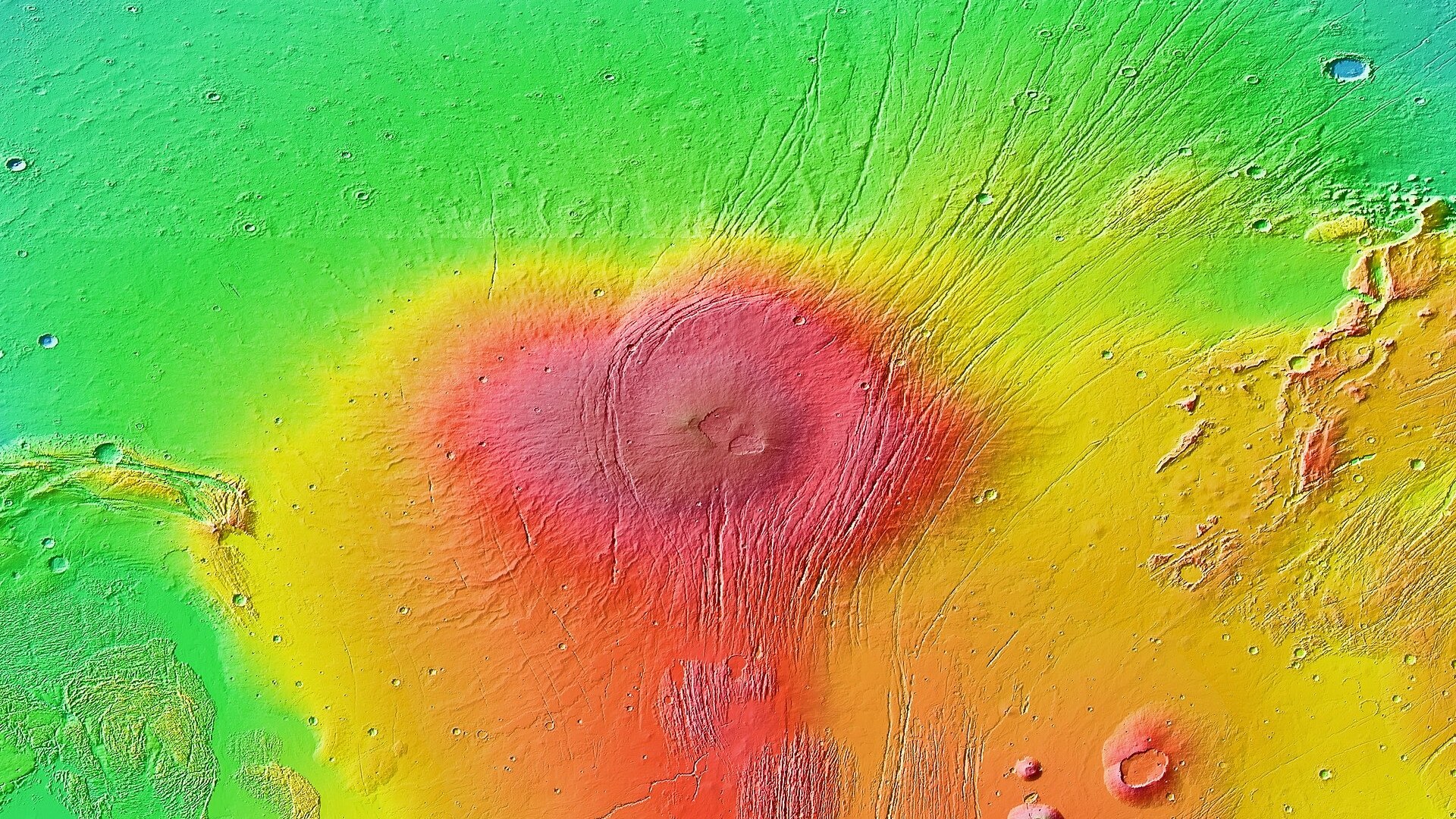
Scientist Daniel Mège says Europe’s ExoMars orbiter caught hydrogen chloride seeping from cracks on Alba Mons, a 600-km-wide volcano, at under 3 kg per second, a sign that Mars may still have magma below its surface
-
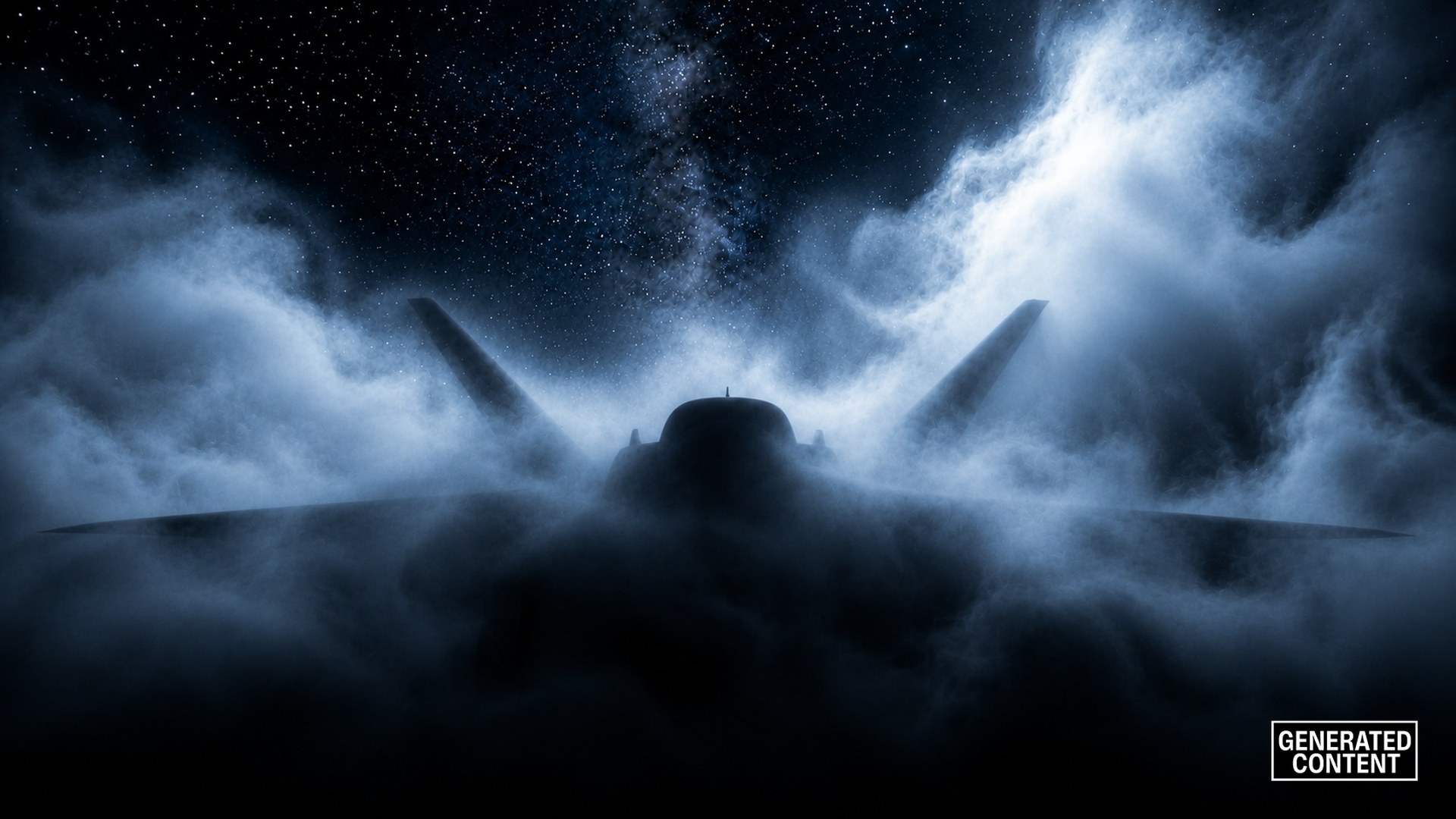
NASA Administrator Jared Isaacman unveiled the X-70 Fractal, a crewed experimental jet that can carry up to 2,000 pounds of test equipment, cruise at Mach 0.75 and fly about 1,726 miles, with a first NASA flight within two years


“Then, in 2025, it erupted!” he said. Webb’s observation 47 days after the peak was the earliest follow-up ever made of an event like this, according to NASA.
Karambelkar called it “absolutely mind-blowing” that the telescope’s data let the team describe the system before, during and immediately after the merger.
Seven orbits instead of thousands
For millennia the two stars orbited each other quietly. Once the smaller star touched the outer surface of the giant, the end came after only seven orbits, which took about seven years.
Other known binary mergers, involving two smaller stars, played out over thousands of orbits. The speed of this one surprised the team members who had been watching it.
“We thought an outburst from such an extended star would take years,” said co-author Nadia Blagorodnova, an associate professor at the University of Barcelona. “One day, its brightness started rising and within a week, it peaked!”
Big Bao and Little Bao
The team’s simulations show that, before the eruption, the primary star was about seven times as massive as the Sun, 350 times its radius and 18,000 times brighter.
That earned it the nickname Big Bao. “It was an absolute beast of a star, completely outshining its companion in the data,” said Karel Temmink, a PhD student at Radboud University in the Netherlands who led the simulations.
The modelling also produced the first mass estimate for the smaller partner, Little Bao. It was likely about 0.7 times the mass of the Sun, slightly smaller in radius and fainter.
A bomb inside a living star
The model suggested Little Bao might have had enough leftover energy to escape. Further analysis showed it was dragged all the way into Big Bao’s core instead.
“It was almost like a bomb exploding inside a living star,” said co-author Kishalay De, an assistant professor at Columbia University. What the surviving star, now simply called Bao, looks like will take future observations to settle.
The shared envelope
De explained the first warning signs. “When a companion star begins to interact with the outer surface of the primary star, it produces a subtle effect, a slow brightening, which we clearly saw in Bao’s data,” he said.
As the companion keeps orbiting, it peels gas from the giant’s outer layers. Astronomers call this stage common envelope evolution, because the two stars end up inside one shared layer of gas.
Drag inside that envelope robbed the smaller star of orbital energy until it plunged inwards. In other systems, both stars survive, shed mass and remain in very tight orbits.
Those surviving pairs can later become neutron stars and black holes, explode as supernovae, send out gravitational waves or form millisecond pulsars, which is why astronomers want to know how often a merger wins instead.
From NEOWISE to Webb
Bao first caught the team’s attention in February 2023, as an unusual variable star in data from NASA’s retired NEOWISE mission. Before 2018, its brightness had been steady.
In September 2024, the Wide-field Infrared Transient Explorer, known as WINTER, showed Bao beginning to brighten and throw off dust. In July 2025, NASA’s SPHEREx saw it fade in visible light and brighten in infrared.
The Zwicky Transient Facility detected the eruption on October 17, 2025, as the stars brightened and heated up quickly. In November 2025, the team obtained fast observations from NASA’s Swift observatory and the Gemini North telescope in Hawaii.
Webb’s turn came on December 24, 2025, through a Director’s Discretionary Time programme. Its mid-infrared data on the dust shed by the giant over centuries matched one of the team’s simulations.

A paper published just before the blast
The team had already published a first paper on Bao in 2025, right before the eruption. That meant the merger was followed live rather than reconstructed afterwards.
In other cases, astronomers have had to reverse-engineer events that happened hundreds or even millions of years ago. Here, Webb’s data let them measure how much mass was thrown out and how efficient the envelope stage was.
More mergers on the way
NASA says the result arrives as its Nancy Grace Roman Space Telescope prepares vast public surveys. Its Galactic Bulge Time-Domain Survey is expected to find large numbers of new transient events.
“There’s going to be a large influx of similar discoveries just ahead,” Karambelkar said. The work was funded in part by NASA’s Astrophysics Data Analysis Program.
If Roman starts flagging dozens of stars like Bao, how many of them will astronomers manage to catch before the final plunge, rather than after it?