





 Portuguese
  English
  Spanish
  5 min of reading
  0 comments


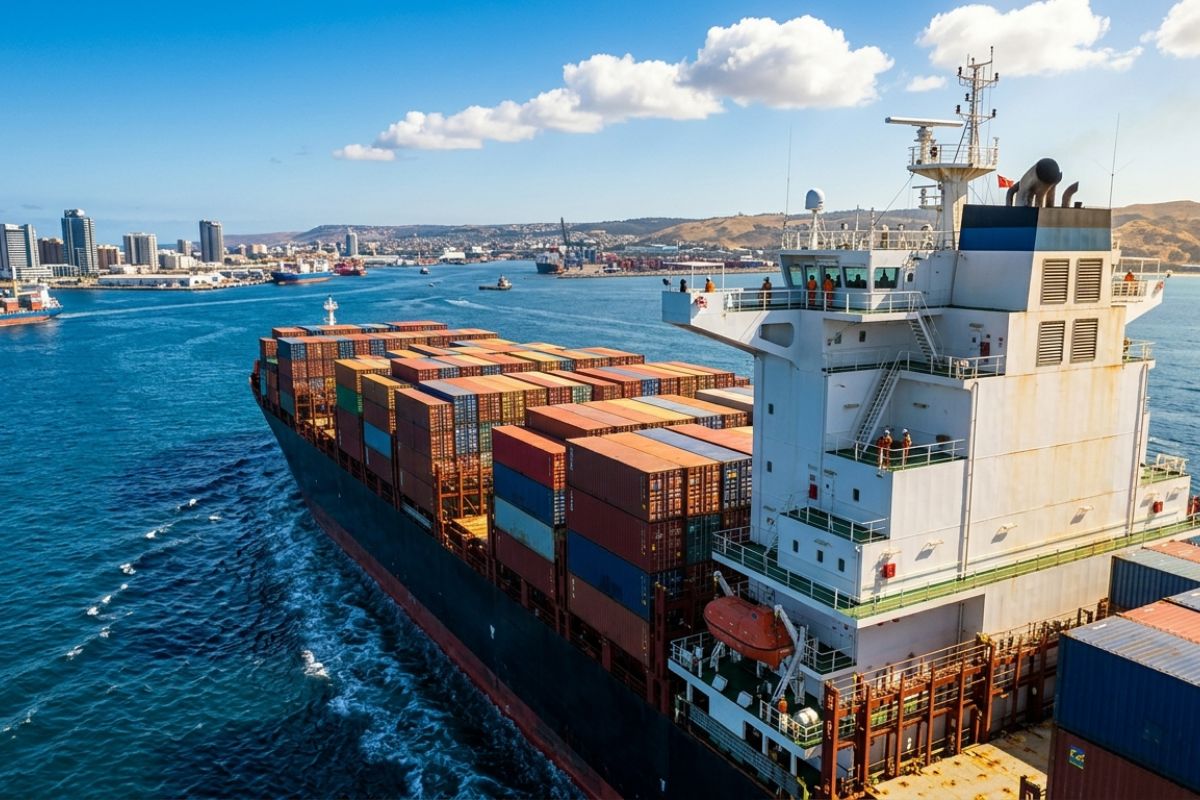
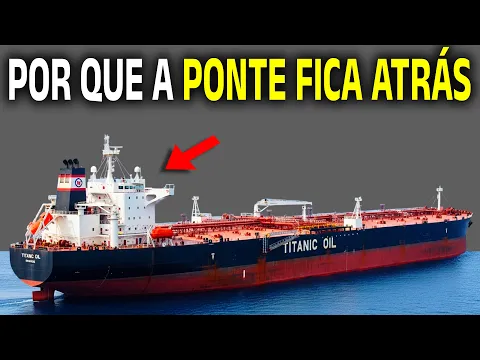
The command bridge at the stern was born near the rudder and the engine, became the rule for load and maneuver, and only changes to the bow when the law and the function require
Imagine commanding a ship with hundreds of meters in length and moving slowly among other steel giants. At first glance, the “right” thing would be to place the command bridge at the bow, with direct vision of everything in front, seeing buoys, obstacles, and traffic before anyone else.
However, in many cases, this choice is not the best and can even be dangerous. The most curious thing is that the logic of the modern ship almost always pulls the command bridge to the stern, as if the captain were driving while looking in the rearview mirror, and there are historical, technical, economic, human, and even legal reasons for this.
The origin comes from sailing yachts and the physics of the rudder

In large sailing yachts, steering was not about “pressing a button.” The rudder was at the back, submerged, and control was done with thick ropes, pulleys, and real physical effort. The farther the wheel was from the rudder, the greater the friction, the greater the loss of force, and the more difficult it became to turn.
-
Advancement in health: UNB and FAPDF develop new technology that reduces Parkinson’s tremors and shows significant results by increasing movement stability and improving patients’ quality of life.

-
Advancement in health: UNB and FAPDF develop new technology that reduces Parkinson’s tremors and shows significant results by increasing movement stability and improving patients’ quality of life.

-
Coca-Cola’s rival converts 8 diesel trucks into 100% electric vehicles to cover 480,000 km per year on routes in Brazil.

-
Large engineering project: with a capacity of 45,500 tons, the world’s largest rock-laying vessel is moving into the final phase of testing and commissioning.
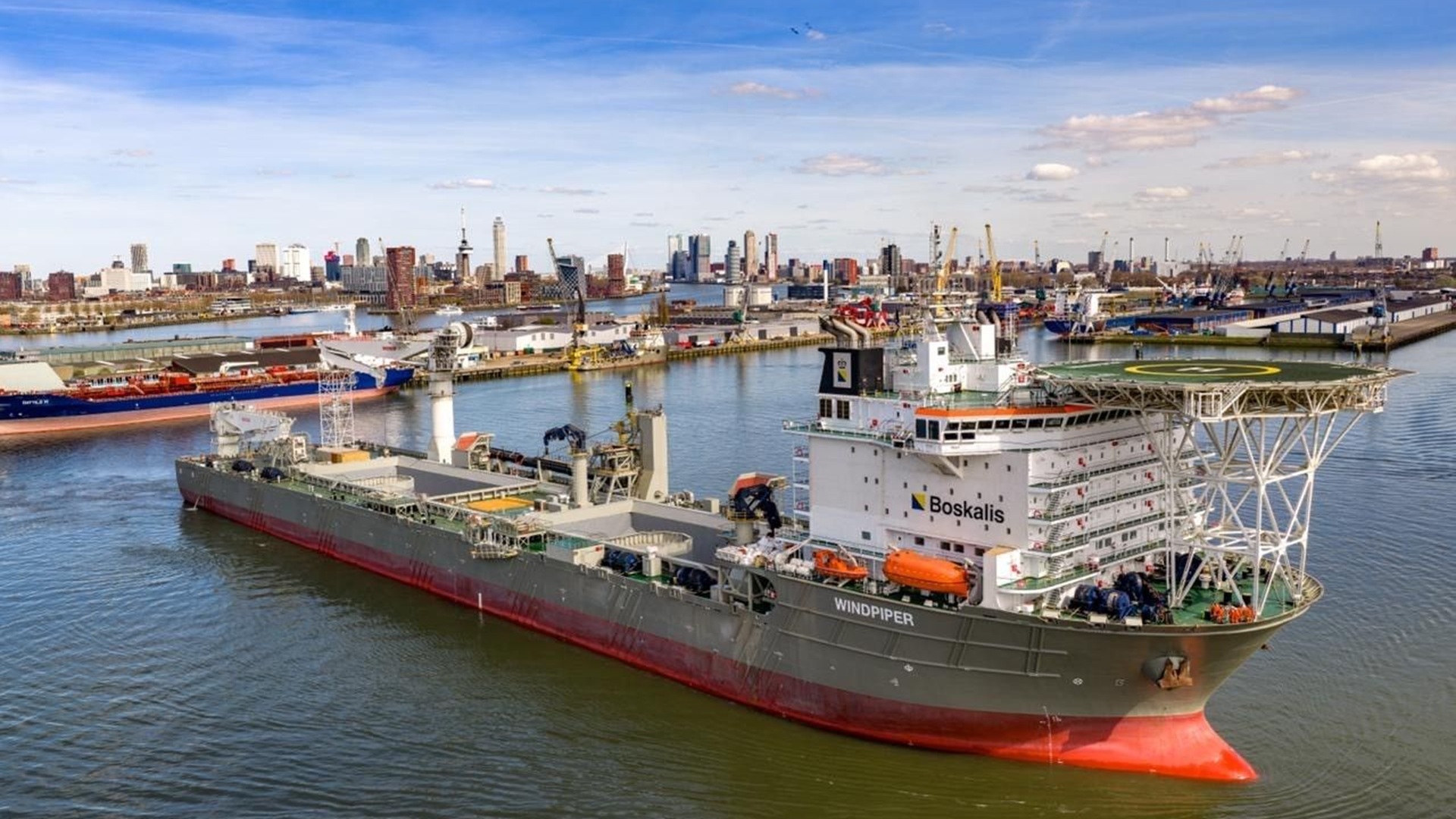
Therefore, the command bridge needed to be as close as possible to the rudder, which pushed the command to the stern. And there was a bonus: from the back, the captain observed the wake, which acts as a kind of language, showing whether the hull is responding well, whether the ship is going straight, and how the wind and water are “talking” to the vessel.
When the engines arrived, the location became about money and efficiency
With engines, ropes and pulleys ceased to be a limitation. In theory, it was possible to place the command bridge anywhere. In practice, the equation changed: every meter of the ship became worth money.
In almost all large ships, the engine is at the stern because the propeller is right behind. A shorter shaft means more efficiency, less vibration, and less complication.
This creates a region that “eats” space with the engine room and technical systems, and the design responds by concentrating everything there: command bridge, cabins, and control areas become a block at the stern. Thus, the rest of the ship is free for cargo, which pays for the operation.
Safer maneuver: the stern is where the risk lives
When docking, the advantage is not just economic. A ship does not turn like a car. The rudder at the stern pushes water and displaces the rear, while the bow responds in the opposite direction. However, the ship turns around a pivot point closer to the bow, which turns everything into a lever.
Result: the stern sweeps more, moves more, and is the part with the highest chance of touching the dock or another structure. With the command bridge behind, the captain sees the “critical point” with real precision, centimeter by centimeter, at the moment when estimation turns into risk.
Comfort and safety: more stable crew and faster response

In rough seas, the bow is the one that “breaks” the waves and takes the strongest impacts. Sleeping there is exhausting, and fatigue on a large ship becomes dangerous, because mistakes are costly and can cost lives.
Therefore, the crew tends to stay at the stern, where the movement is smoother. And, in emergencies, the modern ship prioritizes quick reaction: concentrating command bridge, cabins, controls, and access in one block reduces distances, shortens evacuation routes, and brings emergency resources closer.
So why do some ships place the bridge in the center or at the front
Here comes the factor that overrides tradition, engineering, and money: the law. There is a requirement for visibility ahead within specific limits. In some designs, fulfilling this with the command bridge at the stern becomes unfeasible.
The clearest example is container ships, which stack containers like walls. If the command bridge is at the back, the view disappears. The solution is to move the bridge to the center or to the bow, creating the so-called double-island design: the engine and technical systems remain at the stern, but the bridge goes where it can “see” and operate legally.
Cases where function changes the rule
Not every ship has the same purpose, and this changes the ideal location of the command bridge.
On Ro-Ro ships, which transport cars, the cargo occupies a lot of volume and creates a tall structure. A large superstructure at the stern can raise the center of gravity too much and worsen behavior in the wind, so the bridge may go further forward to improve stability.
On cruises, the ship is a hotel. Cabin with a view is money, and the bridge at the stern can block valuable space and still hinder visibility in an “experience business.” Therefore, the command bridge often stays at the bow, freeing the rest for what sells.
In offshore ships, the important operation happens at the stern, with cranes, cables, anchors, and heavy equipment. In this case, the command bridge goes to the front and rises, to see the entire work area behind with total control.
The final logic is simple: there is no right, there is ideal
The command bridge does not stay at the back out of stubbornness. It stays where the ship works best for what it was made for. Sometimes it is the stern, for efficiency, load, maneuver, and stability. Sometimes it is the center or the bow, because visibility, stability, or mission require it.
Quick question: when you look at a ship, do you notice the command bridge and try to guess whether it is a freighter, cruise, or offshore just by its position?








Seja o primeiro a reagir!