Portuguese
  Spanish


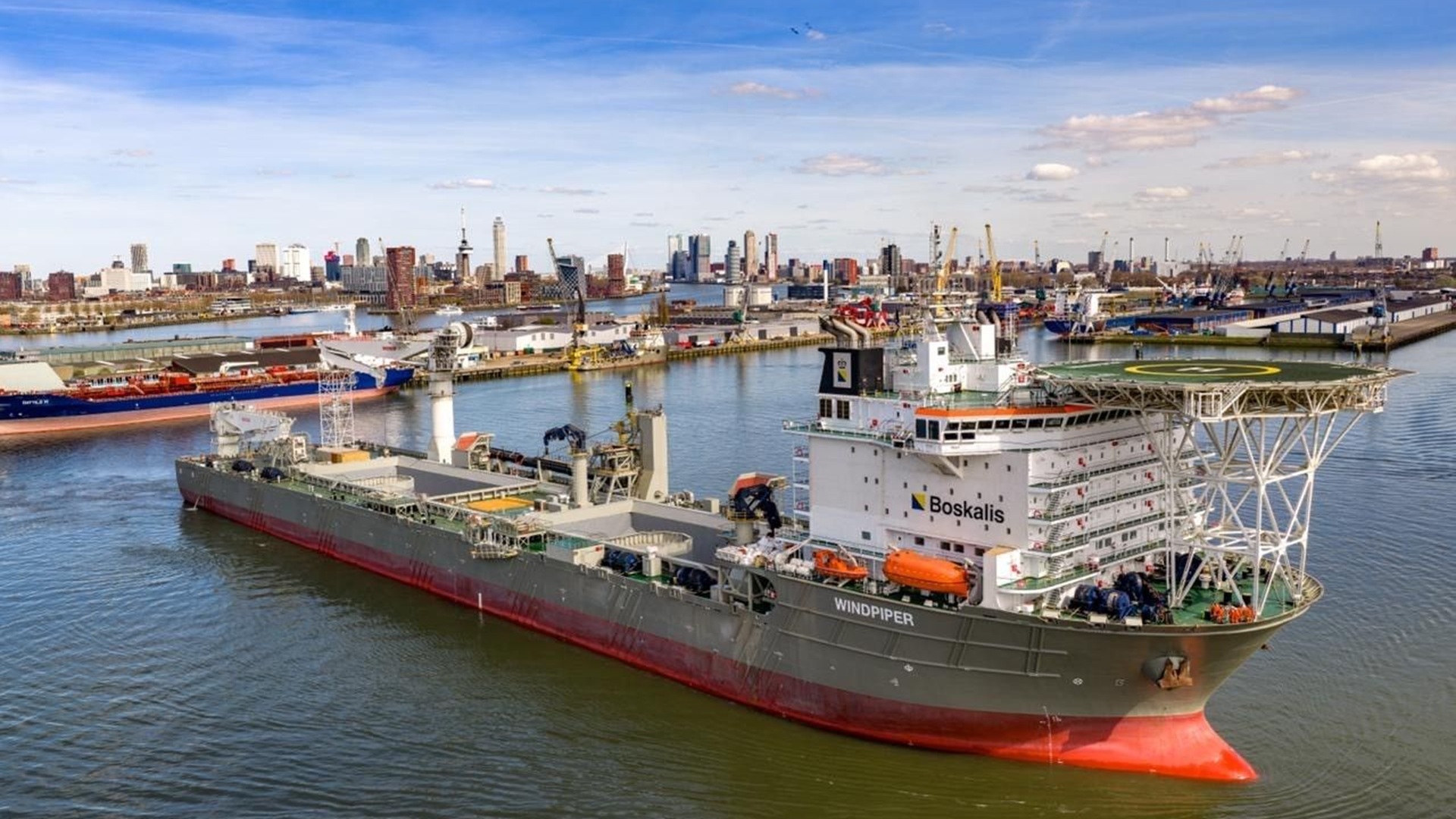

The new vessel from Van Oord combines a record cargo capacity with sustainable technologies to optimize the infrastructure of offshore wind farms.
The offshore engineering sector has reached a new level with the advancement of the world’s largest rock installation vessel, the Acadia, into its final commissioning phase.
The vessel, designed to operate in renewable energy and underwater infrastructure projects, has an unprecedented cargo capacity of 45,500 tons. This Van Oord project represents a technological leap for stabilizing structures in deep waters.
Technical capacity and operational efficiency
The vessel has been specifically designed to meet the growing demand for foundation and cable protection in offshore wind farms. With the support of the largest rock installation vessel, sediment and stone installation operations become faster and more precise in uneven terrain. The optimized design allows the vessel to transport massive volumes of material, reducing the need for multiple resupply trips.
-
Expert Challenges Alarmism Over El Niño in Brazil: Atmosphere Yet to Respond to Warm Pacific, Advises Farmers Against Selling Cattle or Delaying Planting Before September

-
In a Degraded Atlantic Forest Area, a São Gonçalo Resident Transforms Land into a Living Eco-Museum, Now a Model for Environmental Education

-
World’s First Lithium-Sulfur Battery Factory Launches, Promising to Double Range Without Relying on China
-
AI Data Centers Now Feature Built-In Nuclear Power Plants and Have Ordered Non-Existent Reactors


The discharge system consists of cutting-edge technology that ensures the exact positioning of debris on the ocean floor. This precision is crucial to ensure the integrity of wind turbines and underwater pipelines against erosion and ocean currents. The vessel’s robust structure allows it to operate in adverse weather conditions, maintaining stability during discharge.
Innovations in propulsion and sustainability
The Acadia stands out not only for its size but also for the integration of engines ready for alternative fuels and battery systems. The largest rock installation vessel uses a hybrid propulsion configuration, aiming for a significant reduction in carbon emissions during missions.
This approach aligns heavy engineering operations with global sustainability goals in the maritime transport sector.
In addition to the main engines, the vessel features energy recovery systems that optimize electricity consumption onboard.
The design prioritizes the reduction of underwater noise to minimize environmental impact on marine fauna during drilling and installation activities. Such innovations position the vessel as a benchmark in eco-efficiency for the fleet of specialized service vessels.
Conclusion of commissioning stages
Currently, the vessel is undergoing rigorous system tests before its official delivery for open sea operations.
Engineers and technicians monitor the performance of the cranes and automation mechanisms that control the largest rock installation vessel in real time. The final commissioning phase is crucial to validate safety protocols and the functionality of all hydraulic components.
The entry into service of this unit promises to transform the timeline of major clean energy projects around the globe. With a capacity of 45,500 tons, the vessel reduces the execution time of complex underwater engineering projects.
After the completion of tests, the vessel will begin its journey to support the energy transition in international waters.
Click here to access the study.