





 Portuguese
  English
  Spanish
  5 min of reading
  0 comments


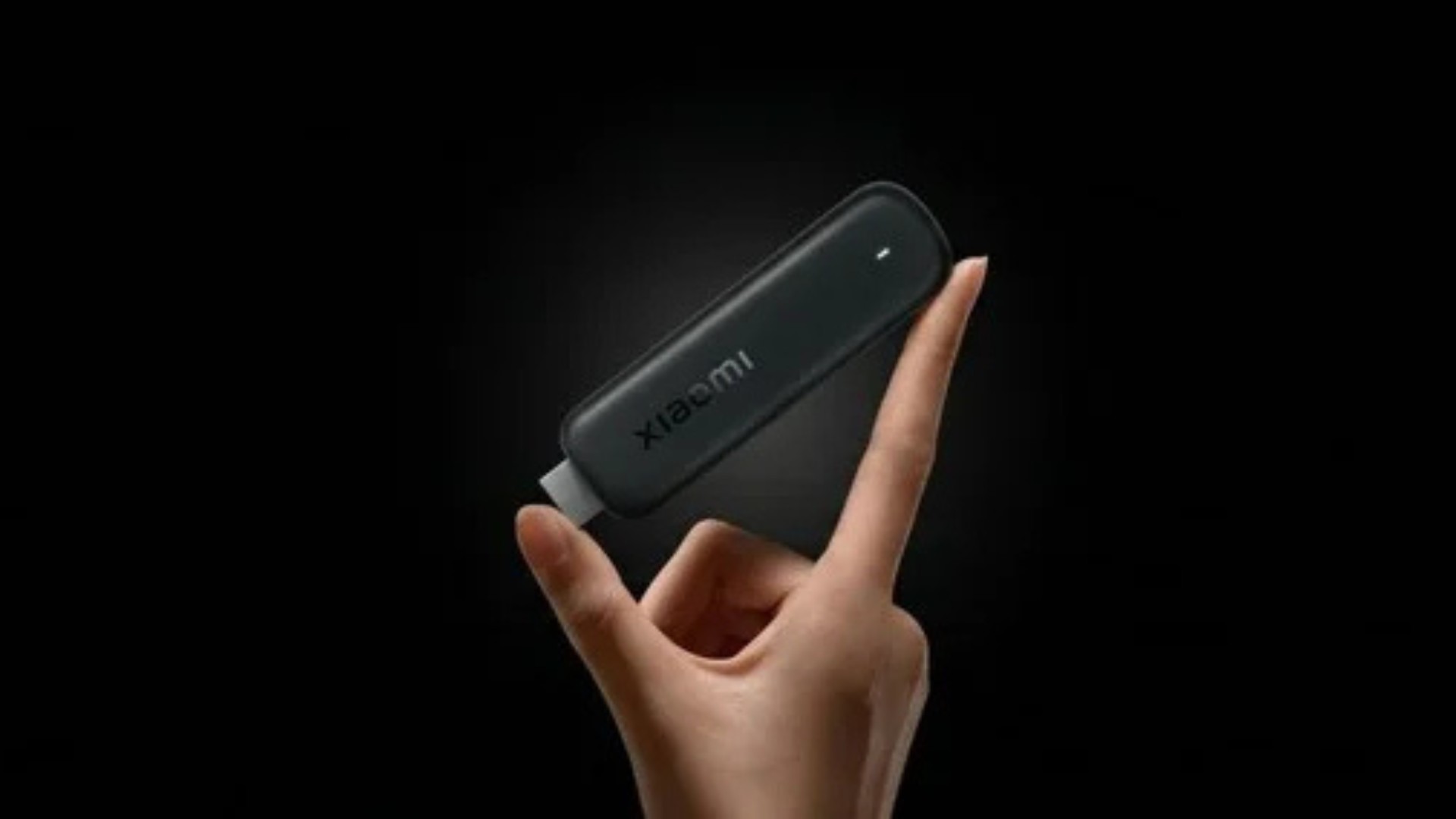
New Xiaomi device bets on performance improvements, updated connectivity, and integration with Google TV to transform any screen into a smart TV, maintaining an accessible proposal and focus on Full HD reproduction with recent image and sound features.
Xiaomi has launched the page for the Xiaomi TV Stick HD (2nd Gen) on its global website. A new device aimed at those who want to bring smart TV features to televisions and monitors with HDMI input.
The listing confirms the adoption of Google TV, video output of up to 1080p at 60 Hz, dual-band Wi-Fi, and an updated platform compared to the previous model, although the company has not yet provided an official price or detailed arrival date in the markets.
Xiaomi TV Stick HD 2 brings Google TV and entry-level proposal
In practice, the accessory’s proposal remains the same as the previous generation.
-
HONOR X80i arrives with a massive 7,000 mAh battery, a 120 Hz AMOLED display with a brightness of 6,500 nits, and the new Dimensity 6500 Elite chip, promising up to 22 hours of video playback and impressive performance in casual gaming.
-
Brazil joins the select group of countries by producing a supersonic fighter that reaches 2,400 km/h with advanced electronic warfare technology, US$ 4 billion in investments, 36 units planned, 350 trained engineers, and unprecedented national production by 2032.

-
At the bottom of the sea, scientists have found a true underwater cathedral measuring 62 meters at the base, 31 meters at the top, and 1,347 square meters of giant coral in the Maug Islands, estimated to be 2,050 years old.

-
Surrounded by the sea, the airport will have a system to prevent airplanes from falling into the water; technology will be installed in Ilhéus (BA), with an investment of R$ 70 million.


To function as an entry-level option for screens that do not have an embedded smart system.
The use remains simple, with direct connection to the HDMI port and initial setup guided by the Google TV interface, which brings together apps, recommendations, and personalized profiles in a more recent environment than that offered on the old Mi TV Stick.
Performance 38% superior and new quad-core chip

The main change is in the hardware set.
According to Xiaomi, the new model delivers 38% more CPU performance compared to the Mi TV Stick, a figure attributed to internal tests by the manufacturer itself.
The technical specifications published by the brand indicate a quad-core Cortex-A55 processor and Mali-G31 MP2 GPU, a combination that aligns the product with the more current demands of the Google TV ecosystem for streaming and basic navigation.
Still, the manufacturer maintained a modest configuration of memory and storage.
The device comes with 1 GB of DDR4 RAM and 8 GB of internal storage, numbers sufficient for the more basic proposal of the device, but which also show that Xiaomi preferred to preserve the more accessible profile of the line rather than repositioning it to a higher range.
Full HD resolution, HDR10+, and AV1 support
In video, the new stick remains limited to the HD/Full HD segment.
Xiaomi reports support for 720i/p and 1080i/p outputs, with a maximum of 1080p at 60 Hz, with no mention of 4K playback.
In compensation, the company adds HDR10+, a feature aimed at improving contrast, brightness, and reading of light and dark areas when the content and the compatible screen also support the standard.
Another important point is the presence of AV1 decoding, in addition to compatibility with formats such as H.265, H.264, and VP9.
This detail tends to be relevant in daily use because AV1 has become an increasingly present codec on streaming platforms and is part of Google’s requirements for newer devices certified with Google TV.
Dolby Audio, DTS:X, and dual-band connectivity
In the audio section, Xiaomi’s official page mentions Dolby Audio and DTS:X, as well as DTS HD in the specifications section.
The manufacturer also emphasizes that these features depend on the compatibility of the content being played and the sound output equipment.
This means that the sound gain announced by the product is conditioned by the rest of the playback chain, and not just by the stick itself.

The connectivity matches the expected package for the category.
The model comes with 2.4 GHz and 5 GHz Wi-Fi, as well as Bluetooth 5.0, which favors both internet connection in environments with compatible routers and pairing with the remote control and other accessories.
Xiaomi also states that the remote can operate via Bluetooth and infrared, a feature that enhances flexibility of use in daily life.
On the remote, the manufacturer highlights integration with Google Assistant for voice commands.
Reports published after the global listing also point to dedicated shortcuts for Netflix, Prime Video, and YouTube, maintaining the focus on widely used services and quick access to content.
Still, the exact availability of apps and buttons may vary depending on the country or region of sale, as Xiaomi itself notes on its official page.
Compact design and power supply via micro-USB
Physically, the stick retains the compact shape of the family.
The dimensions disclosed by the company are 107.4 x 30 x 14 mm, weighing 44 grams, and the package includes a remote control, an HDMI extension cable, and a USB power cable.
The lightness and small size help explain why the line continues to be seen as a practical alternative for older TVs, bedrooms, hotels, or monitors that need to gain smart functions without requiring complex installation.
On the other hand, Xiaomi has maintained power supply via micro-USB, and not USB-C.
This decision draws attention because the connector has already been abandoned in many recent electronics, but remains here as a clearly more conservative design choice.
The company also informs that the box does not include a power adapter, only the power cable, and advises the use of a 5V/1A power source or the USB port of the TV itself when available.
Price has not been disclosed yet
So far, Xiaomi has not published an official price for the Xiaomi TV Stick HD (2nd Gen) on its global showcase.
The presence of the product on the international portal indicates preparation for broader distribution, but does not, by itself, equate to a complete commercial schedule for all markets.
With this, the positioning of the device against competitors and even against other devices from the same brand still depends on the price that will be announced in the upcoming launch stages.
In the current scenario, the new generation appears as a timely update of Xiaomi’s entry-level proposal.
It brings a more modern processor, Google TV, HDR10+, AV1, and updated connectivity.
But it preserves important limitations, such as 1 GB of RAM, 8 GB of storage, resolution restricted to Full HD, and the continuation of micro-USB.
For those looking to simply add a smart interface to a 1080p screen, the technical specifications indicate a more updated product than its predecessor, although still clearly positioned in the most basic segment of the category.







Seja o primeiro a reagir!