





 Portuguese
  English
  Spanish
  9 min of reading
  0 comments


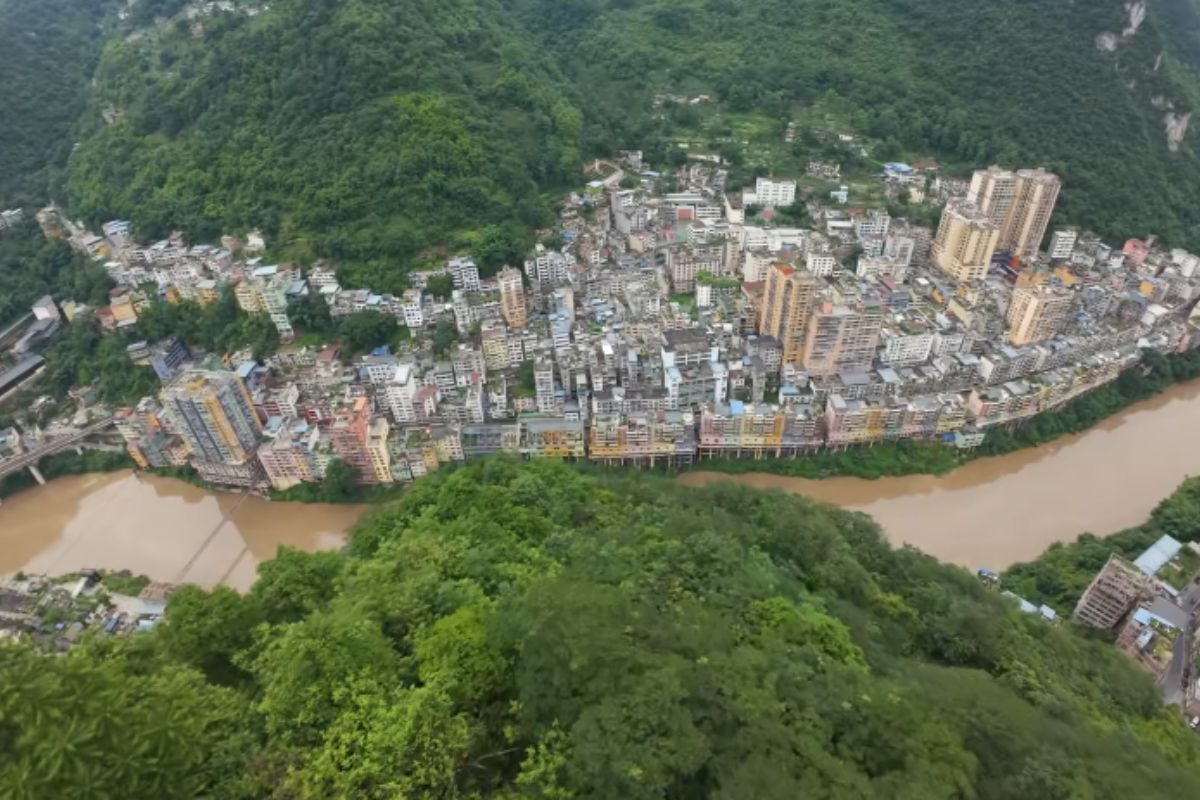
In This Article, We Show How The Narrowest City In The World, Yanjin China, Became A City Among Mountains Crammed Between A Muddy River And Lives Under The Risk Of Floods.
In China, the narrowest city in the world, Yanjin China, seems impossible when viewed from above. In a single strip squeezed between rock walls, a city among mountains extends glued to a muddy river, where about 100,000 people live in slim, tall buildings, practically touching the water, facing the risk of floods every day.
At first glance, the scene is one of an announced disaster. But, when you go down to street level, something surprises any visitor: life in the narrowest city in the world seems, for those who live there, simply normal. Children play, elderly people play cards, young people have tea, work outside, and return to rest in Yanjin China, as if this ultra-tight valley were just another Chinese city, and not an urban corridor on the brink of collapse.
A City Among Mountains Cramped Between A Muddy River

Entering Yanjin China is literally entering a concrete corridor. On one side, steep stone walls rise almost vertically.
-
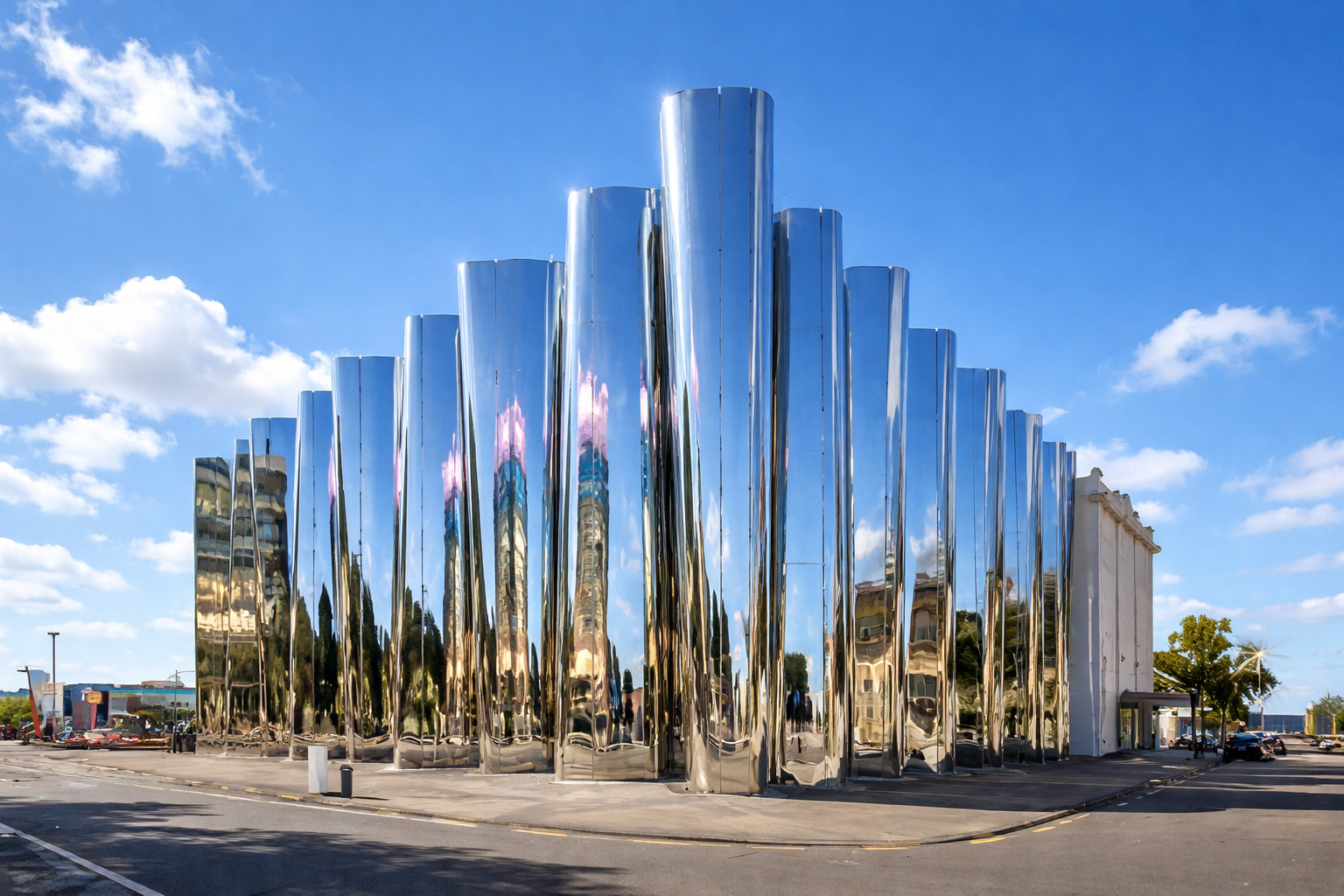
New Zealand builds a shimmering building that vibrates, featuring a 62-seat cinema, moving sculptures, and an environment where sound, light, and energy are felt in the body.
-
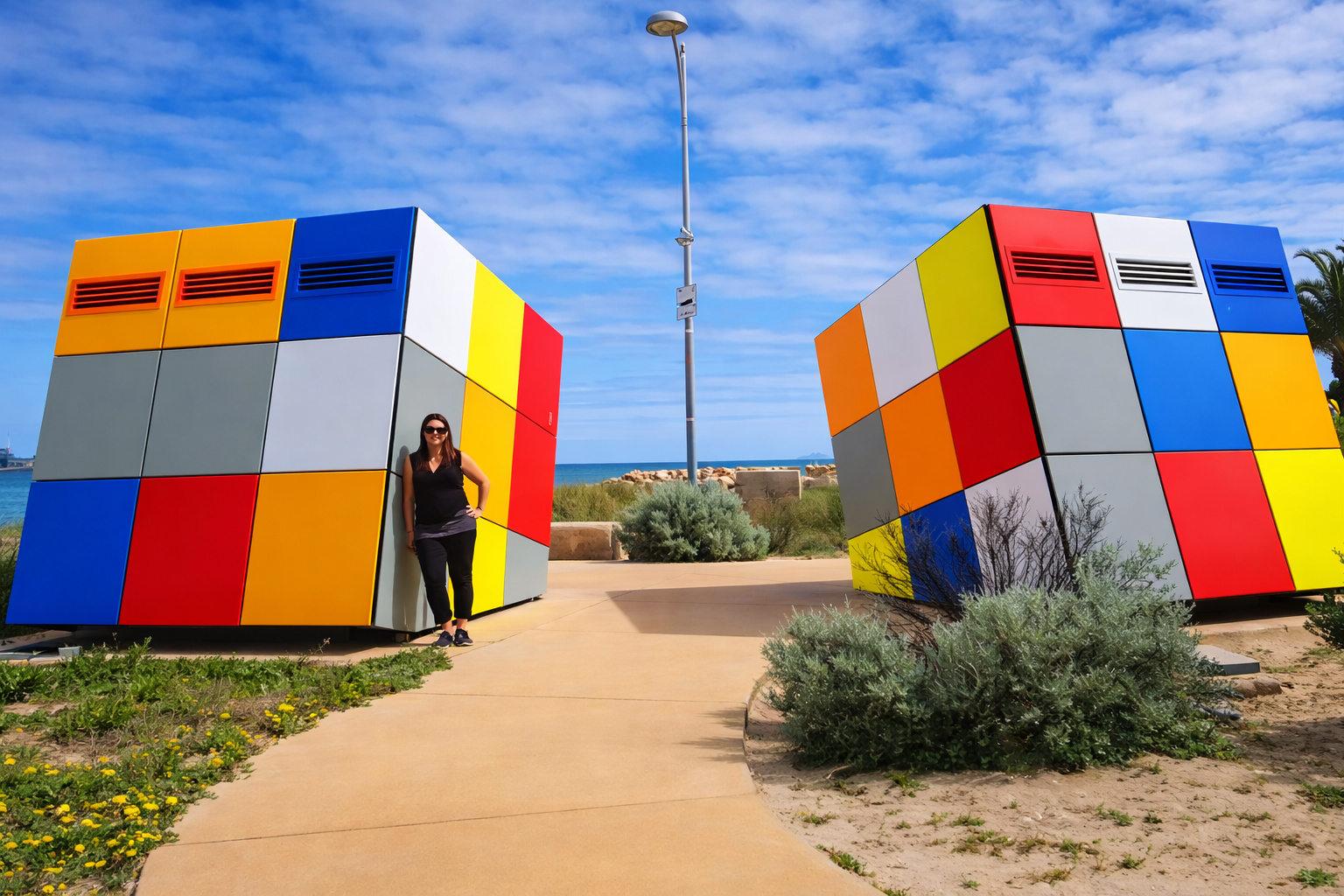
Two colored cubes of 2.5 m transform a public bathroom into a selfie spot in Western Australia, costing up to 75% less than traditional construction and helping to reduce vandalism in public spaces.
-
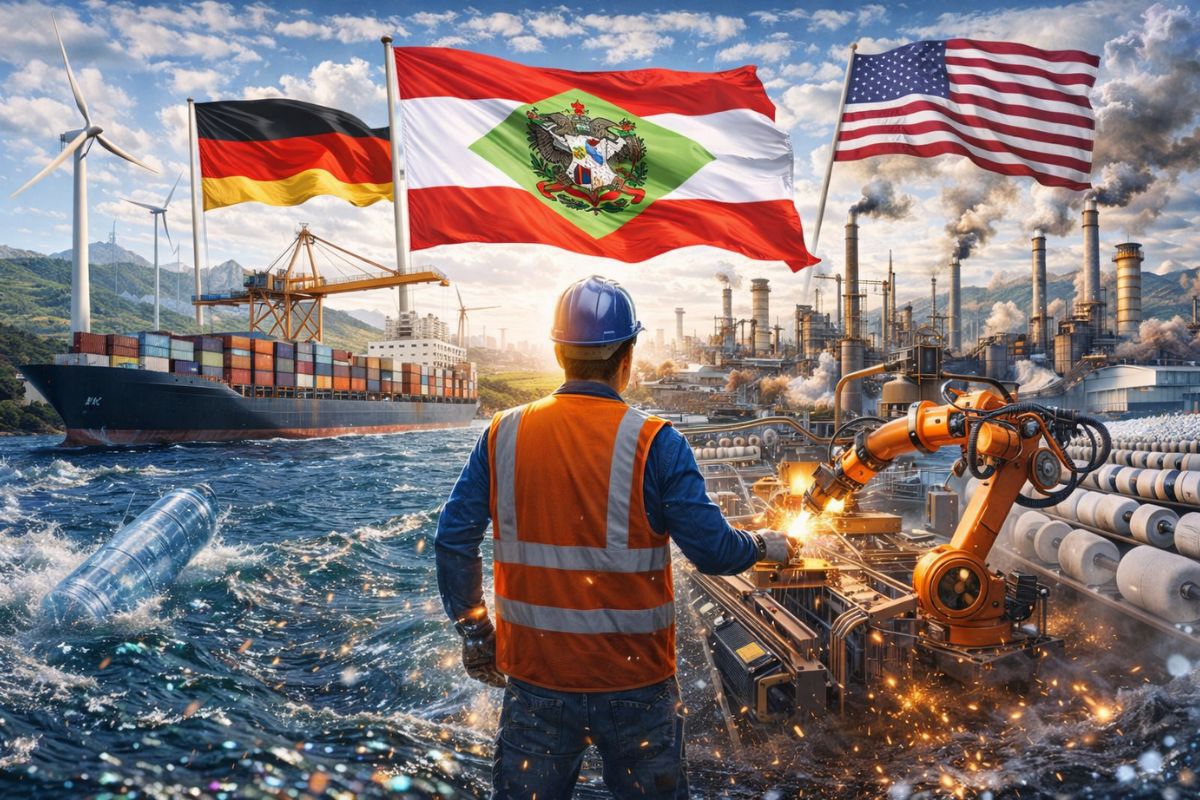
Santa Catarina produces up to 7 times more than it consumes in some sectors, and its century-old industries founded by grandparents and great-grandparents now compete on equal footing with Germany and the United States in the international market.
-
U.S. war giant weighing 9,600 tons and equipped with long-range missiles is sent to the Atlantic to protect global internet and hunt submarines.


On the other, the muddy river continues its path, brown and heavy, occupying all the space left in the valley. In the middle of all this, runs the only main road, following the course of the water.
The buildings do not spread out: they rise. The narrowest city in the world grew upwards because there was nowhere to grow sideways.
Shopping malls, restaurants, small shops, and residential buildings were built in a single row, as if someone had squeezed an entire city into a narrow strip.
Looking down from a bridge, it’s easy to see how everything is close to the river. Almost every resident lives just a few meters from the bed of this muddy river, which has already brought historical floods to the region and daily feeds the feeling that the city among mountains is always on the edge.
Vertical Life In The Narrowest City In The World
In practice, living in the narrowest city in the world means living at height. The apartments multiply in high floors, and stairs are part of the routine as much as breakfast.
Climbing five floors without an elevator is as natural for the residents as taking the bus in a regular metropolis.
Outside, the streets are so narrow that, looking up, it seems that the buildings are leaning towards each other.
In many alleys, two people could almost shake hands from opposing windows. It is in this ultra-compressed place that life continues with a disconcerting normality.
The most curious thing is that, when a visitor keeps their gaze at eye level, Yanjin China can even seem like any urban center.
Clothing stores, jewelry stores, markets full of colorful products, and bakeries coexist with old ladies selling fruits, young people with their cell phones, and curious children with any foreign face.
Morning Market And Routine In Yanjin China


Early in the morning, the narrowest city in the world wakes up with its street market. Stalls and booths lean against the edge of the avenue, almost invading the roadway.
There is no other place to put them. People shop practically glued to the trucks and cars passing by.
The fruits and vegetables stand out for their appearance. Even in a city among mountains cramped by the muddy river, the abundance of fresh products reminds the visitor that Yanjin is still surrounded by rural areas.
At the stalls, there are live fish, frogs, colorful vegetables, firm-textured plums, all ready to go from the street to the pot.
As the vendors negotiate, residents are asked how it is to live in such a narrow place.
One answer is repeated: “we get used to it, the city is like this because of the terrain, it has to be built this way”. For those born and raised there, the extreme geography has become just another aspect of reality.
Yanjin China And The Risk Of Floods And Earthquakes

Despite the apparent calm, one cannot forget that the narrowest city in the world lives permanently under the risk of floods and earthquakes.
The buildings are glued to the muddy river, and the entire urban fabric relies on a narrow, compressed base against the mountain.
Residents recall a big flood that happened decades ago, when homes closer to the water were hit and people had to move up to slightly higher areas, waiting for the level to drop.
These episodes reinforce the risk of floods as part of the package of living in such a tight valley, even if many say these are rare events.
Moreover, a city among mountains like Yanjin China is not free from the fear of tremors. The image of high buildings lined up on a single strip of land makes any visitor imagine the impact of a stronger quake.
For many locals, however, this concern does not dominate their daily lives. They work, return home, drink tea with friends, and trust what they already know.
Community, Tea And The Feeling Of “Being At Home”
One of the most striking aspects of the narrowest city in the world is the strength of community. It is not difficult to be invited to sit in a small tea house, share an improvised table on the sidewalk, or just chat on the bridge.
In one of these houses, a group of men offers tea to a visitor. The cups do not only contain dry leaves in hot water. There are flowers, herbs, and fresh ingredients, turning each cup into a small ceremony of companionship.
Conversations arise naturally: work in construction, the routine of those who leave the city to earn money and return to rest, family stories, and childhood memories.
When asked about what they do to be happy in Yanjin China, many respond with disarming simplicity: “drink tea, play cards, walk, and be with friends”.
Even living cramped in the city among mountains, they describe a life that is quieter and less stressful than that of the big cities.
Climbing Stairs, Crossing Bridges And Confronting The Narrow Valley
Walking through the narrowest city in the world is to accept that gravity will be part of every outing. Staircases rise toward the older buildings, walkways cross the muddy river, and suspended bridges sway gently with the passage of trucks and motorcycles.
On a suspension bridge, the visitor finds themselves alone for a few minutes, observing the scenery. In any direction, what you see are rock walls, building upon building, and the muddy river running in the middle of it all, as if the city were stubbornly existing in a place where logical space simply does not exist.
Even so, people pass by, smile, shout “hello,” ask where the foreigner is from. Children laugh, come closer, receive small gifts. The sensation of physical tightness contrasts with a very strong human openness.
Small Apartments, Great View And Real Life In The Narrowest City In The World

At the invitation of a resident, the visitor climbs to the fifth floor of a building without an elevator. There are many stairs, and each flight reinforces the vertical dimension of the city among mountains.
Up there, the reward: a simple, tidy apartment, and, in the eyes of those who arrive, surprisingly spacious.
The living room is large, the television occupies its place, and a cat watches suspiciously. The bathroom is compact, with a shower over the toilet.
The annual rent costs the equivalent of just over one hundred dollars a month, which makes Yanjin China an affordable living option for those seeking tranquility, family nearby, and a low cost of living.
From the window, you see exactly what defines the narrowest city in the world: the muddy river glued to the main street, buildings aligned like domino pieces, mountains rising abruptly on both sides. It’s a beautiful and, at the same time, slightly threatening landscape.
Fresh Food, Narrow Market And Flavors Of Yanjin China
In Yanjin China, eating well is almost a rule. In a typical restaurant, large pots boil with broth, tofu, sausages, vegetables, and, primarily, sweet potato noodles.
The logic is simple: you grab a cup, choose what you want with large chopsticks, and assemble your own bowl, which is then dipped into a steaming, spicy, and aromatic broth.
The dishes are full of textures and flavors: slippery sweet potato noodles, pieces of meat with well-seasoned fat, crunchy vegetables.
Even in the narrowest city in the world, there is no lack of space for food to occupy a central place in people’s lives.
In markets, supermarkets, and small stores, shelves are filled with candies, snacks, and colorful items.
If someone were to get stuck there for months, they would probably eat something different every day. The obsession with fresh, made-to-order food appears on every corner.
The Dangerous Trail And The Landscape Beyond The City Among Mountains

Beyond the tight urban corridor, the region of Yanjin China holds trails that cling to the slopes, connecting villages and ancient trade routes. A resident invites the visitor for a walk on one of these dizzying paths.
The trail goes up, up, and continues climbing. Stone staircases cut through the mountain, revealing, at every turn, a broader view of the narrowest city in the world below, nestled in the valley.
In certain stretches, the path is so narrow that a misstep could mean a fall of hundreds of meters.
Even so, residents pass naturally, carrying bags, accompanied by children or even with a bird on their shoulder.
For those who live there, what seems like “the most dangerous hike in China” is sometimes just the way to the weekly market.
Tea, Life Stories And The Future Of The Narrowest City In The World
At the end of the day, back in a nearby village, the resident who guided the tourist on the trail shares more than just tea.
He tells his story: he lost his mother when he was a child, worked in a restaurant earning little per day, saved some money, and traveled alone to other parts of China before deciding to stay in Yanjin.
This mixture of life’s hardships, mobility, and conscious choice to return to the city among mountains helps understand why so many people continue in Yanjin China, even knowing the risk of floods, the tightness of the valley, and the lack of space.
The answer lies in the combination of family ties, affordable living costs, simple routines, and a strong sense of community.
As one observes the table full of dishes, friends, laughter, and stories, the conclusion is inevitable: for many residents, the narrowest city in the world is less of a dangerous setting and more of a place where life makes sense.
A Concrete Line In A Gigantic Valley
At the end of the visit, the traveler realizes that Yanjin China is a place of layers. On the first layer is the visual impact: the narrowest city in the world, a city among mountains squeezed next to a muddy river. On the second layer is the daily life: bustling markets, children playing, elderly playing cards, young people drinking tea, families dining together.
Underneath it all remains the risk of floods, the silent fear of earthquakes, and the notion that any sudden change in nature could turn this urban corridor into a scene of tragedy.
Still, the residents continue, day after day, writing the story of this improbable place, which exists in balance between danger and normality.
The narrowest city in the world is, after all, a great reminder that being human is learning to live in places that, on paper, seem unviable, but in the hearts of those who live there are simply “home.”
And you, would you dare to live or spend time in Yanjin, the narrowest city in the world squeezed between mountains and a muddy river, or do you think this type of place is better admired only through a screen?






-

-

2 pessoas reagiram a isso.