





 Portuguese
  English
  Spanish
  4 min of reading
  6 comments


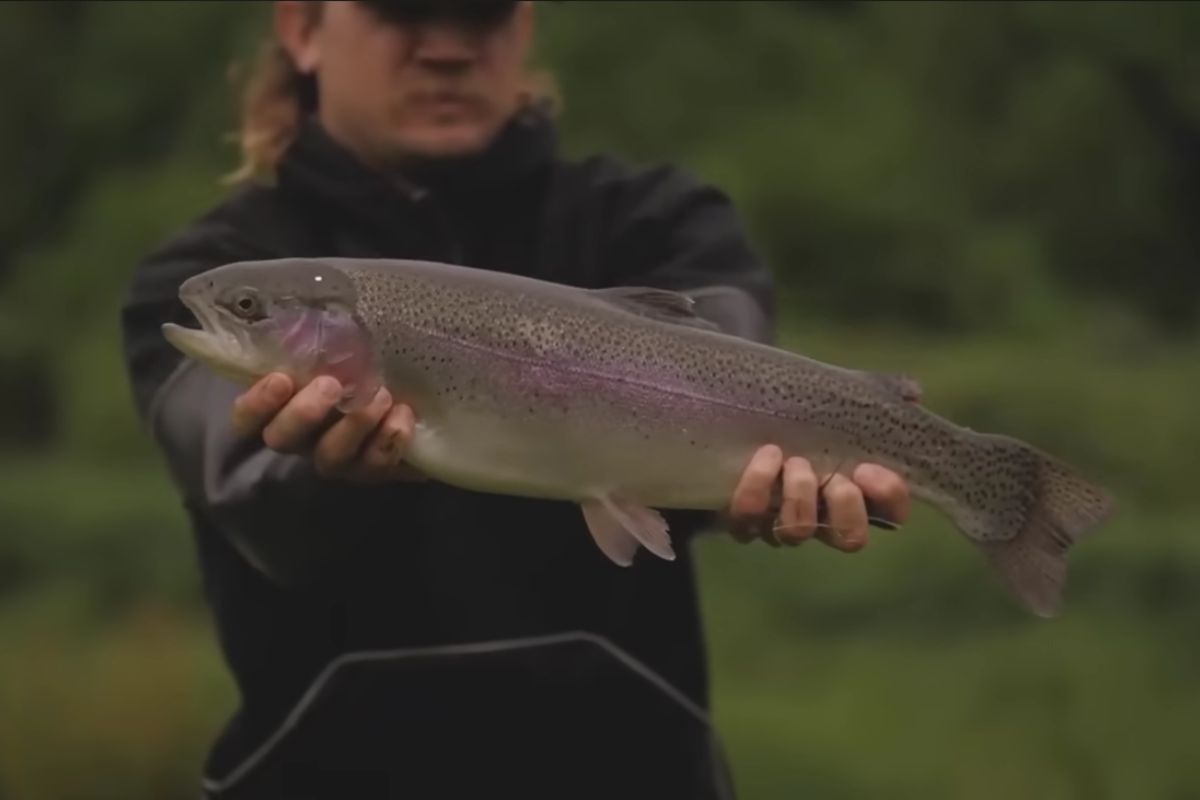


The Abandoned Trout Hatchery Built in the 1930s and Discovered in Newcastle, Virginia, Is Back in Operation, With 54°F Water by Gravity, With Spring Water and Raceways, Without Pumps or Recycled Water, After a Year of Cleaning and Another of Licenses to Process Fish, According to the Producer.
The abandoned trout hatchery that resumed operations in Newcastle, Virginia, came onto the radar when Ty Walker received a call from a friend saying there was an old structure hidden in the brush, resembling a relic of rural industrial past. The first inspection showed no running water, and the uncertainty about what the site really was became the starting point.
The revival of the abandoned trout hatchery was not immediate: Walker describes a sequence of physical and bureaucratic rescue, dealing with trash removal, restoring valves, and then scrambling for state licenses to process trout. The promise, here, is not volume, but a type of farming that relies more on water and gravity than on equipment.
The Rediscovery in Newcastle, Virginia, and the First Sign That There Was Still Life

The trigger to reactivate the abandoned trout hatchery was a visit where nothing seemed to “work” until Walker located a former worker of the place.
-
Goodbye iron: new technology from Xiaomi promises to revolutionize the way we iron clothes with 500 kPa steam, continuous flow of 120 g/min, heating in 65 seconds, and six smart modes for different fabrics.

-
Rio Pardo, the most mysterious city in Rio Grande do Sul: untouched Pampas castle, the missing treasure of the Devil Boy, bride’s saint, invisible tunnels, and a 200-year curse today.
-
China retires the J-7 fighter after years of military protection and can now transform military items into drones, following more than 60 years of operation of the J-7, derived from the MiG-21, with thousands of units produced and strategic use in the PLAAF and PLANAF.
-
Volunteers are sought to live in the mountains for a month: a study pays people to stay at 2,500 meters, with 24-hour monitoring of sleep, metabolism, and blood pressure.

According to the account, it was an older man with a pipe wrench who walked through the tall vegetation and found an old cast iron valve buried in the brush.
When the valve was turned, the water gushed, and the reading of the site changed immediately.
This was no ordinary land, but a structure designed to channel water through raceways and tanks, even decades after the interruption.
Walker also reports finding a specific valve key near an apple tree, as if parts of the system had been scattered, waiting for someone to understand the logic of the whole.
Gravity Engineering and Spring Water: What Separates the Old Method from Intensive Farming

The operation described for the abandoned trout hatchery has a central technical point: there are no pumps on the property.
The water comes from a small spring that flows out of the rocks, supplies a thousand-gallon tank, and feeds channels and ponds by gravity, maintaining a temperature of about 54°F throughout the year, which is roughly 12°C in approximate conversion.
Walker contrasts this arrangement with hatcheries that operate in a closed system, reusing the same water: filtering, recycling, and sending it back to the pools.
In this type of model, he points out a sensory effect that weighs on consumer perception, associating the “aquarium taste” with the use of recirculated water.
In the abandoned trout hatchery, the narrative is of clean water in a continuous flow, with trout eating insects, and the difference appearing in taste and smell perceived after preparation.
Licenses, Learning Curve, and the Invisible Cost of “Filling Tank” with Oxygen
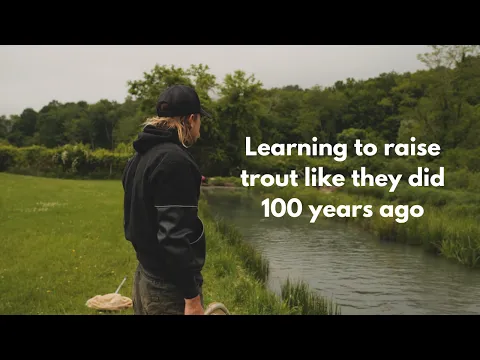

The reactivation of the abandoned trout hatchery was described as a phased project. First, approximately a year to collect trash and make the area “ready to go in the right direction”.
Then, a second year dedicated to licenses and state certifications to enable trout processing, a step that determines whether the operation can or cannot sell and deliver product regularly.
In this same journey, Walker describes a harsh learning curve, stating that he has lost more fish than he has raised due to trial and error, and that a book from the 1930s about trout farming helped him interpret what made sense in that old system.
In contrast, he cites hatcheries that spend between $20,000 and $30,000 per month on liquid oxygen to increase stocking capacity, accommodating up to three times as many fish, with a physical cost to the animals, such as worn fins and injuries.
The technical point here is simple and brutal: producing trout and producing trout that look, smell, and taste “good” can be different operational goals.
What This Return Says About Fish Farming, Consumer Trust, and the Idea of “Pure Flavor”
The case of the abandoned trout hatchery also exposes a trust debate.
Walker states that people have said the trout tasted like “clean water”, and that local chefs praised the product, which indicates that perception about farmed fish can change when the method is explained in detail and the water system is at the heart of the story.
There is also a background of lifestyle that appears in the account: Walker says he raises pigs on pasture and that, at home, they prioritize unprocessed whole food, associating this routine with effects on mood and children’s health.
Without turning this into a promise, the objective point is that the abandoned trout hatchery was repositioned as a low-mechanical operation, more dependent on water, daily management, and flow regularity than on chemistry and recirculation.
In your daily life, would you be willing to pay more for trout from an abandoned hatchery that operates by gravity and spring water, or do you prefer to trust intensive farming with high technology and scale? What weighs more for you: flavor, transparency of the method, or price on the shelf?








Eu li todo o conteúdo e gostei, se Walker não fosse sábio, teria perdido.
1 ano tirando licença. Entenderam bovinos? É assim que funciona em países sérios…
Comer biológico não é sinónimo de comer caro — isso é treta da indústria alimentar processada para te esvaziar o bolso. A beldroega, a azola e ovos verdadeiros são exemplos vivos: sempre foram nutritivos e acessíveis, mas foram demonizados enquanto nos empurravam **** processadas deles. Esse criadouro de trutas abandonado e agora a funcionar sem bombas nem químicos só prova uma coisa: a natureza resolve, a indústria complica e factura.