





 Portuguese
  English
  Spanish
  5 min of reading
  0 comments



Masons Use a Common Kitchen Ingredient to Control the Setting Time of Concrete on Hot Days and Improve the Finishing of Slabs and Residential Floors. The Traditional Practice Makes a Comeback in 2025.
In small and medium construction projects in Brazil, masons and construction foremen use a traditional technique to control the setting time of concrete in high temperatures: the addition of small amounts of common sugar or molasses dissolved in mixing water.
This practice, recorded in various regions of the country, allows concrete to remain plastic for a longer time, facilitating pouring and compaction in slabs, floors, and residential structural elements.
Sugar directly affects the hydration reaction of Portland cement, delaying the onset of setting without interrupting the long-term strength gain process.
-
This star-shaped fortified construction, hidden near the border of Spain, may be the largest fortress on the planet.

-
Congonhas receives the monorail promised for the 2014 World Cup after more than a decade of delays and becomes the first airport in Brazil with integrated subway.

-
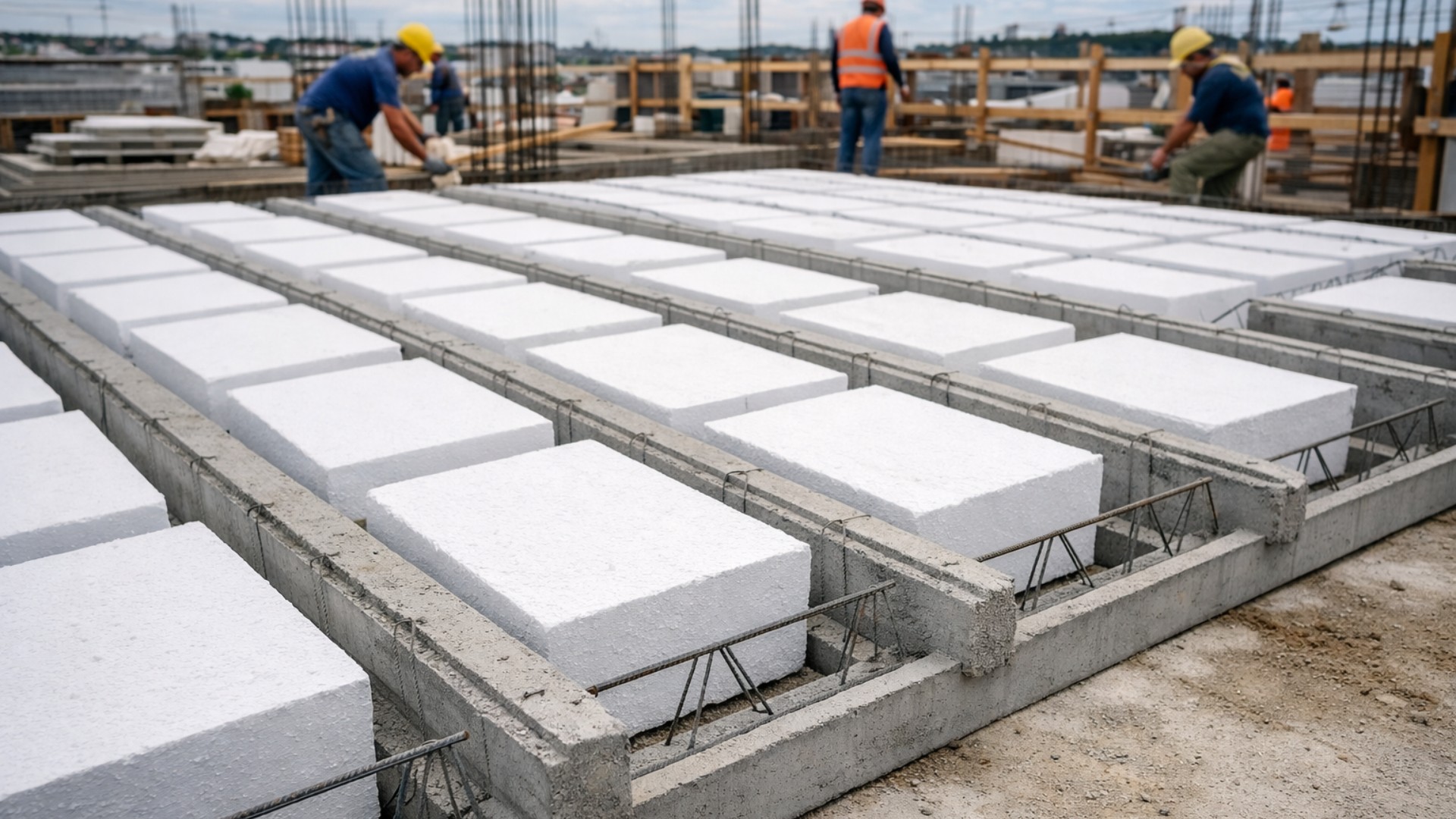
Goodbye, concrete: a new trend in civil construction reduces the weight of the structure by up to 30%, accelerates projects by up to 40%, cuts costs on steel and labor, and improves thermal insulation with EPS.
-
Russian engineers create an innovative propeller blade for aircraft that could completely change the way airplanes and helicopters operate.


Professionals report that the technique remains alive on job sites where concrete is manually mixed or in small mixers.
In hot climates, conventional concrete can begin to set in less than an hour, making leveling difficult and increasing the risk of cold joints.
With the controlled addition of the homemade additive, the useful working time is extended, allowing for more uniform finishes.
How Sugar Delays the Setting of Concrete
The chemical basis of the retarding action lies in the ability of sucrose to interfere with the initial dissolution of clinker compounds, particularly tricalcium aluminate.

Technical studies and laboratory tests conducted by cement manufacturers and universities confirm that very low dosages of about 0.05% to 0.2% relative to the mass of cement are sufficient to delay setting by hours, depending on the ambient temperature.
Molasses, a byproduct of sugar production, has a similar effect due to its content of sucrose and other reducing carbohydrates.
Where Masons Apply the Technique Most Frequently
Experienced masons in states like São Paulo, Minas Gerais, and Goiás have been applying this method for decades, especially in pouring trussed slabs and floor screeds where the mixture is transported manually.
The practice gains relevance in 2025 due to the increased price of industrial retarding additives and the frequency of intense heat waves.
In residential construction, the additional cost is virtually zero, as kitchen sugar or common molasses are easily obtainable items.
Safe Proportion Used in Real Construction
The most commonly cited proportion by professionals in the field is between 50 and 200 grams of sugar per 50 kg bag of cement, always previously dissolved in water to ensure uniform distribution.
This amount corresponds to about 0.1% to 0.4% of the weight of the cement, a range considered safe in reported practical tests.
Sugar incorporates microbubbles and reduces the speed of initial hydration crystal formation, keeping the concrete fluid for a longer period.
Results of Tests with Sugar in Concrete
In comparative laboratory tests, concretes with the addition of 0.05% sucrose showed a delay of two to four hours in the onset of setting at temperatures above 30°C.
The same test recorded that the compressive strength at 28 days was equal to or slightly higher than that of the reference concrete, provided the dosage did not exceed 0.25%.
Another observed effect consists of greater homogeneity of the mixture, reducing segregation in concretes with high water-cement ratios.
Advantages on Hot Days
In the Northeast and Central-West regions, where temperatures often exceed 35°C, masons use the technique to prevent concrete from hardening in the mixer during short transport.
The modified concrete maintains slump for a longer time, allowing for proper vibration and reducing internal voids.
The most common application occurs in light structural concretes, such as precast slabs, beams, and toppings.
Reduction of Cracks Through Thermal Control
Professionals highlight that controlled retarding distributes hydration heat more gradually, contributing to a lower incidence of thermal shrinkage cracks.
In calorimetry tests, the heat release curve shows a peak shifted to later ages, benefiting larger volume pieces.
Molasses, being more viscous, also slightly improves the cohesion of the fresh mixture, facilitating manual or mechanical pumping over short distances.
Care and Limitations of the Technique
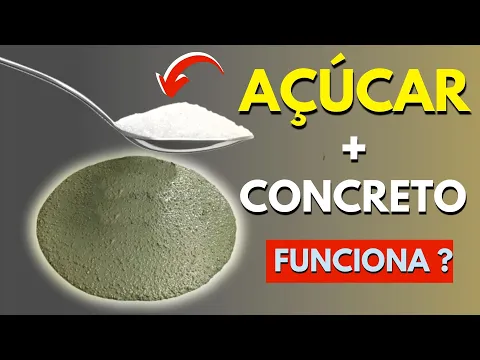

Cement manufacturers warn that the technique requires prior testing for each batch, as reactivity varies depending on the type of cement and fineness of grinding.
CP V-ARI cements, which have high initial strength, respond more intensely to the homemade additive than cements with pozzolana.
In concrete placements made at temperatures between 28°C and 38°C, the average observed delay ranges from 90 to 180 additional minutes compared to concrete without addition.
The final strength gain remains, with values at 28 days within the expected range for the mix used.
Surface drying occurs more controlled, reducing the formation of crusts that hinder finishing with a screed.
Small builders report indirect savings due to reduced losses from premature hardening of unused mixtures.
When to Avoid Using Sugar or Molasses
The method applies exclusively to unreinforced concretes exposed to high aggressiveness or in structures of great responsibility, where certified additives are mandatory.
In internal works or secondary elements, the use continues to be widespread among freelancers and renovation teams.
The cost per cubic meter of concrete is less than one real compared to commercial retarders of the same effectiveness.
Experienced professionals dissolve the sugar or molasses in part of the water before starting the mixing, ensuring complete incorporation.
The resulting mixture has longer open time for leveling corrections and the elimination of air bubbles.
On intensely hot days recorded in 2025, the technique prevents forced halts in the concreting of residential slabs up to 100 square meters.
The concrete maintains sufficient workability for manual straightening even after two hours of preparation.
The strength at seven days may show slight reduction, but it fully recovers by 28 days under normal curing conditions.
Masons pass on the knowledge orally, adjusting the dosage according to the feel of the batch in the mixer.
The practice reinforces the search for accessible solutions in a time of rising industrial input costs.
The modified concrete shows less tendency to plastic shrinkage on surfaces exposed to direct sunlight during the initial cure.
In field reports, pieces cast with the method show a smoother and less cracked surface after curing.
The technique is limited to precise dosages, as amounts exceeding 0.5% can permanently compromise hydration.
Have you ever used or witnessed the use of sugar or molasses to control the setting of concrete in any construction?








-

-

-

-

-

-

21 pessoas reagiram a isso.