





 Portuguese
  English
  Spanish
  3 min of reading
  0 comments


Discover How Neugebauer Became the Oldest Operating Chocolate Factory in Brazil, Its Centenary Trajectory, Historical and Current Relevance.
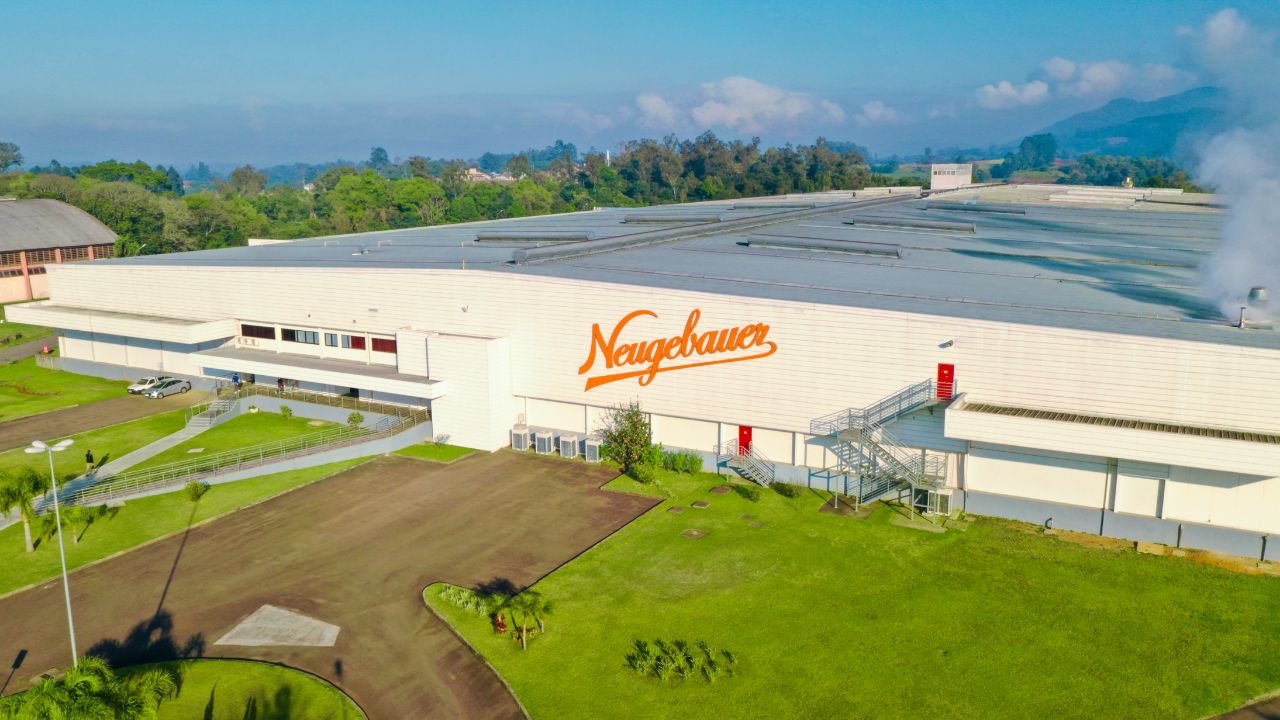
Neugebauer is the oldest operating chocolate factory in Brazil: founded on September 17, 1891, by Franz and Max Neugebauer with partner Fritz Gerhardt, it currently operates in Arroio do Meio (RS) and employs hundreds of people. Its “Refeição” chocolate, launched in 1925, has just completed 100 years — a fact that reinforces the brand’s longevity and relevance.
Over more than 130 years, Neugebauer has gone through different owners (Grupo Fenícia, Parmalat, Florestal) until being acquired in 2010 by Grupo Vonpar and, in 2013, concentrating all of its production in the Vale do Taquari.
Why does this centenary brand remain alive? Due to its capacity for innovation, adaptation, strong regional identity, and technological investment — factors that explain why Neugebauer remains a symbol of national chocolate.
-
8-year-old boy discovers hidden gold mine in China and reveals millennia-old relics that could rewrite the history of ancient trade routes

-
A Brazilian teenager created an artificial intelligence to map heat islands and help cool down cities that are becoming open-air ovens under increasingly extreme temperatures.

-
With 18 levels carved into the rock and a capacity for 20,000 people, Turkey’s gigantic underground city was a complete refuge with churches, schools, water, and ventilation, created to keep an entire population hidden and protected.
-
A pizza owner discovers a fake R$ 173 Pix payment, sends a “pizza” filled with rubble to the scammer, goes viral with over 2 million views, and exposes a scam affecting small businesses, reinforcing the warning to check payment confirmations before delivering orders.


Neugebauer: A Trajectory of Pioneering and Foundation
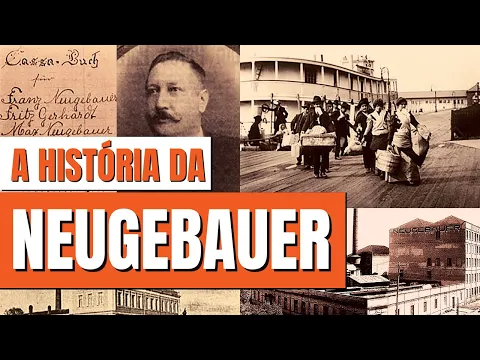
The history of Neugebauer began when the German confectioner Franz Neugebauer arrived in Porto Alegre in 1887, becoming interested in the food sector.
He asked his brother Ernest to specialize in confectionery in Germany and to have Max come to Brazil so they could start a candy business together.
On September 17, 1891, Neugebauer Irmãos & Gerhardt was born in the Navegantes neighborhood of Porto Alegre, in a building that had previously been a school.
The initial production focused on candies, rapaduras, and simple confections, sold door to door.
Soon, with Ernest’s arrival and new techniques, the company expanded, promoted corporate changes, and began investing in larger structures.
By the early 20th century, the factory housed dozens of steam-powered and electric machines, in addition to producing dragees, caramels, chocolates, and cookies.

Growth, Iconic Products, and Centenary Milestones
Launch of Chocolates and Consolidation
The chocolate itself began to be produced around 1903.
In 1925, the Refeição chocolate was launched, which over time became a symbol of the brand.
In the mid-1930s, family size versions (250 g and 500 g) were introduced.
Over the decades, new products marked Neugebauer’s trajectory: the Amor Carioca bonbon (1958), Bib’s confections, Napolitano bars, Stikadinho, and the Mu-Mu dulce de leche.
In 2025, Neugebauer celebrated 100 years of Refeição, reinforcing its symbolic and nostalgic strength.
Corporate Changes
The Neugebauer family maintained control of the company until 1982 when they sold the factory to an Argentine group.
In 1998, the business was acquired by Parmalat; in 2002, it passed to Florestal Alimentos; and finally, in 2010, it was purchased by the Grupo Vonpar, which transformed Neugebauer into a food division.
In 2013, a new manufacturing unit was inaugurated in Arroio do Meio (RS), where all chocolate and candy production is now concentrated.
This modern facility, spanning over 35 thousand square meters, is considered one of the most efficient in Latin America.
Why Does Neugebauer Remain Active?
Innovation, Adaptability, and Identity Reinforcement
Neugebauer has stood the test of time through constant adaptations — modernizing its processes, investing in new packaging and production technologies, and consolidating its regional presence in Southern Brazil.
By relocating operations to Arroio do Meio, it took advantage of local infrastructure, qualified labor, and industrial synergy in the region.
Additionally, the emotional appeal and centenary history serve as a competitive advantage: products like Refeição evoke memories and are identity symbols for generations.
Market, Export, and Performance
Neugebauer is not restricted to Rio Grande do Sul: it exports to over 30 countries and targets national markets in the Southeast and South.
In 2021, it estimated revenues of R$ 570.2 million.
In recent periods, products such as bars and candies have shown significant growth in sales and exports.
The daily production at the Arroio do Meio plant averages 74 thousand kg of chocolate and 20 thousand kg of dulce de leche.
The expectation is to double this capacity with a structure prepared for expansion.
If chocolate is an example of persistence, Neugebauer shows that it is possible to span centuries with flavor and identity.





-

1 person reacted to this.