





 Portuguese
  English
  Spanish
  4 min of reading
  0 comments


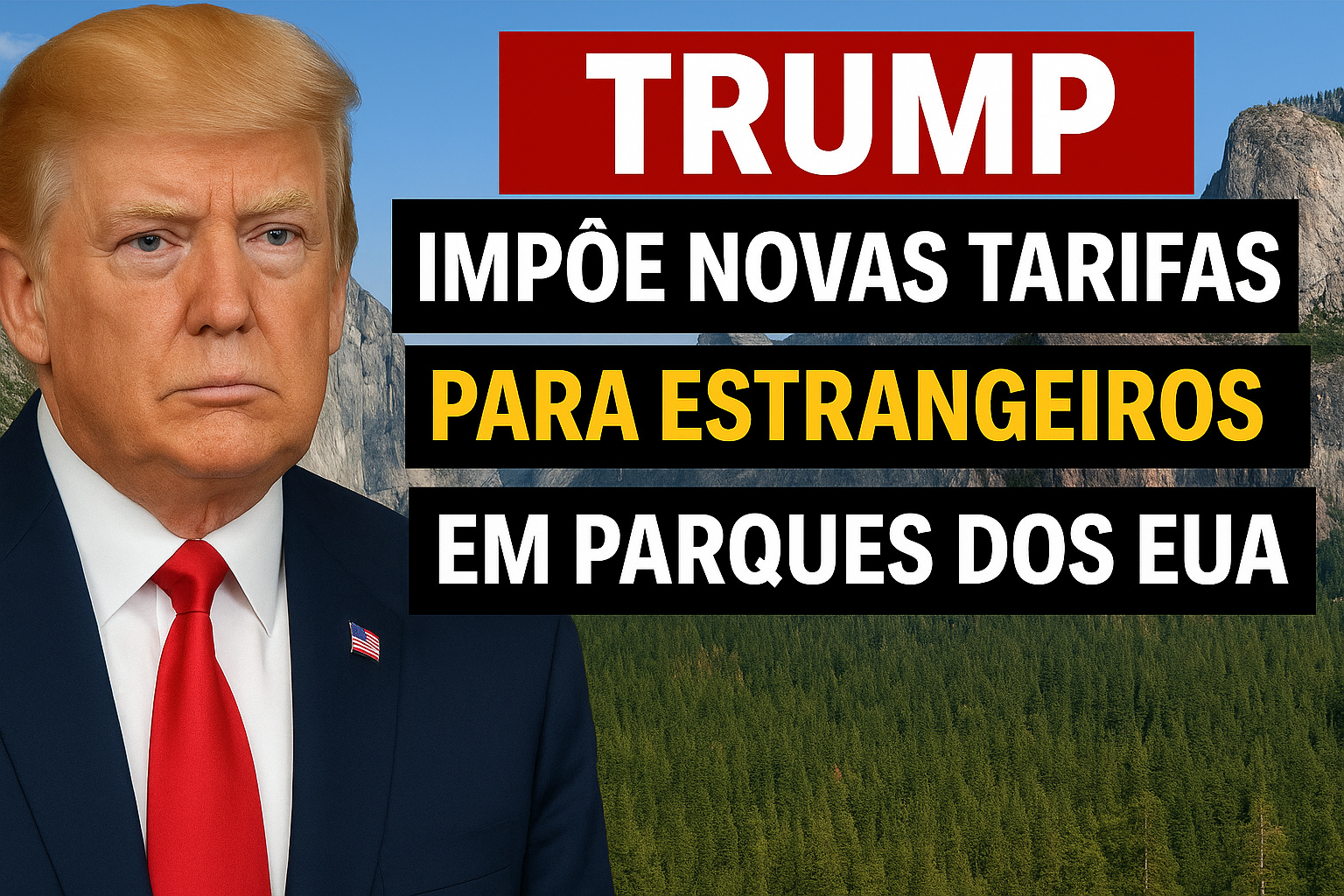
Trump Creates Taxation in US Parks and Foreign Visitors Will Start Paying a $100 Surcharge at Major Destinations.
US Tightens Rules and Trump Approves New Taxation for Foreign Visitors in National Parks
The United States has decided to charge a new tax in national parks, a measure announced by the Donald Trump administration on Tuesday (25), which significantly changes access for foreign visitors to the country’s main natural destinations.
The change, effective from 2026, particularly affects those visiting some of the most iconic parks in the US, such as Yellowstone, Yosemite, and the Grand Canyon.
The government claims that the decision aims to preserve natural heritage, while analysts point out direct impacts on geopolitics in tourism and the relationship between the US and international travelers.
-
Spain challenges the USA and closes its airspace for operations against Iran, raising global tension and provoking the threat of a trade rupture.

-
While no other country manufactures tanks in Latin America, Argentina activates the TAM 2C-A2 and raises a curiosity about the technological lag in the region.

-
A Russian ship with 730,000 barrels of oil has just arrived in Cuba while Mexico negotiates fuel sales through private companies: the communist island is desperately seeking alternatives after losing its supply from Venezuela due to American military action.

-
Iranian drones and missiles destroyed a 270 million dollar American spy plane in Saudi Arabia, splitting the E-3 Sentry aircraft in half and injuring 12 military personnel in an attack that exposes the vulnerability of U.S. bases in the Persian Gulf.


The surcharge, according to the Department of the Interior, acts as a response to the constant increase of foreign tourists and the cost of maintaining areas of conservation increasingly pressured by global traffic.
Thus, the additional $100 will be part of the experience for non-residents, significantly raising the entry cost.
Taxation in US Parks Changes Access Priorities
The new policy, announced by Interior Secretary Doug Burgum, reinforces the Trump administration’s goal of prioritizing American families. He stated:
“These policies ensure that American taxpayers, who already support the National Park System, continue to enjoy affordable entry, while international visitors contribute their fair share to maintain and improve our parks for future generations.”
Furthermore, the decision comes at a time when national parks are reaching record visitation levels. In 2024, there were nearly 332 million visitors, spread across the 63 officially designated parks.
Foreign Visitors Will Face Higher Costs
With the new rule, international tourists wanting to visit the 11 most popular parks will face an additional charge of $100, added to the standard entry fee. The change thus creates a significant difference between residents and foreigners.
Although the popular annual pass “America the Beautiful” still allows unlimited entry, the price for non-residents will rise dramatically. The current price of $80 will increase to $250, more than three times the current amount. Still, those opting for the pass will not pay the extra surcharge at the most visited parks.
This disparity in prices, in addition to stirring internal debates, raises discussions about the impact of the measure on the flow of foreign visitors and the positioning of the US in the geopolitics of global tourism.
Measure Integrates Nationalist Strategy of the Trump Administration
The surcharge goes along with other actions aligned with the current administration’s domestic policy. In July, Trump signed an executive order stating that parks should be “preserved” for “American families,” reinforcing a nationalist discourse.
As part of this package, the government announced the “patriotic days without fees”, commemorative dates when residents will have free entry. Among these days are Presidents’ Day, Veterans Day, and Trump’s own birthday, which coincides with Flag Day.
Meanwhile, the higher costs for foreign visitors become a way, according to officials, to better distribute the financial burden of environmental conservation.
Tourism Impact and Debate on Geopolitics
Tourism experts say that the price increase may temporarily reduce the presence of international travelers. On the other hand, they argue that the extra charge can generate essential revenue to maintain the parks.
Still, some analysts point out that the taxation in parks could create diplomatic tensions. They remind that many countries view US parks as important destinations in global tourism. Thus, the change may influence the geopolitics of the sector.
The government insists that the measure seeks preservation and fiscal fairness. However, tour operators warn that the decision may impact the image of American hospitality.
National Parks Remain a Jewel of US Tourism
Even with the new charge, national parks continue to be among the country’s biggest attractions. With unique scenery, preserved history, and world-renowned infrastructure, they continue to draw crowds — albeit, starting in 2026, with a clear distinction between American and foreign visitors.
For millions of tourists, the experience will still be worth the investment. For others, however, the surcharge may weigh on the travel decision. Regardless, the announcement marks a significant change in the US tourism policy during the Trump administration.









-

-

-

4 pessoas reagiram a isso.