





 Portuguese
  English
  Spanish
  7 min of reading
  1 comment


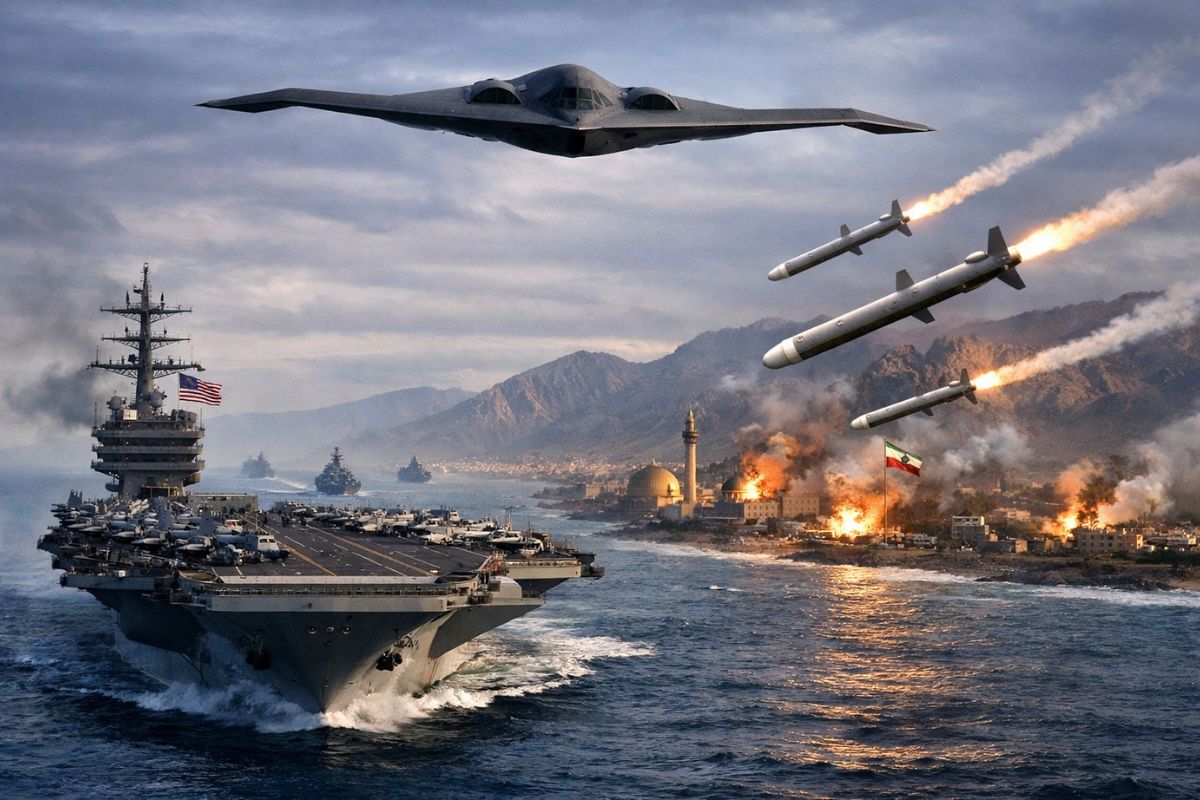


With 19 Military Points in the Region, Aircraft Carriers, B-2 Bombers, and Missile Defense on Alert, the USA and Iran Return to the Center of the Crisis in the Gulf as Trump Weighs an Attack That Could Overthrow the Ayatollahs and Unleash Thousands of Missiles in the Middle East
The USA and Iran are once again on a collision course that could redraw the map of the Middle East. On one side, the United States is setting up a network of air bases, aircraft carriers, strategic bombers, and missile defense systems around the Gulf. On the other, the Iranian regime has made it clear that if it feels the attacks aim at overthrowing the ayatollahs, the response will come in the form of thousands of ballistic missiles and drones, capable of saturating defenses and dragging the entire region into a new cycle of destruction.
Over the past few years, American military presence has spread to at least 19 locations, with eight permanent bases functioning as pieces of the same board. While the mainstream media focuses on isolated crises, the USA and Iran are already engaged in a silent strategic chess game, with measured moves involving deployed aircraft carriers, bombers on standby, and repositioned defense systems waiting for the final decision from the White House.
How the USA Surrounded Iran with 19 Support Points
When talking about the Persian Gulf, many people only think of the countries directly bordering the Gulf. But in practice, the American presence functions as a network that surrounds the Gulf, Iraq, Jordan, the Red Sea, the Eastern Mediterranean, and Israel, creating a belt around Iran.
-
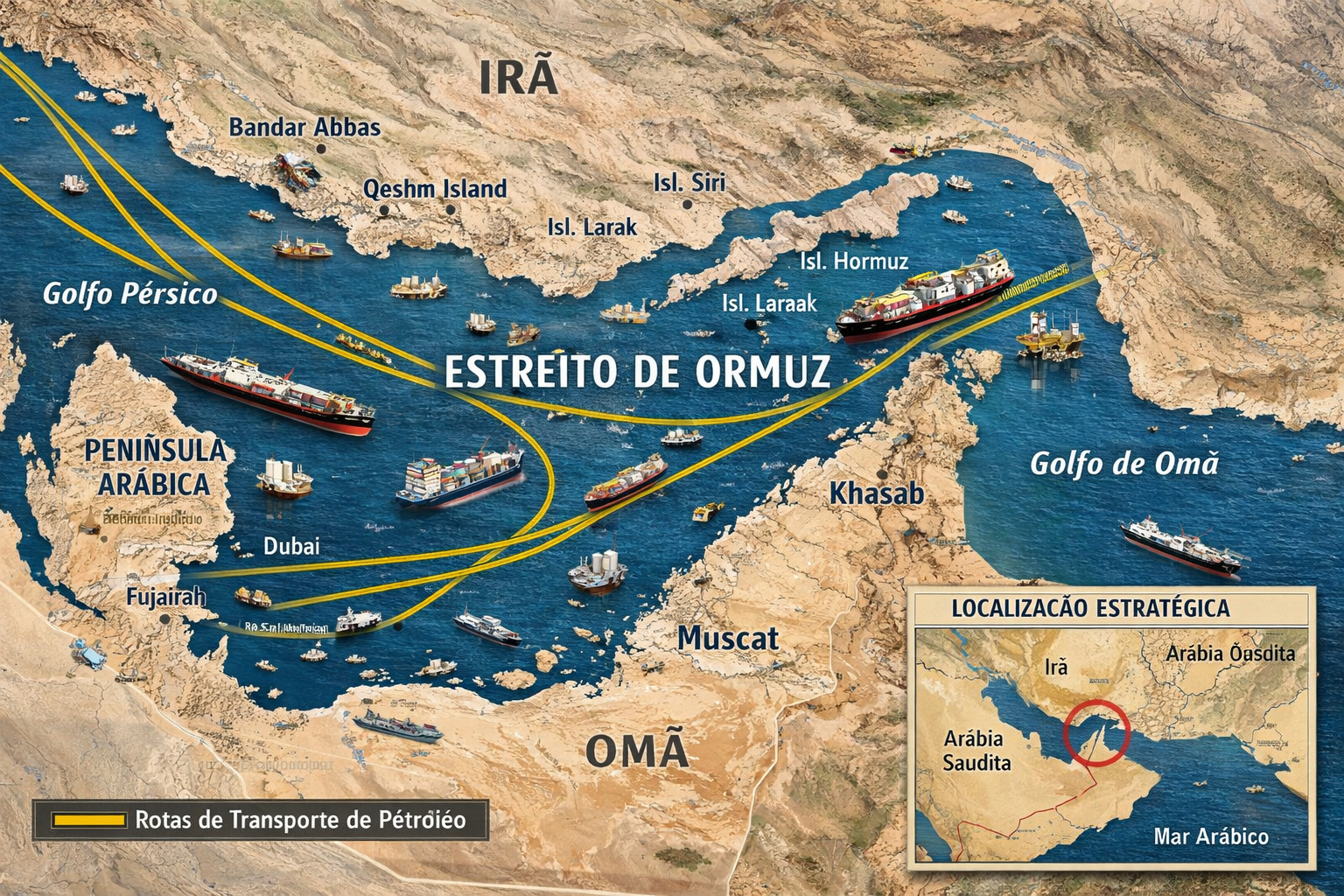
Global summit with over 40 countries pressures Iran for a blockade in the Strait of Hormuz and warns of direct impact on oil, food, and the global economy.
-
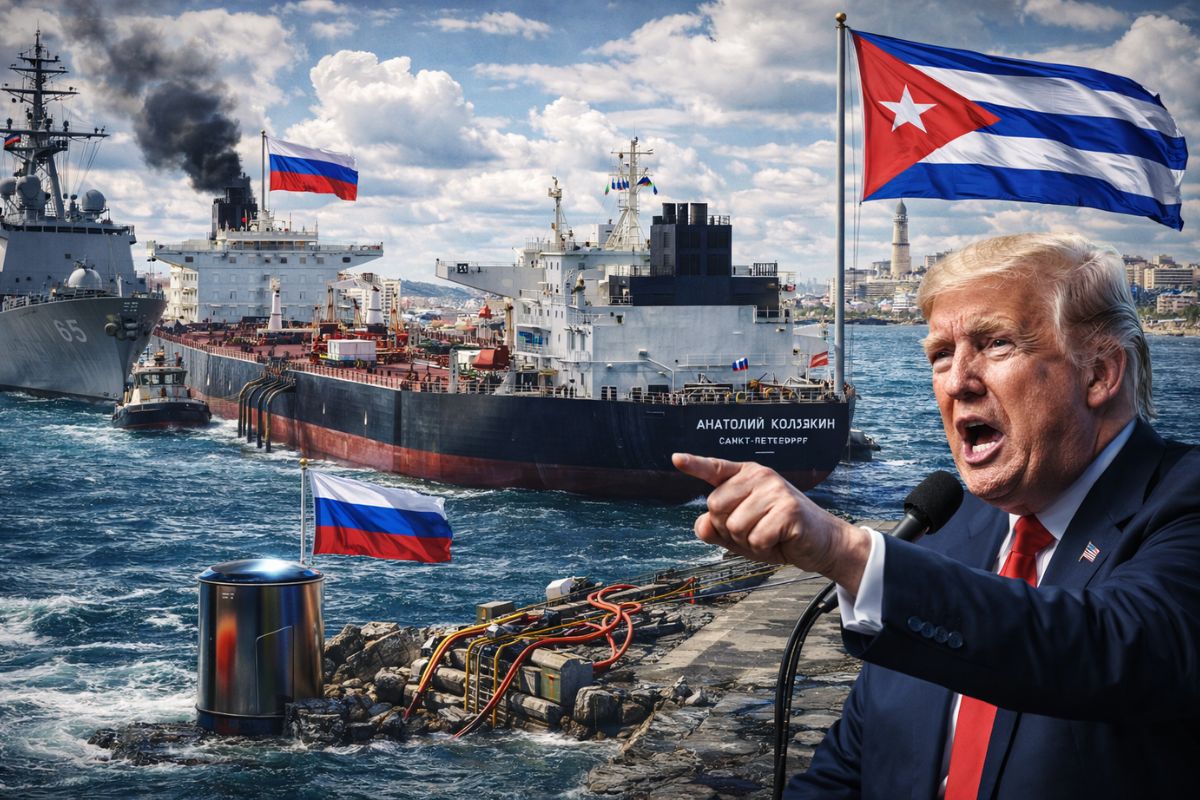
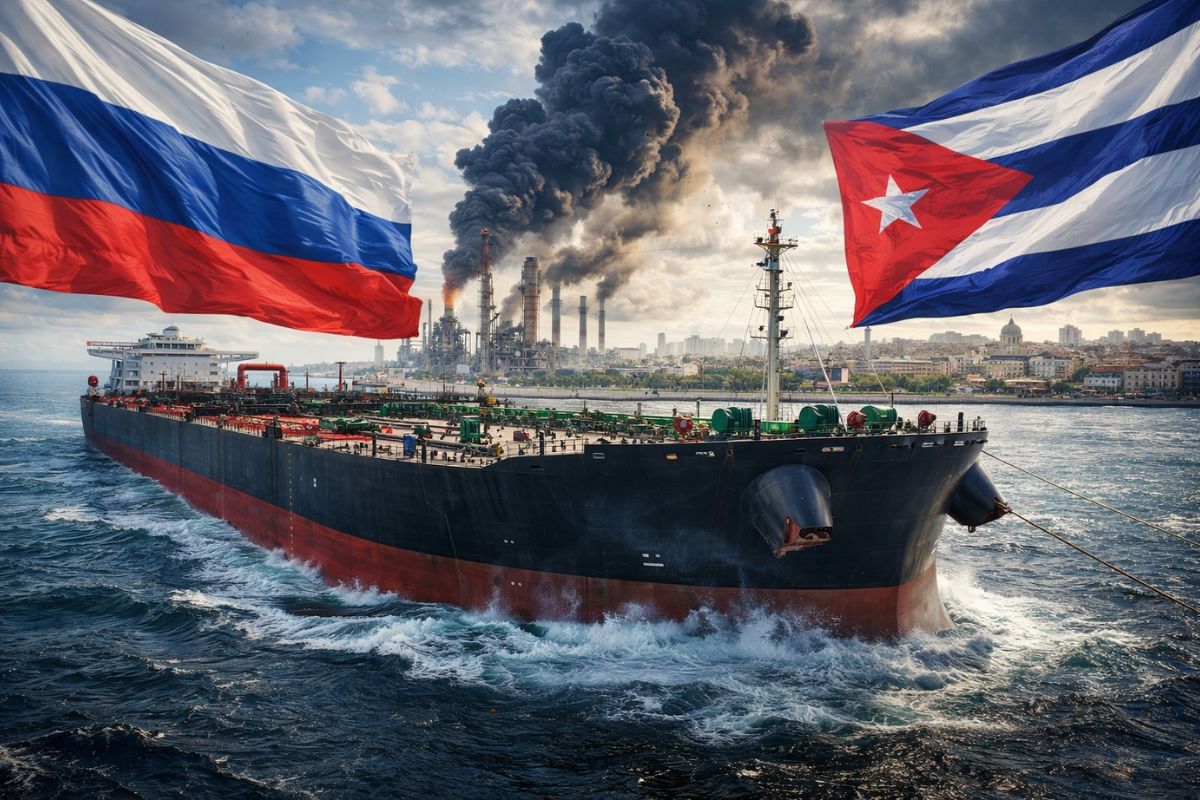
Russia has broken the U.S. maritime blockade to send oil to Cuba and is now loading a second ship while Trump says that “Cuba is next” in a possible military action against the island.
-
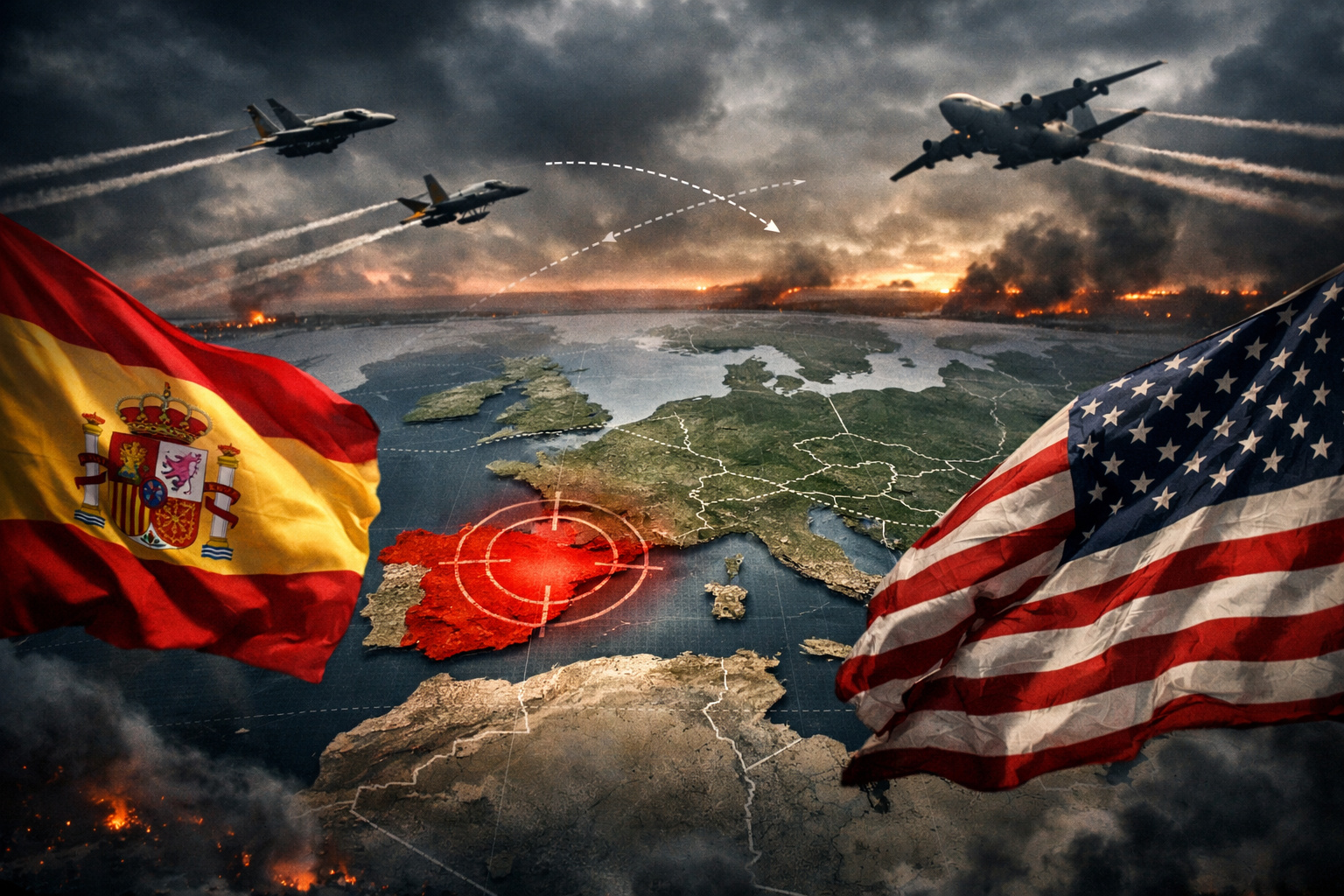
Spain challenges the USA and closes its airspace for operations against Iran, raising global tension and provoking the threat of a trade rupture.
-
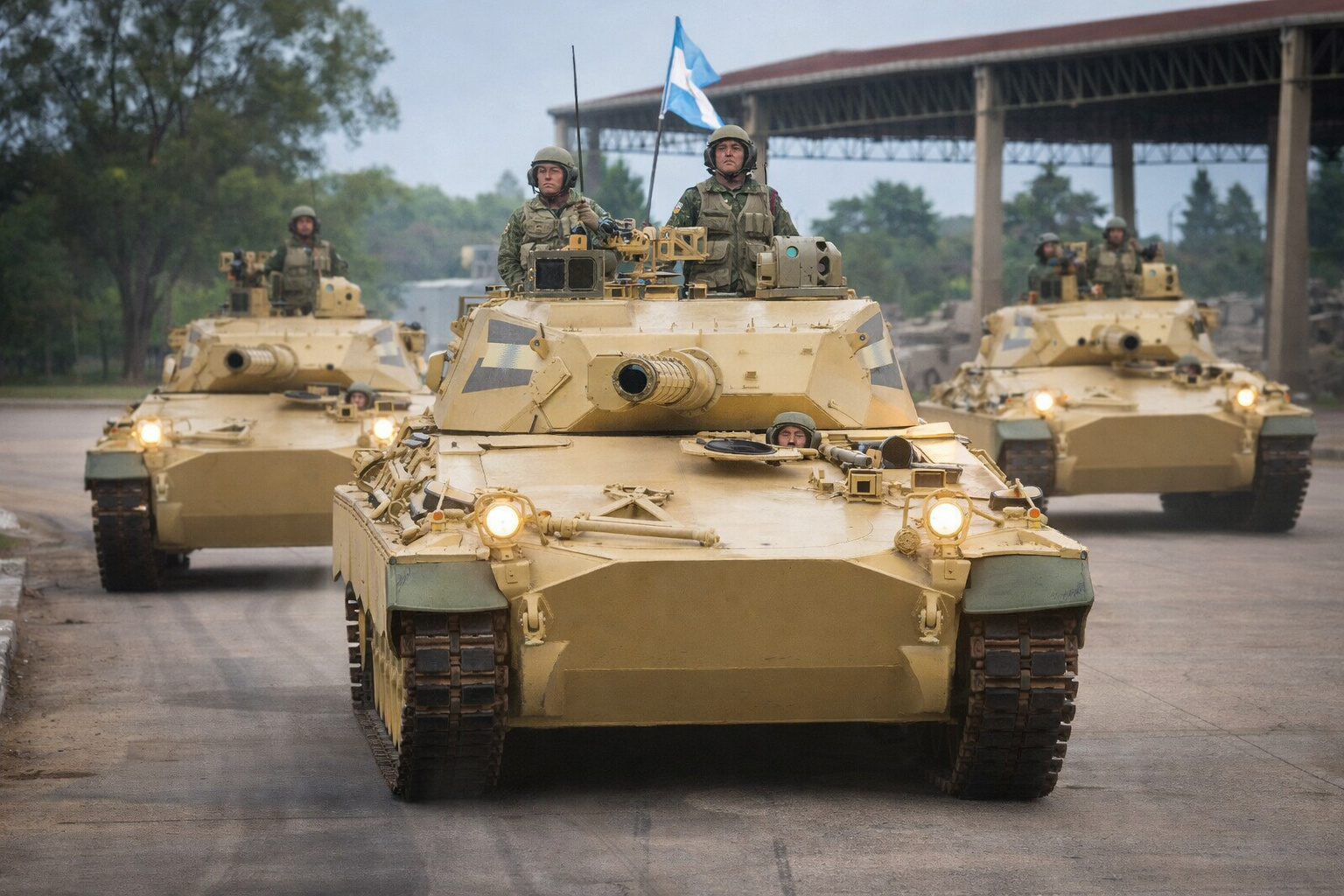
While no other country manufactures tanks in Latin America, Argentina activates the TAM 2C-A2 and raises a curiosity about the technological lag in the region.

The USA and Iran face each other from this structure. At the heart of the system is the Al Udeid Air Base in Qatar, which serves as the headquarters for combined air operations.
From there, they command and coordinate practically everything that flies in the area of Centcom, which covers the entire Middle East and parts of Central Asia and Africa. About 10,000 American military personnel operate in this complex, which acts as the brain of air power in the region.
In Bahrain, there is the headquarters of the Fifth Fleet, responsible for the Gulf, the Red Sea, the Arabian Sea, and parts of the Indian Ocean. It is from there that a constant naval presence is projected, with destroyers, cruisers, and support ships, all ready to protect aircraft carrier strike groups or conduct independent operations.
In Kuwait, three major installations, Camp Arifjan, Camp Buehring, and Ali Al Salem Air Base – form a fundamental land and logistical pillar. These points allow for the sustainment of troops, equipment, and supplies in any scenario of escalation between the USA and Iran.
In Saudi Arabia, the Prince Sultan Air Base stands out as a key point for air defense, with Patriot and Tads systems operating as a shield against missiles.
In the United Arab Emirates, the Al Dhafra Air Base serves as an advanced platform for observation, reconnaissance, and support missions with drones and fighters, further tightening the noose around Iranian territory.
Aircraft Carriers, B-2, and Cruise Missiles: The American Strategic Hammer

Besides the bases on land, the decisive factor in the balance between the USA and Iran is the mobile means, especially naval.
The strike group of the USS Abraham Lincoln, accompanied by escort ships and at least one nuclear cruise missile submarine, brutally expands the options for military action and defense in the area.
When an American aircraft carrier enters the theater of operations, the United States gain the ability to launch intense air strikes without relying on the permission of any host country, something critical in a complex political network like that of the Middle East.
At the same time, this presence sends a strong political message to allies and adversaries.
In the event of an actual attack, the B-2 Spirit bombers and long-range cruise missiles also come into play.
The United States have already shown how this works in practice during the Midnight Hummer operation on June 22, 2025, when seven B-2s took off directly from American territory to drop bunker-buster bombs on Iranian nuclear facilities, while dozens of cruise missiles were launched from ships and submarines over a thousand kilometers away from the Persian Gulf.
This combination of aircraft carriers, B-2s, and cruise missiles allows the USA to accurately strike command centers, air defense systems, and critical Iranian infrastructure while keeping a good part of its means out of reach of the initial Iranian retaliation.
Why the USA Reinforces Defenses Against Iranian Missiles and Drones
In January, the Pentagon began moving extra fighters and additional air defense systems to the Middle East, anticipating that any escalation would place the USA and Iran in a saturation war of missiles and drones.
The recent history weighs. In June 2025, Iran launched around 500 ballistic missiles against Israel in response to attacks that did not have the immediate goal of toppling the Iranian regime. Even so, the volume was enough to test Israeli defenses to the limit.
Now, the scenario is different. If an American and allied attack is clearly seen as an attempt to overthrow the ayatollahs, Tehran’s logic changes completely.
The regime would fight for its own survival, and the expectation is that not hundreds, but thousands of missiles and drones would be launched against Israel, American bases, regional allies like Jordan and Saudi Arabia, and even strategic targets in the Gulf.
Therefore, Patriots, Tads, and the layered defense installed on destroyers and cruisers become vital to withstand the initial impact.
Any coordination error between the USA, Israel, and other allies opens the door to massive damage to infrastructure, the civilian population, and response capacity.
Targets at Stake if Trump Authorizes an Attack to Overthrow the Regime


If President Trump decides to use all this military capacity for a campaign aimed at the overthrow of the Iranian regime, the type of target changes compared to isolated operations.
It is not just about destroying military units or missile batteries.
The focus shifts to the nervous system of the Iranian regime:
- command and control centers
- military and political communication networks
- structures of the Revolutionary Guard
- internal security forces and repression units
The goal is to “blind and silence” the system, preventing commanders from seeing what is happening and hindering the sending of orders to coordinate the defense.
At a later stage, targets of the political command would also come into view, which could include attacks on structures associated with the supreme leader himself, Ayatollah Ali Khamenei.
For this, the United States would likely rely on intense support from Israel, both in intelligence and in battlefield preparation and direct attacks inside Iran.
This would force the regime to divide its attention between two powerful offensives, further pressuring its coordinated response capacity.
The Ghost of Iraq in 2003: Overthrowing is One Thing, Replacing is Another
Even if the USA and Iran move toward an open confrontation and the military campaign is successful in weakening the Iranian regime, the hardest part may come afterward. Overthrowing a regime is one thing, building something viable in its place is entirely different.
The example of Iraq in 2003 is a clear warning. The fall of Saddam Hussein opened a power vacuum that plunged the country into chaos, facilitated the rise of extremist groups, and contributed to more than two decades of war and instability throughout the region.
In the case of Iran, the scenario is even more delicate. The Iranian opposition is fragmented, has deep historical divisions, and a more prominent figure, Reza Pahlavi, linked to the former monarchy, carries in the memory of part of the population a past of persecution.
This makes it harder to build internal consensus around an alternative.
Trump himself, in recent interviews, shows caution in endorsing any specific leadership as successor, indicating that the White House knows that the question “who takes over?” weighs as much as the decision to attack.
Without a coherent answer, the risk is to repeat in Iran the same spiral of institutional collapse and violence that marked post-2003 Iraq.
In the end, the USA and Iran are not just discussing bases, aircraft carriers, and missiles. What is at stake is the future of a country of over 80 million people and the stability of a region that has already seen enough wars for several generations.
And you, do you think that the USA and Iran are heading towards a real attack with the risk of exploding the Middle East once again or is there still room for diplomatic retreat before the point of no return?






E se o regime tem de reservas armas nucleares?