





 Portuguese
  English
  Spanish
  5 min of reading
  0 comments


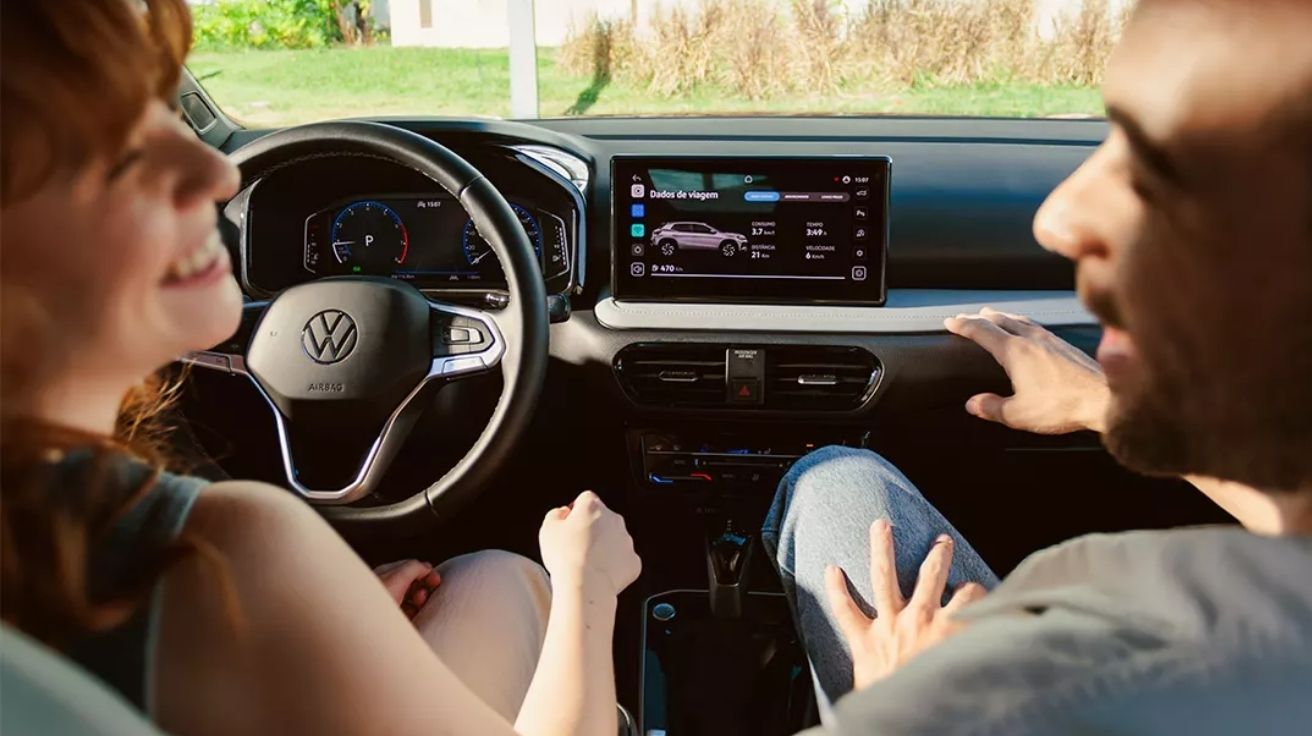
New Entry SUV from Volkswagen Arrives in Brazil with Highlighted Range and Competitive Price, Using the Same Mechanical Base as the Polo, the Best-Selling Car in June, to Face Direct Rivals Such as Renault Kwid, Fiat Pulse, and Hyundai Creta.
The Volkswagen Tera arrives in the Brazilian market surrounded by expectations and carries a curious title: it is considered the “brother” of the Polo, a model that led car sales in Brazil in June 2025.
The association between the two vehicles is no accident.
Both share the same platform and mechanical sets, a factor that reinforces Volkswagen’s strategy to expand its national portfolio based on a foundation well-regarded by consumers.
-
Only 275 people share 7 surnames on a volcanic island in the middle of the South Atlantic that is 7 days by boat from the nearest continent, does not accept credit cards, and can only be visited with special permission.

-
Mansion valued at 5 million dollars is completely destroyed after being invaded by teenagers.

-
Hackers invaded China’s military supercomputer and stole 10 petabytes of secret data including missile schematics, bomb simulations, and aerospace projects, and are selling everything for cryptocurrency.

-
The habit of saying “good morning” to strangers reveals much more than politeness and can indicate how your mind interprets the world.

This technical proximity means that the new entry SUV from the automaker, the VW Tera, brings solutions already known to the Brazilian public, especially regarding engine options, transmissions, and embedded technology.
The choice to leverage the success of the Polo – recognized for its balance between performance, efficiency, and robustness – was central to the conception of the Tera, which now seeks to carve out space in a market segment marked by intense competition.
VW Tera Entry SUV Volkswagen
Launched in June 2025 with a starting price of R$ 99,990, the Volkswagen Tera arrives in Brazil to compete directly with models such as Renault Kwid, Fiat Pulse, and Hyundai Creta, betting on high range and efficient consumption.
Although it uses the same mechanical set as the Polo, the new compact SUV presents some differences compared to the hatch, mainly in dynamic behavior and consumption, due to its higher suspension and the additional weight typical of the category.
The Tera is offered in three mechanical versions, all derived from the Polo, which had some of its configurations discontinued after the arrival of the compact SUV.
The model was developed to cater to both those looking for economy and those prioritizing performance.
Range of the VW Tera: Up to 735 km Without Refueling
One of the great highlights of the VW Tera is its range.
With a 49-liter tank and fueled with gasoline, the SUV can cover up to 735 kilometers without needing to refuel, a figure that strengthens the model’s appeal among drivers who prioritize long trips and practicality in their daily lives.
The consumption reaches 15 km/l in ideal situations, according to official data from the manufacturer.

Technical Specifications VW Tera
The entry version, called Tera MPI, features a 1.0 naturally aspirated engine, capable of delivering 84 hp with ethanol and 77 hp with gasoline, plus torque of 10.3 kgfm (ethanol) and 9.6 kgfm (gasoline).
This configuration comes equipped with a five-speed manual transmission.
According to data from the Brazilian Vehicle Labeling Program (PBEV) from Inmetro, the consumption in the city is 9.1 km/l (ethanol) and 13.2 km/l (gasoline), while on the highway the figures rise to 10.2 km/l (ethanol) and 14.7 km/l (gasoline).
The performance in this version registers acceleration from 0 to 100 km/h in 13.8 seconds (ethanol) and 14.3 seconds (gasoline), with a top speed of 162 km/h.
Next, we have the Tera TSI, equipped with a 1.0 turbo engine (170 TSI), which develops 116 hp (ethanol) and 109 hp (gasoline), with torque of 16.8 kgfm and five-speed manual transmission.
Here, the urban consumption reaches 9 km/l (ethanol) and 12.9 km/l (gasoline), while on highways it achieves 10.3 km/l (ethanol) and 15 km/l (gasoline), making it the version with the highest range in the lineup.
The performance is superior: it accelerates from 0 to 100 km/h in just 10.1 seconds (ethanol) or 10.2 seconds (gasoline), reaching a top speed of 187 km/h.
The Comfort and High configurations feature the same 1.0 turbo engine, but paired with a six-speed automatic transmission.
In these versions, urban consumption is 8.6 km/l (ethanol) and 12.2 km/l (gasoline), with highway averages of 10.3 km/l (ethanol) and 14.5 km/l (gasoline).
The performance records 0 to 100 km/h in 11.7 seconds (ethanol) and 11.8 seconds (gasoline), as well as a top speed of 184 km/h.
Consumption VW Tera vs Polo
Although the VW Tera brings identical mechanical sets to the Polo, factors such as higher suspension and greater weight directly impact performance and consumption.
The Polo, which remains a national reference in the compact segment, presents slightly better figures: the 1.0 MPI registers up to 13.5 km/l (gasoline) in the city and 15.7 km/l (gasoline) on the highway, while the turbo versions reach 13.9 km/l (gasoline) in the city and 16.3 km/l (gasoline) on highways.
Even so, Volkswagen bets that the visual appeal, higher driving position, and SUV status should compensate for any differences in efficiency, especially among consumers looking for a robust, versatile vehicle in line with trends in the Brazilian automotive market.
Competition Between VW Tera and Compact SUVs
With the introduction of the Tera, Volkswagen expands its presence among compact SUVs and directly targets consumers of models such as Renault Kwid, Fiat Pulse, and Hyundai Creta, which have established themselves in public favor.
The new Tera seeks to carve out a niche with a package that combines range, versatility, and competitive pricing, without compromising on the tradition of reliability and embedded technology, trademarks of the Polo and now transferred to its “brother” SUV.
Do you believe that the VW Tera has the potential to repeat the Polo’s success among compact SUVs? Or could differences in performance and consumption impact the decision of Brazilian consumers? Leave your opinion in the comments!






-

-

-

-

-

22 pessoas reagiram a isso.