






 Portuguese
  Spanish


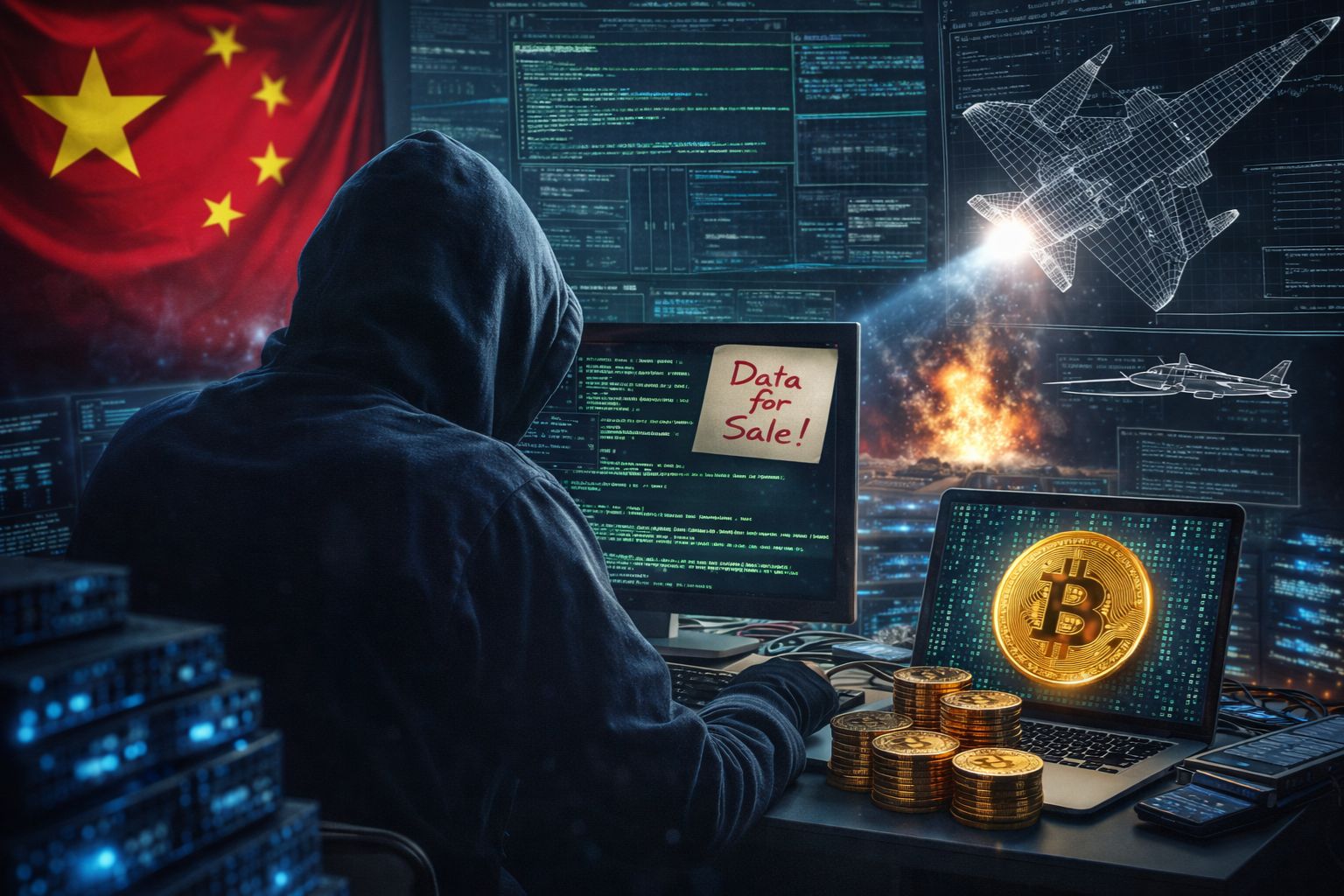

Hackers of the FlamingChina group claim to have stolen more than 10 petabytes of data from the state supercomputer at the National Center for Supercomputing in Tianjin, China. The material includes defense documents marked as secret, missile schemes, and military simulations. The data is being sold for cryptocurrency on anonymous Telegram channels.
A hacker group identifying itself as FlamingChina claims to have hacked the state supercomputer at the National Center for Supercomputing (NSCC) in Tianjin, China, and stolen over 10 petabytes of highly confidential data. To put this into perspective: one petabyte equals one thousand terabytes, and a high-performance computer stores about one terabyte. The stolen material from the supercomputer includes defense documents marked as “secret” in Chinese, missile schemes, animated simulations of military equipment, and research in aerospace engineering, bioinformatics, fusion simulation, and other fields that rely on high-performance computing. China has denied the attack and classified the documents as forgeries, but cybersecurity experts who analyzed samples consider the material authentic.
If confirmed in its entirety, the breach would be the largest data theft in China’s history. The Tianjin supercomputer serves over 6,000 clients nationwide, including advanced science agencies and defense organizations, such as the Aviation Industry Corporation of China (AVIC), the Commercial Aircraft Corporation of China (COMAC), and the National Defense Technology University. The FlamingChina group published samples of the data on an anonymous Telegram channel on February 6 and is offering full access for hundreds of thousands of dollars in cryptocurrency.
How the Tianjin supercomputer was hacked
According to the CNN portal, the method used to hack the supercomputer was not particularly sophisticated, according to experts who spoke with the responsible hacker. The attacker claimed to have gained access to the system through a compromised VPN domain, an entry point that should have been secured but, in this case, acted as an open invitation. Once inside the supercomputer’s network, the intruder implemented a botnet, a network of automated programs that entered the NSCC system and began extracting, downloading, and storing data in a distributed manner.
-
Billionaire says the most valuable skill will help overcome job elimination caused by AI, following Bill Gates’ fears

-
A Dutchman created a ‘box’ that makes trees grow in the desert almost without water and without irrigation: the invention has already brought seedlings to dozens of countries and achieves up to 90% survival where common planting did not exceed 10%.

-
Abandoned warehouse hid a giant collection of rare computers, with over 2,000 artifacts from the 1930s to the 1980s.
-
Scientists warn that melting ice is triggering an alarming chemical transformation in preserved areas, and the first signs are already concerning researchers worldwide.




The extraction of 10 petabytes from the supercomputer took about six months. Instead of transferring large volumes of data at once, which would have triggered security alerts, the attacker distributed the extraction across multiple servers, moving small amounts of data simultaneously to reduce the risk of detection. Dakota Cary, a consultant at the cybersecurity firm SentinelOne specializing in China, explained to CNN that the approach was “less about technical sophistication and more about architecture,” meaning exploiting the system’s structure rather than using advanced hacking tools.
What hackers stole from the supercomputer
The samples published by the FlamingChina group include documents that experts classify as consistent with the type of information that a large-scale supercomputer would store. Among the material are technical representations of defense equipment, including missiles and bombs, engineering manuals, simulation results, and rendered models related to weapon systems. One of the most impactful leaks shows simulations of attacks on American military equipment, including graphics of an attack on the U.S. Navy’s Nimitz-class aircraft carrier.
The Tianjin supercomputer does not only store military data. The facility supports clients conducting intensive calculations in civil aviation, bioinformatics, climate modeling, and cutting-edge scientific research, meaning that the data theft could affect everything from secret military programs to academic research and industrial projects. The FlamingChina group mentioned connections with organizations like AVIC and COMAC, indicating that data from China’s commercial and military aviation programs may also be among the stolen material.
What a theft of 10 petabytes from a supercomputer means

Simon Song/South China Morning Post/Getty Images
The scale of 10 petabytes makes this leak qualitatively different from any previous data theft involving China. To put it in perspective, 10 petabytes is equivalent to 10 thousand terabytes or the storage capacity of 10 thousand high-performance computers. The volume is so large that, according to Marc Hofer, a cybersecurity researcher and author of the blog NetAskari, the dataset would be attractive primarily to state intelligence agencies, as only they would have the processing power necessary to analyze everything and extract useful information.
The Tianjin supercomputer, inaugurated in 2009 as the first national supercomputing center in China, is one of several high-performance computing hubs located in major Chinese cities. The concentration of sensitive data from over 6,000 clients in a single facility amplified the impact of the attack, transforming what could have been an intrusion into a single system into a leak that potentially affects the entire defense and research ecosystem of China. Cybersecurity experts recommend that such facilities constantly review remote access protocols and monitor internal traffic to detect gradual exfiltrations.
China denies, but experts say the supercomputer material is authentic
China has classified the documents as forgeries and has not officially confirmed the attack on the supercomputer. However, several cybersecurity experts who analyzed the samples published by FlamingChina told CNN that the material appears genuine. Dakota Cary from SentinelOne stated that the data “is exactly what one would expect from the supercomputing center” and that “the large number of samples reflects the broad client portfolio that this center had.”
The vulnerability exposed by the supercomputer breach points to a known fragility in China’s technological infrastructure. Cybersecurity has long been a weak point in both the government and private sectors in China, according to experts. In 2021, an online database containing personal information of up to one billion Chinese citizens was left unsecured and accessible to the public for over a year. The data theft from the Tianjin supercomputer follows this pattern of vulnerabilities that, despite investments in technology, continue to be exploited by attackers who bet on persistence and patience.
What the supercomputer data theft means for global security
If the material is authentic in its entirety, the implications extend beyond China. Data on simulations of attacks on American military equipment, next-generation missile schemes, and aerospace projects in the hands of unknown buyers represent a security risk that affects multiple countries. Governments that acquire this data will gain access to information about Chinese military capabilities that would normally require years of espionage to obtain.
At the same time, as Cary noted, many governments interested in the supercomputer data may already possess similar information obtained through other means. The real impact will depend on who buys the material and what they do with it. For China, the incident is an embarrassment that exposes weaknesses at a time when the country is competing with the United States for global leadership in technology and artificial intelligence. For the rest of the world, it is a reminder that even the most powerful computing facilities can be compromised when basic security fails.
Hackers claim to have stolen 10 petabytes of secret data from a Chinese military supercomputer and are selling everything for cryptocurrency. Do you think this type of attack could change the balance of power among the superpowers? Share your opinion in the comments.





