Portuguese
  Spanish


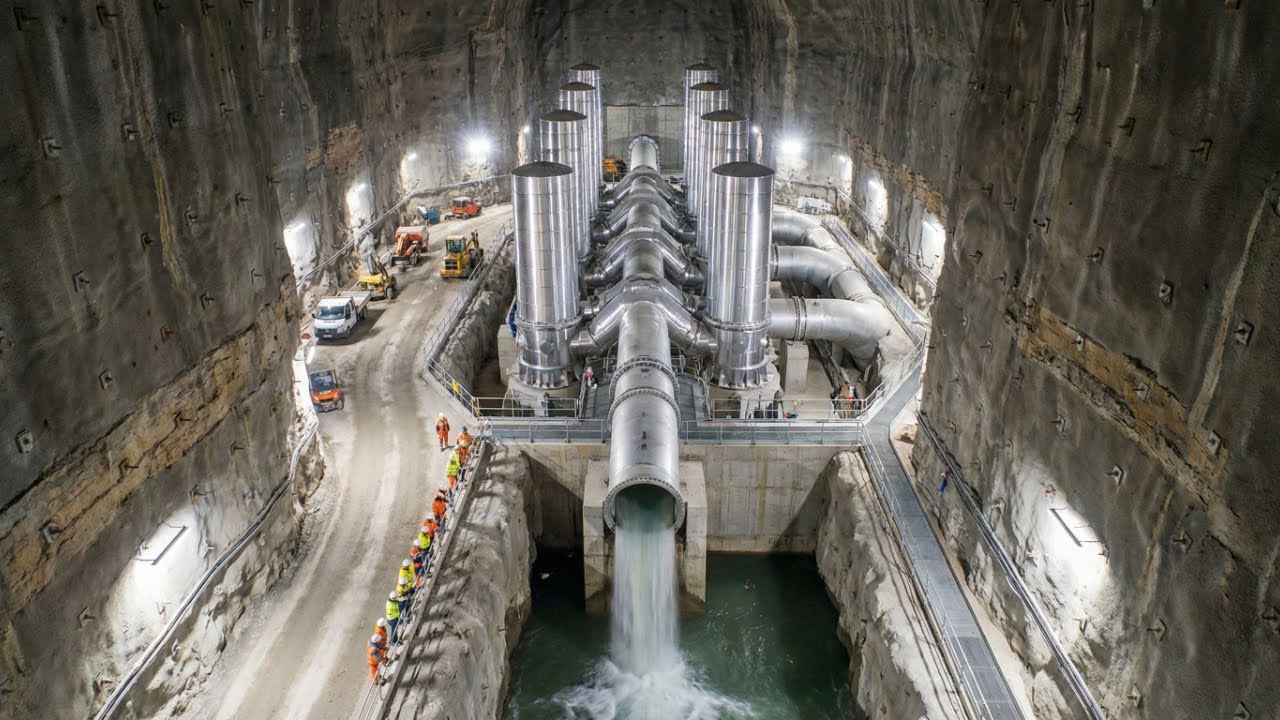

Canadian technology uses underground caves to store energy with compressed air and promises plants of up to 500 MW.
In 2024, while advancing with the Willow Rock Energy Storage Center project in California, the Canadian company Hydrostor reinforced a proposal that aims to transform deep hard rock caves into industrial-scale energy storage infrastructure. The technology, called Advanced Compressed Air Energy Storage (A-CAES), builds on the traditional concept of compressed air storage but adds important changes: capturing the heat generated during compression and storing the air in underground cavities constructed in hard rock, which reduces dependence on salt caves and expands the possibilities for installation close to where the power grid needs support the most.
Unlike chemical batteries, this system uses compressed air, water, and thermal storage to store electricity and release it when demand increases. In practice, it functions like a kind of “underground lung”, capable of absorbing excess energy from the grid, maintaining the air under constant pressure in deep caves, and then releasing that energy on demand, without resorting to burning natural gas during the discharge phase, as occurs in conventional CAES plants.
How compressed air turns into electricity underground
The operation of the system is based on known physical principles, but applied on a much larger scale. When there is excess energy in the grid — especially from sources like solar and wind — this electricity is used to compress large volumes of air and store them in underground caves.
-
Brazilian scientists are simultaneously advancing two research projects on clean hydrogen and driving solutions that could transform the energy matrix, enhance industrial competitiveness, and accelerate large-scale emission reduction targets.

-
Advancement in renewable energy: A R$ 150 million project launched by Petrobras and Finep aims to create state-of-the-art electrolyzers for green hydrogen, strengthening national research and preparing Brazil to compete in a billion-dollar energy market.
-
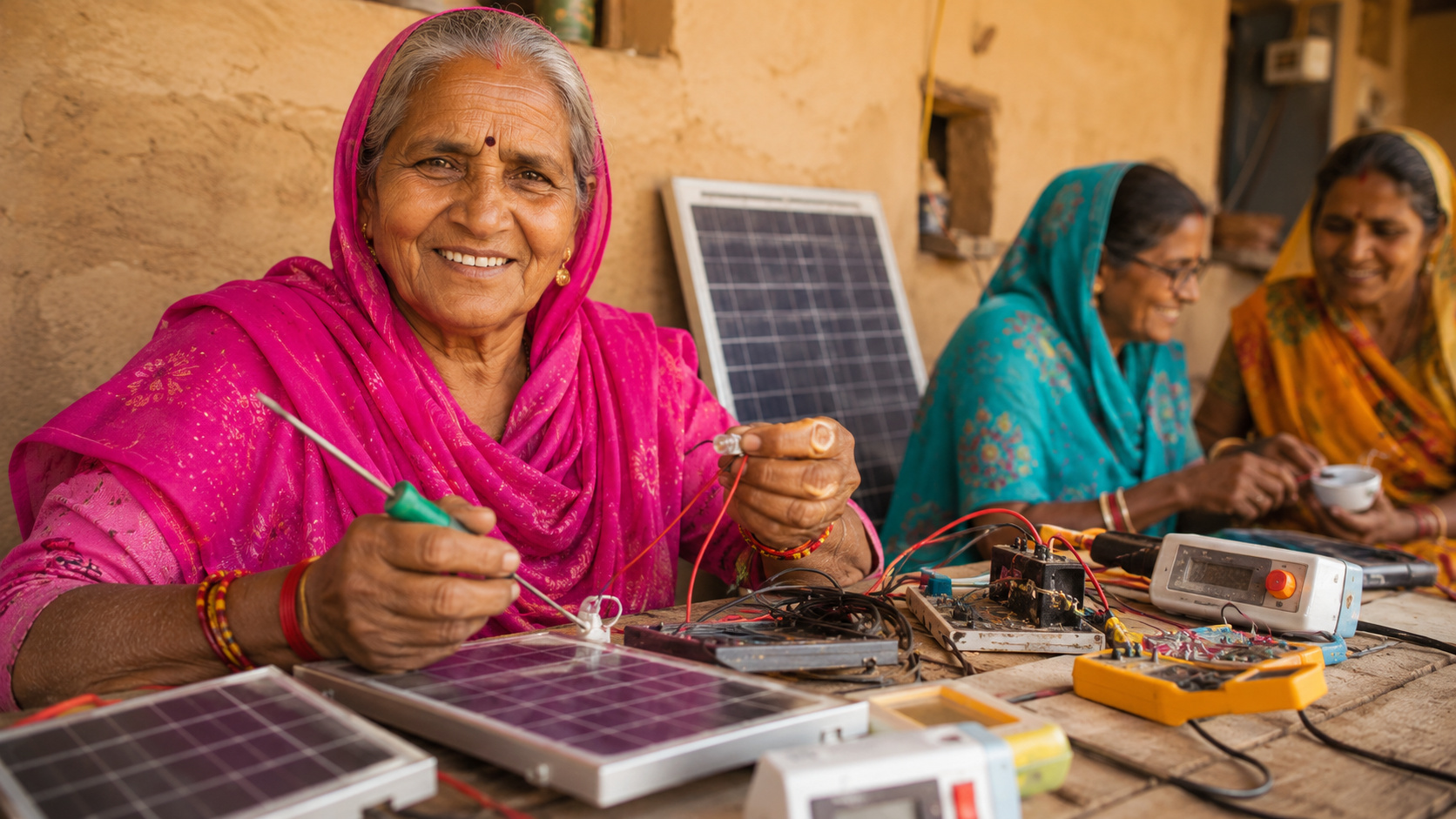
Illiterate or semi-literate grandmothers were trained to repair solar systems, open rural workshops, and light up homes that still depended on kerosene.
-
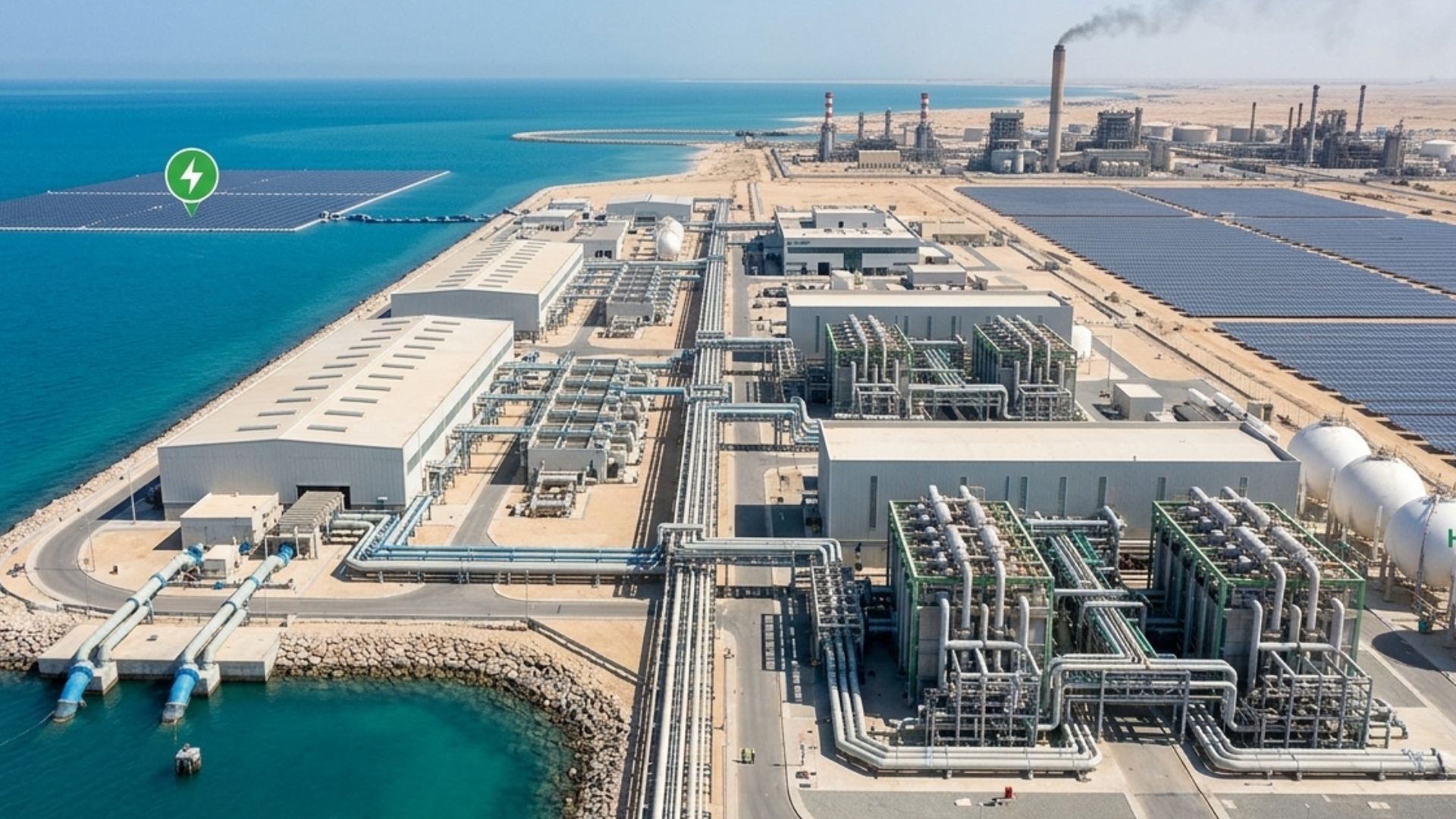
The world has bet on green hydrogen as the fuel of the future, but now faces the side effect: producing 1 kilogram requires about 9 liters of ultrapure water, and the largest projects on the planet are precisely in the driest regions of the Earth, where water is already scarce for people.




These caves can be located hundreds of meters deep, where the natural pressure of the environment contributes to the efficiency of storage.
When the grid needs energy, the compressed air is released, heated, and expanded, moving turbines that generate electricity. This cycle can be repeated countless times without significant degradation of the system, unlike chemical batteries that lose capacity over time.
Projects reach 500 MW with long-duration storage
One of the most impressive aspects of the technology is its scale. Projects developed by Hydrostor indicate systems with a capacity of up to:
- 500 megawatts (MW) of power
- storage for more than 8 continuous hours
This positions the technology as a solution for grid-level energy storage, comparable to large power plants.
In practice, an installation of this size can supply hundreds of thousands of homes during periods of low renewable generation.
Geography-independent system expands global application
Unlike pumped hydroelectric plants, which require specific terrain with elevation changes and large reservoirs, Hydrostor’s model uses caves excavated in rock, significantly expanding deployment possibilities.
This allows countries and regions without mountains or natural reservoirs to implement large-scale energy storage. The choice of location becomes more dependent on the geology of the underground than on the surface topography.
Thermal integration improves system efficiency
One of the important advancements over older CAES versions is thermal integration. During air compression, the system generates heat. Instead of dissipating this energy, modern technology stores this heat and reuses it during air expansion.
This reuse significantly improves the efficiency of the energy cycle, reducing losses and making the system more competitive. Another strategic differentiator of the technology is the independence from critical materials.
The system basically uses:
- atmospheric air
- subterranean rock
- conventional turbines and industrial equipment
This eliminates the need for metals like lithium, cobalt, and nickel, whose extraction involves environmental and geopolitical challenges. Additionally, the system’s lifespan can reach decades, with less degradation over time.
The expansion of renewable sources has brought a structural problem: variability. The production of solar and wind energy depends on natural conditions that do not always align with consumption.
Large-scale storage thus becomes essential to balance the electrical grid. Systems like underground CAES operate precisely at this point, storing energy when there is a surplus and releasing it when there is a shortage.
Comparison with other large-scale storage solutions
In the global scenario, different technologies compete for space in energy storage:
- lithium-ion batteries: high efficiency, but limited duration
- pumped hydroelectric: large capacity, but dependent on geography
- hydrogen: promising, but with low current efficiency
Underground CAES positions itself as an intermediate solution, with:
- large capacity
- prolonged storage
- potentially lower cost at scale
Global expansion indicates growing interest in the technology
With the pressure for decarbonization and increased participation of renewable energies, countries and companies have been seeking robust solutions for storage. Hydrostor has already announced projects in different regions, indicating that the technology may scale in the coming years.
The interest is driven by the need to ensure energy stability without relying on fossil fuels. One of the most interesting changes brought by this technology is the use of the underground as energy infrastructure.

Caves that were previously unused are now functioning as energy reservoirs, creating a new invisible layer of infrastructure. This model can transform the way cities and countries plan their energy systems.
Debate: can storing energy underground be the key to 100% renewable electric grids?
With the evolution of large-scale storage technologies, a central question arises: is it possible to sustain an electric grid based almost entirely on renewable sources without solutions like underground CAES?
The answer is still in development, but the advancement of systems that use the underground itself as a battery indicates that heavy engineering may play a decisive role in the global energy transition.
And you, do you believe that this type of “invisible plant” underground could become standard in the future of energy?