





 Portuguese
  English
  Spanish
  4 min of reading
  0 comments


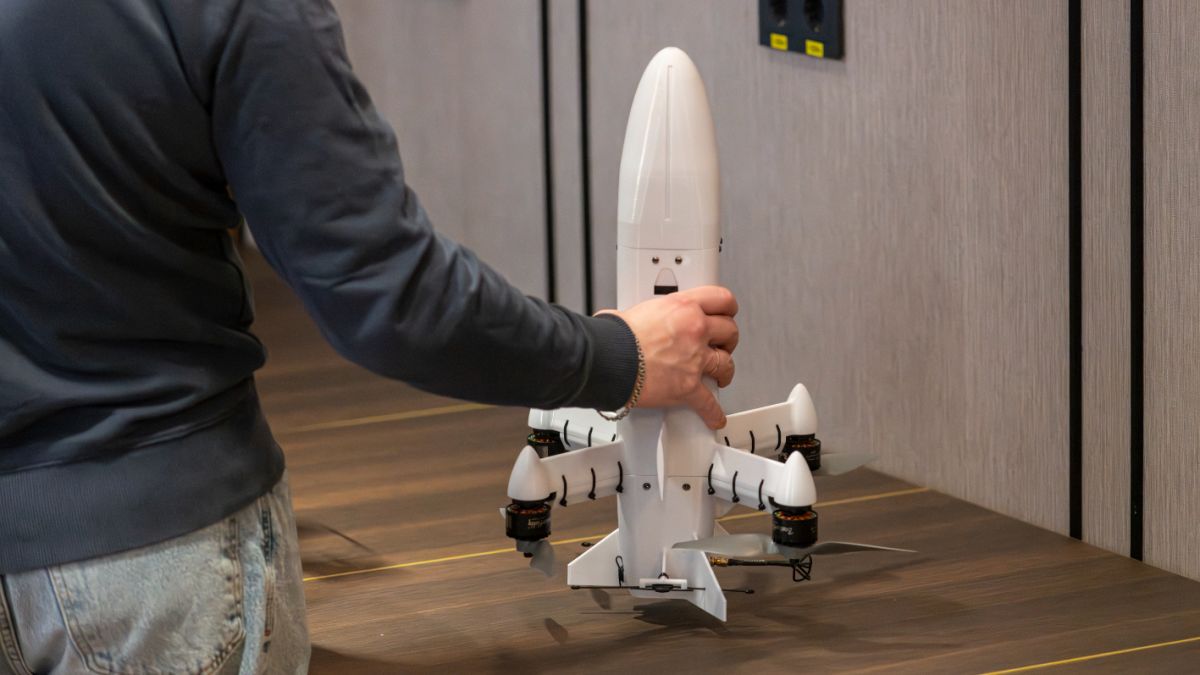
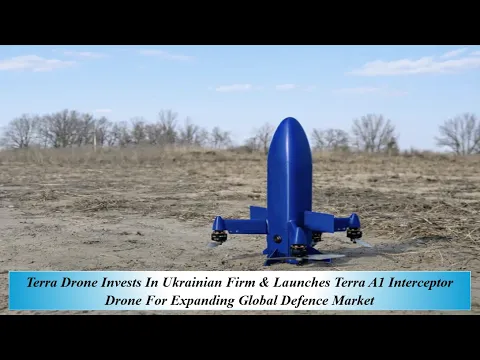
Drone interceptor Terra A1 costs $2,526 and can replace million-dollar missiles in defense against UAV swarms.
On April 8, 2026, a Reuters report highlighted a new type of weapon that could change the logic of contemporary air defense: the Terra A1 interceptor, launched by the Japanese company Terra Drone in partnership with the Ukrainian Amazing Drones. According to Terra Drone itself, the system was developed to counter the rise of low-cost attack drones in war scenarios, especially models like the Shahed, which have been pressuring traditional defense systems.
The key feature of the Terra A1 is its extremely low price for this type of mission, around $2,526 per unit, a value much lower than that of conventional missile-based interceptors. The proposal, according to Reuters and the manufacturer, is to provide a cheaper and scalable response to the saturation caused by drone swarms, with a range of up to 32 kilometers and a maximum speed of 300 km/h.
This model emerges at a time when several countries face an increasingly evident strategic dilemma: using million-dollar missiles to take down drones that cost only a fraction of that. The formulation, however, requires an important adjustment: although the Terra A1 has already been presented to the international market, Reuters reported that the system had not yet been tested in combat and was expected to undergo trials with Ukrainian forces in the following months.
-
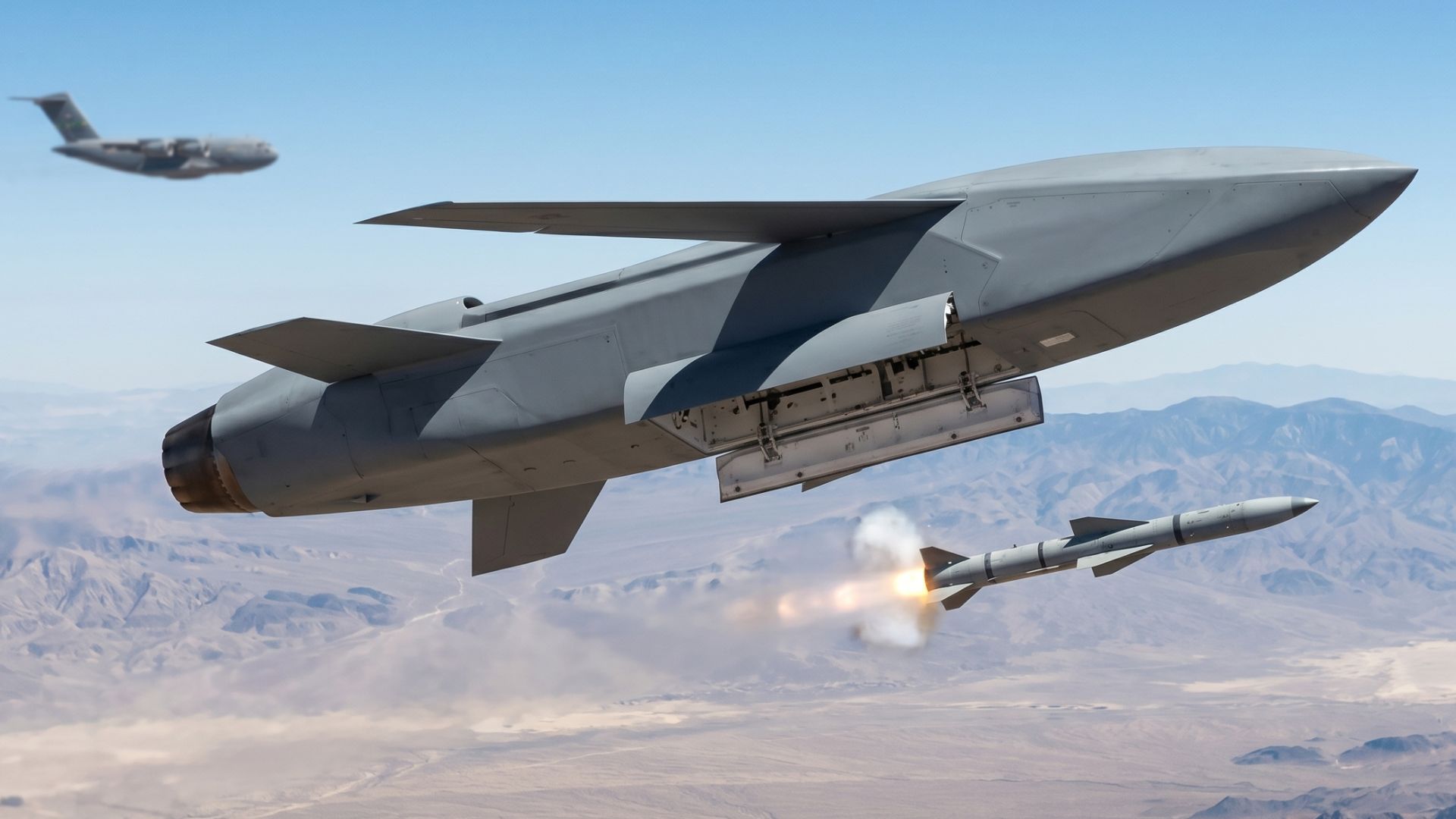
The drone that emerges from under a fighter jet and becomes a hunter in the sky: X-68A LongShot will be launched by an F-15, will fly ahead of the pilots, and aims to change aerial combat by transforming manned aircraft into mother platforms with much greater range.

-
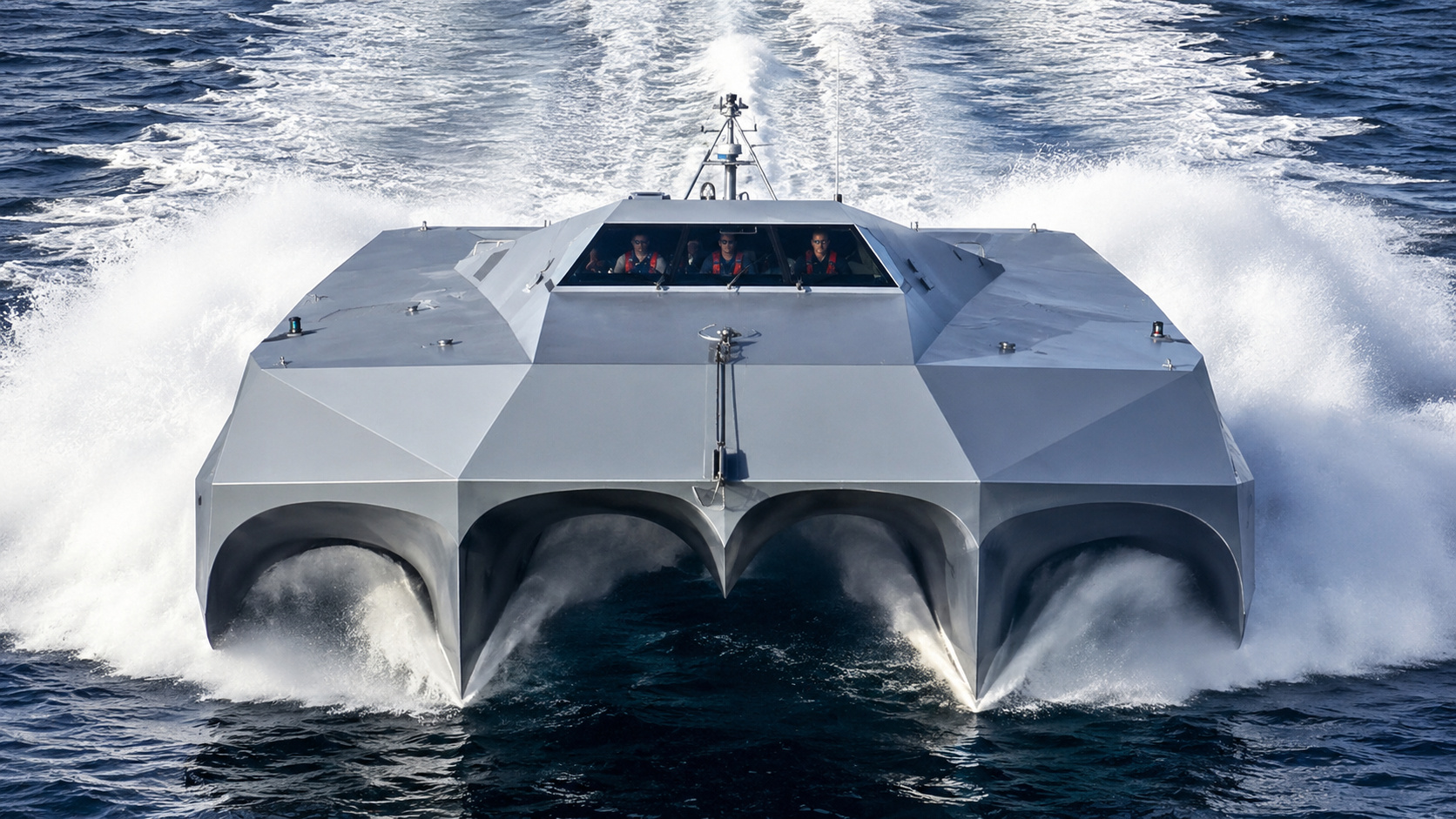
The “naval Batmobile” with 5 hulls that the US Navy tested in shallow waters: M80 Stiletto had a pentamaran shape, 88 feet in length, a draft of only 2.5 feet, and a speed above 50 knots to prove a new generation of stealth littoral vessels.

-
Brazil wants to boost its firepower and is negotiating for 20 more Gripen fighters to bring the Air Force fleet to 56 aircraft, a race against time in the face of a squadron that is getting older, more expensive, and harder to maintain each year.
-
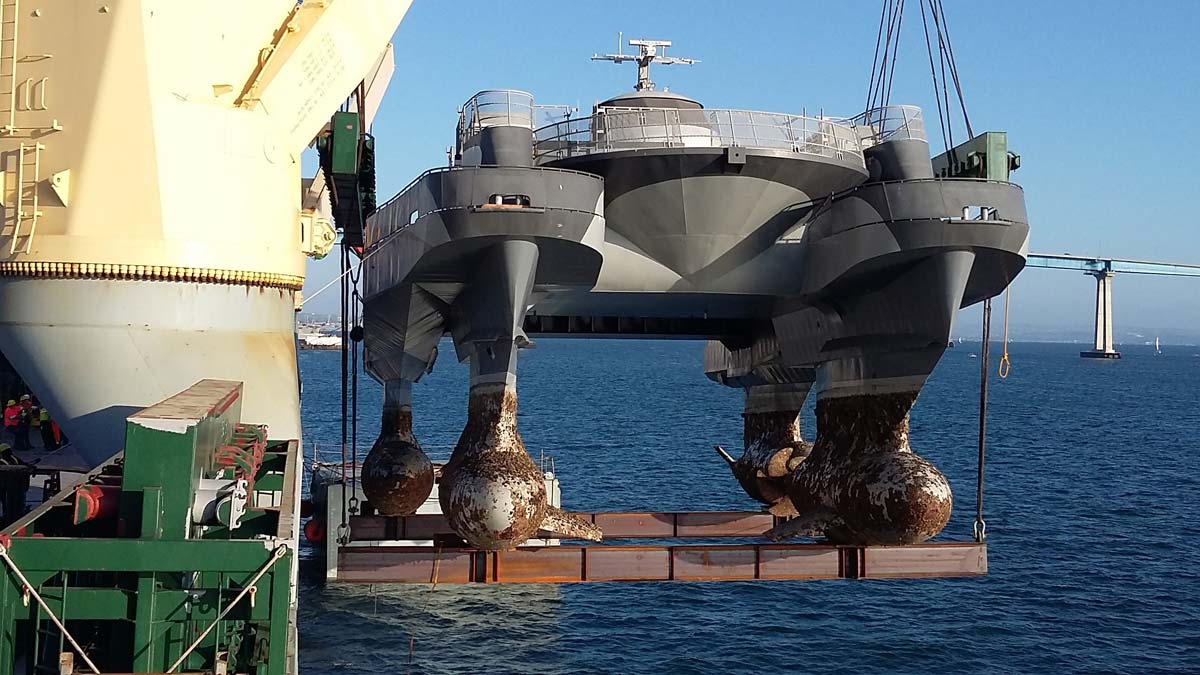
The “naval UFO” with four submerged hulls that Lockheed Martin launched into the sea: Sea Slice was 105 feet long, 55 feet wide, and had a SWATH hull so strange that it seemed to float on invisible legs to challenge the waves and reinvent ship stability.


Cost difference reveals imbalance of modern warfare
One of the central points of this innovation lies in the cost-benefit relationship. While the Terra A1 costs just over two thousand dollars, traditional air defense systems use missiles that can reach $4 million per unit, as seen in platforms like the MIM-104 Patriot.
This difference creates an evident operational problem:
- cheap drones attack in large numbers
- defense systems spend millions to intercept each unit
This model is economically unsustainable in prolonged conflict scenarios, especially when attacks occur en masse. The Terra A1 was developed precisely to balance this equation.
System is designed to combat drone swarms
The concept behind the Terra A1 is not just to intercept a single target, but to operate in scenarios where multiple drones are launched simultaneously.

This approach responds to a recent trend observed in contemporary conflicts, where swarms of drones are used to:
- saturate defenses
- confuse radars
- increase the chance of penetration
The interceptor was designed to operate quickly and agilely, allowing for large-scale responses.
Light and modular architecture allows accelerated production
Another relevant factor is the structure of the system. The Terra A1 was conceived with a focus on: rapid production, low manufacturing cost, and ease of maintenance.
This approach contrasts with traditional systems, which require complex infrastructure and long production cycles. Modularity also allows adaptations for different types of missions, enhancing operational flexibility.
According to Reuters, Gulf countries have begun to evaluate the use of the Terra A1 as an alternative to traditional air defense systems.
The interest is directly linked to the increase in drone attacks in the region, especially in scenarios where:
- there is a need for rapid response
- the volume of threats is high
- operational costs need to be reduced
This movement indicates that the technology is already beginning to gain traction in the international market.
Paradigm shift in air defense gains strength with new systems
The emergence of low-cost interceptors is part of a broader transformation in modern warfare. Historically, air defense has been built on:
- sophisticated systems
- high cost per interception
- focus on high-value targets

With the popularization of drones, this model began to be pressured. New solutions, such as the Terra A1, indicate a paradigm shift, where:
- cost becomes a central factor
- scale becomes essential
- response speed gains priority
Technology reflects adaptation to asymmetric wars
Recent conflicts show that simple and cheap technologies can have significant impacts. Adapted commercial drones, for example, have been used for reconnaissance, attack, and sabotage.
In this context, systems like the Terra A1 represent a direct response to this new reality, offering a solution compatible with the profile of threats.
Joint development shows international integration in the defense industry
The partnership between companies from Japan and Ukraine also highlights an important aspect of the sector:
- international collaboration
- exchange of expertise
- acceleration of development

Ukraine, for example, has been accumulating practical experience in the use of drones in conflict, while Japanese companies contribute with technology and engineering. This combination has allowed the emergence of solutions more adapted to current needs.
System can influence future military investments
The advancement of low-cost interceptors can directly impact defense investment decisions. Governments and armed forces may begin to prioritize:
- scalable solutions
- cheaper systems
- adaptable technologies
This may reduce dependence on extremely expensive and complex systems.
Evolution of war with drones raises a central question about the future of air defense
With the exponential growth of drone usage and the arrival of low-cost interceptors, a fundamental question arises for the military sector: will traditional air defense systems continue to dominate the battlefield or will they be progressively replaced by simpler, cheaper, and scalable solutions?
The answer to this question could define not only the future of wars but also the direction of the global defense industry in the coming years.








-

1 person reacted to this.