





 Portuguese
  English
  Spanish
  3 min of reading
  4 comments


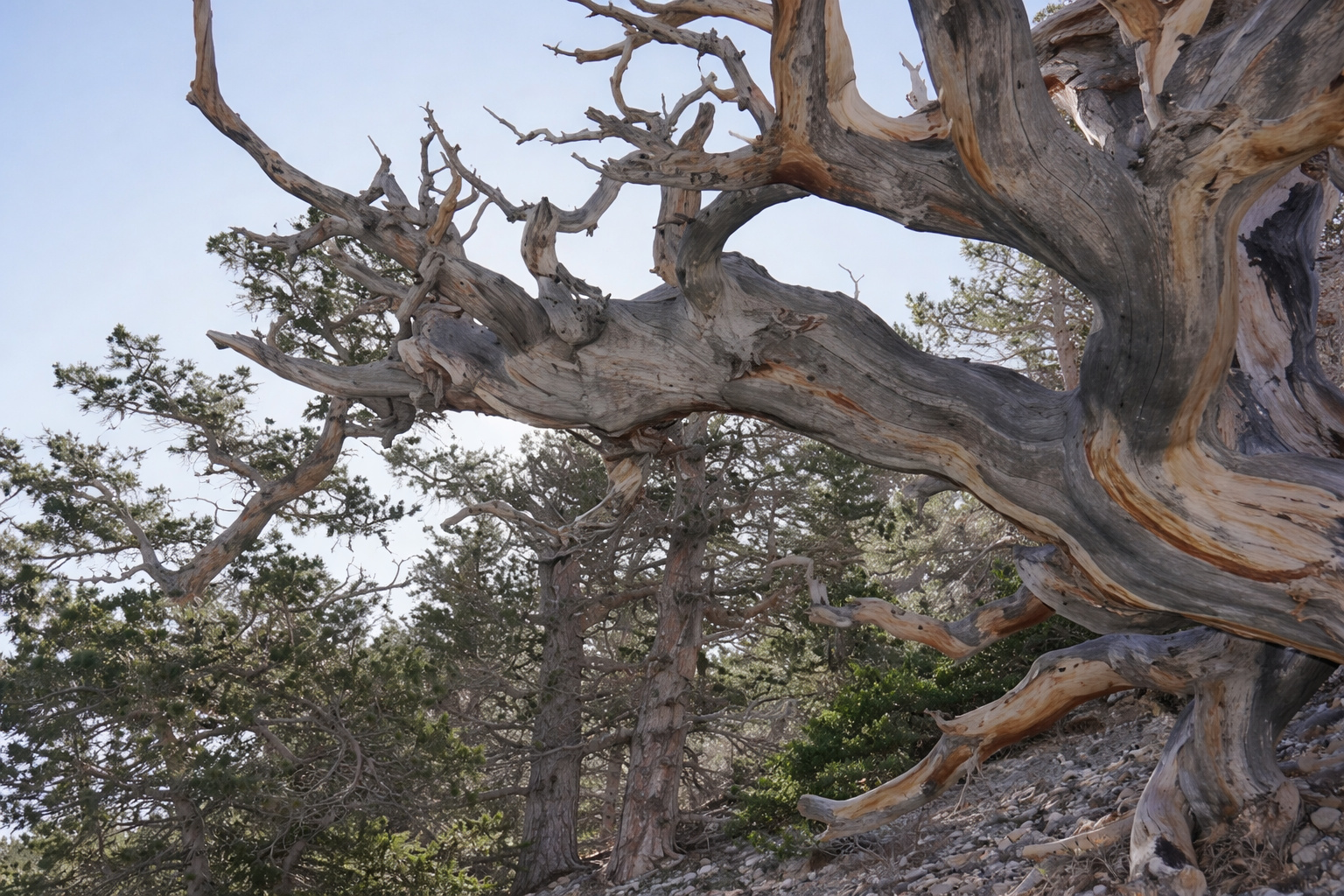


The felling of one of the oldest trees on the planet reveals how science has evolved and changed conservation protocols over the decades
A significant environmental impact scientific episode was recorded in 1964, in the United States, when a millennia-old tree was felled during academic research.
The tree known as Prometheus, belonging to the Bristlecone Pine (Pinus longaeva) species, was cut down in the state of Nevada after official authorization from the United States Forest Service.
The researcher Donald R. Currey, then a graduate student, conducted the study with the aim of understanding climatic variations throughout history through the analysis of ancient tree growth.
The investigation sought more accurate data on environmental changes naturally recorded in the trunks over thousands of years.
This episode became a landmark, as it opened the floor for important debates on scientific ethics and environmental preservation.
Location and historical relevance of the millennia-old tree
The Prometheus tree was located on Wheeler Peak, in Nevada, a mountainous area known for housing some of the oldest trees on the planet.
The Pinus longaeva species stands out for its extreme longevity, capable of surviving for millennia in adverse conditions.
Prometheus was identified as one of the oldest non-clonal trees ever recorded, which increased its scientific value.
Its age was determined through the analysis of growth rings, a traditional technique of dendrochronology.
This natural record allowed for the reconstruction of climatic patterns over thousands of years.
Scientific decision and cutting process
During the research, Donald R. Currey faced difficulties in extracting samples without damaging the tree’s structure.
After several unsuccessful attempts, he requested authorization from the United States Forest Service to perform a complete cut.
The permission was granted, and the tree was felled to obtain a full cross-section.
The goal was to gather more detailed data on historical climatic events, including the so-called Little Ice Age.
The decision, although technical, had significant consequences in the environmental field.
-
Can buying a small farm become a trap? When the dream of weekend relaxation turns into weeds, maintenance, bad roads, and endless expenses.

-
Far from football, São Paulo idol and former national team player becomes a wine producer in Italy, transforms the nickname “Prophet” into his own brand, and now runs a winery, restaurant, and hotel in Piedmont.

-
Train of up to 111 tons leaves China for Brazil, crosses almost 20,000 km in up to 70 days by ship, and arrives in São Paulo in such a tight operation that a truck even had to deflate its tires to pass under a viaduct.
-
A small town with 800 inhabitants in the interior of the United States is giving away free land, with water, electricity, and paved streets, and even offers a cash allowance for families with children, all to attract residents and escape the depopulation threatening rural villages.





Discovery of age and scientific importance
After the cut made in 1964, the analysis revealed that Prometheus was approximately 4,862 years old.
At that moment, it was considered the oldest known tree in the world.
This data reinforced the scientific value of the study, as it provided an extensive timeline of climate variations.
Subsequently, researchers identified another specimen of the same species in the region that was about 5,065 years old, surpassing the previous record.
Still, Prometheus remained an important symbol in the history of environmental science.
Environmental impacts and changes in scientific protocols
The felling of Prometheus generated strong repercussions among scientists and environmentalists.
The case began to be discussed as an example of the conflict between scientific advancement and nature conservation.
From this episode, new guidelines began to be adopted to protect extremely old trees.
Research protocols were revised to avoid irreversible interventions in rare species.
This movement marked an important change in how science began to deal with natural heritage.
Environmental awareness and historical legacy
The episode also contributed to the creation of the Great Basin National Park, aimed at protecting the bristlecone pine forests.
Over more than 60 years since the incident, awareness of the importance of millennia-old trees has significantly increased.
Society has come to value the preservation of unique flora more, recognizing its historical and environmental role.
Scientific institutions have adopted more responsible practices, balancing research and conservation.
This case continues to serve as a reference for decisions involving natural resources of inestimable value.
To what extent should scientific advancement occur when it involves the possible loss of natural heritage that took thousands of years to exist?







Bloody Chootiyaas. Instead of respecting the 2000+ Years old tree and making arrangements to help it live longer, these idiots cut it off in the name of a stupid science. What a bunch of lousy morons.
U did research on climate by destroying it! The tree could have lived longer.
Forget these fools
The research is done, you have climate information, no more trees need be cut.