





 Portuguese
  English
  Spanish
  4 min of reading
  3 comments


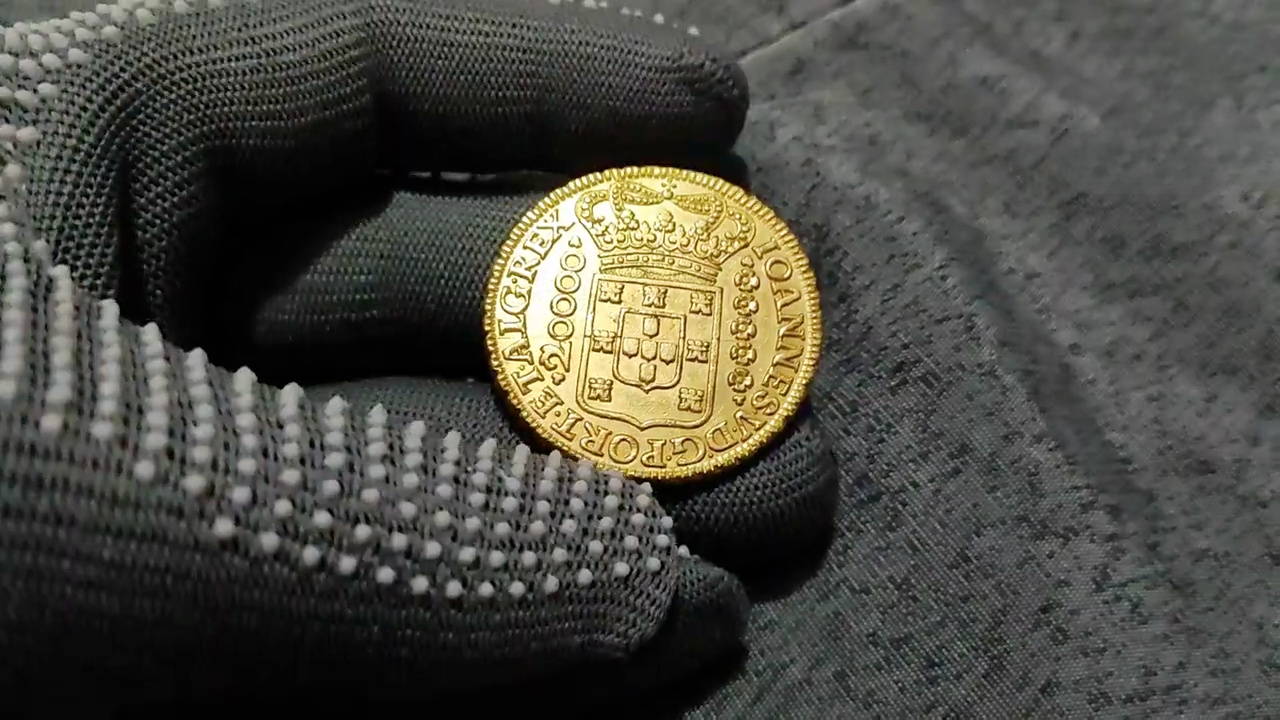


Meet The Rare And Coveted Dobrao Of 20,000 Reis: With 53 G Of Pure Gold And Rare Variants, The Treasure Born From The Heart Of Brazilian Mines Reveals Why It Is One Of The Most Valuable Coins Of Colonial Brazil And In The Collectors Market.
Brazil has witnessed many stories of wealth, but few are as impressive as that of the dobrao of 20,000 reis. Born at the peak of the gold cycle in Minas Gerais, it was not just money: it was power, it was diplomacy, and it was the business card of the largest gold-producing province on the planet in the 18th century.
With more than 53 grams of pure gold, luxurious finishing, and circulation restricted to colonial elites, this coin has crossed nearly 300 years to become one of the most sought-after objects in international numismatics.
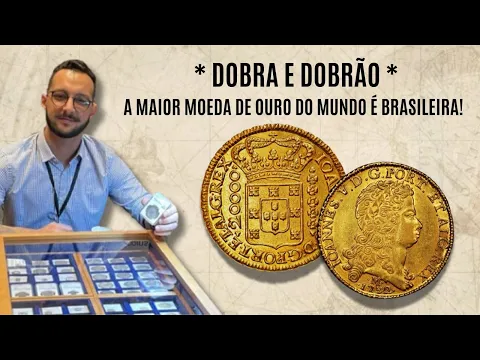

A Treasure Born From The Heart Of Brazilian Mines
In the 18th century, Brazil was experiencing the peak of gold extraction in its history. Vila Rica, now Ouro Preto, was the nerve center of all this wealth. It was in this context that Dom João V authorized, in 1724, the minting of a coin that would represent the economic peak of the colony: the dobrao of 20,000 reis.
-
Goodbye iron: new technology from Xiaomi promises to revolutionize the way we iron clothes with 500 kPa steam, continuous flow of 120 g/min, heating in 65 seconds, and six smart modes for different fabrics.

-
Rio Pardo, the most mysterious city in Rio Grande do Sul: untouched Pampas castle, the missing treasure of the Devil Boy, bride’s saint, invisible tunnels, and a 200-year curse today.

-
China retires the J-7 fighter after years of military protection and can now transform military items into drones, following more than 60 years of operation of the J-7, derived from the MiG-21, with thousands of units produced and strategic use in the PLAAF and PLANAF.

-
Volunteers are sought to live in the mountains for a month: a study pays people to stay at 2,500 meters, with 24-hour monitoring of sleep, metabolism, and blood pressure.


The piece impressed by its weight: 53.78 grams of gold with a fineness of 917 thousandths, a very high standard even for Europe. The diameter of almost 38 millimeters and the characteristic shine of the noble alloy made it an object of immediate admiration. On one side, the coat of arms of the Portuguese crown appeared; on the other, the traditional cross of the Order of Christ, with the letters “M” indicating its Minas origin. This luxurious design symbolized not only wealth but also authority.
The nominal value was gigantic. To give you an idea, 20,000 reis were well above the average salary of the time, serving mainly for large transactions, purchasing properties, commercial agreements, and Crown operations. It was a coin reserved for the powerful.
Years Of Issue, Rare Variants And The Search For Perfect Examples
The dobrao was minted for a very short period: only between 1724 and 1727. This already makes any example rare by nature. However, within this interval, there are variants so difficult to find that they practically do not appear on the market.
The most sought-after date is the 1724-M, considered the rarest in the series. Collectors and investors often pay amounts well above average when the piece is in a high state of preservation.
Another curiosity is the variant known among numismatists as “MMMM”, meaning the repetition of the letter “M” in the four quadrants of the cross. In some pieces, this marking is so clear that it seems like a signature of the Mint of Vila Rica. These details cause some editions to reach values that surpass even prestigious Roman or medieval coins.
There are also records of pieces with triple strikes, an extremely rare minting error. In common coins, this would already be a rarity; in a dobrao, it is practically a museum artifact. This type of error further increases collectors’ interest.
From Minas Gold To The Hammers Of Great International Auctions
What once circulated as a symbol of colonial wealth is now sought after by museums, private collectors, and funds that invest in historical artifacts. And here the dobrao shines brightly: it simply skyrockets in value when it appears in high states of preservation.
In recent years, some examples have broken records:
A 1725-M graded as MS63 by NGC fetched US$ 22,000 at a Heritage auction in the United States. Another example of 1724-M, in MS60, reached US$ 15,000 in 2025.
Even pieces with aggressive cleaning, classified as “AU Details,” easily go for over US$ 11,000.
In Europe, 1727-M dobraos reached bids over 6,000 euros, while in Brazil, editions like the 1727 “MMMM” can exceed R$ 38,000 in Superb condition.
It is important to remember that the intrinsic value of gold — about 1.58 troy ounces — represents only a part of this fortune. The largest portion of the price comes from historical value, rarity, and the very high level of preservation.
Examples with original luster, intact edges, and well-preserved details can be worth more than small gold bars.
Today, the dobrao of 20,000 reis is not just an ancient coin: it is an investment, a symbol of the Portuguese imperial era, and a physical reminder that Minas Gerais was once the financial heart of an empire.
Why This Coin Still Fascinates Today
The dobrao occupies a unique place in the history of Brazil and world numismatics. It represents the peak of the gold cycle, Portuguese colonial power, the influence of the Mint of Vila Rica, and the technical sophistication of 18th-century minting. At the same time, it serves as a reminder of how gold shaped the economy, culture, and even geopolitics of the Western world.
The combination of a high gold content, low mintage, rare variants, and limited circulation has created an object that transcends its metallurgical value. Each surviving dobrao is a fragment of an era when Brazil produced more gold than any other known region.
At auctions, the piece functions almost like a thermometer of history: the greater the global interest in colonial Brazil, the higher the value rises. This “metallic memory” continues to captivate collectors and researchers worldwide.
In the end, the dobrao of 20,000 reis is proof that some stories remain alive even after nearly three centuries.
If you liked this content, leave your comment and share it with someone who is also interested in history, numismatics, or curiosities about Brazil.









Tenho uma moeda de 1944, de tempo de Getúlio Vargas.
Alguém de interessa ?
Como eu, você está condenado à pena do Taleão do Numismata. Explico: Se está na sua mão, assim como está na minha, NÃO VALE NADA! Se valece não estaria em nossas mãos; estaria nas mãos de colecionadores numismatas. essa é a realidade que ninguém explica!