





 Portuguese
  English
  Spanish
  5 min of reading
  0 comments


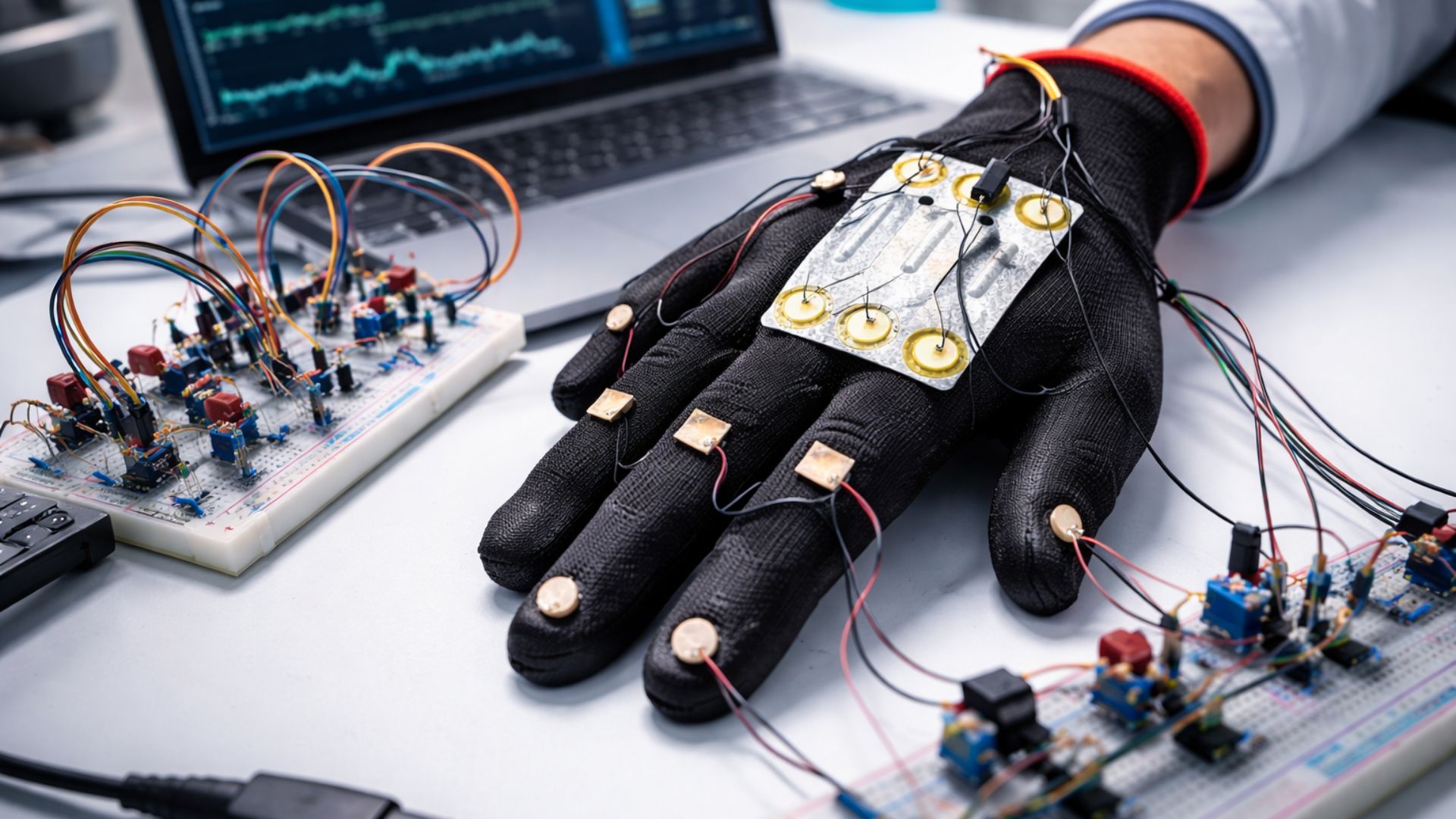
Advancement of UNB with support from FAPDF presents new technology capable of soothing Parkinson’s tremors, improving motor control, and increasing patients’ autonomy in their daily lives.
In the context of World Parkinson’s Day, celebrated on April 11, an initiative from UNB with support from FAPDF draws attention for presenting a new technology aimed at reducing Parkinson’s tremors. More than a technical advancement, it is a solution that seeks to restore autonomy and quality of life to patients.
The project was developed at the University of Brasília (UNB), with funding from the Foundation for Research Support of the Federal District (FAPDF), through the Public Call BIO Learning, linked to the FAPDF Learning Program of 2023. The proposal already shows relevant results in the laboratory and points to promising paths for practical application.
Coordinated by Professor Marcela Rodrigues Machado from the Department of Mechanical Engineering at the Faculty of Technology of UNB, the research brings together a multidisciplinary team dedicated to transforming scientific knowledge into real impact. The new technology arises precisely from the need to more efficiently face the challenges posed by Parkinson’s tremors.
-
Coca-Cola’s rival converts 8 diesel trucks into 100% electric vehicles to cover 480,000 km per year on routes in Brazil.

-
Large engineering project: with a capacity of 45,500 tons, the world’s largest rock-laying vessel is moving into the final phase of testing and commissioning.

-
Global monitoring warns that glaciers are rapidly diminishing and projects extreme losses of ice mass.

-
Largest uranium reserve discovered in the U.S. in a decade begins production with 2,791,175.76 kg.

Parkinson’s tremors go beyond the symptom and directly impact autonomy
Parkinson’s tremors are one of the most recognized signs of the disease, but their effects go far beyond the clinical aspect. They directly interfere with the ability to perform simple tasks, compromising patients’ independence.
Daily activities can become challenging, such as:
- Holding a glass or utensils
- Writing or typing
- Buttoning clothes or handling small objects
- Performing basic household tasks
These limitations affect not only functionality but also self-esteem and emotional well-being. In this scenario, initiatives like that of UNB, with support from FAPDF, gain relevance by proposing a new technology capable of acting on the manifestation of these involuntary movements.
By focusing on reducing Parkinson’s tremors, the research expands treatment possibilities and reinforces the importance of scientific innovation in facing neurological diseases.
How the new technology from UNB and FAPDF based on smart metamaterials works
The new technology developed by UNB with support from FAPDF is a wearable device designed to be used directly on the patient’s body. Its operation is based on smart metamaterials, structures designed to respond specifically to stimuli such as vibrations and movements.
These materials are already used in areas such as aerospace engineering and mechanical vibration control. In the case of Parkinson’s tremors, the device acts as a filter that identifies and reduces the characteristic frequencies of involuntary movements.
In practice, this means that the system can:
- Reduce the intensity of tremors without blocking voluntary movements
- Adapt to different vibration patterns over time
- Provide a more precise and personalized response
Another differentiator is the use of integrated sensors that record the patient’s movement patterns. This data can be used to monitor the disease’s progression and support more accurate clinical decisions.
Additionally, the technology uses piezoelectric materials capable of converting movement into electrical energy. This allows the tremor itself to partially power the device, increasing its energy efficiency.

Practical differences between the new technology and traditional solutions
Existing solutions for Parkinson’s tremors often have significant limitations. Traditional orthoses, for example, use rigid structures that restrict movements and do not keep up with the disease’s progression.
The proposal from UNB and FAPDF with this new technology is to offer a more modern, adaptable, and functional alternative. Instead of limiting movement, the device acts selectively, reducing only the unwanted tremors.
Among the main differentiators are:
- Light and comfortable structure for continuous use
- Ability to adapt to the patient’s individual patterns
- Constant monitoring of movements
- Less need for replacement over time
Laboratory tests already indicate promising results, with a significant reduction in the intensity of vibrations, even in low-frequency ranges — one of the biggest challenges in controlling Parkinson’s tremors.
Direct impact on the routine and quality of life of patients
The reduction of Parkinson’s tremors can lead to profound changes in patients’ lives. With greater motor control, activities that were previously difficult can be performed with more safety and autonomy.
The new technology developed by UNB with support from FAPDF aims to restore this independence. By improving movement stability, the device contributes to a more functional and less limited routine.
Potential benefits include:
- Greater safety in performing daily tasks
- Reduction of dependence on others
- Improvement in confidence and self-esteem
- Increased quality of life
More than a technological advancement, it is a patient-centered solution. The proposal goes beyond controlling symptoms, seeking to directly impact the well-being and dignity of those living with the disease.
FAPDF investment boosts applied research and innovation at UNB
The support from FAPDF has been essential in transforming UNB’s research into a concrete solution. With an investment of R$ 1 million, the project has advanced from theory to practice, structuring a laboratory, acquiring equipment, and forming a qualified team.
Currently, the new technology is at TRL 4, which corresponds to the laboratory validation phase. The goal is to advance to levels 5 and 6, which involve more robust testing and closer to real application.
In addition to technical advancements, the project also contributes to talent development. Undergraduate and graduate students actively participate in the development, strengthening the innovation ecosystem.
This investment model reinforces the strategic role of FAPDF in promoting science and technology, especially in projects with the potential for direct impact on society.
Path to clinical application and expectations for the future
With positive results already observed, UNB and FAPDF are moving on to the next stages of developing the new technology. The focus now is on improving prototypes and expanding testing.
Partnerships with health institutions and technology-based companies are also planned. These collaborations will be essential to enable large-scale production and clinical validation of the device.
Among the next steps are:
- Testing in environments closer to clinical reality
- Improvement of design and usability
- Partnerships for technology transfer
- Planning for large-scale production
The expectation is that, in the future, the solution will be available not only in the Federal District but throughout Brazil. This could represent a significant advancement in the treatment of Parkinson’s tremors, increasing access to innovative technologies.
What this advancement reveals about the future of Parkinson’s treatment
The initiative from UNB, with support from FAPDF, shows how the combination of science, investment, and innovation can generate concrete solutions to complex challenges. The new technology represents an important step in the search for more effective treatments for Parkinson’s tremors.
By integrating engineering, health, and technology, the project points to a future where smart devices will play an increasingly relevant role in the care of neurological diseases.
If the next tests confirm the initial results, this innovation could become a reference in the sector, benefiting thousands of patients and reinforcing the prominence of UNB and FAPDF in the national scientific landscape.






Seja o primeiro a reagir!