Archaeologist Calliope Limnios-Papakosta and her Greek mission spent about 20 years digging below a waterlogged park to reach giant limestone foundations that an Egyptian committee now says may belong to a lost Alexandria royal tomb built by Ptolemy IV Philopator.
Egypt’s Ministry of Tourism and Antiquities presented the find on November 24, 2026, according to Daily News Egypt, which reported the ministry’s statement on the excavation in the Shallalat Gardens.
The work is led by the Hellenic Institute for the Research of Alexandrian Civilization, known as HRIAC. Its director’s first name appears as both Kalliopi and Calliope, and her surname as Limnios-Papakosta or Limneos-Papakosta, depending on the outlet.
What the diggers actually found
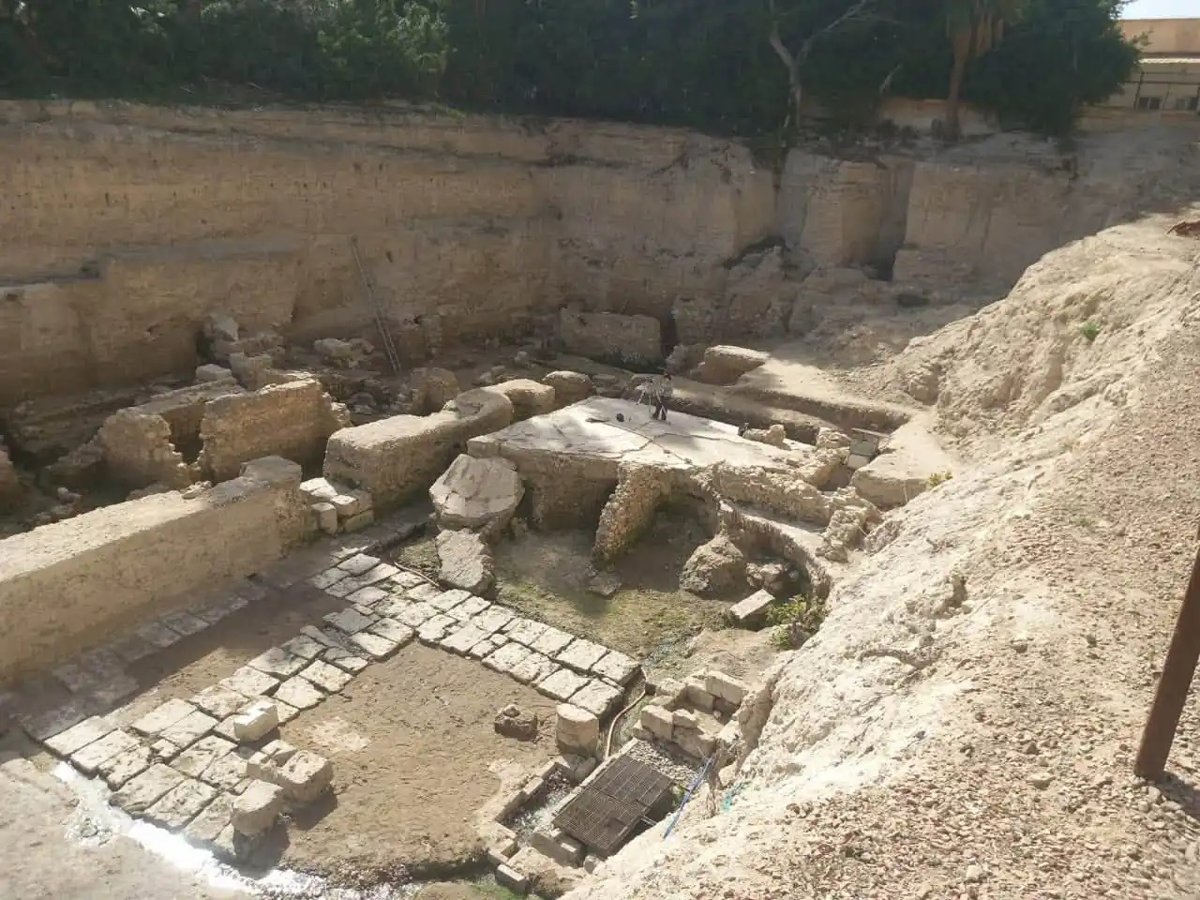
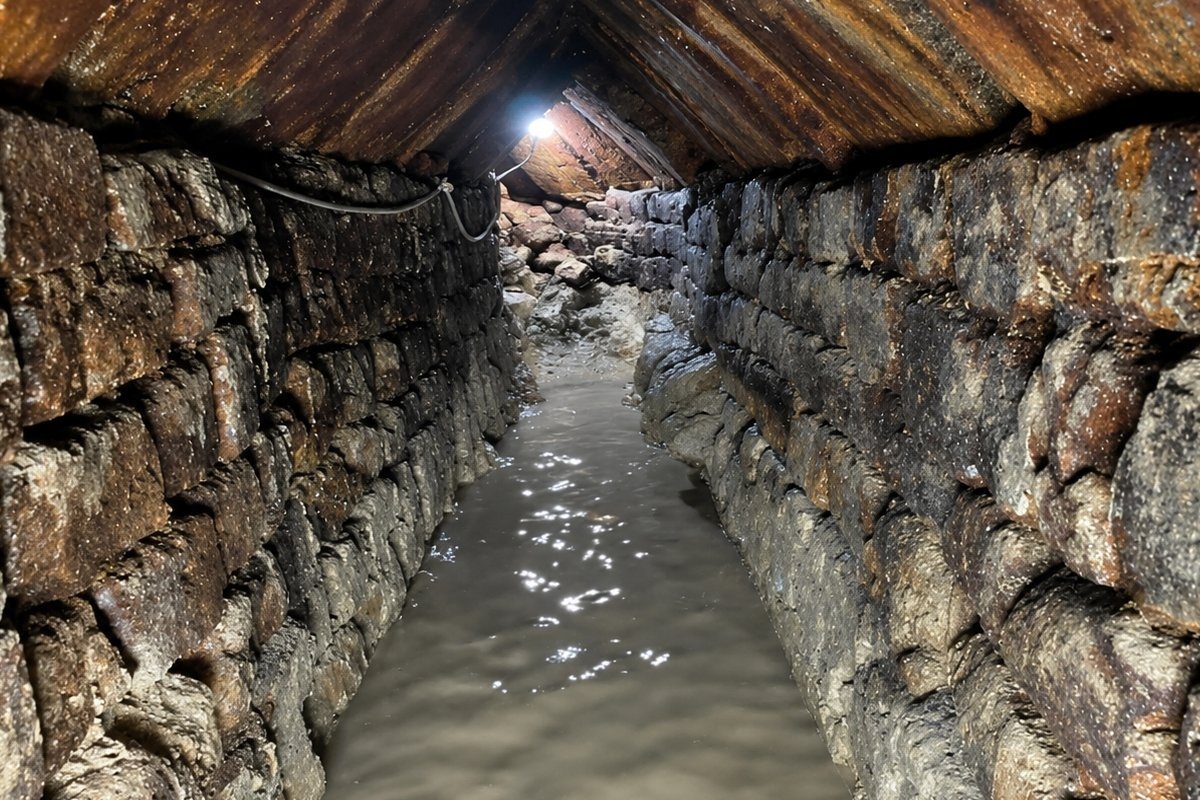
The excavation revealed the foundations of a large limestone structure surrounded by walls, plus a tunnel that runs northward beneath the building, the ministry said in the statement carried by Daily News Egypt and HeritageDaily.
-
Unitree launches UNI-DOGGIE, a collectible robot dog with 12 joint motors, 19 kg weight, snout-mounted camera, speed of 2 m/s, and price of 43,900 yuan

-
Briggs & Stratton launches SimpliPHI 16, a 16-kWh home battery with LFP chemistry and expansion to 512 kWh, now available for preorder for extended power during outages
-
Differ Power unveils 9-in-1 heat pump with built-in 6 kW hybrid inverter and support for 7.68–15.36 kWh LFP batteries for solar-powered homes in Europe
-
Amflow launches UE Carbon and UE Carbon Pro urban e-bikes featuring Avinox motor, 600 Wh battery, up to 132 km range, priced at $3,499 and $3,899



According to the committee that inspected the site, the square plan of the foundations and their dimensions indicate that they once carried a large and tall building, standing inside the Royal Quarter of the ancient city.
The mission has been working in the gardens for around 20 years, with funding from the Moheb Kassabgui Foundation and the company Reliance Egypt, according to the ministry’s account.
A committee called in by the minister
After receiving the mission’s report, Minister of Tourism and Antiquities Sherif Fathy ordered a specialized committee led by Ayman Ashmawy, head of the central administration for Lower Egypt, Sinai and North Coast antiquities at the Supreme Council of Antiquities.
The group included professors of Greek and Roman history and archaeology from Alexandria and Tanta universities. Its members visited the excavation, examined the remains and sent their findings to Hisham El-Leithy, secretary-general of the Supreme Council of Antiquities.
El-Leithy said the on-site inspection confirmed the importance of the location, especially because it sits inside the Royal Quarter, and that the find opens new lines of research into royal buildings of the Ptolemaic period.
Why a tomb is on the table
The committee said the building’s architectural features raise the possibility of a funerary use. If that is confirmed, it could be the royal tomb founded by Ptolemy IV Philopator, who ruled from 221 to 204 BC, as ancient writers describe.
Ashmawy stressed that this is a preliminary hypothesis still under study. He said more excavation and architectural work could reveal the building’s function and its relationship with the structures around it.
HeritageDaily noted that more of the building must be exposed before its date and purpose can be established, and that the tunnel may help explain how the structure was used.
Strabo’s royal enclosure and Alexander’s body
The Greek geographer Strabo, who lived in Alexandria around 20 BC, described a part of the royal precinct called the Soma, an enclosure holding the tombs of the kings and of Alexander the Great, La Brújula Verde recalled.
The Roman-era author Zenobius wrote that Ptolemy Philopator built a funerary monument called the Sema in the middle of the city and placed his ancestors, his mother and Alexander of Macedon inside it, the same outlet reported.
The ministry’s statement does not mention Alexander. La Brújula Verde pointed out that more than 140 official excavations in Alexandria have been recorded without locating his tomb, whose whereabouts have been unknown for centuries.
Digging below the water table
La Brújula Verde reported that the mission received its permit in March 2007 and opened its first trenches that May. Its main obstacle soon appeared: the water table, reached at about 7.5 meters deep.
In 2016 the team installed wells with pumps running day and night. According to the same report, the limestone foundations then appeared about 10 meters below the park’s surface, and pottery among the stones dated the construction to the Ptolemaic period.
In 2017, the outlet said, the mission cleared the entrance to a rock-cut tunnel and confirmed that the line of foundations ran for at least 36 meters, with the building’s main axis oriented east to west.
A statue found along the way
On May 4, 2009, a marble statue of a nude man in early Hellenistic style came out of the same excavation. Limnios-Papakosta interprets it as a portrait of Alexander, and it is displayed at the National Museum of Alexandria, La Brújula Verde reported.
The mission also sends electric current into the ground to detect buried masses, a method that has pointed to 14 possible structures beneath the park, according to the outlet’s review of the team’s published work.
The cautions that remain
La Brújula Verde noted that the ministry’s release gives no measurements of the building and mentions no inscriptions or burial remains. For now, the case rests on shape, size and location.
The tunnel raises its own question. The mission’s preliminary report on the 2007 to 2020 seasons described a tunnel as later than the Hellenistic period, possibly a water channel. If it is the same one, it was not original.
The outlet also observed that the statement does not say whether the building now presented is the one the mission has documented since 2016, although the descriptions point in that direction.
A city buried under a city
Reconstructing the Royal Quarter is difficult because much of ancient Alexandria lies under the modern city, HeritageDaily explained. The exposed foundations offer a rare chance to study an area once filled with palaces and monuments.
Egypt has recently presented other finds in the north of the country, such as the 3,000-year-old tombs found beneath a Roman camp in the Nile Delta.
Minister Fathy said the discovery underlines Alexandria’s archaeological and cultural heritage and that the ministry will keep supporting Egyptian and foreign missions working with universities and research institutions.
What comes next in the Shallalat Gardens
The Limnios-Papakosta mission is continuing its excavation. HeritageDaily said the next phase will follow the foundations, investigate the tunnel and establish the building’s chronology before any funerary identification can be tested.
Only then, the committee indicated, will archaeologists be able to say whether the structure was a tomb and whether it has any link to the royal burials described by ancient writers.
If the foundations prove to be Philopator’s royal tomb, should Egypt dig deeper under a busy modern park to look for Alexander?