Portuguese
 Spanish


After a 2023 fire in the North Sea, the cargo ship Fremantle Highway had its superstructure removed, crossed oceans aboard the BOKA Vanguard and was rebuilt to carry up to 6,200 cars again.
The ship that crossed the North Sea carrying 3,783 cars and caught fire in July 2023 is close to returning to the shipping market. The former Fremantle Highway, which measures 199.9 meters in length, had much of its superstructure destroyed, underwent steel cutting in the Netherlands and was taken to China to receive a new structure.
Now renamed Viking Ningbo, the cargo ship is listed in Global Car Carriers’ fleet with capacity for 6,200 cars. The reconstruction required rebuilding the steel structure between decks five and thirteen, along with the crew quarters, bridge and other equipment.
The progress was reported on November 16, 2026, by specialist publication Shippax, which said the vessel was in the final stage of repairs, with delivery expected soon. The overhaul restores a hull that survived one of the most notable fires involving vehicle carriers in recent years.
-
70-meter vessel can be dismantled into seven sections and transported overland to reach inaccessible lakes and reservoirs, dredging up to 27 meters deep

-
ANTAQ deploys teams from eight regional offices to inspect ferry services through Dec. 11, checking insurance coverage, schedules, vessel inspections and passenger rights
-
Shipyard in Brazil’s Pará state delivers tug with nearly 74 metric tons of bollard pull and is building the Americas’ first two TRAnsverse vessels, expected to create 750 shipbuilding jobs
-
Petrobras and Transpetro present projects to over 30 Chinese companies in Shanghai, advocate for investment and partnerships in Brazil to strengthen the shipbuilding and offshore industries



Fire left its mark on a nearly 200-meter cargo ship
Built in 2013 by Japanese shipyard Imabari Shipbuilding, the Fremantle Highway was sailing under the flag of Panama when the fire broke out near the Dutch island of Ameland. At the time, Japanese operator K Line said 3,783 cars were aboard, NOS reported.
The fire reached the interior spaces of a ship built specifically to carry vehicles on multiple decks. Smoke made it difficult for those on board to escape and turned the emergency response into a rescue mission. One of the 23 people aboard died, according to the Dutch Safety Board.
Once conditions allowed the cargo ship to be moved, tugboats took it to Eemshaven. The salvage operation kept the ship from remaining adrift or being lost at sea, clearing the way for the cargo to be removed and the surviving structure to be assessed.

Inspection found the engine room intact below the fifth deck
The decisive discovery for the cargo ship’s future came during the technical assessment. Koole, a company involved in preparing it for reconstruction, said the inspection found no damage below the fifth deck, including to the engine room and control systems.
This separation between the damaged area and the intact compartments made it possible to develop a recovery plan. The team moved the vessel to Damen Verolme’s facilities in Rotterdam, where lifting equipment and waste-treatment infrastructure were available. Before the steel was cut, burned-out vehicles and hazardous materials had to be removed.
The work required separating structures that had to be discarded from those that could remain aboard. Preserved sections included structures connected to the winches, the elevator shaft, chimney components, and ramps. The cut line was planned to allow new sections to be integrated later while meeting the technical requirements of classification and Dutch authorities.
By the end of this stage, the cargo ship no longer looked like a complete car carrier. Much of the structure above the hull had been removed, and the vessel was renamed Floor.
The cargo ship’s hull crossed oceans aboard another vessel
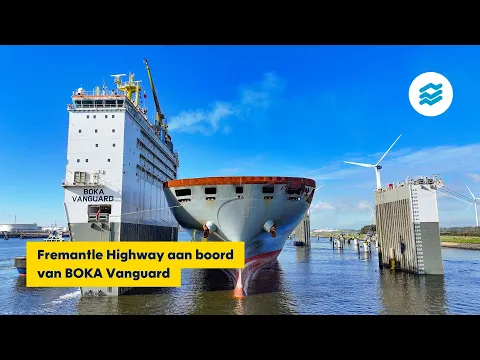
In October 2024, the Port of Rotterdam received a vessel designed to carry oversized structures: the BOKA Vanguard, operated by Boskalis. The goal was to load the Floor and transport it to China, rather than tow it across the ocean.
The procedure was captured on video by the Port of Rotterdam Authority. The semisubmersible ship lowers its cargo deck below the surface using ballast systems, allowing the structure to be positioned on it with the help of tugboats.
Once the structure is in position, the transport vessel regains buoyancy and lifts the load, which is secured for the voyage. Shipbroker Friday & Co., in a statement published by PES, said the loading used supports specially designed for the remaining hull, taking into account the structural changes caused by cutting away the damaged sections.

Images from the port itself show the scale of the operation: a ship originally designed to carry thousands of cars became cargo aboard another vessel.
Nine steel decks, crew accommodations and a bridge were rebuilt in China
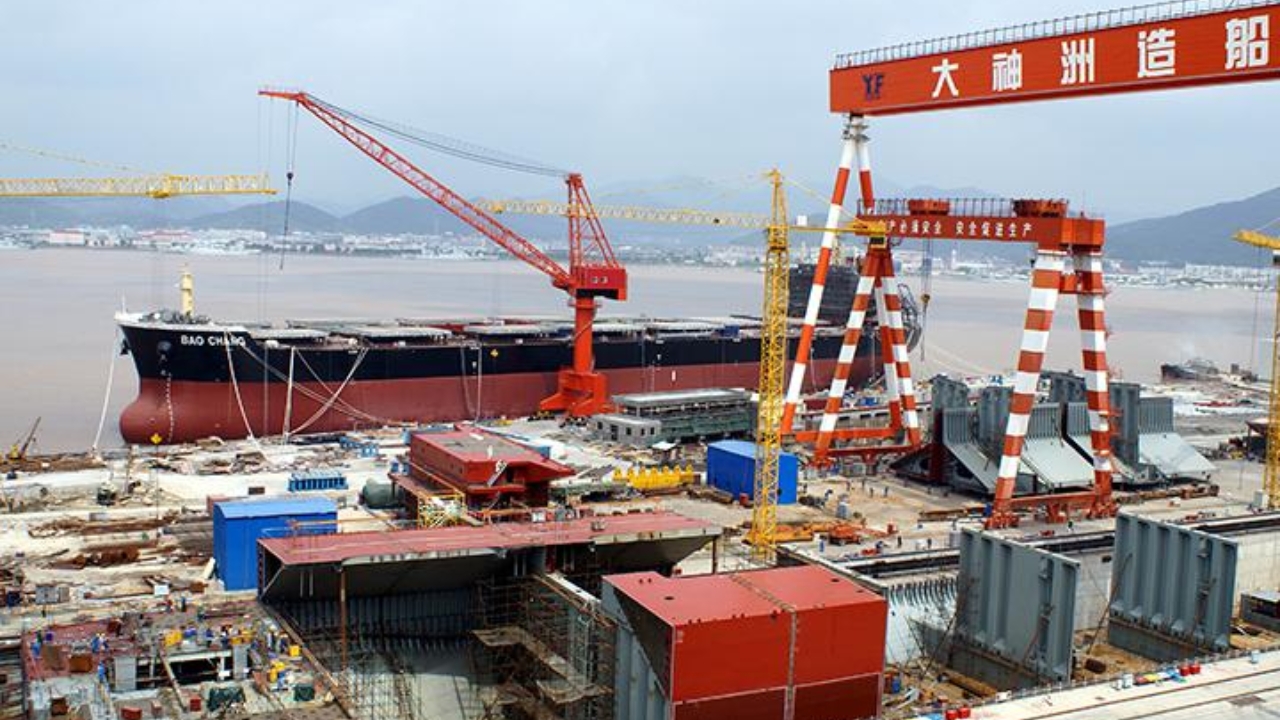
The work carried out in China went far beyond a cosmetic refit. The restoration included replacing the steel assembly between decks 5 and 13, a nine-level section that makes up a significant part of a car carrier’s structure.
Crew accommodations and a new bridge, where the crew controls navigation, also had to be built. The preserved hull received the components it needed to return to service as a vessel dedicated to transporting vehicles.
The vessel retains its maritime identity through IMO number 9667344, although it received other names during its restoration. The Dutch publication Nautique reported that the name Ocean Eva also appeared during the process, before its current identification.
New owner lists Viking Ningbo with capacity for 6,200 vehicles
Global Car Carriers lists Viking Ningbo among its vehicle carriers. The fleet listing confirms its 2013 build year, its original Japanese shipyard, Marshall Islands flag and capacity for 6,200 cars.
The recovery effort was also tied to demand for specialized vessels. Shippax noted in November that high charter rates for ships in this class helped make such an extensive reconstruction economically viable.
Viking Ningbo’s addition to the fleet marks the expected commercial outcome after more than three years of salvage, transport and construction work. Its first voyage with a cargo and its operating route still depend on delivery confirmation and commercial scheduling.
Which approach seems more compelling: rebuilding a hull that retained important equipment or building an entirely new vessel? Opinions can be shared in the comments.