





 Portuguese
  English
  Spanish
  2 min of reading
  0 comments


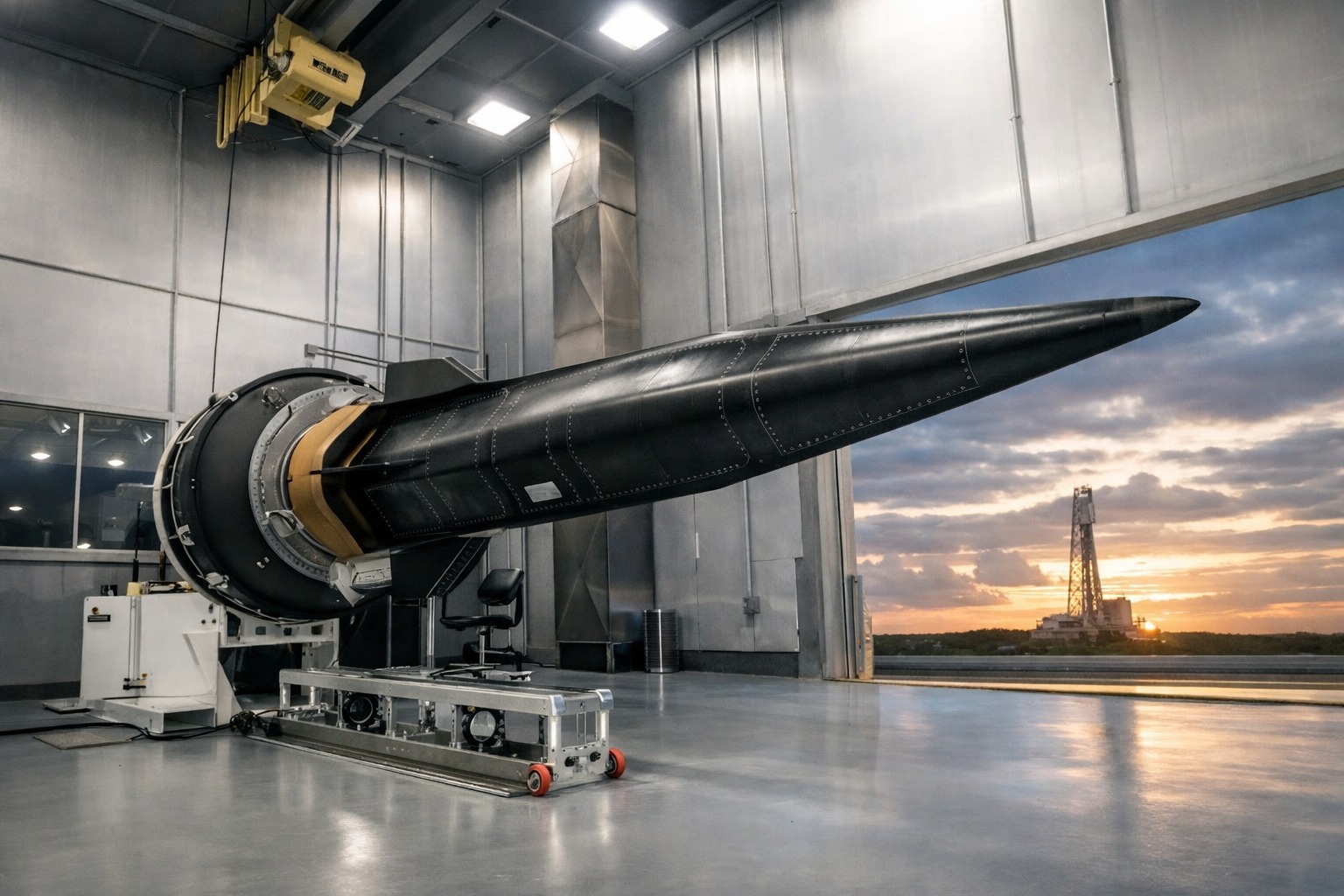
DART AE Aircraft Weighing 300 kg Launched from Virginia Reaches Mach 8 and Covers Approximately 1,000 km in Hypersonic Mission Cassowary Vex Conducted on February 27, 2026
An experimental Australian hypersonic aircraft reached Mach 8 on February 27, 2026, after launch in Virginia, when the hypersonic DART AE flew approximately 1,000 km on a mission aimed at testing hypersonic technologies.
Launch of the Cassowary Vex Mission
The Cassowary Vex mission occurred with the launch of the HASTE vehicle by Rocket Lab from Wallops Island, Virginia, carrying the 300 kg DART AE on a suborbital trajectory before the scramjet engine was activated in the upper atmosphere.
Performance of the Hypersonic Aircraft During Flight
The rocket accelerated the vehicle to Mach 5, at which point the SPARTAN engine was activated using green hydrogen as fuel to propel the hypersonic aircraft DART AE toward a maximum recorded speed of Mach 8 during the flight.
-
Extinct for over 100 years and considered one of the rarest birds in Brazil, a legendary species reappears in the Northeast, resumes breeding in the wild, and surprises researchers in 2026.

-
7,000-year-old bonfire in southern Israel reveals a rare scene from the past and uncovers ostrich eggs prepared by nomads in the desert.
-
Gigantic megalithic mound of 42 meters emerges during housing construction in Lublin and reveals a Neolithic megadendron with a moat of nearly 30 meters.
-
The surprising fact: 1 in 3 Brazilians doubts the arrival of man on the Moon, while the majority still believes in the historic achievement, according to a Datafolha survey with more than 2,000 people.


The vehicle reached an altitude of about 26 km and traveled approximately 1,000 km before landing in the Atlantic Ocean, completing a hypersonic flight test intended to assess materials and systems under real conditions of extreme speed and heating.


Launch Broadcast and Video Interruption
Named “That’s Not a Knife,” the launch was streamed live by Rocket Lab; however, the video was interrupted before the fairing release and stage separation at the request of Hypersonix Launch Systems, the manufacturer and operator of the vehicle.
According to Rocket Lab, the goal was to validate 3D printing, high-temperature alloys, and autonomous guidance systems used in the hypersonic aircraft under real hypersonic flight conditions recorded during the Cassowary Vex mission conducted in 2026 in the U.S.
The telemetry data obtained during the flight will be compared to digitally simulated models from earlier, allowing for the assessment of the structural and control behavior of the DART AE in hypersonic conditions and verifying the accuracy of autonomous guidance systems.
The DART AE also represents a technological milestone as the first aircraft fully made from high-temperature alloys produced by 3D printing, a solution applied directly to the structure of the hypersonic aircraft developed by Hypersonix Launch Systems in Australia.
The test was conducted by the Innovation Unit of the United States Department of Defense, which used the mission to evaluate hypersonic technologies in a real environment and gather essential data for future operational hypersonic aircraft projects in development.
According to Dr. Michael Smart, data collection in flight is crucial for understanding the performance of the hypersonic aircraft at high temperatures and speeds, contributing directly to the development of future hypersonic aircraft.
With information from New Atlas.







-

-

-

-

-

-

104 pessoas reagiram a isso.