Portuguese
 Spanish


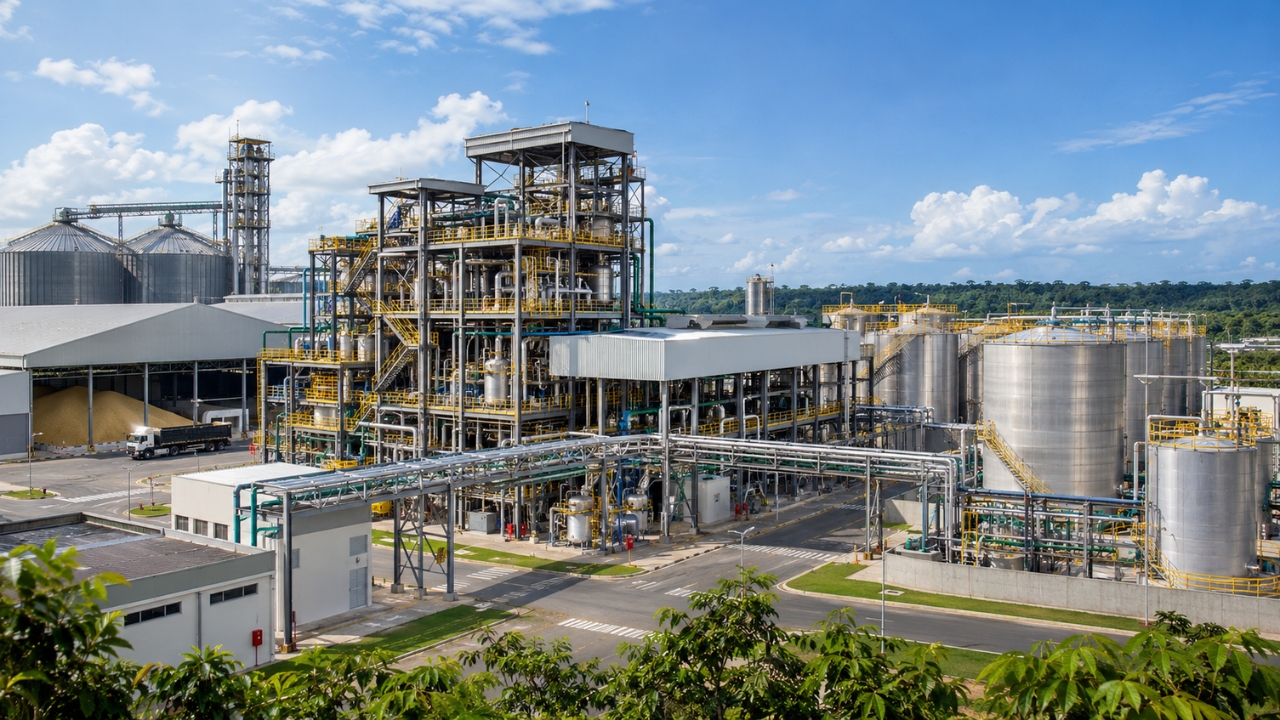

Brazil’s National Agency of Petroleum, Natural Gas and Biofuels (ANP) authorized Juparanã to operate a biodiesel plant capable of producing 910,000 liters a day in Paragominas, in the state of Pará. The federal license comes five months after the opening of the company’s facility, which processes 3,000 metric tons of soybeans a day.
A factory capable of producing 910,000 liters of biodiesel a day has received federal authorization to operate in Paragominas, in southeastern Pará. The National Agency of Petroleum, Natural Gas and Biofuels (ANP), Brazil’s oil and biofuels regulator, cleared the Juparanã Comercial Agrícola facility, located along the BR-010 federal highway, about five months after the company opened a soybean-processing plant.
The new authorization, published in Brazil’s Official Gazette of the Union on November 18, 2026, moves the project beyond the ceremony held in June. The facility had already received a state environmental license, but it now also has federal authorization to produce biofuels and operate the biodiesel unit.
ANP issues two authorizations, clearing plant to produce up to 910,000 liters a day
ANP Authorization No. 639, dated November 17, authorizes operation of the production facility at a capacity of 910 cubic meters a day, equivalent to 910,000 liters a day. Its registered address is kilometer 171 of the BR-010 highway, in rural Paragominas. The authorization took effect when it was published on November 18.
-
SolarEdge Ends Direct Sales and Local Operations in Brazil; Final Orders Due by Nov. 30, Warranties Remain Valid

-
China’s Windey Advances in BNDES Supplier Registration and Prepares R$100 Million Battery Factory in Bahia, With Planned Capacity of 2 GWh a Year and Operations Set to Begin in 2027
-
Compagas invests R$20 million, installs 12 km of gas pipelines in Maringá, and prepares renewable natural gas from sugarcane waste for Coca-Cola plant and future truck fueling station

-
Brazil Opens Call for Pumped-Storage Hydropower Projects as Federal Plan Targets 2 GW by 2036



In the same issue of the Official Gazette, ANP Authorization No. 638 granted Juparanã Comercial Agrícola the right to produce biofuels. Both authorizations refer to the same administrative proceeding, No. 48610.212122/2026-32, and to a decision by the agency’s board on November 12.
The first document authorizes the company to operate in the sector; the second covers the specific industrial facility and the maximum permitted production volume. The agency requires both authorizations from biofuel producers, in addition to ongoing compliance with environmental, technical and safety rules.
The 910,000 liters represent the plant’s authorized production capacity, a measure of its operating limit. Actual production and sales will depend on the volume of feedstock received, the pace of the industrial lines and demand for biodiesel.
Plant opened in June, after Pará had already issued its environmental license
The new federal approval follows a step announced by the Pará state government on June 19. On that date, officials attended the opening of Juparanã’s soybean processing plant and the handover of the Operating License granted by the Secretariat for Environment, Climate and Sustainability (Semas) for biofuel production.
The state license followed earlier authorizations for the environmental assessment and construction of the complex. The ANP’s approval now adds the federal clearance required under regulations specific to fuel producers.
The distinction matters when tracking industrial development: the soybean processing plant opened in June; the event in November was authorization for the biodiesel plant. The ANP announcement does not mention a new opening ceremony or disclose how much biodiesel has already been produced.
Complex could process 3,000 metric tons of soybeans a day into oil, meal and fuel
The Paragominas facility is part of Juparanã’s plan to process some of the soybeans produced and sold in the region. On the company’s corporate website, it says the processor can handle 3,000 metric tons of soybeans a day, equivalent to about 50,000 60-kilogram bags.
The processing operation could generate about 2,200 metric tons of meal and 600 metric tons of vegetable oil a day, as well as pelletized hulls and feedstocks for biodiesel production. These are capacities and products of the integrated industrial complex; the figures should not be added together as if they represented the same material.
After receiving, cleaning and preparation, the beans are crushed to separate soybean oil from the solid fraction. The resulting meal goes to the animal feed industry, while the oil can be used for different purposes, including as feedstock for biofuel.
During biodiesel production, the oil undergoes chemical processes to produce fuel that meets specifications set by the ANP. The plant also has supporting operations for feedstock handling and storage, as well as product quality control.
The company also says it uses biomass from reforested areas to generate steam and power at its facilities. This system is part of the complex’s energy-use model, while the biodiesel it produces is intended for the fuel market.
Pará’s biodiesel output could grow, but production capacity does not guarantee sales
The biodiesel sector is important to Brazil’s fuel supply because the product is used in the mandatory blend with fossil diesel sold in the country. According to the ANP, Brazil’s oil, natural gas and biofuels regulator, the required blend reached 15% in August 2025, following successive regulatory changes.
In June, the industry publication BiodieselBR reported that operating plants in Pará had produced about 206,300 cubic meters in 2025. The report estimated that the state would need more than 400,000 cubic meters to meet road-fuel consumption.
Juparanã’s plant is authorized to add substantial capacity to the state’s installed production base, but the amount actually available will depend on the facility’s operations and purchases by distributors. New producers also need logistics, storage, quality control and supply contracts.
For soybean producers, the industry’s expansion creates another way to market their crop. Some of the beans can be processed in Pará into oil, meal and fuel, rather than being sold solely as unprocessed agricultural feedstock.

Project received FNO support and is expected to create 950 direct jobs
The Superintendency for the Development of the Amazon (Sudam) said after the June inauguration that the industrial project was partly funded by the Constitutional Financing Fund for the North (FNO). The federal announcement linked the project to the industrial processing of soybean production in Pará.
At the time, the state government announced a projection of approximately 950 direct jobs tied to Juparanã’s expanded operations. The figure was presented for the industrial project and its expansion, without a public breakdown showing that all positions would be exclusively related to biodiesel production.
Juparanã was founded in 2001 and operates in agriculture, storage, seeds, logistics and grain trading. The company says in its corporate materials that it has approximately 150 trucks of its own and storage capacity of 450,000 metric tons, infrastructure that supports the receipt and movement of agricultural products.
Biodiesel production expands the company’s presence in the soybean processing chain. In addition to jobs directly tied to production, operations may require transportation of oil and fuel, technical services, industrial maintenance and supplies for processing lines.
Next steps are to track biodiesel production, distribution and supply
With federal authorizations No. 638 and 639 in force, Juparanã’s complex has the ANP’s approvals to produce biodiesel and operate its production facility in Paragominas, subject to current environmental and safety requirements. Its authorized production capacity is 910,000 liters per day, the production limit registered by the agency.
The next data points to track are the start of production at the scale the company has announced, volumes recorded in the ANP, Brazil’s oil regulator, systems, and sales contracts with distributors. The plant is located on the BR-010 highway, in a region where soybeans already drive the economy and will now also supply a new renewable fuel chain.
Whether processing soybeans into biodiesel in Pará can strengthen the state’s industry is a question for discussion in the comments.