Portuguese
 Spanish


EPE accepts pumped-storage hydropower project proposals through Dec. 18. The plants can store energy by pumping water between reservoirs. Federal planning targets 2 GW by 2036, but no contracts have been awarded yet.
Brazil’s Energy Research Office (EPE), the government’s energy planning agency, has opened a nationwide call for information on pumped-storage hydropower projects, facilities that can store electricity using large water reservoirs. Companies have until Dec. 18, 2023 to submit their proposals, including initiatives still in the early study phase.
The move comes as the Brazilian government considers adding 2 gigawatts (GW) of this type of storage to its plans by 2036. Before contracting or building new plants, EPE wants to find out how many projects exist in the country, where they could operate and what obstacles need to be addressed.
Water is pumped uphill to store electricity, then flows downhill to generate power when demand rises
A pumped-storage hydropower plant uses two reservoirs at different elevations. When electricity is available for storage, pumps move water from the lower reservoir to the upper one. The water remains at the higher elevation until it is needed to supply the power system.
-
Inside a Welsh mountain: Dinorwig, Britain’s largest energy-storage facility, is a 1,728-MW plant carved into an old slate quarry that delivers 1,320 MW in 12 seconds and stores 9.1 GWh

-
China activates 100-MW, 1-GWh CO2 battery in Xinjiang desert, surpassing Italy’s pioneering plant
-
Amazon pledges another $7 billion for renewable energy in India by 2030, on top of $4 billion already contracted, and secures 934 MW of solar and wind projects to power its own operations
-
Iberdrola replaces 74 old wind turbines with just 11 giant machines at its Muras wind farm in Galicia, each generating more than six times as much energy as its predecessor while continuing to supply the same 40,000 homes


When the grid needs power, water flows down through pipes and turns turbines connected to generators. The lower reservoir receives the water again, allowing the cycle to be repeated. The facility thus works like a large-scale water battery, storing energy by holding water at a higher elevation.
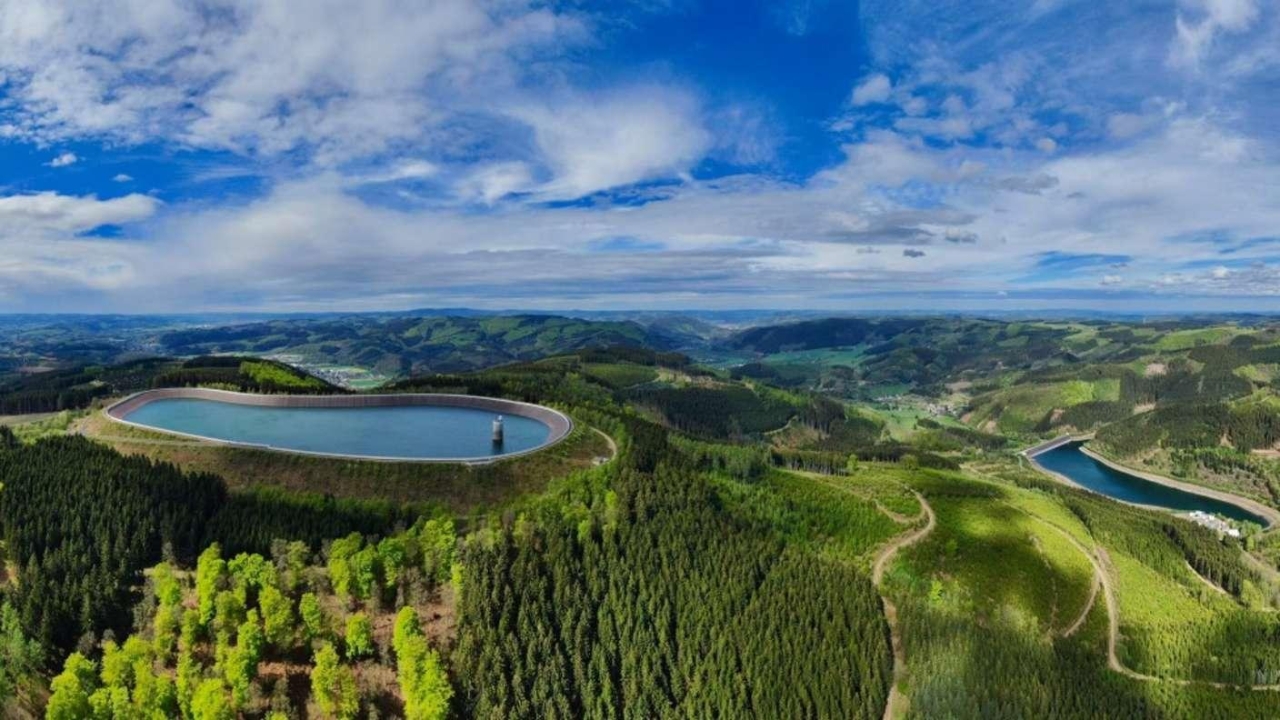
The process involves losses: pumping consumes more electricity than the plant can return at the end of the cycle. Its benefit is to shift energy from one time of day to another, providing capacity during periods of higher demand rather than increasing net electricity production.
This feature can help make better use of wind and solar generation, which varies with wind conditions and sunlight. A pumped-storage hydropower plant can absorb electricity when it is more readily available and supply power later, depending on the grid’s needs and operating conditions.
EPE will accept proposals through Dec. 18, including for projects still in the preliminary stage
In the call published on November 13, Brazil’s Energy Research Office (EPE) directed interested parties to contact it by email at aege@epe.gov.br. Submissions must identify the company responsible and name the projects it intends to submit.
After this initial contact, the state-owned agency will provide a link for file uploads and a form for submitting technical data. The process aims to gather initiatives ranging from projects with advanced studies to those still at an early stage, provided their sponsors can share basic information about the project.
The minimum data required include location, general characteristics and development stage. For more mature proposals, EPE’s technical guidelines cover information on power output, storage capacity, performance, integration with Brazil’s National Interconnected System, timelines and estimated construction costs.
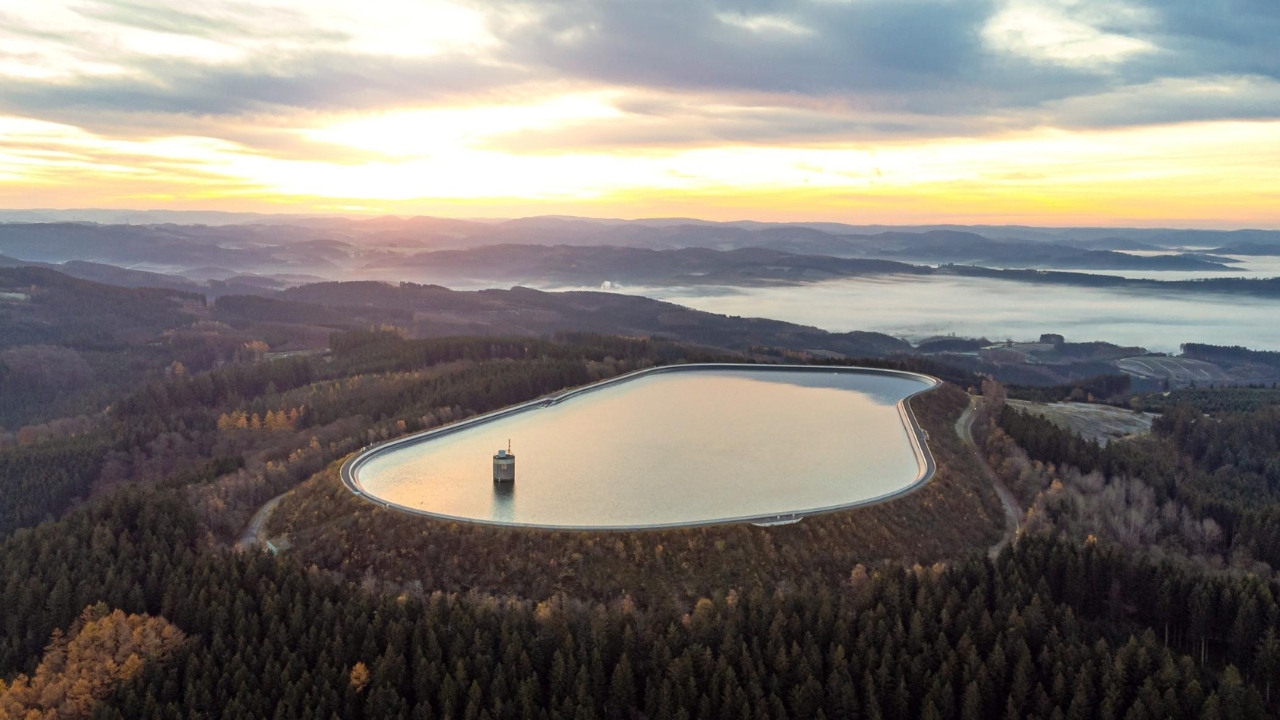
The energy planning agency also wants to assess how prepared the market is. A proposal with completed studies, identified sites and advanced environmental assessments is at a different stage from one still seeking the best location for its reservoirs.
Individual submissions will remain confidential. EPE may later publish a report with aggregated results that do not identify companies or projects. The call is intended to map projects and prepare studies and rules; participation does not automatically qualify a project for a future contract.
Federal planning targets 2 GW and opens the door to auctions starting in 2027
The Ministry of Mines and Energy said the version of the Ten-Year Energy Expansion Plan 2036 now under public consultation calls, for the first time, for 2 GW of hydropower storage systems to come online in 2035 and 2036. This is a planning signal, subject to future decisions by the power sector.
The ministry also cited Normative Ordinance No. 143/2026, which sets an estimated schedule for power-generation auctions between 2027 and 2029. Pumped-storage hydropower systems are among the technologies that could be considered for capacity-reserve contracts during that period, depending on the rules adopted.
The 2 GW figure refers to the power output the plants could deliver at a given moment. How long they can sustain that output will depend on the volume of stored water, the elevation difference between reservoirs and the characteristics of each project.
In September, Brazil’s Energy Research Office (EPE) had already announced a work plan to prepare the market, assess costs and risks, refine procurement guidelines and discuss social and environmental impacts. The new call turns that preparation into a request for concrete proposals to gauge investor interest.
Santa Catarina gets first registration application for a 5.2-MW pumped-storage hydropower plant
The activity has also reached Brazil’s electricity regulator, the National Electric Energy Agency (ANEEL). On October 21, 2026, the agency registered the first application for a preliminary permit for a closed-loop pumped-storage hydropower plant under current regulations: the 5.2-MW Salto Timbé do Sul pumped-storage hydropower plant, proposed by AMUR Ltda. in Timbé do Sul, Santa Catarina.
This registration is an optional preparatory step intended to facilitate licensing and other measures before an authorization application is filed. It is valid for four years and does not guarantee exclusivity or the right to receive final authorization. The facility must still complete additional steps before it can begin operating.
In a closed-loop configuration, artificial reservoirs are outside the continuous flow of a river. Even with this arrangement, developers must meet environmental requirements and, when water is withdrawn to fill the reservoirs or replace losses, obtain the corresponding water-use permits.
December deadline will help determine which projects can move forward in Brazil
EPE’s survey could clarify where conditions are suitable for storing electricity through pumping, which projects have enough studies to advance, and which connection, permitting, cost and timing requirements still hinder investment. The results could also inform the development of future procurement rules.
The next milestone is December 18, 2026, the deadline for submitting projects. Until then, the priority is to build a picture of the initiatives underway; any auctions and construction will depend on subsequent decisions.