Portuguese
 Spanish


Contracts tied to Petrobras and Transpetro are driving activity at Brazilian shipyards, while industry experts point to labor shortages, financing difficulties and the need to sustain new projects.
Brazil’s shipbuilding industry is receiving orders again for vessels and offshore projects after a prolonged downturn. A report published by the National Union of the Shipbuilding and Offshore Repair Industry (Sinaval) on August 31, 2026, said the recovery is already bringing activity to shipyards in several states. However, industry representatives warn that a sustained recovery depends on a steady pipeline of projects.
The highlighted orders include 16 offshore support vessels for Petrobras operations, five gas carriers and four Handymax vessels ordered by Transpetro. Together, the contracts cover 25 vessels, although they have different schedules and specifications.
-
Army trains 29 riverboat operators to strengthen logistics in the Amazon

-
India plans five shipbuilding megacomplexes and negotiates a $4 billion shipyard with South Korean giant HD Hyundai

-
Brazilian shipbuilding industry projects exceeding 80,000 jobs with Transpetro ship orders but faces labor and credit shortages
-
Collision Between Ships in India Entangles Anchor Chains, Causing Bulk Carrier with Nearly 86,000 Tons of Coal to Take On Water

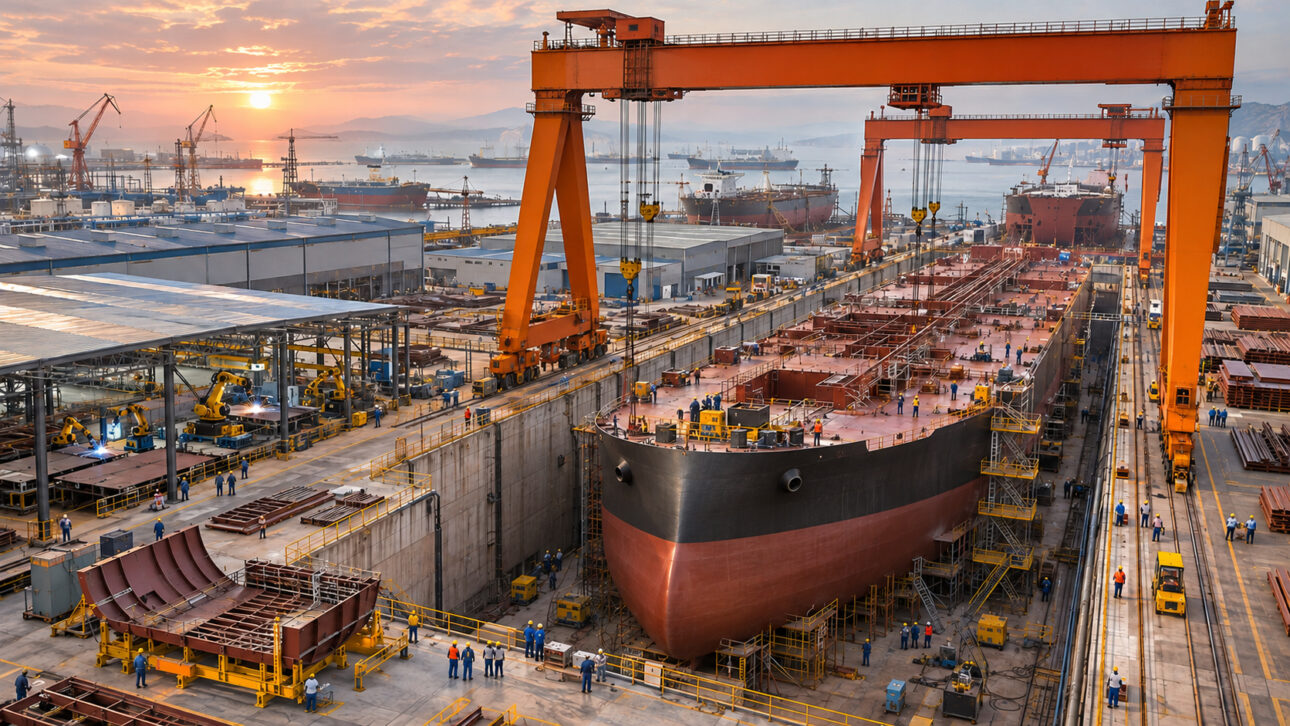


Beyond shipbuilding, the recovery involves engineering firms, equipment suppliers and skilled workers. Industry experts are therefore calling for measures to keep industrial activity going after the current contracts are completed.
Petrobras and Transpetro drive new shipyard orders
The increase in orders is primarily tied to the oil and gas industry’s transportation and offshore support needs.
Since 2023, 16 offshore support vessels have been ordered for Petrobras platform operations, Sinaval said.
The vessels are being built for Brazilian shipping companies at the Navship and Detroit shipyards in Santa Catarina.
In addition, Transpetro ordered five gas carriers from the Ecovix-Rio Grande shipyard in Rio Grande do Sul.
Another four Handymax vessels, used to transport oil and petroleum products, were awarded to a consortium formed by Ecovix-Rio Grande and Mac Laren shipyard in Rio de Janeiro.
The new orders therefore reach shipbuilding hubs across Brazil.
However, the announcement of a contract does not mean that all vessels are at the same stage of construction. Each project has its own engineering, materials procurement and assembly phases.
Shipyards in Santa Catarina, Rio Grande do Sul and Rio de Janeiro resume activity
The contracts are also helping revive industrial facilities that went through periods of weak demand.
Part of the new order book has already moved into production, including the cutting of steel plates, said Ariovaldo Rocha, president of Sinaval.
In addition, Seatrium Group shipyards in Angra dos Reis (RJ) and Aracruz (ES) have resumed building modules for Petrobras platforms.
The modules combine structures and equipment that will later be integrated into offshore units.
The recovery thus extends beyond the construction of complete ships. It also includes industrial work to manufacture maritime components and structures.
Another sign of activity in the sector can be seen in São Gonçalo, Rio de Janeiro, where Navemestra announced plans to build six tugboats at São Miguel Shipyard, with financing from BNDES, Brazil’s development bank.
Although the project differs from Transpetro’s vessels, it shows that new orders are emerging across different segments of Brazil’s shipbuilding industry.
Brazil’s shipbuilding industry lost workers and capacity during the downturn
The return of new orders follows several cycles of expansion and contraction.
In the 1960s and 1970s, Brazil expanded construction of cargo ships, bulk carriers and tankers, driven by development policies for the merchant marine.
However, the activity lost momentum in the following decades as support mechanisms changed and international competition intensified.
A new phase of expansion began in the 2000s, alongside growth in the oil and gas industry and discoveries in the pre-salt fields.
During that period, Brazilian shipyards began working on more complex projects, including drillships, FPSO platforms, tankers and offshore support vessels.
But beginning in 2014, a combination of economic crisis, corporate problems, falling oil prices and changes to industry rules reduced demand.
As a result, some companies lost experienced workers, equipment and production capacity.
Now, recovery requires rebuilding expertise and infrastructure that cannot be restored overnight.
Shortage of specialized workers worries engineering companies
Industry representatives say one of the biggest challenges is rebuilding the skilled workforce.
Shipbuilding relies on professionals from different fields, including naval engineering, mechanical engineering, electrical engineering, automation, welding and industrial planning.
Complex projects also require teams able to develop technical drawings, integrate equipment and oversee manufacturing.
According to Pedro Guimarães, executive vice president of Macnor Marine, Brazil has preserved important expertise but needs to rebuild its network of suppliers and specialized professionals.
The same need is reflected in the assessment of Frederico Cupello, CEO of Ghenova in Brazil.
For the executive, new orders represent an opportunity for recovery. However, the industry still lacks the capacity to absorb a very rapid expansion.
Professional training therefore needs to keep pace with the growth of the project backlog.
Financing and a steady stream of contracts are essential to sustain the recovery
Another issue highlighted by the industry is the need to ensure projects have adequate financing.
Shipbuilding requires substantial investment and involves multiple stages before final delivery.
Shipyards and shipping companies therefore need financing, guarantees and predictable revenue.
The Merchant Marine Fund (FMM) is one of the main mechanisms supporting shipbuilding and ship repair projects in Brazil.
Understanding how this fund works is important to understanding investment in the industry. The FMM can finance vessel construction, upgrades, repairs and improvements to industrial facilities, subject to applicable rules.
However, the availability of funds does not mean financing is automatically approved.
Companies must meet the requirements for each transaction, including contractual conditions and guarantees.
Naval engineering representatives also support maintaining an order backlog spread over several years.
That would allow companies to plan investments, retain teams and reduce the effects of periods without new contracts.
Engineering design is as important as ship construction
One of the warnings raised in Sinaval’s report concerns the role of companies responsible for ship design.
Before construction of a vessel can begin, studies, calculations and technical specifications must be developed.
These activities define characteristics such as hull structure, propulsion systems, equipment layout and safety requirements.
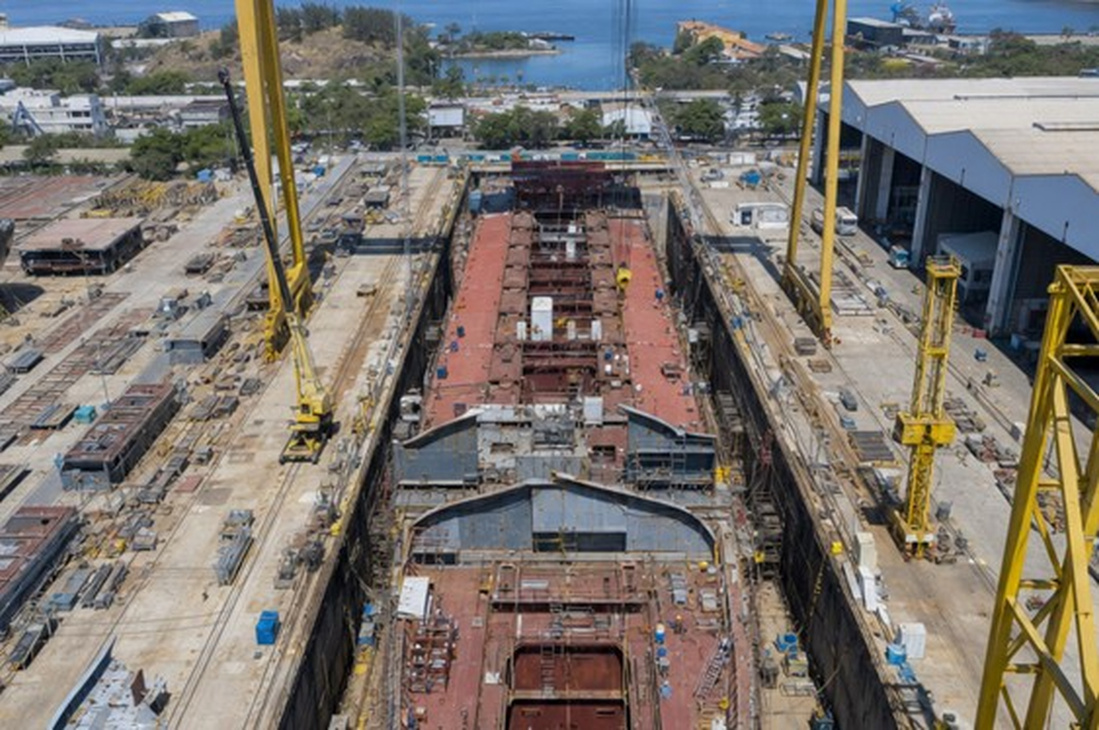
According to Macnor Marine, strengthening this stage is essential for Brazil to expand its technological capabilities.
The goal is to ensure domestic shipyards do not depend exclusively on designs developed abroad.
However, international companies can also contribute to knowledge transfer and the development of local solutions.
The international market offers an example of the importance of engineering. Jan De Nul ordered a second specialized subsea cable-laying vessel designed by Norway’s Ulstein, illustrating how technical development figures in contracts for complex vessels.
For Brazil, expanding its capacity to design ships could create opportunities for technology companies and specialized professionals.
Ghenova works on designs for five Transpetro gas carriers
Engineering firms are already involved in specific projects under the new contracts.
Frederico Cupello, CEO of Ghenova in Brazil, said the company is working on the basic and detailed designs for five gas carriers ordered by Transpetro.
These stages turn vessel requirements into the technical information needed for construction.
Ghenova also has experience with projects related to the Brazilian Navy, including military vessels.
The Brazilian subsidiary had 145 technical professionals and received support from the group’s engineering centers in Europe, the report said.
The company also sought to diversify its activities during years of weaker demand for shipbuilding.
That strategy helped retain professionals and technical expertise for participation in new projects.
Vessel modernization also creates opportunities for suppliers
In addition to building new ships, the sector sees opportunities in modernizing existing vessels.
These projects may involve equipment replacement, system upgrades, automation, energy efficiency and emissions reductions.
The process of adapting a vessel for new functions is known as vessel conversion.
Retrofit, meanwhile, involves improvements and upgrades to existing structures or systems.
Macnor Marine says these activities could become more important as shipowners seek to expand their fleets’ operating capacity.
In addition, maintenance and modernization projects help keep engineering companies active between major orders.
However, the report does not provide specific values for new contracts tied to these opportunities.
They should therefore be treated as market possibilities, not as confirmed investments.
River transport and agribusiness could also boost shipyards
The recovery of Brazil’s shipbuilding industry does not depend solely on the oil and gas industry.
Sinaval also sees opportunities in building river barges and pushboats used to transport goods.
These vessels are important for moving agricultural and mineral products, particularly in the North and Northeast regions.
They can also serve operations that use waterways to transport large volumes of cargo.
Ariovaldo Rocha says several Brazilian shipyards are already working on projects of this kind.
However, manufacturing requirements vary depending on vessel size and route characteristics.
Diversifying their order books can therefore help shipyards serve markets with different needs.
Brazil’s shipbuilding industry must turn orders into lasting growth
New contracts show that Brazil’s shipbuilding industry is once again taking part in major projects.
With 16 offshore support vessels, five gas carriers and four Handymax vessels, the projects highlighted by Sinaval are generating activity in different parts of the country.
Offshore module fabrication and vessel modernization are also expanding opportunities for engineering companies and suppliers.
However, experts warn that the recovery depends on conditions that can sustain activity after current contracts are completed.
Priorities include professional training, financing, supplier development and a steady flow of orders.
The challenge, then, is not just to resume building ships. It is to maintain an industrial base capable of developing projects, manufacturing equipment and competing in different markets.
In the coming years, the progress of contracts with Petrobras and Transpetro will be an important indicator of this recovery.
Will Brazil be able to keep its shipyards active in the coming years, or does the shipbuilding industry still risk facing another downturn?
Source: Sinaval — New orders revive the sector, but shipbuilding still depends on a sustained policy, published August 31, 2026.