Portuguese
 Spanish


With the stands’ demolition set for Nov. 24, Caio Martins in Niterói is set to undergo a R$381.8 million project that includes a reservoir of more than 102 million liters to reduce flooding in Icaraí.
The field where Botafogo played matches in Niterói is slated for a project unlike a typical stadium renovation: an underground reservoir to hold water from heavy rain. Demolition of the Caio Martins stands is scheduled for Nov. 24, 2026, in a notice published by Niterói’s Infrastructure and Public Works Company (ION).
The transformation is part of a R$381.8 million contract for large-scale drainage improvements in the Icaraí River watershed. Official specifications set the reservoir’s capacity at 102,659 cubic meters, equivalent to 102.659 million liters. A public park is also planned on the site of the playing field, while drainage work will be carried out on streets in Icaraí and Santa Rosa.
Demolition date set after initial work with an excavator in October
A notice published in Niterói’s official gazette on Nov. 10 set Nov. 24 as the start date for demolition work. The measure meets the conditions of Demolition Permit No. 79/2026 and is part of construction of the Icaraí River Reservoir.
-
Gateway CEO Tom Prendergast says a second tunnel boring machine with a 28-foot cutterhead has started on the $16 billion Hudson Tunnel, so both new rail tubes under New Jersey’s Palisades are now being dug at once.

-
After more than 20 years out of service, a 54-meter elevator inside a Paraná sinkhole reaches 92% completion on R$15 million restoration and prepares to welcome visitors in Ponta Grossa

-
Iguatemi and Catuaí announce R$1 billion Four Seasons complex in São Paulo, with 26 stories, a 104-room hotel and a 1,200-square-meter penthouse near Avenida Faria Lima

-
Transnordestina construction mobilizes over 3,000 workers, logs 107,000 trips, and moves 1 million cubic meters of earth in a month in Ceará, enough to cover 140 soccer fields with a 1-meter layer


The city held a groundbreaking ceremony on Oct. 23 and released images of the first work on the stands. The new notice sets the official date for the demolition work announced by ION. This phase affects structures in the area needed for the reservoir, particularly the stands facing Rua Presidente Backer.
The stadium is in a densely developed area, surrounded by buildings, commercial streets and homes. Demolition will change part of a sports landscape that has been part of Niterói since 1941 and make way for a structure that will be hidden beneath the future park.
Contracted project calls for an underground reservoir holding more than 102 million liters
The project put out to bid by ION and the notice to proceed under Contract No. 82/2026 specify a capacity of 102,659 m³ for the enclosed flood detention reservoir. The project covers approximately 15,000 square meters, including part of the former field and the stands.
The city had also cited an estimate of 80 million liters in earlier announcements and presentations, including at the project launch in October. However, the technical documents for the January bidding process and the October 2026 contract order specify 102,659 m³. That is the capacity included in the ION contract documents.
The reservoir will not be a recreational pool. It will temporarily hold some of the water collected during storms, allowing it to flow later, at a controlled rate, into the Icaraí River and ultimately Guanabara Bay. The goal is to ease pressure on the drainage system when rain falls faster than the streets can carry it away.
Six kilometers of pipes and pumps will carry street runoff to the former field
The work will extend beyond the Caio Martins grounds. The project calls for approximately six kilometers of new drainage pipes, including large storm-drain conduits on Rua Presidente Backer and Rua Lopes Trovão that will carry some of the watershed’s runoff to the storage system.
Additional local drainage work is planned on Avenida Roberto Silveira and on Rua Paulo César, Rua Santa Rosa and Rua Mariz e Barros. The project also includes three pumps to help move water through the reservoir system.
The neighborhoods of Icaraí and Santa Rosa, along with the area around Largo do Marrão, are at the center of the project. The municipal administration also expects potential benefits for nearby sections of Viçoso Jardim, Cubango and Pé Pequeno. The expected benefit is a reduction in the frequency and severity of flooding, especially in areas where rain currently disrupts traffic.
R$381.8 million contract sets 30-month construction schedule and one year of assisted operations
Signed in October, the notice to proceed sets the estimated total value at R$ 381.801.003,66. That amount covers the contracted work to prepare detailed engineering designs, carry out large-scale drainage work and provide assisted operation of the reservoir. It is not just the cost of demolishing the stands or excavating beneath the field.
The document sets a 42-month contract term: 30 months for construction, followed by 12 months of assisted operation. The notice states that work will begin on October 26, 2026, and is scheduled to end on April 25, 2030, including the period after construction.
The work was awarded to the Reservatório Rio Icaraí Consortium, made up of MPE Engenharia e Serviços, Construtora Zadar and DP Barros Pavimentação e Construção. The plan calls for work in a busy urban area and connections between the new structures and the existing drainage system.
Stands closed since 2023 were found to pose structural risks, Civil Defense says
The deterioration of the stands had raised concerns even before the reservoir contract was awarded. In June 2026, Niterói Civil Defense reaffirmed the closure of the field and adjacent areas, which had been in effect since August 2023 because of structural problems identified during technical inspections.
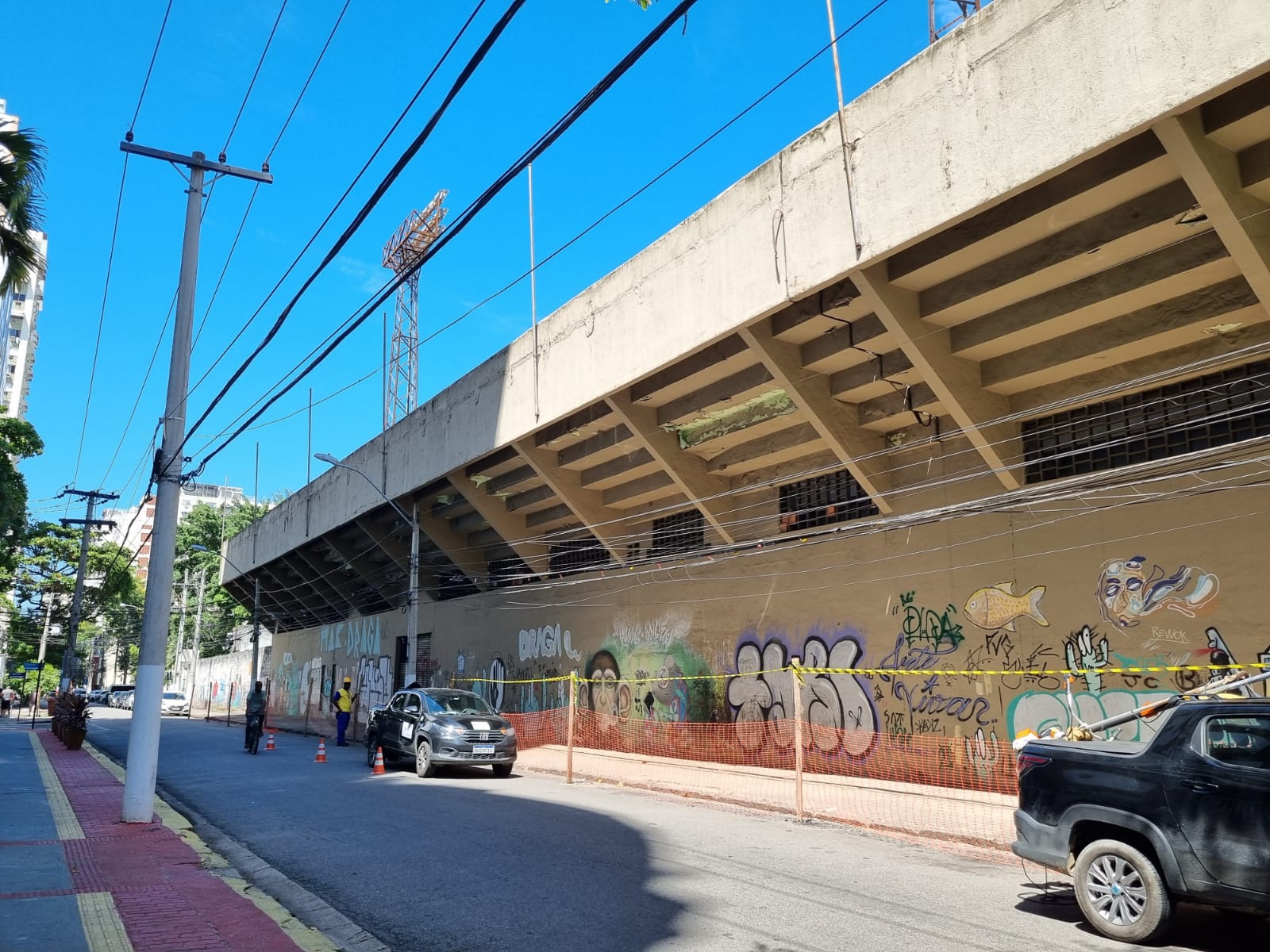
In its assessment released in June, the agency cited risks associated with the structures and maintained the ban on events drawing large crowds at the stadium. Its recommendations included repairs or the controlled demolition of compromised sections. This history helps explain why the stands are among the first parts of the site to undergo physical changes.
Apart from the structural issues, the site had already been earmarked for a drainage solution. In September 2026, the state government transferred to the city an area of approximately 25,000 square meters, including the field, stands and locker rooms, to enable construction of the reservoir and planned park.
Soccer field to make way for park, while gymnasium and aquatic center retain their sports functions
The project calls for a new public gathering space above the reservoir, with green areas, gardens and sports facilities. The installations announced by the city include courts for tennis, soccer, volleyball and basketball, along with recreational areas for residents of different ages.
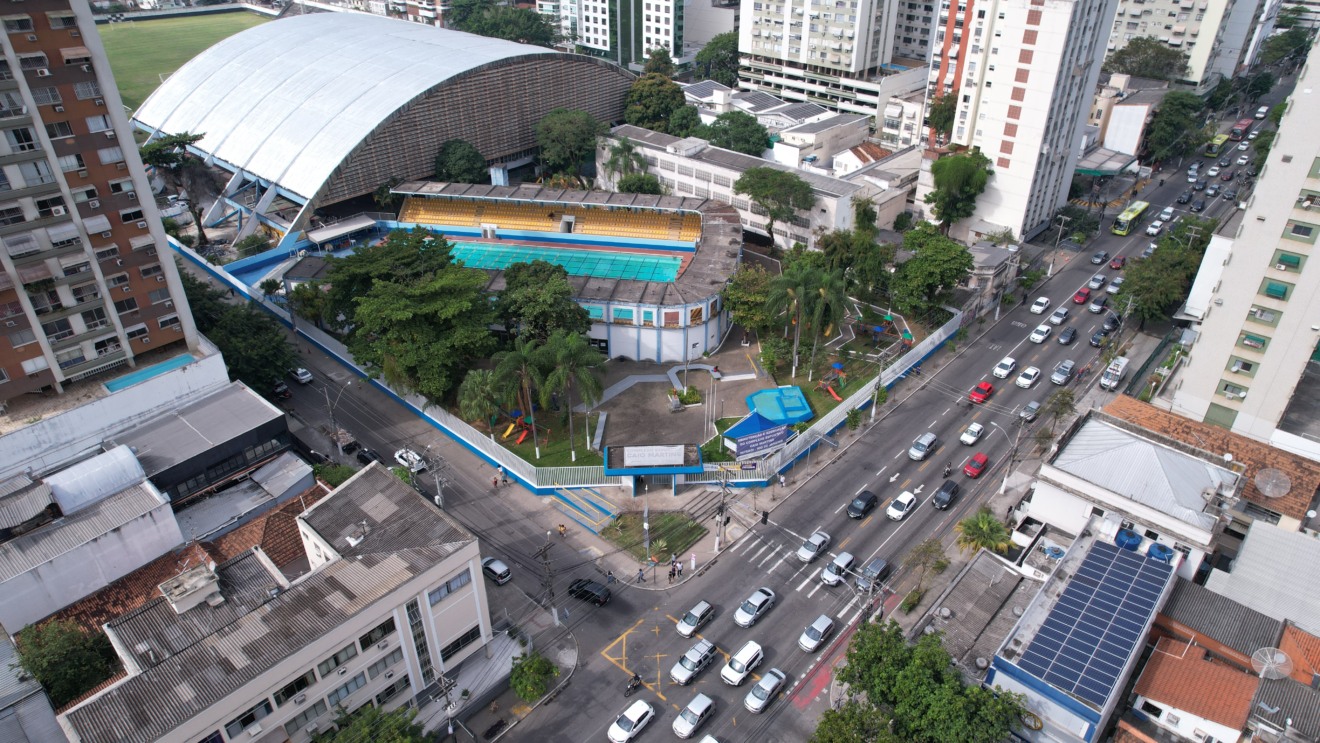
The state transfer covers the soccer stadium grounds earmarked for construction. The Caio Martins complex also includes a covered gymnasium and an aquatic center, which will remain part of the state’s sports facilities, according to information released about how the areas will be divided.
Opened on July 20, 1941, Caio Martins has been part of generations of fans’ and athletes’ lives. Botafogo used its field at different times, while the surrounding sports facilities hosted activities and classes. The new layout is intended to preserve public access to the site, now with a large hydraulic structure beneath the public gathering area.
Residents can already contact officials with questions about the work
ION said residents, business owners and others can send questions to the Social Technical Work Program by calling (21) 97106-9239, Monday through Friday, from 8 a.m. to 5 p.m. The notice published in November sets the start date for demolition work, while specific guidance on traffic and potential road closures will depend on the schedule for each phase.
The next confirmed date is November 24, 2026, when the municipal company plans to begin the demolition work announced officially. Construction of the reservoir and storm-drain conduits will follow, along with development of the park. For people dealing with flooding around the Icaraí River, the system’s effectiveness will be measured once the new structures are complete and operating during rainy periods.
Are you familiar with flooding around Caio Martins? Tell us in the comments how rain affects the neighborhood, and share this report with anyone following this transformation in Niterói.