





 Portuguese
  English
  Spanish
  6 min of reading
  1 comment


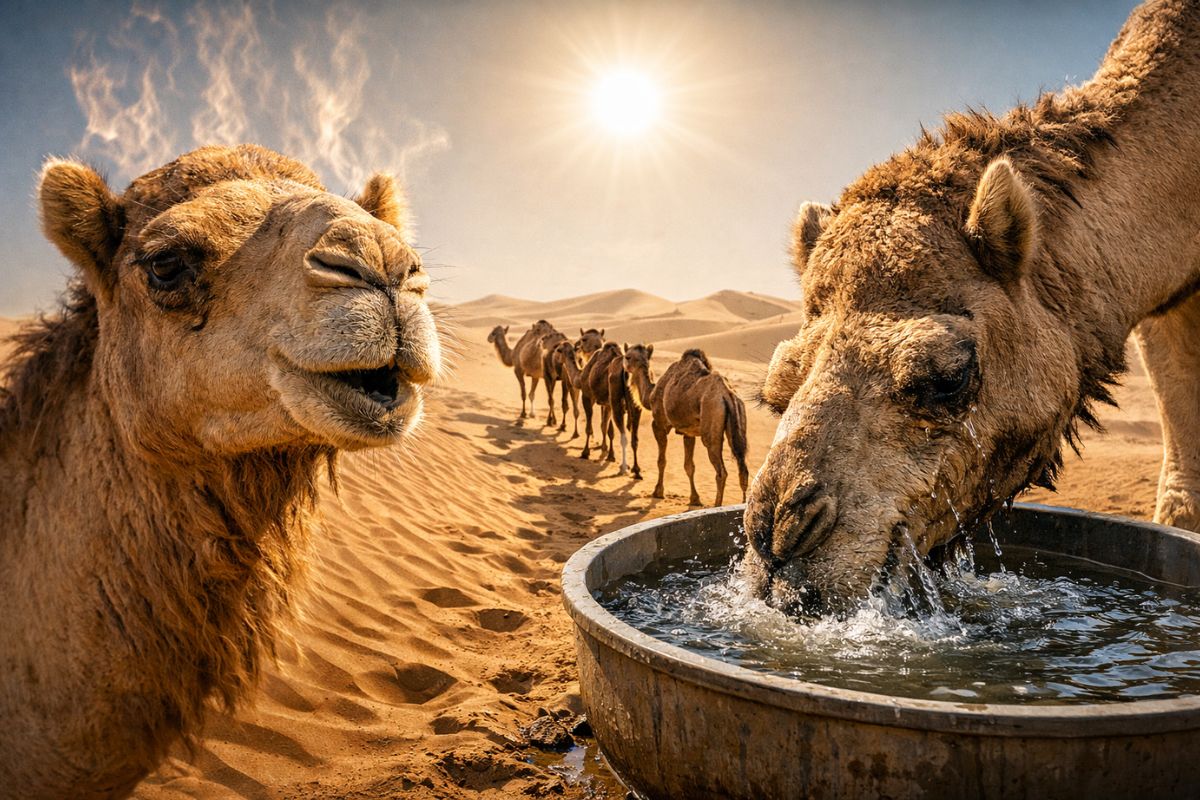


Among Dunes And Sandstorms, Camels Save Water By Allowing Body Temperature To Vary, Store Fat In The Hump And Withstand Extreme Dehydration. When They Find A Water Hole, They Drink More Than 100 Liters In Minutes. The Curious Thing Is That Their Ancestors Emerged In North America And Lived In Forests And Prairies.
Camels seem to exist to challenge common sense about survival: where most mammals break down quickly, they endure days of heat and scarcity as if it were routine. This resilience is not “magical,” but the result of unusual biological choices, trading comfort for tolerance to extremes.
The striking aspect is the contrast between the environment and the body. Camels coexist with sand, thirst and temperature variation without following the typical manual for terrestrial vertebrates. And the more details emerge, the more it impresses that evolution chose improbable yet efficient solutions.
Camels Did Not Originate In The Desert And This Changes The Whole Story
The classic image of camels among dunes hides a different beginning. Fossils indicate that the ancestors of camelids emerged in North America about 45 million years ago, living in open forests and prairies, alongside animals and predators that are now extinct. The desert, at that stage, was not the main stage.
-
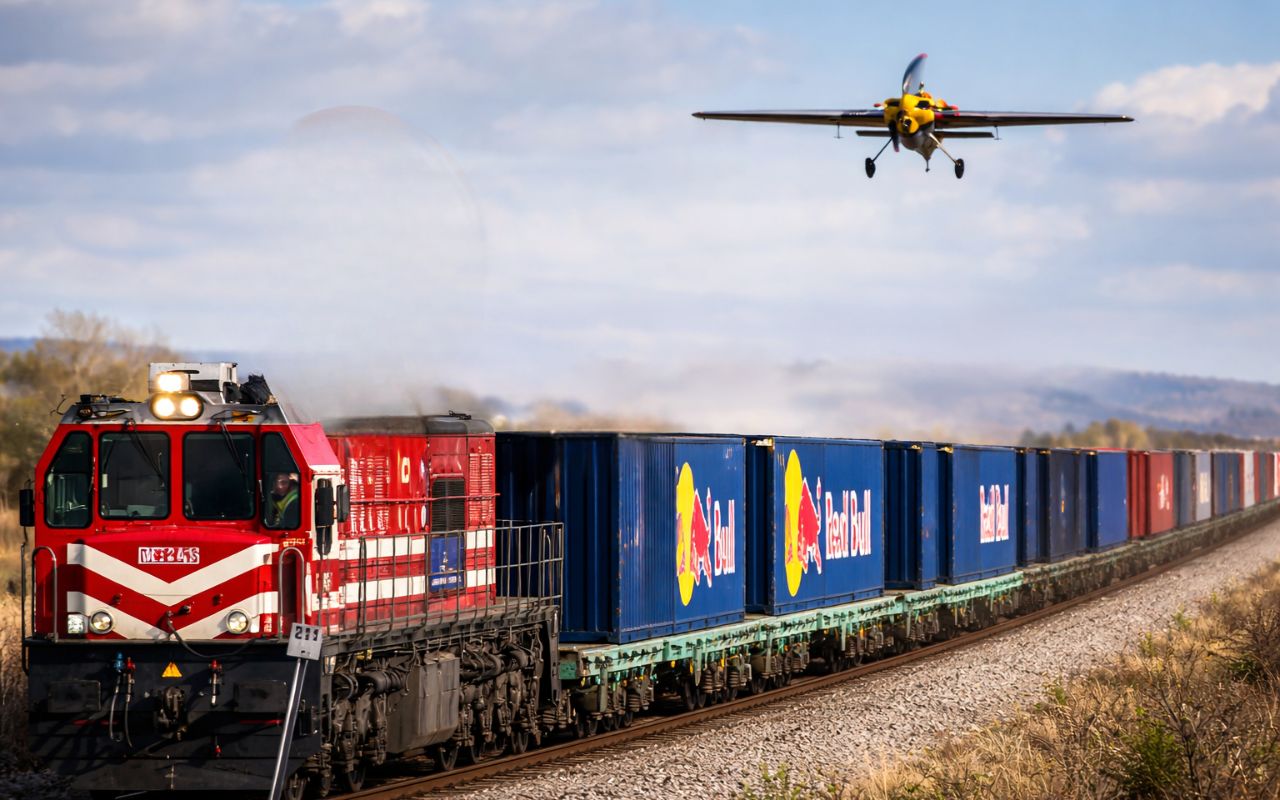
(Video): Italian pilot lands plane on moving train at 120 km/h and achieves unprecedented feat in aviation, even with a narrow runway and without direct visual contact.
-
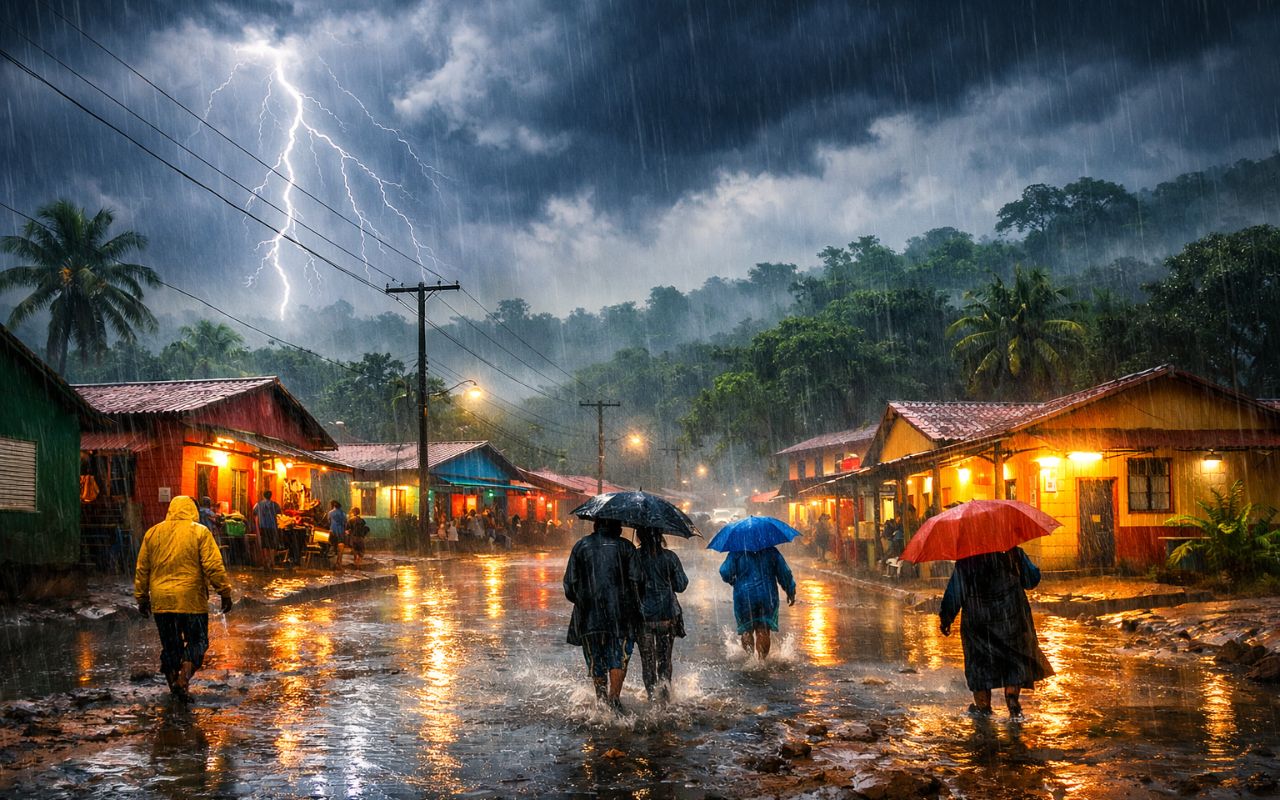
It seems to have come out of a science fiction movie: A Brazilian city where it rains almost every day, recording over 4,000 mm per year, driven by climatic factors — a direct result of its strategic location in the Amazon.
-
The water crisis that could change everything this year has already begun; it’s not just about the climate, it affects technology, raises product prices, and can halt entire companies without warning.

-
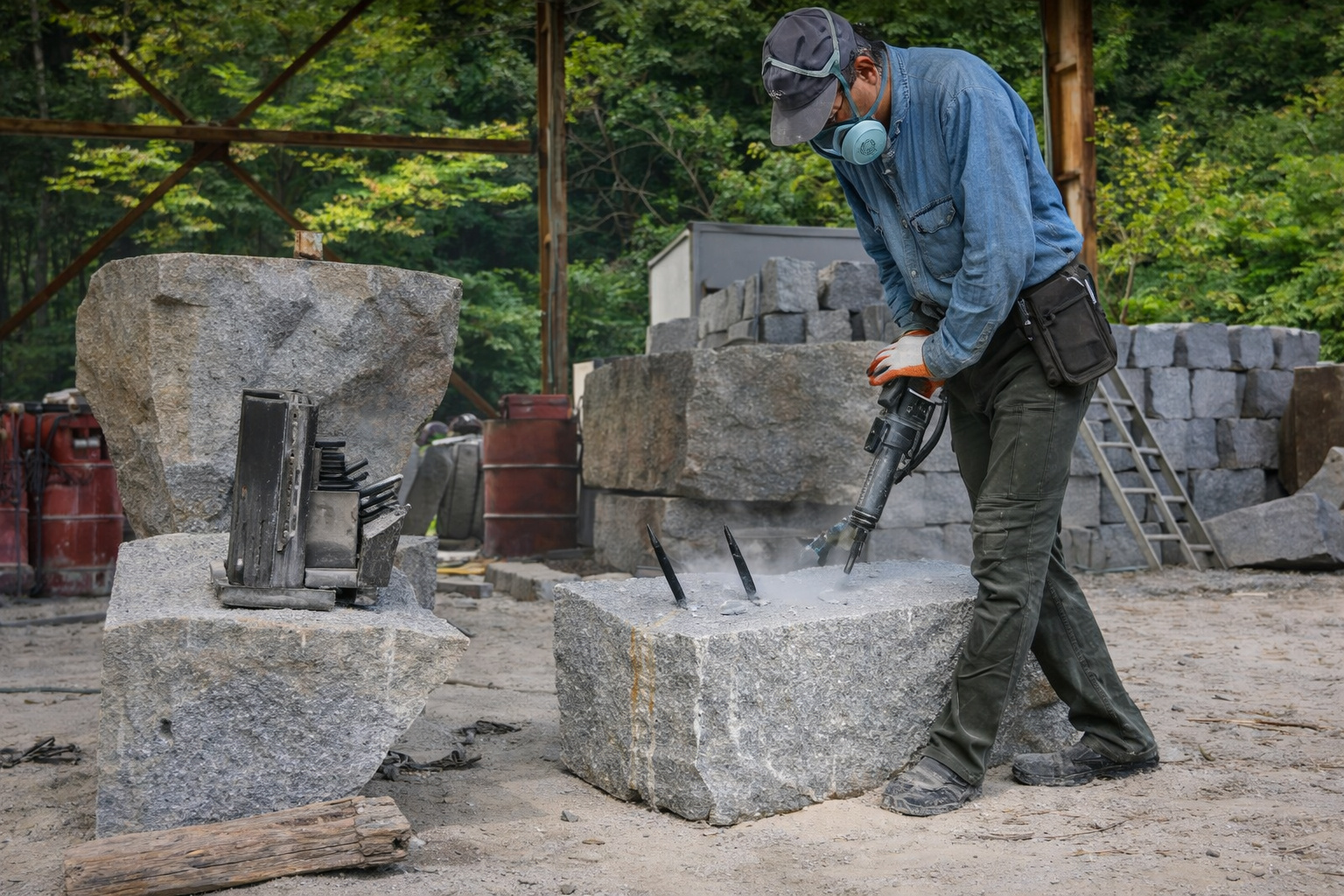
A Japanese mason transforms raw granite into small cups and handcrafted utensils, collects giant stones, cuts with precision, and impresses with detailed manufacturing and finishing.

With millions of years of climate change, previously wet regions became dry, forests retreated, and large areas turned into arid environments. In this push and pull of the planet, the lineage was forced to adapt or disappear. Many disappeared, some survived, and the mutations that were once just variations became advantages.
This history gave rise to different specializations. The dromedary and the Bactrian camel emerge as responses to distinct types of arid environments, one more associated with hot deserts, the other with cold and dry regions. Camels, in this sense, carry in their bodies a kind of memory of two worlds, the green past and the harsh present.
The Body Of Camels Seems Exaggerated Because It Was Shaped By A Real Problem

At first glance, camels seem like a collection of disproportions. Long legs, elongated necks, and humps that, to a quick observer, may appear like an “anatomical mistake.” However, each part responds to a specific challenge from the environment.
The long legs elevate the body and keep vital organs away from the ground, which can exceed 60ºC. In extreme environments, a few centimeters make a difference, and the body design becomes a thermal strategy, not aesthetic. The elongated neck allows reaching sparse vegetation without walking too much, saving energy and water when every movement has a cost.
The hump, in turn, is the most misunderstood detail. It does not store water. What exists there is concentrated fat, functioning as an energy and metabolic reserve. When metabolized, it releases energy and also metabolic water, a small but valuable source. Concentrating fat in one spot helps the rest of the body dissipate heat, unlike mammals that spread thermal insulation all over the skin.
The Math Of Thirst In Camels Is Different From Most Mammals

A camel does not “win” against thirst; it redefines what is tolerable. One of the most impressive facts is the ability to lose up to 30% of body water without dying. For humans, a loss of 10% can already be fatal, and this comparison makes clear why camels belong to another category of resilience.
Part of this lies in internal details that may seem minor but change everything. The red blood cells of camels are oval-shaped, unlike the circular shape common in many mammals. This shape helps the blood keep circulating even when it becomes more viscous with dehydration. It’s a subtle adjustment with a huge impact.
And when water finally appears, camels do not need to “take it easy.” They can ingest more than 100 liters in a few minutes without collapsing. The body handles the abrupt change in a way that would be dangerous for many animals, protecting internal balance and avoiding a shock that would compromise organs like the kidneys.
Nostrils, Urine And Feces: The Details That Hold Each Drop
A camel does not survive just by “withstanding” thirst but by reducing losses at every possible point. The nostrils can partially close to prevent the entry of sand and dust, especially during storms. Long eyelashes act as filters, protecting eyes and airways when the environment becomes a blur of particles.
Water economy also appears in the output, not just the input. Urine can become highly concentrated, and feces come out almost dry, minimizing liquid loss. This is not an isolated trick; it is a complete package, calibrated to function when supply is uncertain.
This kind of adjustment creates a logic of its own. Instead of seeking thermal comfort and constant hydration, camels accept to operate under risky conditions, but with safety margins that have been shaped for the worst-case scenario.
The Strangest Choice: To Let The Body Heat Up To Save Water
Among the most counterintuitive strategies is how camels deal with temperature. They regulate heat throughout the day and allow their body temperature to rise when the sun is strong, ranging from 34ºC in the morning to 41ºC in the afternoon, falling again at night. By doing this, they reduce the need to sweat and save water.
This decision comes at a cost. The body becomes hotter, discomfort increases, but the gain is surviving longer without hydration replenishment.
It’s the kind of efficiency that doesn’t seem elegant, but it’s brutally functional in an environment with no margin for error.
And this relates to behavior. When camels recognize signs of exhaustion, they simply stop and refuse to continue. What many call stubbornness may be a refined mechanism of self-preservation, because insisting too much in a hostile environment can be fatal.
What Camels Eat And Why This Is Also A Radical Adaptation
The diet of camels helps answer where they find energy when there is almost nothing available.
They can explore thorny, dry, and salt-rich plants that other herbivores would avoid. Thick lips, resistant structures in the mouth, and a hardened palate reduce injuries and allow them to take advantage of resources that seem impractical.
A camel also expands its menu beyond what’s expected. It can feed on more than 200 species of plants, including plants toxic to other animals. This is not just “eating anything”; it is transforming restriction into advantage, using what is available when competition recedes.
In the end, the whole makes sense: camels save water, reduce losses, tolerate dehydration, accept temperature fluctuations, and sustain energy with a diet that dodges scarcity.
Every choice seems absurd in isolation, but together they form a coherent system.
What Camels Reveal About Evolution And A More Arid Planet
A camel is not efficient in the common sense of “maximum comfort with minimum effort.” It is efficient to the extreme, made to function when almost nothing works. Evolution did not seek beauty or balance, it sought persistence, generation after generation, selecting those who could tolerate a bit more thirst, heat, and scarcity.
And this portrait gains another layer when considering a planet with accelerating desertification. Camels cease to seem an anomaly and begin to sound like a reminder that life adapts with unexpected tools. The lesson is not about the past, it’s about how organisms can endure when the environment tightens.
Now the question arises that often divides opinions: if you could “borrow” an adaptation from camels for real life, would you choose to endure more days without water, better control your body heat, or have a metabolic reserve like the hump, and why?






Fantástico , admirando esse **** cada vez mais!