






 Portuguese
  Spanish


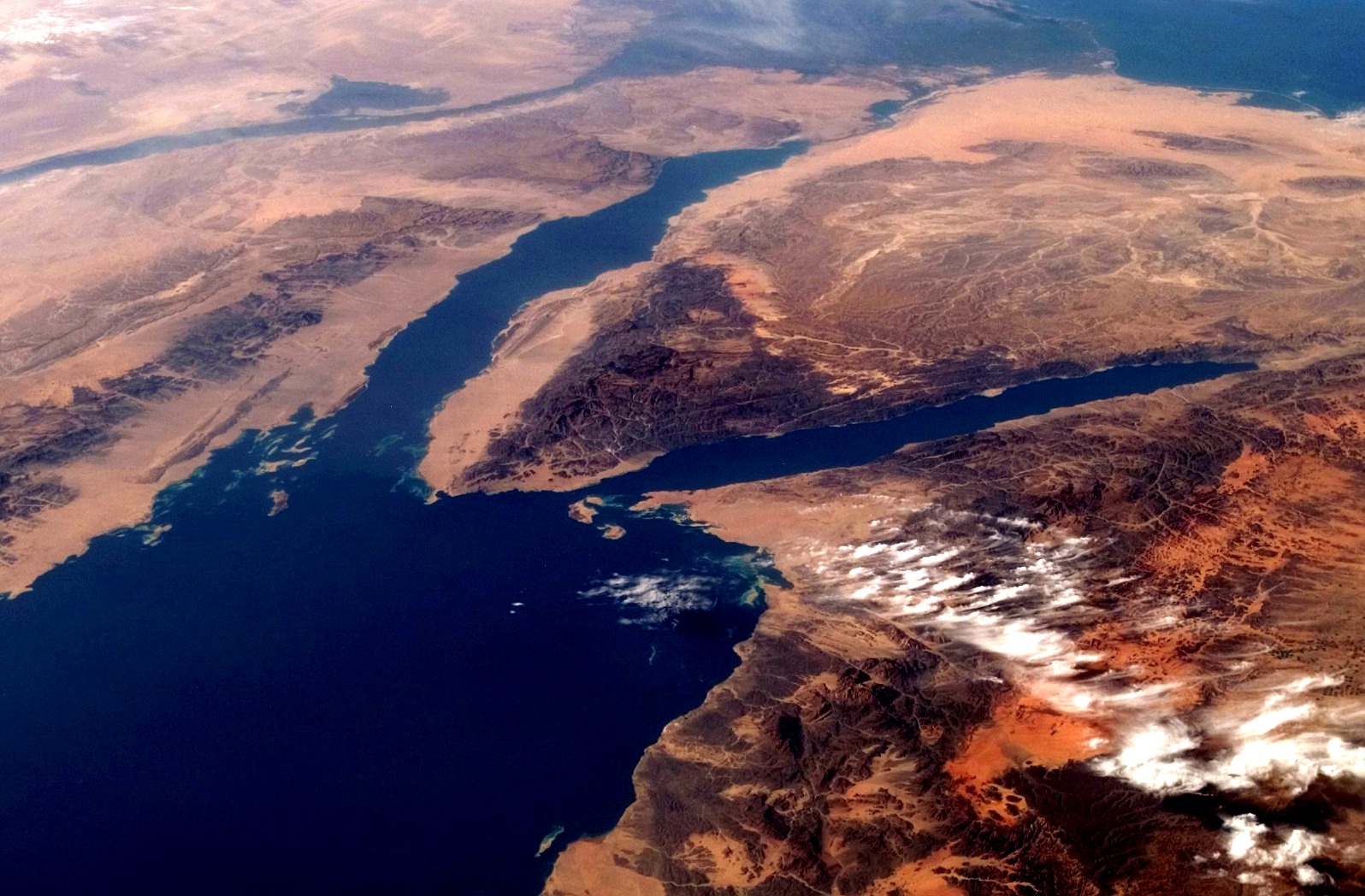


Hypersaline Underwater Pool, Nicknamed the “Pool of Death”, Is Found in the Gulf of Aqaba, Where High Salinity Prevents Marine Life from Surviving
Brine pools have been identified on the seafloor of the Red Sea, providing new insights into the origin of life on Earth and possible clues about life on other planets.
These hypersaline pools, located 1,210 meters below the surface of the Gulf of Aqaba, present a lethal environment for most marine life.
The discovery was made by researchers from the University of Miami, led by Sam Purkis, PhD, professor and chair of the Marine Geosciences Department.
-
ChatGPT Alerts FBI to Prevent Planned Murder of 8-Year-Old in Brazil’s Espírito Santo

-
Scientists Discover 125-Million-Year-Old “Pregnant Fossil” with Preserved Embryos and Microscopic Larvae Inside Mollusk in England

-
17-Year-Old Justin Bernstein Develops Bacteria to Produce Glass on Arctic Ice to Reflect Sunlight, Wins $50,000 U.S. Scholarship

-
The 19-Meter Rocket-Helicopter: A Private Industry Prototype That Challenged Space Race Logic



These pools, with water up to 10 times saltier than that of typical seawater, have anoxic conditions, meaning they are completely devoid of oxygen. Such conditions become extremely toxic. Any marine creature that enters them is killed or paralyzed instantly.
At the edges, predators lie in wait, ready to capture unsuspecting prey. Despite their hostility, these environments may hold answers about the formation of oceans and the emergence of life millions of years ago.
Exploring the Depths
The team from the University of Miami used remotely operated vehicles (ROVs) from the research vessel OceanXplorer, a highly equipped ship designed to navigate the planet’s most isolated regions.
“We were very lucky,” commented Purkis. “The discovery came in the last five minutes of the ten-hour ROV dive we could dedicate to this project.” The team was exploring deep trenches between Africa and the Arabian Peninsula when they encountered the pools.
In addition to extreme salinity and lack of oxygen, the toxic environment of the pools poses a challenge for marine life. However, despite these adverse conditions, the researchers found a community of microbes that survived in these locations.
This discovery could be crucial for understanding the limits of life on Earth and providing innovative clues in the search for extraterrestrial life.
Brine Pool: A Snapshot of the Past
Researchers believe that these brine pools may mimic the conditions of Earth’s past when life began to form. According to Purkis, the current understanding is that life on Earth originated in the depths of the ocean, likely in oxygen-free environments.
“Until we understand the limits of life on Earth, it will be difficult to determine whether alien planets can host any living beings,” Purkis explains.
“Our discovery of a rich community of microbes that survive in extreme environments could help outline the limits of life on Earth and could be applied to the search for life elsewhere in our solar system and beyond“, he concluded.
These pools also serve as natural time capsules. Due to the lack of animals that reexamine the seafloor, the sediment layers that accumulate remain intact.
This could preserve historical records of the region and provide information about climate changes and the evolution of ecosystems over millions of years.
Importance and Future Expectations
Only about 40 brine pools have been identified worldwide, located in the Red Sea, the Mediterranean, and the recently renamed Gulf of America. Purkis’s team believes that these discoveries could provide valuable insights into the origin of life.
Recent findings in the Gulf of Aqaba reinforce the value of these pools as preserved environments capable of offering a direct glimpse into Earth’s past. Future research could reveal more about ancient oceans, climate changes, and the evolution of marine life.
With information from Interesting Engineering.


No recente renomeado “Golfo da América” ?
Quem escreveu isso deveria ser banido.