





 Portuguese
  English
  Spanish
  5 min of reading
  0 comments


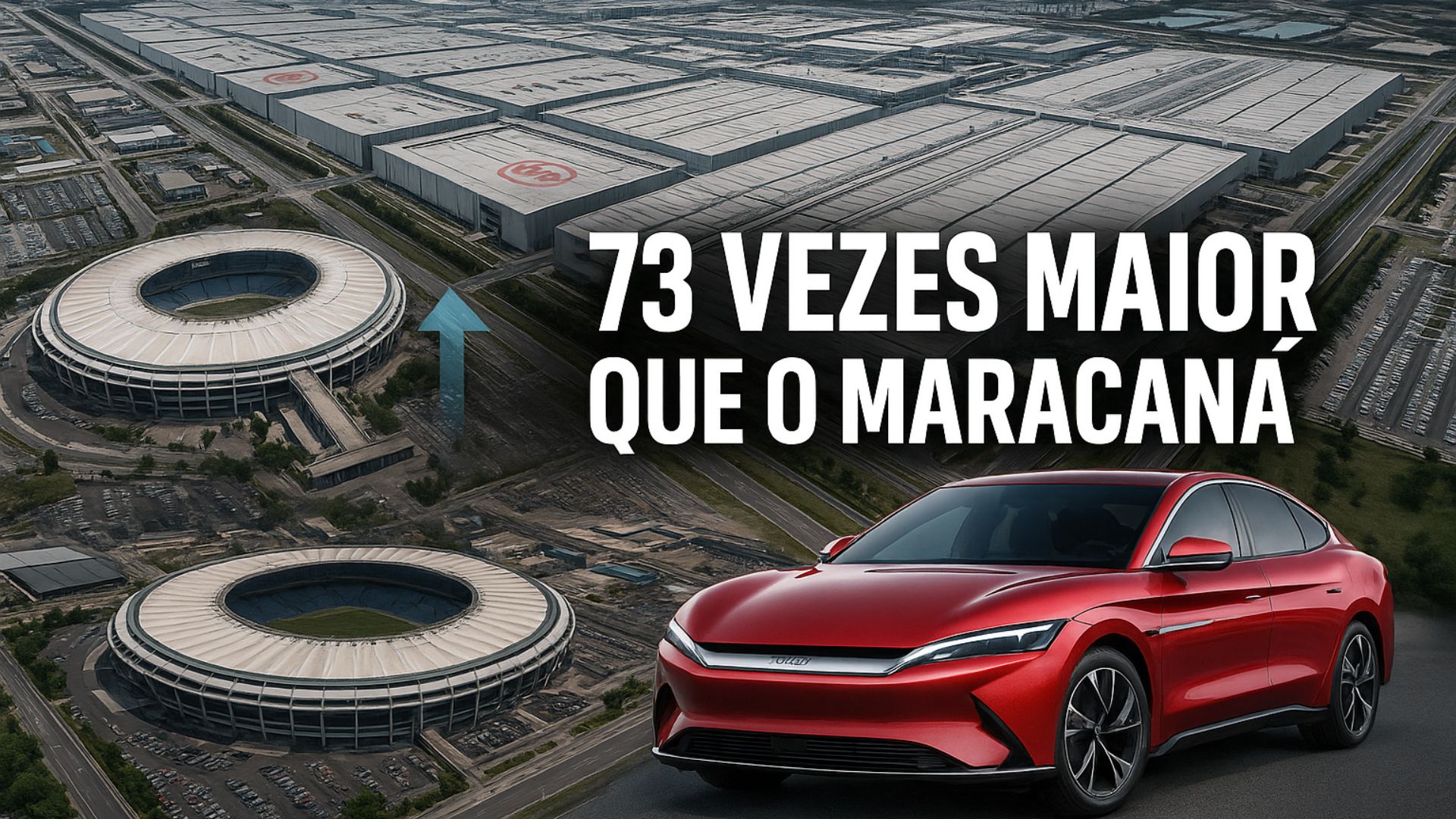
BYD’s Largest Factory Gathers Extreme Automation, Large-Scale Production, and Unprecedented Vertical Integration, Creating an Industrial Complex That Attracts Global Attention for Its Technological Capability and Effects on the Automotive Market.
BYD’s largest industrial complex for passenger cars in China operates like a city focused on electric mobility.
The area covers 10.67 km², employs around 57,000 people, and operates with automation levels close to 100%.
According to a report published by UOL, the complex uses nearly 2,000 robots on lines capable of assembling up to 12 different models simultaneously, achieving automation over 98%.
-
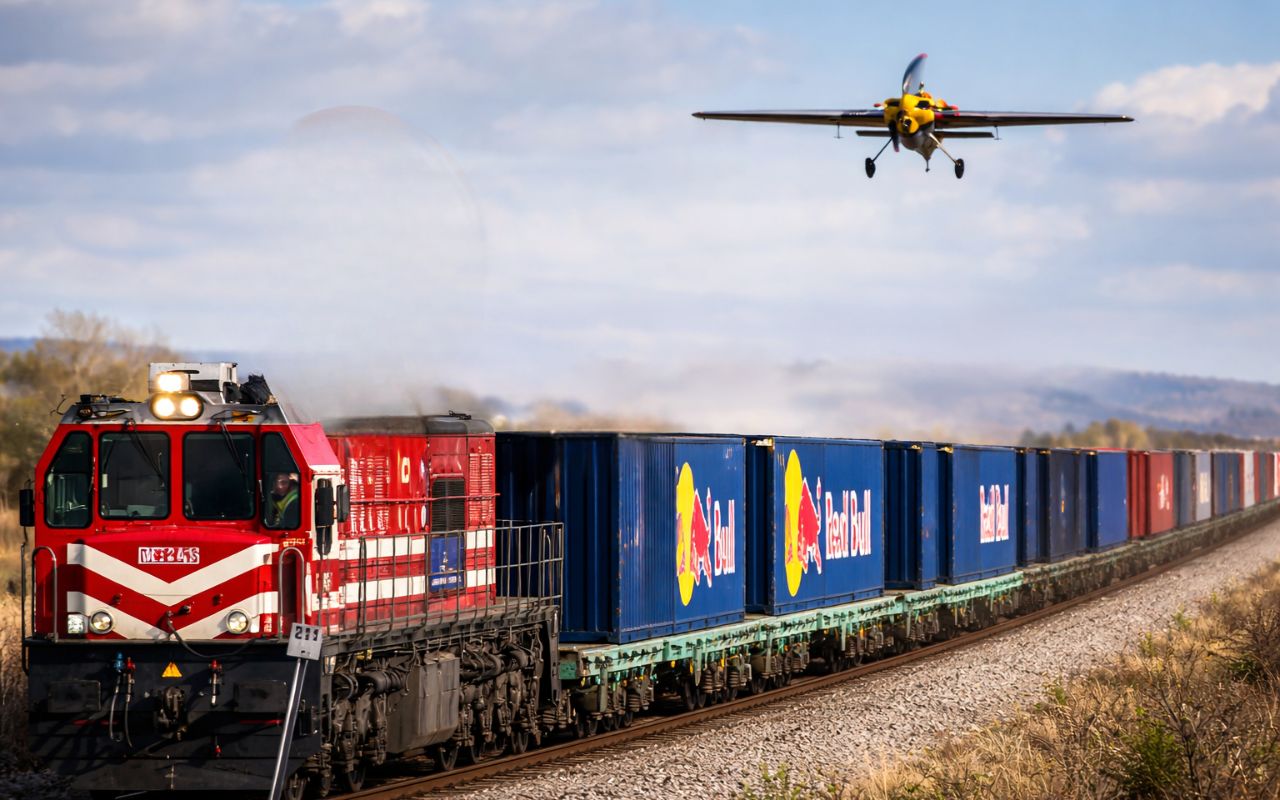
(Video): Italian pilot lands plane on moving train at 120 km/h and achieves unprecedented feat in aviation, even with a narrow runway and without direct visual contact.
-
It seems to have come out of a science fiction movie: A Brazilian city where it rains almost every day, recording over 4,000 mm per year, driven by climatic factors — a direct result of its strategic location in the Amazon.

-
The water crisis that could change everything this year has already begun; it’s not just about the climate, it affects technology, raises product prices, and can halt entire companies without warning.

-
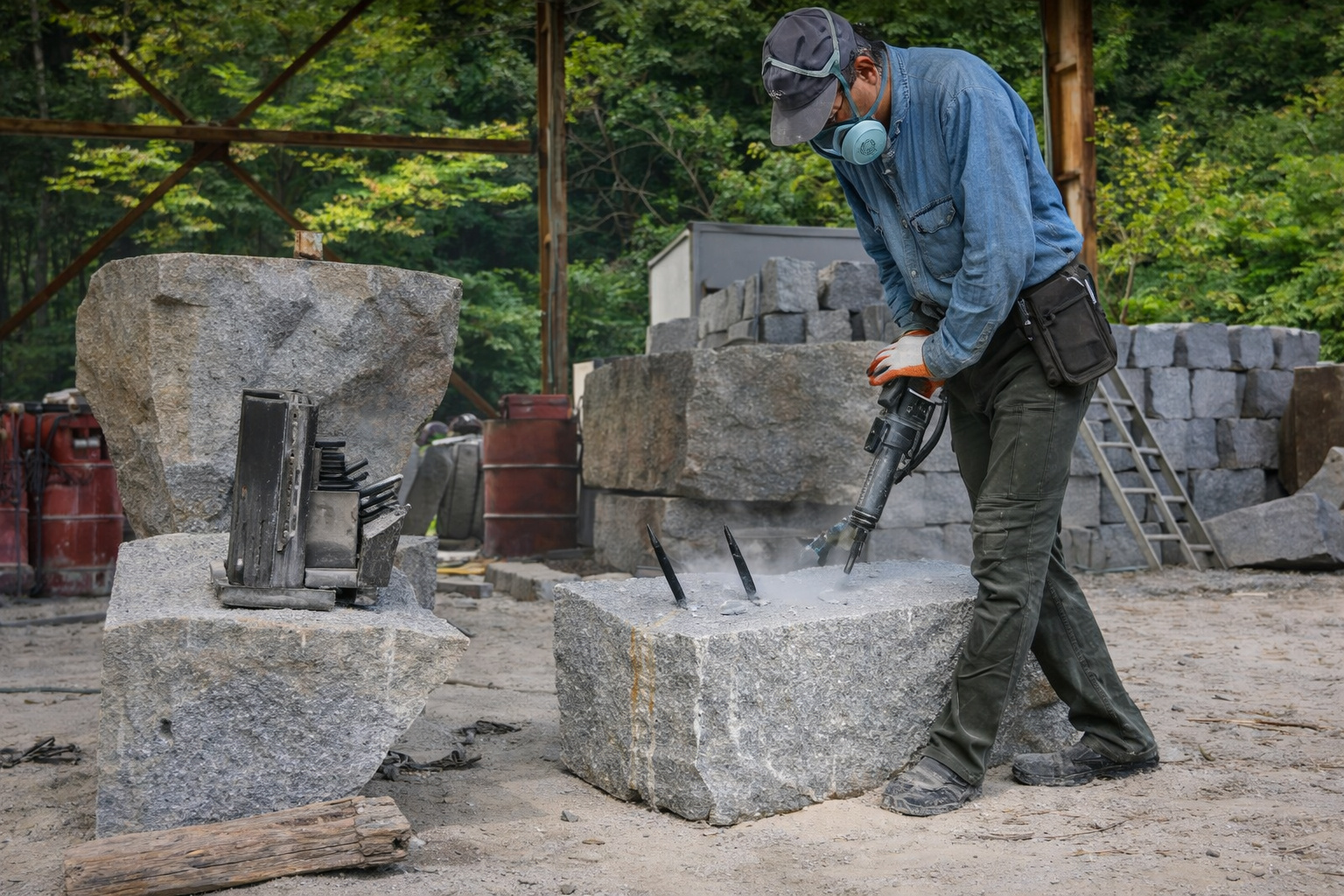
A Japanese mason transforms raw granite into small cups and handcrafted utensils, collects giant stones, cuts with precision, and impresses with detailed manufacturing and finishing.
Industrial City and Large-Scale Operation
The visit to the Zhengzhou complex brings together more than 250 journalists and influencers from the Americas, Europe, and Africa.
The company’s management confirms the strategy.
Stella Li, BYD’s Executive Vice President and head of international business, stated that the goal of opening the plant’s doors was to showcase the scale and operation of the production center.
The complex houses assembly lines, stamping, welding, painting, component machining, and production of strategic parts.
The internal organization includes dormitories, testing areas, and work support structures, which reinforces the frequent comparison made by visitors to an “industrial city”.
According to UOL’s investigation, this internal logistical integration is one of the most highlighted points during guided tours.
Automation, Robots, and BYD’s Vertical Integration
The Zhengzhou complex is considered BYD’s main production hub aimed at the Chinese market.

Industry experts say that the size is linked to the vertical integration model, in which the company manufactures around 70% of a vehicle’s components internally.
In the welding areas, human presence is minimal.
Robots execute almost all steps, allowing the same production line to adjust software and equipment to assemble, in sequence, models such as Song Pro, Seal 07, Shark, and Denza B8.
According to the company, the architecture of the lines and the use of internally developed systems enable quick alternation between models.
The silence is one of the points that draw attention during the visit.
The stamping presses operate isolated in acoustic booths, and the number of visible operators is small.
For analysts, this scenario demonstrates the current stage of the Chinese automotive industry, based on intensive automation and standardized processes.
UOL also noted that the low presence of workers on the factory floor has become a recurring feature of the country’s most modern industrial centers.
The unit also houses the Power Battery Park, responsible for producing the Blade Battery, lithium iron phosphate technology developed by BYD.
According to the company, the design aims to improve thermal safety and energy density compared to previous models.
Chinese Subsidies and Global Impact
The expansion of these complexes is part of China’s industrial policy.

Between 2009 and 2023, the government allocated at least US$ 230.8 billion to the electric vehicle sector, according to CSIS data.
The incentives include subsidies to buyers, tax exemptions, investments in charging infrastructure, R&D programs, and public procurement.
As a result, the country recorded strong growth in the domestic market and consolidated a robust battery and power electronics supply chain.
In 2023, China surpassed Japan to become the world’s largest exporter of vehicles.
In 2024, it recorded approximately 31.4 million vehicles produced, with electric and plug-in hybrid vehicles accounting for about 40% of sales and licensing.
Researchers claim that the strategic goal is to expand China’s presence in global electrification markets.
They emphasize that the government accepts smaller margins in the domestic market to strengthen essential sectors, increasing competitiveness in international markets.
BYD and Leadership in Electromobility
BYD plays a significant role in this scenario.
Founded in 1994 as a battery manufacturer, it transitioned to the automotive sector in the early 2000s and expanded its operations to the entire electrification chain.
The company is present in over 100 countries, with cars, buses, trucks, and energy solutions.
In 2024, market reports show that BYD surpassed Tesla in global sales of battery electric vehicles (BEV).
The international expansion includes factories operating or being implemented in countries such as Brazil, Thailand, Hungary, and Turkey.
Flash Charging and 1 MW Charging

BYD introduced the Flash Charging technology, based on 1 megawatt chargers.
According to the company, the system can add about 400 km of range in five minutes, under ideal conditions.
The first compatible vehicle is the sedan Han L.
The charging requires specific infrastructure, with dedicated cables and cooling systems.
BYD also announced plans to install more than 4,000 megacharging stations in China.
In Brazil, partnerships foresee the installation of fast and ultra-fast chargers, including 1 MW models.
Camaçari Factory and Expansion in Brazil
International expansion also includes South America.
In October 2025, with the presence of President Luiz Inácio Lula da Silva, BYD inaugurated the passenger vehicle factory in Camaçari (BA).
The investment is R$ 5.5 billion, with an estimate of up to 20,000 direct and indirect jobs, according to the company and Brazilian authorities.
The industrial plan includes production expansion stages.
Initially, the unit is expected to operate with a capacity close to 150,000 vehicles per year, potentially reaching 300,000 units and up to 600,000 vehicles at full load.
In a UOL report, executives emphasized that the factory was designed to act as an export hub for countries in Latin America.
Experts highlight that BYD’s presence is likely to grow in relevance as regional demand for electric vehicles increases and electrification policies consolidate.
With this global redesign of the industry and increased investments in Brazil, the central question arises: how will BYD’s presence influence innovation and competitiveness in the Brazilian automotive chain in the coming years?






-

-

-

-

-

9 pessoas reagiram a isso.