Portuguese
 Spanish


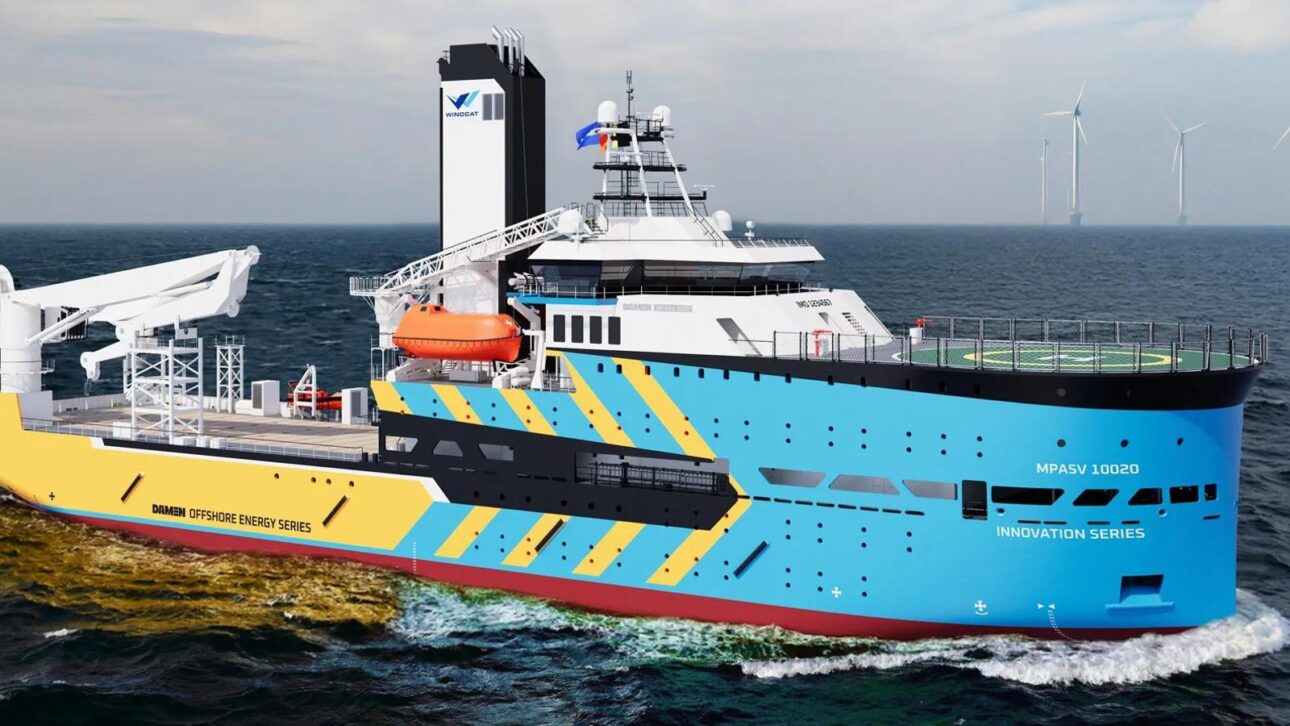

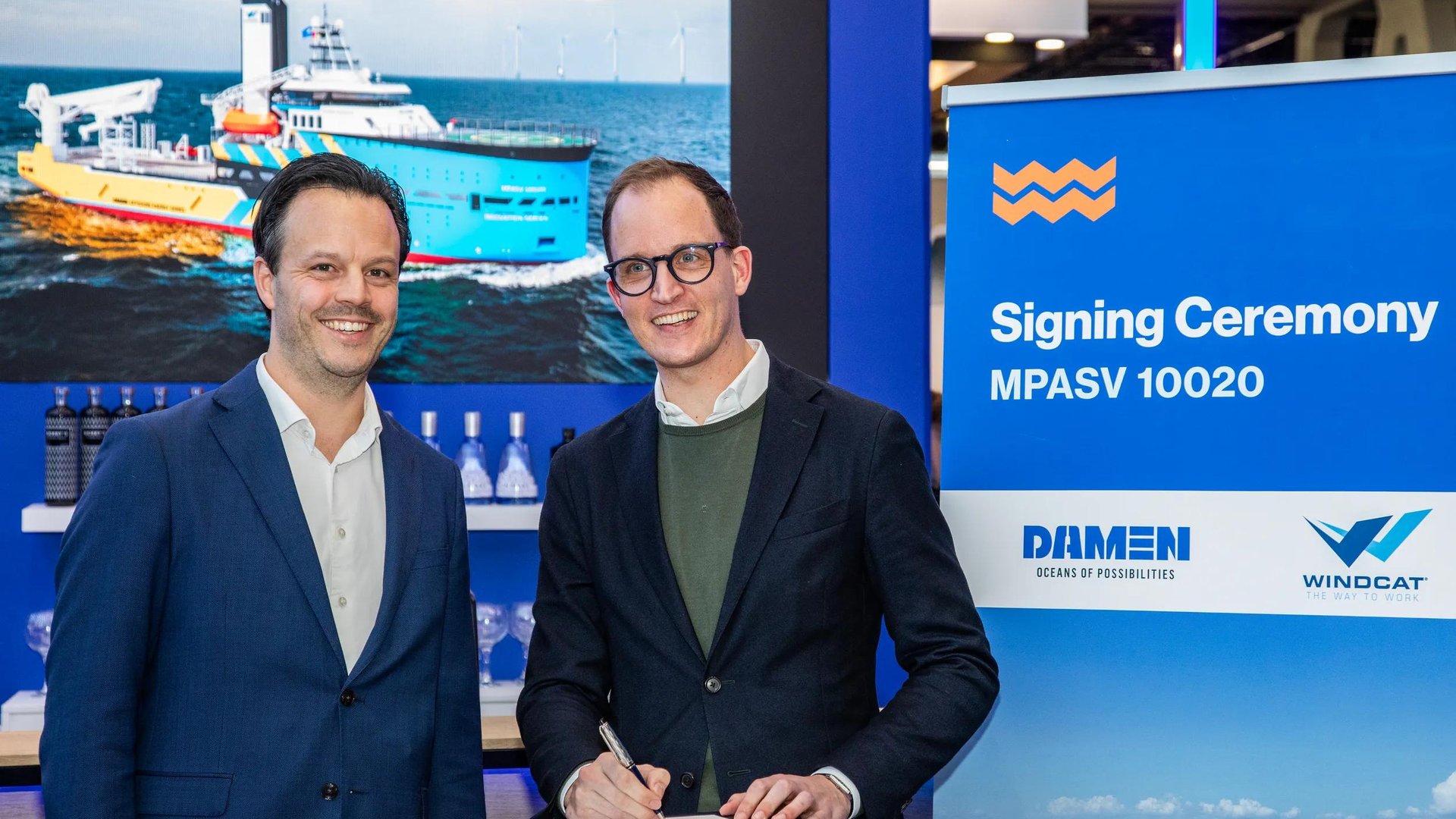
Dutch shipbuilder Damen signed a contract with Windcat on Tuesday, November 24, 2026, for the second support and accommodation vessel in the Innovation series: 102 meters, 111 cabins, capacity for 190 people, a 150-metric-ton subsea crane and missions of up to 150 days
Dutch shipbuilder Damen will build the second vessel in Windcat’s Innovation series in Vietnam. The ship combines support functions with floating accommodation. The contract was signed on Tuesday, November 24, 2026.
The order was reported by Offshore Engineer on Wednesday, the 25th. Damen’s announcement was published on the 24th on The Maritime Executive website, with comments from both companies.
The order has no direct impact on Brazil because the vessel is headed to a Dutch company. Damen, however, is also a supplier to the Brazilian Navy.
-
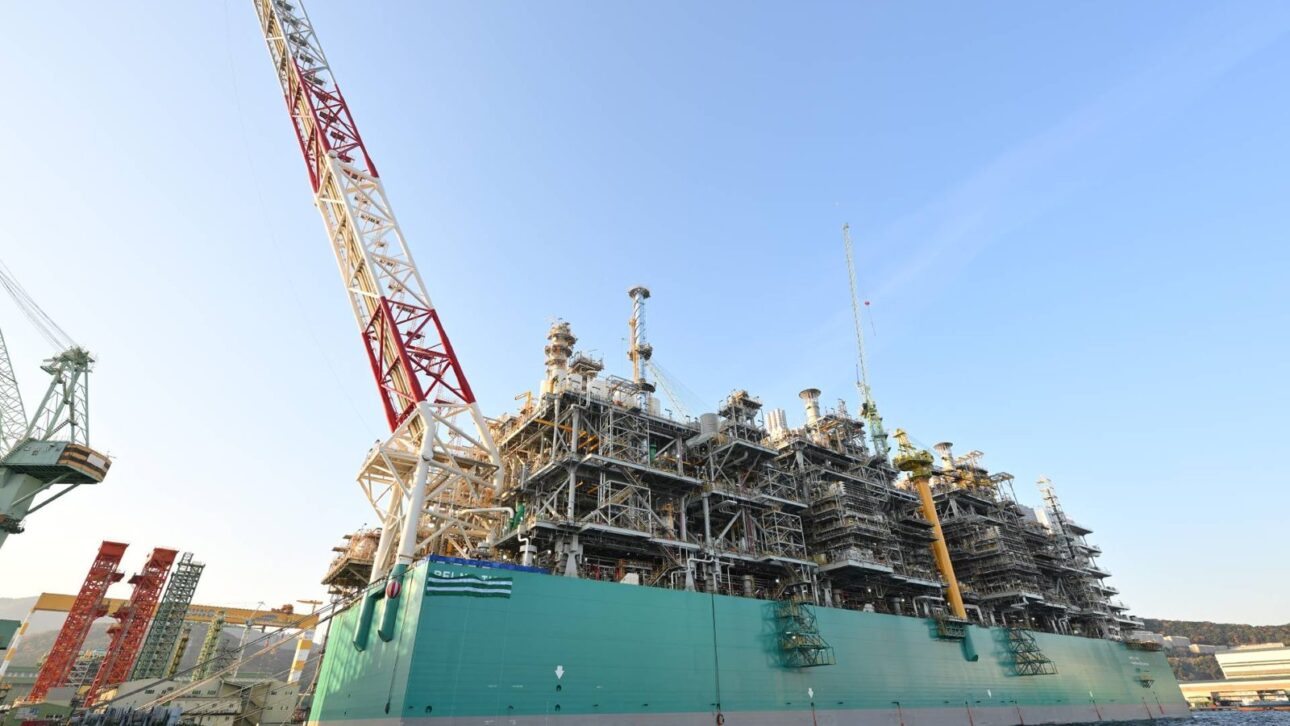
Petronas christens PFLNG TIGA, the world’s first nearshore floating LNG facility, a 281-meter vessel with capacity to produce 2 million metric tons a year starting in 2027

-
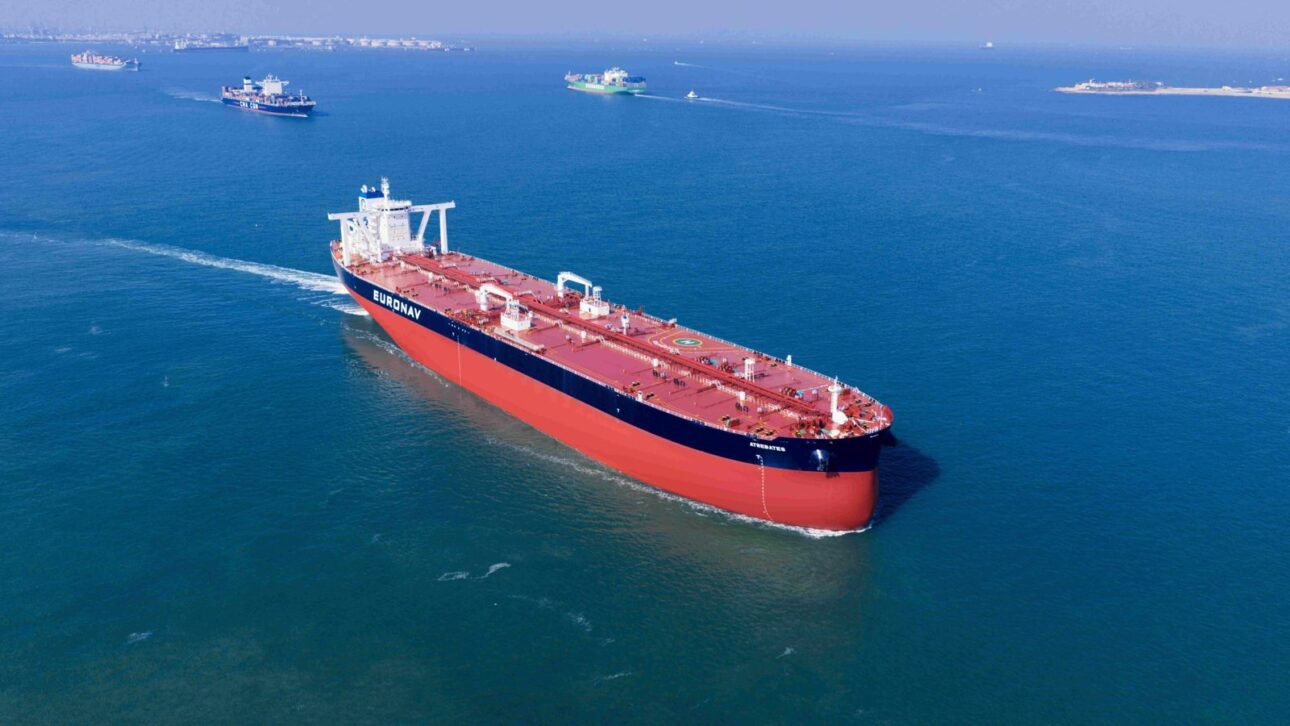
CMB.Tech reveals 15-year-old supertankers now worth $165 million, exceeding the price of new ones by 25%, as daily rates soar past $635,000 amid Strait of Hormuz conflict
-
Siemens Gamesa reserves capacity for turbines over 15 MW for Green Volt, set to be the world’s largest floating wind farm
-
Petrobras considers targeted change in fuel pricing policy as oil stays below $90, director Laureano suggests permanent shift

Two rescue boats built by the group entered service with the Navy in 2026, in Rio de Janeiro and Vitória. The case is covered in detail further below.
Windcat is part of CMB.TECH, a group controlled by the Saverys family, as reported on the Splash247 website. The vessel’s acronym is MP-ASV, short for multipurpose accommodation support vessel.
Specifications for the vessel Damen will build
The hull is 102 meters long and 20 meters wide. The open deck covers about 750 square meters, an area used for cargo, equipment and offshore operations.
The accommodation section has 111 cabins, with space for up to 190 people on board. With its maximum fuel capacity, the vessel can remain at sea for up to 150 consecutive days.
The vessel also has equipment for installing an ROV, or remotely operated vehicle. The crane, gangway and power system round out its specifications.
The uses listed in the announcement include subsea cable repairs, support for offshore wind farms, floating accommodation and support for ROV operations.
150-metric-ton crane and gangway that compensates for wave motion
The offshore crane operates in two ways. In subsea crane mode, it can lift up to 150 metric tons. With three-dimensional motion compensation, the same crane can lift up to 15 metric tons.
Motion compensation offsets the waves’ up-and-down movement. This keeps the load hanging from the crane stable even when the vessel is moving.
The access gangway also has three-dimensional motion compensation. It comes with two interchangeable end fittings.
One end fitting is for short transfers of personnel to wind turbines. The other is for longer connections to offshore structures.
Dynamic positioning and extra thrusters
The vessel uses a DP2+ dynamic positioning system, with CBS and CBT class notations from classification society DNV. The system keeps the vessel in place without an anchor by using its thrusters.
In addition to the main thrusters, the design includes extra tunnel thrusters at the bow and stern. In a description published by Damen in 2025, this redundancy allows the vessel to maintain DP2 even if one thruster fails.
Batteries, hydrogen and three generators for long missions
The power system has three components. The first is a battery system used to cut peak demand, provide spinning reserve and enable battery-electric operation.
In the 2025 design, Damen presented a 3,981 kWh battery connected to a DC grid. This setup enables the vessel to travel some stretches using only electricity.
The second element is the dual-fuel auxiliary generator, which can run on hydrogen. Damen and Windcat have highlighted the hydrogen engine more than any other feature since the first contract.
In 2025, the shipyard had already described the dual-fuel engine as capable of running the auxiliary generator on hydrogen, alongside the battery on the DC grid.
The third element is three main generators made by ABC, from its Evolve line. They can run on biodiesel, HVO (hydrotreated vegetable oil), in dual-fuel mode, or entirely on gas.
Why Windcat calls the vessel a floating hotel
With 111 cabins, the vessel serves as a flotel, a floating hotel that accommodates crews working on offshore construction and maintenance projects. Damen lists this as one of the vessel’s applications in its announcement.
The design builds on the comfort already tested on Damen’s Elevation series vessels, built for Windcat. Those vessels provide the technical foundation for the Innovation series.
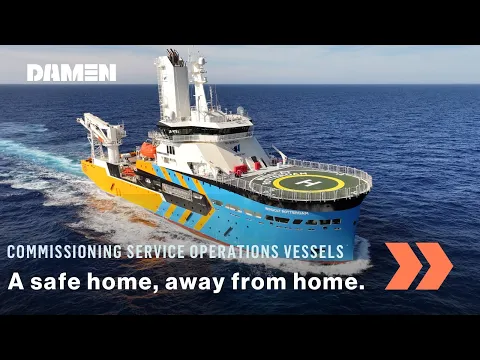
Damen showed the interior of one of these vessels, the CSOV 9020, in an English-language video on YouTube dated January 23, 2026. The description says the vessel was built with Windcat.
The video highlights leisure areas designed to reduce seasickness and homesickness. It also shows step-free access to the turbines and the Damen DPX propulsion system.

From the Elevation series to the Netherlands’ Ship of the Year
The Innovation series continues the partnership established with the Elevation series. The first vessel in that series, the Windcat Rotterdam, won the KNVTS Ship of the Year award at the 2026 Maritime Awards Gala.
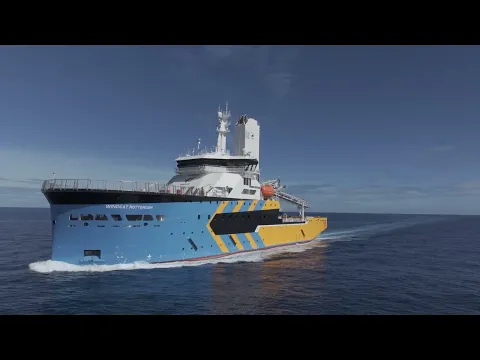
Windcat introduced the Windcat Rotterdam in a video posted on YouTube on August 26, 2025. In the English-language description, the company celebrates the vessel’s arrival in its fleet.
Windcat writes that with its addition, it now offers both services: crew transfer boats and commissioning vessels for wind farms.
TGS | 4C Offshore, a data platform, also documented the series’ debut. On August 27, 2025, it posted a brief announcement in English on X.
The post says Windcat launched the first of six new hybrid commissioning vessels for use at offshore wind farms.
How the Innovation series came together in 2025
The first vessel in the series was ordered on November 25, 2025, at the Offshore Energy Conference in Amsterdam. That day’s contract covered one firm vessel and an option for five more of the same design.
At the time, Damen said construction was scheduled to begin in February 2026 at the Ha Long shipyard in Vietnam, with delivery in 2028. Splash247 reports that the series is being built at the same shipyard.
With Tuesday’s order, Windcat now has two vessels in the Innovation series on order from Damen.
On March 25, 2026, Windcat welcomed visitors aboard another vessel from the partnership, Windcat Amsterdam, in Amsterdam. A video the company posted on YouTube on April 1 shows the event.
The English narration says viewers were introduced to the “home away from home” concept aboard the vessel and its technologies for fuel efficiency, emissions control and safety.
What Windcat and Damen say
Windcat Managing Director Willem van der Wel said in the announcement that ordering a second vessel reflects confidence in the new concept.
He also cited the goal of strengthening Windcat’s position in the offshore energy market.
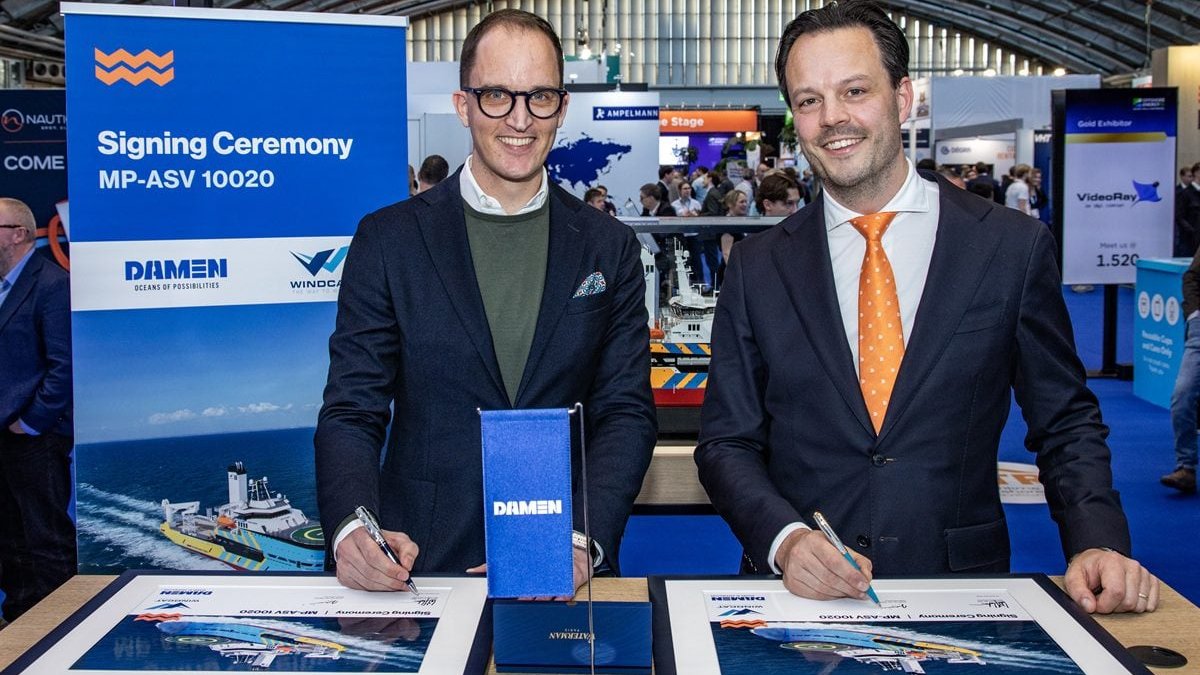
Damen Sales Director Joost van der Weiden said the shipbuilder was very pleased with Windcat’s second order. gCaptain published a photo of the two signing the contract.
Damen in Brazil: Navy rescue boats
In Brazil, Damen’s name is associated with the Navy. Two SAR 1605 FRP search-and-rescue boats entered service in 2026.
The details come from a Damen announcement published by The Maritime Executive on May 29, 2026.
LSAR 01 was commissioned at a ceremony in Rio de Janeiro on April 27, 2026. LSAR 02 was commissioned in Vitória, in the state of Espírito Santo, on May 18.
The boats are 15.7 meters long and have a beam of 4.8 meters. They were built at Damen’s shipyard in Antalya, Turkey.
Damen delivered both boats to the Navy in late 2025, after winning a tender in late 2023.
Under Navy specifications, they right themselves after capsizing and can make more than 25 knots. They operate up to 80 nautical miles offshore, with an endurance of three days.
The Brazilian Navy has been a longtime Damen customer. The shipbuilder has delivered tugboats and the training sailboat Cisne Branco, which was received around 2000.
Brazil and offshore wind farms
The other point of contact with Brazil is offshore wind, a market that vessels such as Windcat’s are designed to serve.
On August 19, 2025, Offshore WIND published a post on X in English saying the Brazilian government is preparing a methodology to select areas for offshore wind auctions.
The post says the method identifies and designates areas where projects can be proposed. The selection process would take place in three stages.
Markets the vessel was designed to serve
Splash247 describes the vessel as suitable for offshore wind, oil and gas, subsea cable repair, accommodation, and ROV operations.
The 2025 contract left open the option for five more vessels in the Innovation series, in addition to the first. Windcat can therefore still expand the series with Damen.