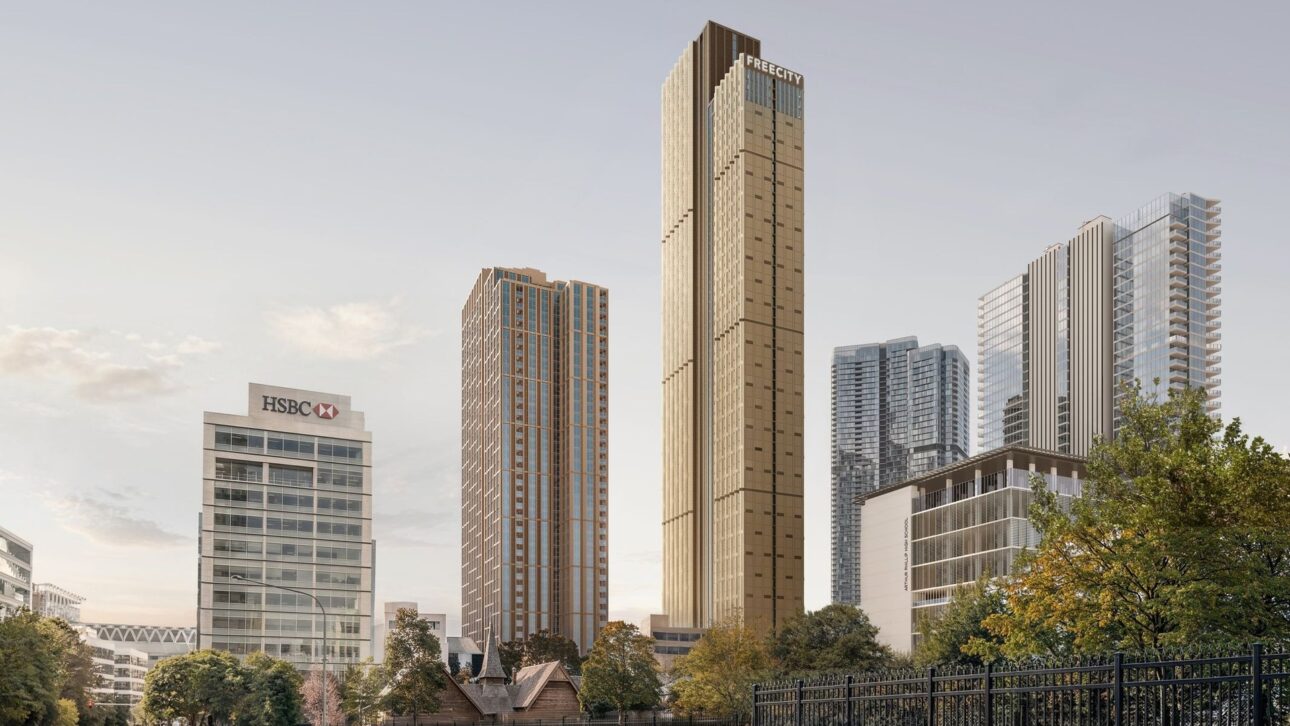

Developer Lawrence Zheng wants to stack factory-built steel modules 71 storeys high at 89-91 George Street in Parramatta, in a $607 million modular tower with 1,152 rental homes that his company, Freecity, says would rank among the tallest volumetric modular buildings in the world.
The plans were lodged with the New South Wales planning system this week, according to ArchitectureAU, which reported the scheme on November 25 after Freecity released details of the proposal in western Sydney.
Nothing has been approved yet. The tower was lodged as a state significant development application, with a concurrent rezoning request through the Housing Delivery Authority pathway, and construction would only start in 2027 if the state signs off.
A rental tower split into three kinds of homes
The 1,152 rental dwellings are divided into three groups. There are 280 build-to-rent apartments, and 236 of them are designed as dual-key units, which the developer says can create up to 516 separate homes.
-
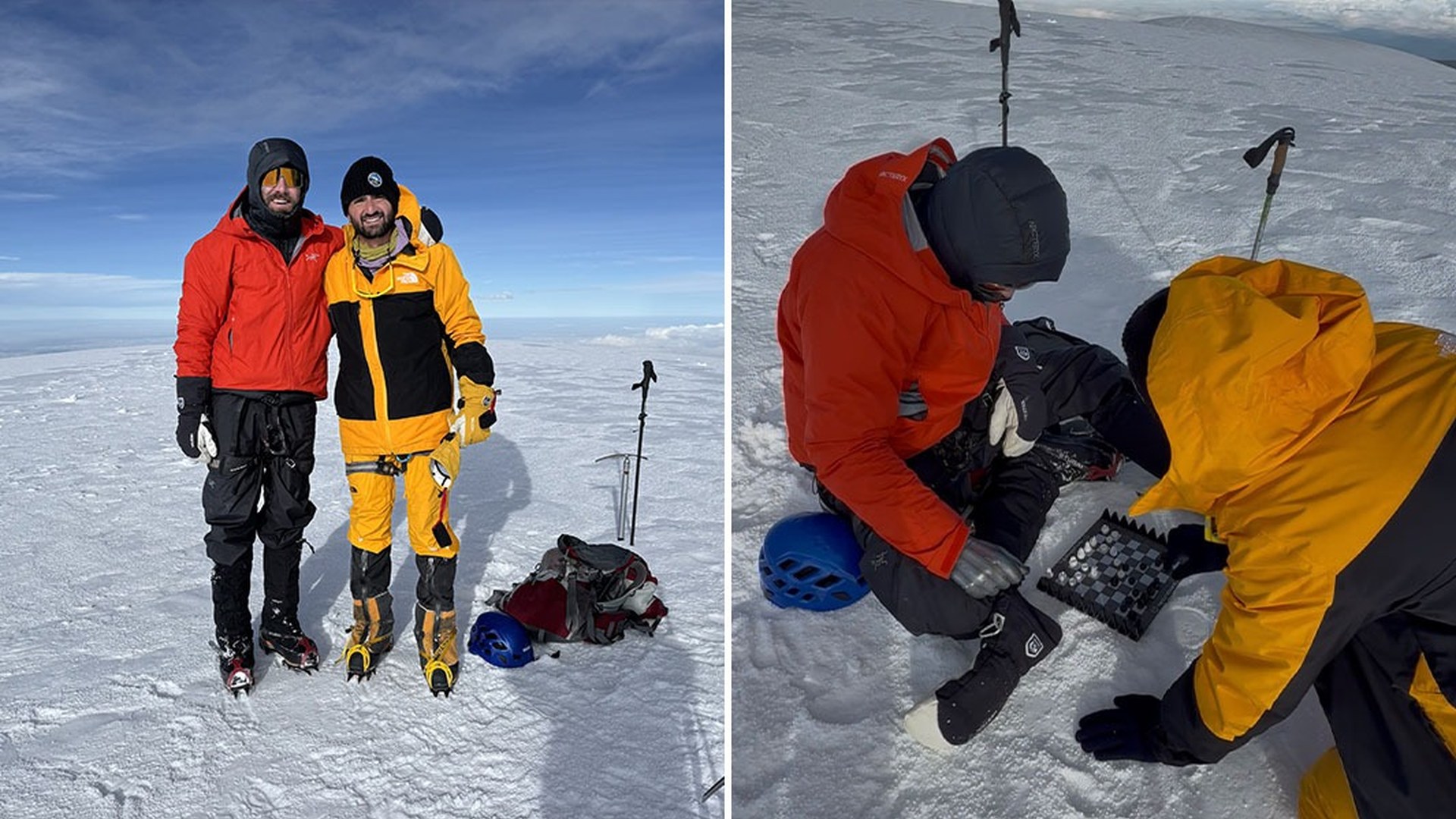
Best friends Adam Wininger and Joshua Host climbed Ecuador’s Chimborazo to 6,277 m (20,593 ft) and played chess on the summit in gloves, and Guinness World Records now lists it as the highest altitude for playing a board game, 200 ft above the old mark

-
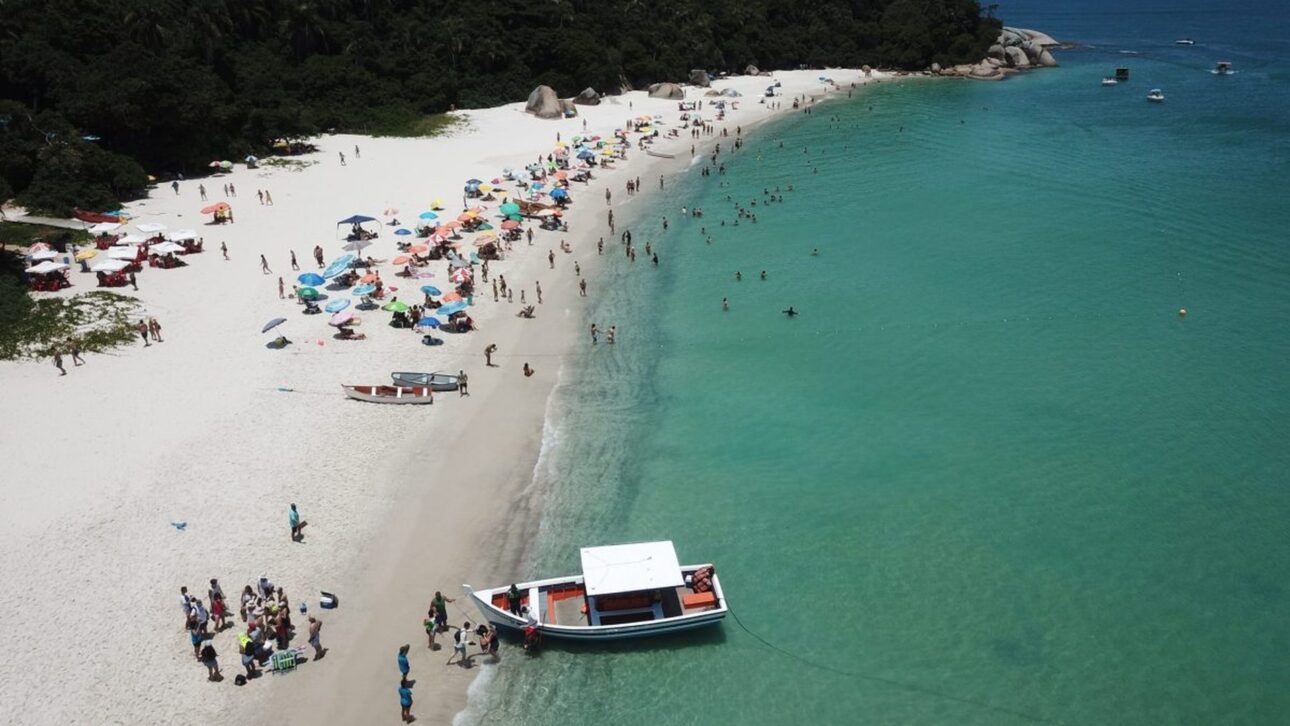
Campeche Island, the Brazilian Caribbean, imposes doubled entry fee of R$35 this summer, capping visitors at 800 daily

-
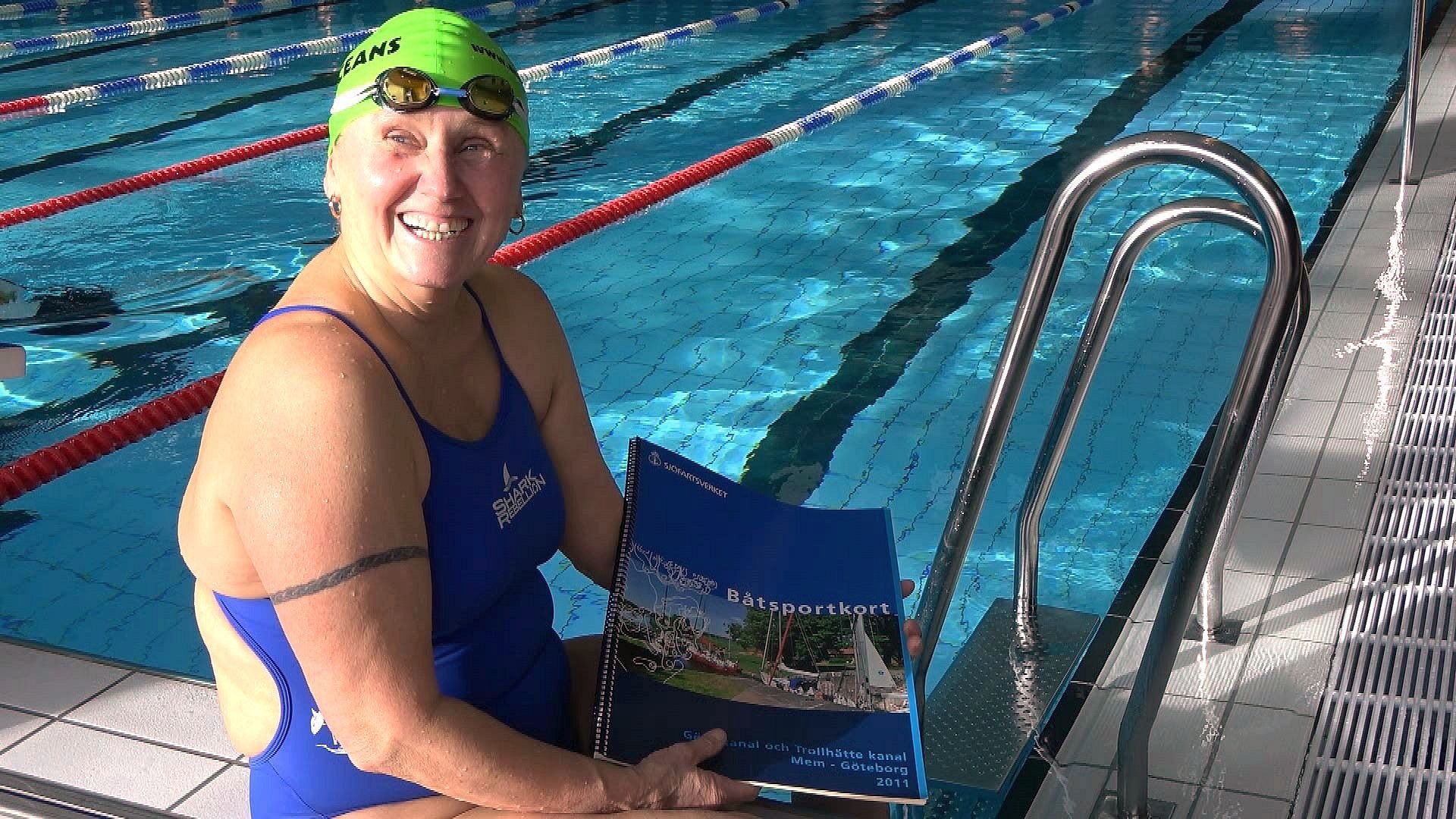
Swedish lifeguard Anna-Carin Nordin swam the full 190 km of the Göta Canal through 58 locks in water of 12 to 14°C wearing only a swimsuit, cap and goggles, and Guinness World Records now lists it as the fastest female stage swim of the canal
-
Cerrado Mineiro coffee grower sells one bag for R$220,000 in Uberlândia, setting Brazil’s all-time record at about R$3,667 per kilo as nine bags fetch R$733,000 at auction

The rest of the count comes from 636 co-living units with their own shared spaces. Freecity said 5 percent of the build-to-rent apartments would be affordable housing, managed together with a community housing provider.
Below the homes, the scheme adds 1,500 square metres of commercial space, shops at ground level and more than 4,500 square metres of amenities for residents, according to the project details published by ArchitectureAU.
How a 71-storey building gets built in a factory
The tower would use steel-structure volumetric modular construction, known in the industry as VMC. Whole room-sized modules are manufactured in a factory while the site work goes on, and are then lifted into place on the building.
Freecity claims the approach is expected to cut construction time by 25 to 50 percent and to improve consistency and quality. Those figures come from the developer’s own media release, as quoted by ArchitectureAU.
The phrase “one of the tallest volumetric modular construction buildings in the world” is also the developer’s claim. No independent ranking of modular towers was published alongside the plans.
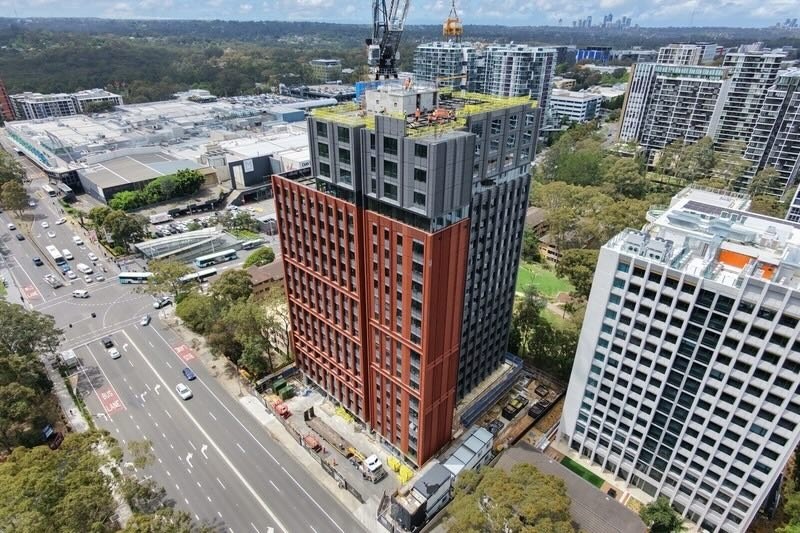
The 20-storey test run in Macquarie Park
The company’s case rests on a building it has just finished stacking. Freecity topped out a 20-storey, 528-unit student accommodation block at 169-171 Herring Road, Macquarie Park, in Sydney, according to Built Offsite.
The steel-framed modules there went up just over four months after the first units were craned into position on June 12, 2026, at an average pace of more than one floor per week, the trade publication reported.
Those modules were manufactured and fitted out in China, with procurement, compliance and delivery coordinated by Freecity’s modular integrator, Space Labs Australia. Each one arrived in Sydney with its interior fit-out and facade already installed.
The Herring Road building combines the factory modules with a reinforced concrete core built on site in the conventional way. Completion is scheduled for early 2027, and Accor will manage the finished property under the Freecity brand.
What the co-founder says about Parramatta
Lawrence Zheng, co-founder and joint CEO of Freecity, said the company wants to carry what it learned building “Australia’s tallest modular building” at Herring Road, designed by Cox Architecture, into the George Street proposal.
“Parramatta is one of the most exciting growth stories in Australia,” Zheng said. He argued that government money has gone into the city’s transport, education and cultural life, and that private developers should help turn that spending into homes and jobs.

Michael Romano, Freecity’s executive director of development, said housing delivery needs to keep pace with the investment already under way in Parramatta, and that a growing employment centre needs a wider range of housing choices.
Two slender forms joined by a central spine
The tower is designed by FK Australia with HTA. According to the developer, it consists of two slender forms joined by a central spine, a shape refined through an independent design review panel.
Freecity said the design was also shaped by Walk on Country and co-design sessions with Dharug Elders. FK Australia partner Helen Kuo and project lead Dinal Savinda described it as a vertical community with apartments that adapt to multi-generational households.
“We look forward to setting a new benchmark for resilient, sustainable housing,” Kuo and Savinda said in the statement quoted by ArchitectureAU.
A second Freecity tower next door
The 71-storey building is not planned alone. Freecity is also developing a 40-storey build-to-rent tower at 1 Barrack Lane and 81-83 George Street, and the company describes both as one precinct with a shared podium and street frontage.
Both towers would use the same steel modular system. The developer said the coordinated podium would sit about 17 metres from the neighbouring Perth House and Stables, which are listed on the state heritage register.
From 60-plus storeys to 71
The Parramatta project has grown in public descriptions. In its report on the Herring Road topping out, Built Offsite described Freecity’s pipeline as including a 60-plus-storey build-to-rent tower at Parramatta. The lodged scheme now calls for 71 storeys.
The same pipeline includes three modular towers at Rouse Hill with 548 rental homes and two student housing projects at Rockdale and Forest Lodge, with a combined 235 units, according to the trade publication.
Freecity reports a development portfolio of more than $7 billion and a pipeline of over 6,000 units across Sydney. Benjamin Brown, the company’s associate director of development, said lessons from Herring Road will go straight into the Parramatta and Rouse Hill towers.
What still has to happen before any module is lifted
The application now goes to the New South Wales Department of Planning, Housing and Infrastructure. The published material does not give the tower’s height in metres, a construction timetable beyond the 2027 start, or a completion date.
It also does not say where the Parramatta modules would be manufactured or who would build them. At Herring Road, the factory work was done in China and the modules were shipped to Sydney already fitted out.
Research on factory-built housing has moved fast in other places too, as shown by MIT’s self-aligning blocks for low-cost robotic modular construction, but a 71-storey rental tower would test the method at a scale few cities have tried.
Would living 70 floors up in a building assembled from factory-made steel modules make renters feel more or less confident about the home?