





 Portuguese
  English
  Spanish
  3 min of reading


Floating Offshore Wind Technology Can Be Up to Five Times More Efficient Than Traditional Wind Turbines
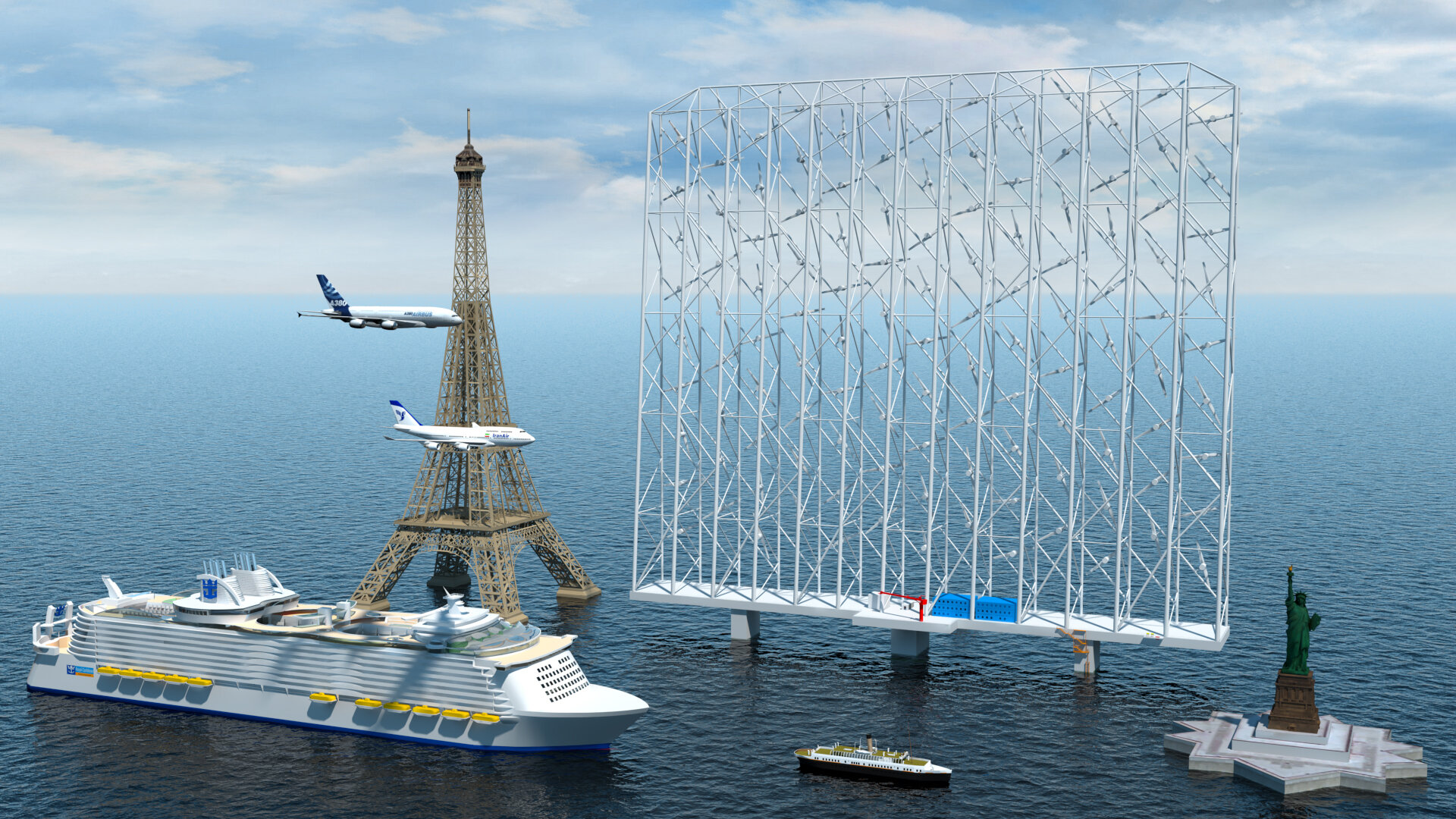
Companies worldwide are investing in new technologies aimed at reducing costs and increasing the efficiency of offshore wind energy. A Norwegian company called Greentech revealed a new concept for floating wind turbines that stands about 324 meters tall. Named Wind Catcher, the innovation highlights that it alone is capable of powering a city of up to 80,000 homes.
The new project was developed and presented by Wind Catching Systems (WCS), headquartered in Norway. The project claims it can generate up to five times more solar energy annually than the largest wind turbines in the world.
The Norwegian company showed that the Wind Catcher would have a massive metal structure, where several small turbines would be installed for wind energy generation. The entire structure would be offshore, anchored to the seabed, using technologies similar to those in the oil industry.
-
The Brazilian state accelerates industrial competitiveness with a focus on the extraction of strategic minerals to boost the energy transition in Goiás.
-
A Canadian retiree creates a hydroelectric system on a real river, generating energy continuously throughout the day and demonstrating how the power of water can supply a house with stability even in a simple structure.
-
Petrobras reaffirms its commitment to the market and ensures that it will carry out the energy transition safely to maintain national sovereignty.

-
Researchers discover a possible hydrogen deposit of up to 46 million tons beneath an ancient coal basin, and the volume could exceed half of the entire global production.


The Wind Catcher Can Be Up to 5 Times More Efficient Than Traditional Wind Turbines
At higher speeds, conventional wind turbines tend to activate certain mechanisms to prevent structural damage due to the great force. However, since this would not happen with WCS, the Norwegian system would have the capability to generate up to 400% more annual energy.
WCS emphasizes that, due to the use of much smaller wind turbines than conventional ones, they could perform significantly better than their competitors at higher speeds. Furthermore, the company highlights that just one of these systems would have 2.5 times the swept area of the world’s largest wind turbine, the Vestas V236. This means that a Wind Catcher could return the investment in less time than traditional wind turbines.
-
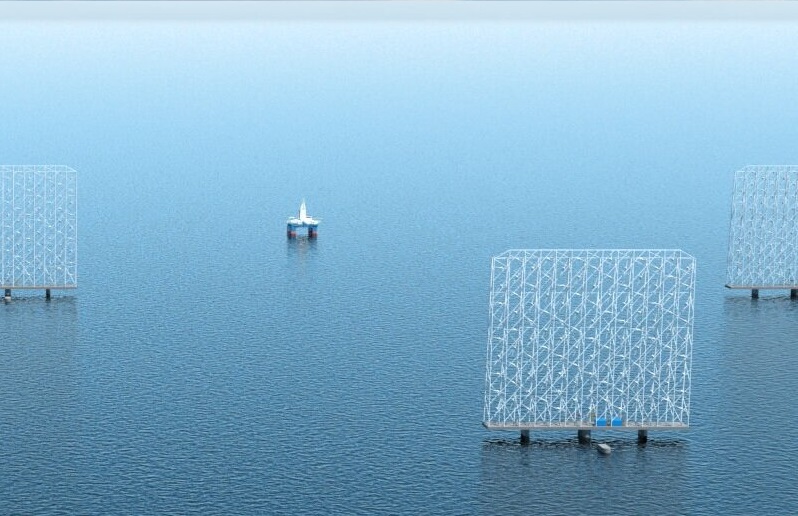
Example of how the Wind Catcher will look at sea / Photo: Windcatchin.org -
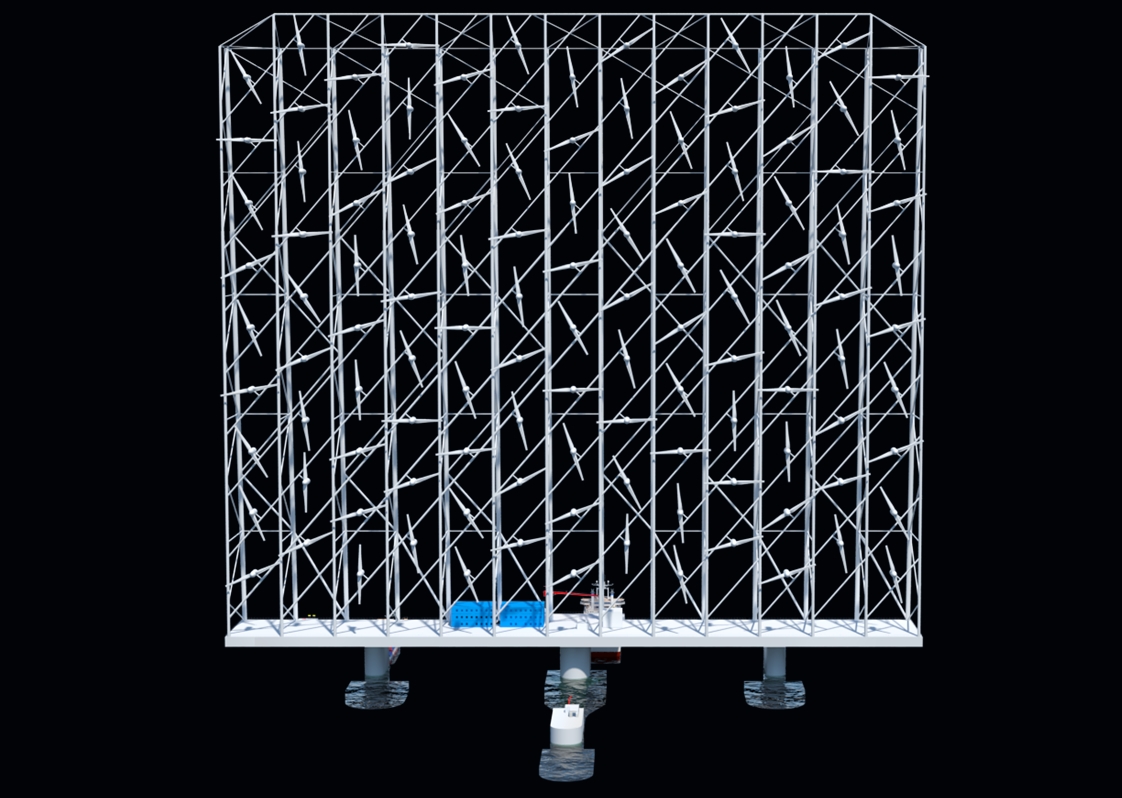
Example of how the Wind Catcher will look / Photo: Windcatchin.org
”Simplifying, we will deliver floating offshore wind energy at the costs of fixed seabed solutions, which offers great opportunities on a global scale for the Norwegian supply industry”, said Ole Heggheim, CEO of WCS.
WCS believes that its new concept can be much more financially viable since once the floating offshore platform is installed, the installation and maintenance process can be performed by the structure itself, without the need for specialized cranes or ships that increase the cost. The company highlights that its system is ready for production and offshore deployment worldwide, providing energy at the same cost-effectiveness as traditional power grids.









Seja o primeiro a reagir!