





 Portuguese
  English
  Spanish
  7 min of reading
  0 comments


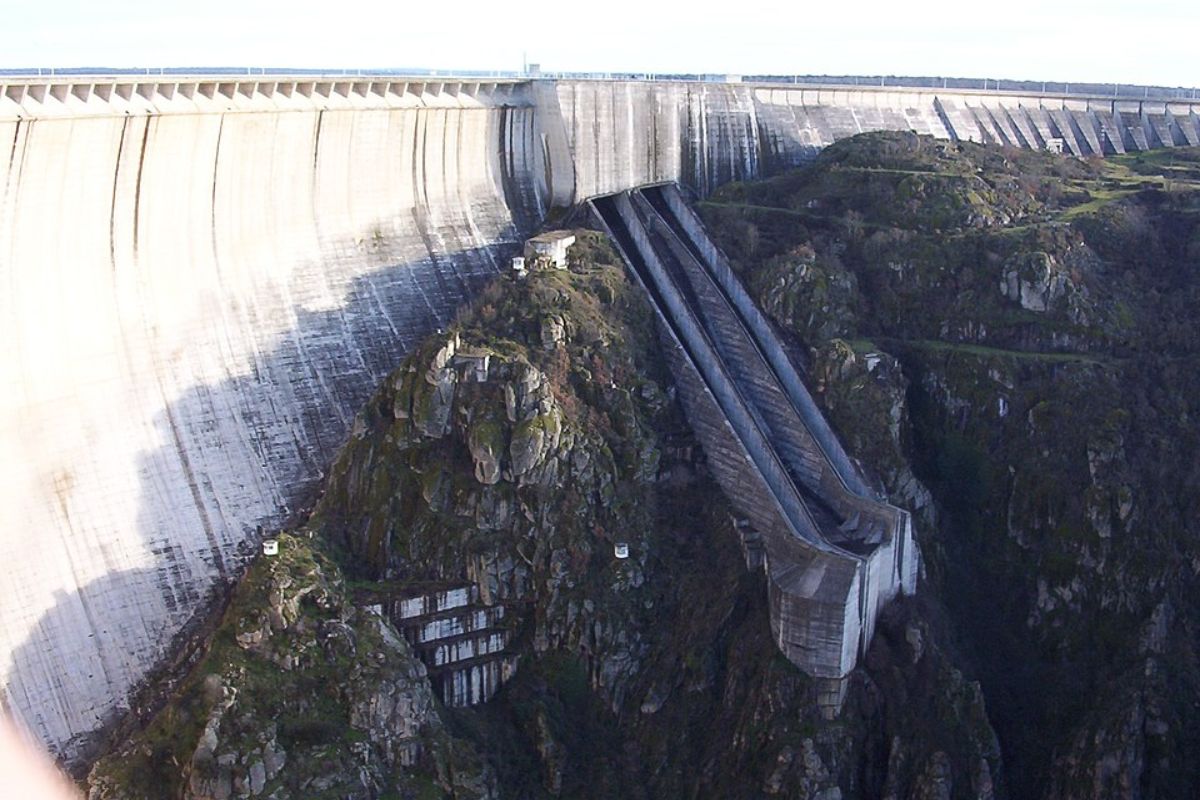
With Dams Full During February Storms, Spain Started Using the Same Infrastructure Built for Water and Electricity as a Shield Against Floods, Holding Back Floods in Major Rivers and Protecting Cities in Different Regions of the Country.
Images of open sluice gates, walls of water cascading down, and rivers like the Douro flowing with impressive force caught attention on social media. Behind the spectacle, however, operated a precise strategy: reservoirs designed for supply and hydroelectric generation were operated as flood shields, absorbing part of the storm volume, reducing flow peaks, and preventing critical episodes from turning into disasters for those living downstream of the dams.
While the public only saw a show of engineering and nature, technical teams worked with narrow margins. In the Basque Country, in the Zadorra system, and in the south, in reservoirs like Iznájar, the structures needed to accommodate exceptional volumes in a few days while simultaneously releasing water in a controlled manner. Meanwhile, the excess hydropower storage was so great that it made nuclear energy less competitive, to the point that the Trillo plant was taken offline amid the abundance of hydropower generation.
When an Entire Winter Falls in a Few Days
To understand what happened in February, it is necessary to first look at the hydrometeorological scenario. In the Basque Country, winter came concentrated in episodes of very intense rain over short intervals.
-
7,000-year-old bonfire in southern Israel reveals a rare scene from the past and uncovers ostrich eggs prepared by nomads in the desert.

-
Gigantic megalithic mound of 42 meters emerges during housing construction in Lublin and reveals a Neolithic megadendron with a moat of nearly 30 meters.
-
The surprising fact: 1 in 3 Brazilians doubts the arrival of man on the Moon, while the majority still believes in the historic achievement, according to a Datafolha survey with more than 2,000 people.

-
Scientists have finally discovered where the plastic that disappeared from the oceans went, and the answer is frightening: it fragmented into such tiny particles that they became invisible and now there are 27 million tons of nanoplastic just in the North Atlantic.


Instead of a regime spread over the months, large volumes fell within a few days, testing the response capacity of the regulation systems.
Under these conditions, mountainous areas with already saturated soils respond rapidly to storms, sharply raising river levels.
This was the case in basins controlled by the Zadorra and Añarbe systems, which needed to be operated with constant attention to the combination of inflow rate, forecasts of new cold fronts, and the safety limits of the reservoirs.
This pattern was not restricted to the north. In other parts of the peninsula, reservoirs close to 80 percent capacity, like Santa Teresa in the Tormes system, had to initiate preventive discharges to reduce risk downstream.
In Andalusia, the Iznájar reservoir, the largest in the region, went from a critical level of around 25 percent to over 50 percent in about two weeks, reaching levels not seen in a decade.
The result was a combination of relief from drought with localized risks. In areas like Grazalema, in Cádiz, soil saturation led to water emerging directly from the ground and the need for preventive evacuations to reduce danger to communities.
From Supply to Flood Shield
The major Spanish dams were built, for the most part, with clear objectives: to ensure water for human consumption, irrigation, and industry, and to generate electricity through hydroelectric plants.
They were not originally conceived as barriers dedicated to flood control, but today they perform exactly that role in extreme situations.
According to the director of Planning and Hydrological Works of the Basque Water Agency, the regulation structures have become essential for moderating floods even though they were not specifically designed for that.
The reason is simple: a large reservoir acts as a lung for the system, capable of storing part of the volume that would otherwise arrive instantly in valleys and cities.
In practice, this means operating with the concept of reserve. During higher risk periods, teams deliberately leave empty space in the reservoir, opening sluice gates before large rain fronts arrive.
This available volume allows the artificial lake to absorb a good portion of the additional water during the critical phase of the storm without having to release everything at once downstream.
By acting as a flood shield, the dam transforms a sudden peak in flow into a smoother curve, lengthening the discharge time and reducing the level that would reach urban areas. This logic was central to avoiding scenarios of widespread flooding in the most pressured basins in February.
Millimetric Coordination Between Sluice Gates, Rivers, and Weather Forecasts
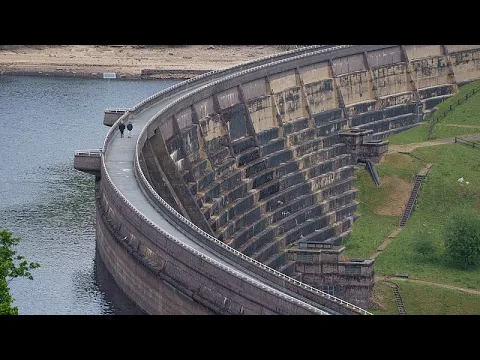

The example of the Zadorra river illustrates the degree of precision needed in crisis situations. The reservoir system of this basin controls about 60 percent of the area upstream, giving the operator significant capacity to intervene in the flow.
At one of the most delicate moments of the episode, the volume entering the system reached approximately 260 cubic meters per second, while the flow released by the sluice gates was only 54 cubic meters per second.
This difference represented, in practical terms, the flooding that was avoided downstream thanks to the damping provided by the dam.
In the Añarbe system, responsible for supplying the Donostialdea region, the situation was different. There, the infrastructure controls only about 23 percent of the basin.
Most of the water flows freely down the river’s natural course, which reduces the margin for maneuvering. Nevertheless, the strategy was similar: closing sluice gates at critical moments to retain as much as possible within the safety limits of the structure.
This operation does not happen in isolation. Agencies such as URA, the Ebro Basin Authority, and the Cantabrian Basin Authority act in coordination to align decisions, share data, and adjust operations based on meteorological forecasts and real-time readings. In the words of the technicians themselves, they work with one eye on the rivers and the other on the sky.
Not All Dams Protect Similarly
Amid the recognition of the role of large dams as flood shields, an apparent contradiction arises: why have some structures on Basque rivers been demolished in recent years?
The answer lies in the difference between large regulation reservoirs and small low-height barriers. The former have volumetric capacity and discharge systems designed to actually influence the river regime during flooding situations.
On the other hand, the latter, often old and with no relevant operational function, can even worsen local floods by raising water levels at certain points.
Therefore, the removal of small obstacles follows two main criteria. From an environmental perspective, the removal of barriers allows fish migration and improves the connectivity of aquatic ecosystems.
From a hydraulic perspective, the removal of structures that contribute little to regulation reduces the risk of unwanted damming during intense rain events.
In other words, the role of large infrastructures that truly function as flood shields is reinforced, while eliminating what may increase vulnerability on a local scale.
Sediments, Extreme Climate, and the Lesson of the February Rains
If, on one hand, the dams demonstrated their capacity to prevent more serious scenarios, on the other, recent events exposed important limits.
Torrential rains transport large volumes of sediments that accumulate at the bottom of the reservoirs. Over time, this material occupies part of the useful storage volume and reduces the available cushion to absorb new floods.
Environmental organizations and experts warn that, in addition to decreasing the effective capacity to dampen floods, sedimentation can compromise safety devices, such as bottom outlets used for controlled discharges.
When the lifespan of a reservoir is shortened by sediment, the very protection function that proved decisive in episodes like February is lost.
There is also a climate change component that makes the challenge more complex. Studies on dams in warming scenarios indicate that structures designed based on historical series of rainfall and flow tend to operate with greater uncertainty in the face of more frequent and intense extreme events.
In some scenarios, the risk of overflow may increase several times compared to what was observed in the past century if management is not adapted to the new reality.
On the energy front, the episode also left a mark. With so much water accumulated in the reservoirs and high availability for hydroelectric generation, market conditions led the nuclear plant Trillo to be disconnected from the grid at certain moments.
The energy stored in the form of water at altitude became sufficient to meet demand at a lower cost during that specific period.
A Stress Test for Spanish Water Infrastructure
The series of events in February served as a stress test on a real scale for Spain’s dam system.
Structures designed decades ago, with objectives centered on supply and energy, had to operate in a context of concentrated storms, saturated soils, and the need to protect cities and rural areas.
The response demonstrated that, with planning, monitoring, and reserve margins, these works can function as an effective flood shield, reducing flow peaks and gaining valuable time for downstream populations.
At the same time, it highlighted that factors such as sedimentation, climatic variability, and design limits require constant updates of operational plans and investments in maintenance and modernization.
In the end, the lesson is clear: the same infrastructure that guarantees water at the tap and energy at the sockets can be crucial to prevent disasters during periods of extreme rainfall, as long as it is managed with technical criteria and long-term vision.
And you, do you think countries like Brazil should invest more in using reservoirs as flood shields, adapting dam operations to cope with increasingly intense climatic events?








Seja o primeiro a reagir!