





 Portuguese
  English
  Spanish
  4 min of reading
  0 comments


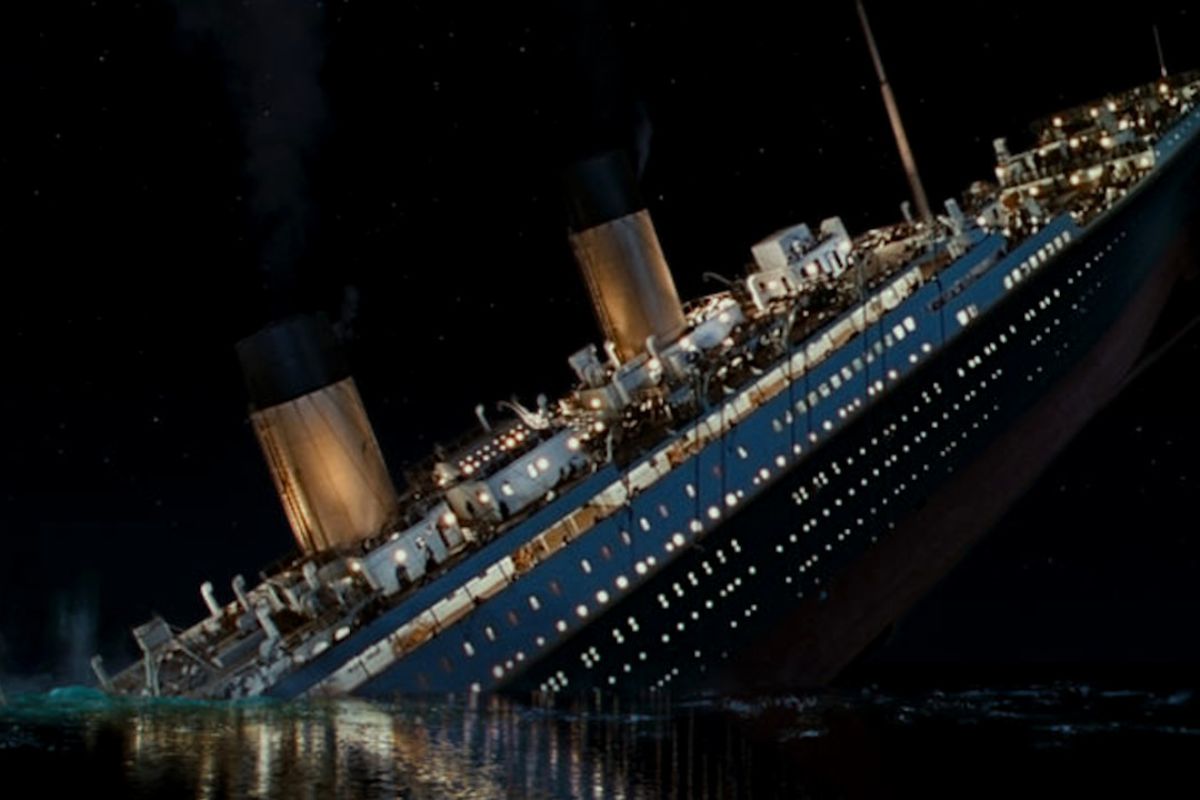
Studies Indicate That The Northern Lights, A Rare Phenomenon Visible That Night, May Have Caused Geomagnetic Interference Capable Of Deviating The Compass, Disrupting Navigation Instruments And Compromising Radio Communications Of The Titanic, Influencing Course, Iceberg Detection And Rescue Speed While Not Replacing The Iceberg, But Adding A Factor
On April 5, 1912, when the Titanic was on its maiden voyage, a rare phenomenon in the sky entered the radar of new theories about the tragedy. The ship collided with an iceberg in the Atlantic Ocean, about 600 km southeast of Newfoundland, and the sinking resulted in the death of more than 1,500 people.
The hypothesis does not “erase” the iceberg, but suggests an invisible element in the chain of events: the presence of the northern lights, with potential to disrupt navigation, communications and even human reading of the environment on a critical night.
What The Studies Bring To The Table On The Night Of The Titanic
Research attributed to meteorologist Mila Zinkova indicates that the northern lights, visible that night, may have played an additional role during the critical hours.
-
7,000-year-old bonfire in southern Israel reveals a rare scene from the past and uncovers ostrich eggs prepared by nomads in the desert.

-
Gigantic megalithic mound of 42 meters emerges during housing construction in Lublin and reveals a Neolithic megadendron with a moat of nearly 30 meters.

-
The surprising fact: 1 in 3 Brazilians doubts the arrival of man on the Moon, while the majority still believes in the historic achievement, according to a Datafolha survey with more than 2,000 people.
-
Scientists have finally discovered where the plastic that disappeared from the oceans went, and the answer is frightening: it fragmented into such tiny particles that they became invisible and now there are 27 million tons of nanoplastic just in the North Atlantic.


It is a natural phenomenon that occurs when solar particles collide with the Earth’s atmosphere, generating effects that can evolve into geomagnetic storms.
Reports from the time mention bands of light in the sky that reached up to the North Star, a detail that reinforces the perception of an active sky, not just “beautiful”.
In reading these studies, this scenario may have created conditions for technical and operational interferences, without replacing the collision with the iceberg as the central event.
Compasses And Instruments Under Geomagnetic Interference
The line of reasoning is straightforward: the intensity of solar winds associated with the aurora could have caused a slight deviation in the Titanic’s compass, enough to alter the course and bring the ship closer to a more critical zone.
In navigation, a minimal deviation can translate into a real difference in position, especially when added to decisions made in sequence.
Beyond the course, the rare phenomenon comes as a hypothesis to explain difficulties in iceberg detection.
The geomagnetic interferences associated with the aurora could have impacted navigation instruments, reducing the reliability of readings at a moment when any mistake is costly.
Radios, Distress Calls And A Possible Delay In Response
Another point raised is the radio. That night, communications were essential for distress calls and to coordinate assistance.
The studies remind us that high-frequency communication systems can be sensitive to electromagnetic disturbances.
If this scenario was confirmed, the rare phenomenon would have created additional noise: emergency signals struggling to reach nearby vessels, which helps support the hypothesis of a delay in rescue.
The practical consequence, within this narrative, is simple and heavy: failures or instabilities in communication can cost time when time no longer exists.
Altered Visibility And Operational Impact Amid Chaos
Witnesses noted that the visibility of the northern lights, although striking, may have hindered technical operations.
The idea is not that the aurora “blinded” the ocean, but that it may have changed the visual perception of the environment and created an unusual backdrop just when subtle signals needed to be read.
In this context, the rare phenomenon acts as a risk multiplier: slightly displaced navigation, possibly affected instruments, potentially unstable radio and a nighttime environment with visual references different from expected.
An Additional Link, Not A Replacement For The Iceberg
The studies themselves, as they are presented, do not claim that the northern lights “sank the Titanic on its own.”
The point is different: to add an invisible factor that may have influenced course and rescue, without erasing the weight of the iceberg as the immediate trigger.
It is an important difference because it avoids the easy shortcut.
The rare phenomenon does not become a universal excuse, but a technical hypothesis about how nature can interfere with human decisions and sensitive systems, especially in a context of high operational vulnerability.
The reading of these studies repositions the tragedy of the Titanic in a more complex framework, where a rare phenomenon in the sky may have acted as physical and operational noise at critical points, from the compass to the radio, from visibility to response time.
If you follow technical analyses of historical events, it’s worth mapping what details still make sense under this hypothesis and which remain just as hard-to-prove coincidences. In your assessment, were the northern lights a relevant factor or just another dramatic detail that entered history later?








-

-

-

3 pessoas reagiram a isso.