





 Portuguese
  English
  Spanish
  5 min of reading
  17 comments


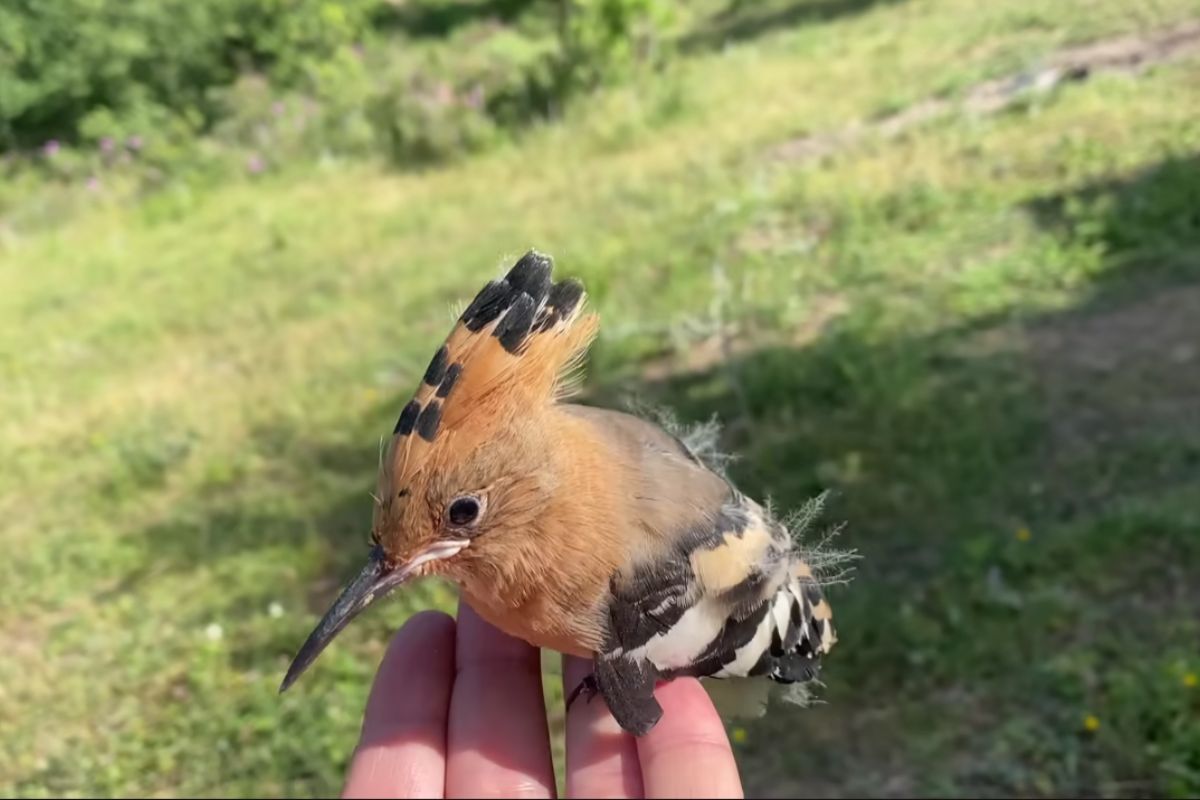


Bird Chicks Found In A Hollow Tree, Without Sign Of Mother At Dusk, Were Rushed Out After Ant Invasion. The Rescue Became Routine: Feeding Every 2 Hours For 30 Days, Initial Mixture And Then Larvae, Until The Survivors Returned Free, All Entering Through The Window At 6:30 AM.
The bird chicks were found inside an old, rotten, hollow tree that had fallen to the ground, after hours of waiting without any adult coming in or out. When the flashlight revealed the interior, the scene was already urgent: constant noise, getting dark quickly, and no return from the mother.
The suspicion raised after seeking guidance was direct and uncomfortable: the mother could have been killed by a predatory bird. From that point on, the choice was no longer theoretical but a practical responsibility, because the bird chicks were alive, vulnerable, and, at that moment, without protection.
The Hollow Tree, The Flashlight And The Point Of No Return

The rescue begins with a common dilemma in occurrences of this type: removing the bird chicks can be the difference between life and death, but it can also interrupt a late return of the mother.
-
Goodbye iron: new technology from Xiaomi promises to revolutionize the way we iron clothes with 500 kPa steam, continuous flow of 120 g/min, heating in 65 seconds, and six smart modes for different fabrics.

-
Rio Pardo, the most mysterious city in Rio Grande do Sul: untouched Pampas castle, the missing treasure of the Devil Boy, bride’s saint, invisible tunnels, and a 200-year curse today.

-
China retires the J-7 fighter after years of military protection and can now transform military items into drones, following more than 60 years of operation of the J-7, derived from the MiG-21, with thousands of units produced and strategic use in the PLAAF and PLANAF.

-
Volunteers are sought to live in the mountains for a month: a study pays people to stay at 2,500 meters, with 24-hour monitoring of sleep, metabolism, and blood pressure.


The impasse lasted for hours, until the end of the day, when the persistent absence and the fading light changed the weight of the decision.
The turning point happens when the flashlight reveals hundreds of ants invading the bird chicks. From that moment on, the situation changes from “waiting a little longer” to damage control.
Two chicks, according to the report, likely died from the ants, and others were at different stages of development, from already formed feathers to individuals still without feathers and even with eyes not open.
Losses To Ants And The Real Portrait Of Biological Risk

The presence of ants inside the cavity is not a narrative detail. In a closed environment, with little mobility and exposed skin, infestation becomes a vector for rapid death, especially for the smaller ones.
The loss of some of the bird chicks reinforces that the event was not “nice” or controlled from the beginning; it was an emergency response to an immediate threat.
Even among the removed, the outcome was not uniform. The smallest did not survive, and the group of survivors was reduced, with differences in strength, plumage, and feeding capacity.
This type of asymmetry is what turns a rescue into a marathon, because each individual requires its own attention and rhythm, without guaranteed results.
Feeding Every 2 Hours For 30 Days And The Discipline That Redefines The Routine
The central point of the described process is the time commitment: for 30 days, the bird chicks were fed every 2 hours, mimicking the pattern attributed to maternal care.
The routine was treated as a total priority, with work set aside and an intense search for references and adjustments to keep the survivors active.
In the first few days, the cited feeding was a mixture of egg yolk and softened feed with warm water. Later, with access to live mealworms, the diet shifted to this resource, described as well accepted by the bird chicks.
The constant remains the key, not the menu, because the axis of effort is repetition, frequency, and continuous adaptation to growth.
Sound, Conditioning And The Engineering Of Bonding
Alongside feeding, a behavioral component comes into play: before feeding the bird chicks, he would tap on a jar to produce a fixed, repeated sound, creating an association between noise and the arrival of food.
Over time, the response to the sound became immediate, acting as a “signal” that organized the contact.
This conditioning gained a practical consequence when the survivors began to fly and explore. Even free, they would return when they heard the sound, suggesting that the bond was built more on pattern and predictability than confinement.
In the report, freedom is maintained as a rule, with the bird chicks able to leave but choosing to come back.
The House In The Forest And The Window That Became A Meeting Point At 6:30 AM
The coexistence scenario consolidates in a house in the forest, with the open window as a corridor of access.
The detail of the time is precise: around 6:30 AM, the grown bird chicks enter and wake the resident, creating a routine that mixes wild behavior with domestic familiarity.
The observed dynamic is of an environment, not a cage. They fly from tree to tree around, follow the resident when they see him, emit different sounds in response to unusual stimuli, and respond to the sound signal from the jar.
The “forever” change lies in this type of barrier-free coexistence, where presence is a daily choice, not an imposition.
The Limit Between Rescue And Domestication When The Bird Remains Free
The narrative brings up a delicate point: the perception that the bird chicks may see him as “mother,” for they show no fear.
At the same time, there is an emphasis that they remain free in the habitat, hunt, explore, and spend nights on branches, returning in the morning, suggesting an unstable balance between dependence and autonomy.
This balance becomes more complex when some begin to fly far and take time to return, generating anxiety and constant vigilance.
At this stage, the rescue moves beyond mere survival and becomes an emotional negotiation with nature, as freedom includes the real possibility of not returning.
The story of the bird chicks begins in a hollow tree and ends at an open window in the forest at 6:30 AM, but the path involves losses to ants, an exhausting cycle of feeding every 2 hours for 30 days, and a bond built on routine, sound, and presence.
In the end, what changes is not just the life of the birds, but the way the resident starts to measure time, silence, and responsibility.
If you were in this situation, what would your real limit be: maintaining 30 days of feeding every 2 hours, dealing with inevitable losses like the ants, or accepting that freedom may mean they might not come back? And do you think such a bond is care, or is it already starting to be disguised domestication?









Incrível, eu estaria disposta a fazer o mesmo. Por mais que isso os levassem embora após a maratona de cuidados. Eles merecem ser livres. Mas o privilégio de tê-los como visita é pra poucos.
Muita sensibilidade desse homem fazer o que fez para salvar os pássaros. Mesmo que um dia não voltem mais. Lembrei da frase do poeta portugues Fernando Pessoa “tudo vale a pena quando a alma não é pequena” Inclusive um texto muito bem escrito. Gostei muito.
O homem continua a se surpreender com a natureza de Deus.