Portuguese
 Spanish


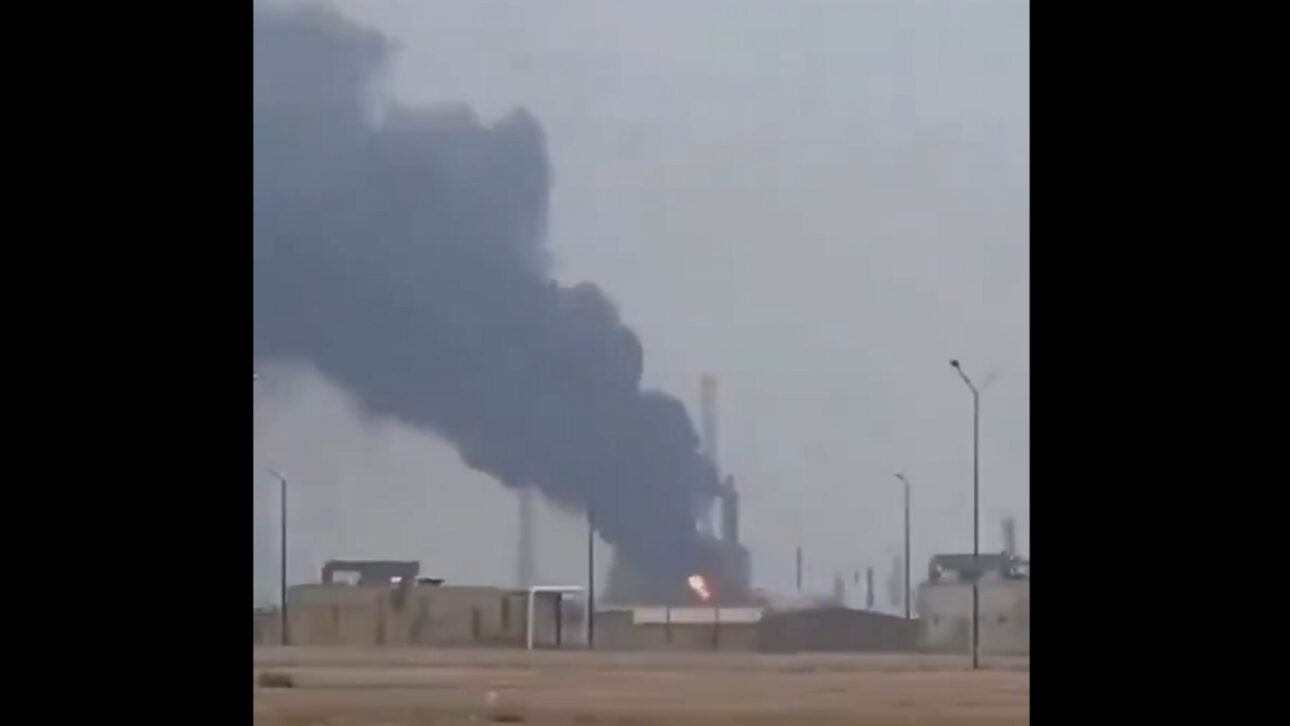

Houthis claimed an attack on the Ras Tanura refinery that caused fires, the group said, while satellite images showed a vast smoke plume over one of Saudi Arabia’s major oil complexes
Saudi Arabia’s largest oil refinery, Ras Tanura, was targeted in an attack claimed by Yemen’s Houthis on Wednesday (25). The facility, which can process 550,000 barrels a day, was shrouded by a massive column of black smoke that spread over approximately 600 square kilometers, according to satellite images.
Houthi military spokesperson Yahya Saree said the attack caused fires at the facility. A source familiar with the incident confirmed the attack but provided no details about the extent of the damage.
According to CNN Brasil, images captured by NASA and Planet Labs showed smoke over a wide area near the refinery.
-
Canada approves $10 billion oil megaproject 500 km offshore, with a floating production platform, billions in revenue and production expected to last 20 years

-
PRIO receives Cade approval for $3.35 billion purchase of Equinor’s final 20% stake in Campos Basin, potentially taking full control of two oil fields off Rio de Janeiro
-
Sirius adopts Brazilian magnetic resonance technology to probe microscopic structures in oil-bearing rocks, map hydrocarbon flow and expand research into geological CO₂ storage
-
Petrobras sheds the equivalent of R$204 billion in 20 days as shares fall 25% in dollar terms, worst performer among 17 oil companies




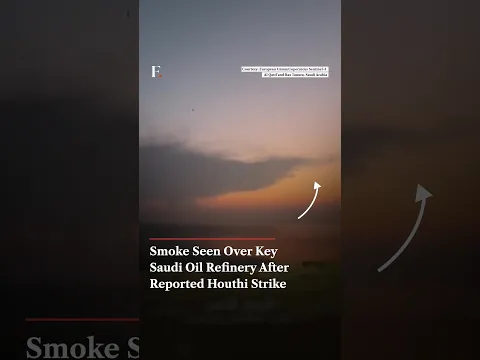

Smoke covers 600 square kilometers after attack on Ras Tanura refinery
The plume’s size drew attention. The 600 square kilometers it covered is roughly equivalent to the area of Chicago, in the United States.
That figure refers to the area covered by the smoke, not the size of the refinery or the area actually destroyed in the attack.
Located in Saudi Arabia’s Eastern Province, Ras Tanura is part of an oil complex on the Gulf coast, near one of the world’s largest crude oil export terminals.
Despite the images, there was still no confirmed information about how much equipment was hit or whether the Wednesday attack specifically caused any shutdowns.
The Saudi government and state-owned Aramco, which operates the country’s oil industry, did not immediately respond to requests for comment.
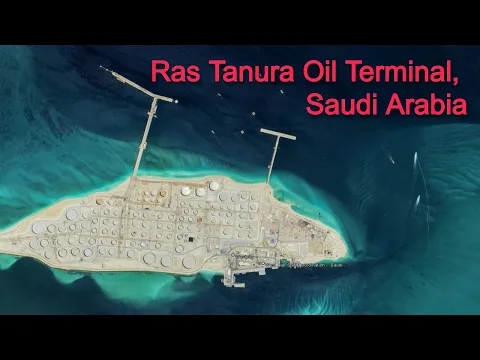
Saudi defenses intercept four drones in the region
Hours earlier, the Saudi-led military coalition said its air defenses had intercepted and destroyed four drones in Ras Tanura.
The drones were identified in the same area as the oil refinery. However, the coalition did not confirm that the oil facility had been hit.
The oil refinery had already been targeted in other attacks during the conflict with the Houthis and the war involving Iran.
Jeddah and Jazan ports also come under attack
The attacks were not limited to oil infrastructure.
The Saudi-led coalition said a projectile launched by the Houthis hit the port of Jazan on the Red Sea. The impact caused minor damage, with no civilians reported injured.
The Houthis also claimed attacks on Jeddah, another Saudi port city. At that point, however, there was no independent confirmation that the port had been hit.
The escalation comes after the group expanded its presence in strategic areas along Yemen’s Red Sea coast, advancing toward the Bab el-Mandeb Strait.
Attacks injure 11 in Riyadh and increase pressure on Saudi Arabia
In the Saudi capital, the violence also reached the financial district.
Civil Defense said 11 people were injured Tuesday (the 24th) in an attack on the tower that houses the headquarters of the Public Investment Fund, Saudi Arabia’s sovereign wealth fund.
It was the second attack on the building in less than a week. The first, reported on November 19, damaged the structure but caused no injuries.
Yahya Saree said the Houthis carried out a three-stage attack on Riyadh’s financial district.
Earlier attacks had already caused temporary disruptions to Aramco operations and cancellations of international flights to the Saudi capital.
In the oil sector, the Ras Tanura complex also lost some of its relative logistical importance to Yanbu on the west coast, which was supplied by the East-West pipeline during the war between the United States and Iran.
This article was prepared using data and information published by CNN.