





 Portuguese
 Spanish



Indonesia and Thailand expand biodiesel and ethanol blends as Asian countries prepare new rules for aviation and shipping, with biofuel consumption expected to grow 11% in 2026
Biofuel use in Asia gained momentum in the second half of 2026, with new biodiesel blending mandates, tax incentives and plans to increase ethanol in gasoline. Indonesia and Thailand are leading the changes, while the aviation sector prepares rules for 2027 and shipping still faces regulatory uncertainty.
The push comes as Asian governments seek to reduce dependence on imported oil. Rising fuel prices, linked to the conflict in the Middle East, have accelerated discussions about alternatives for powering cars, planes and ships.
The International Energy Agency (IEA) estimates that biofuel consumption in Southeast Asia will grow 11% from 2025 to 2026. Worldwide, growth is projected at 7%.
-
Brazil may import 562 million liters of ethanol in early 2027, up 59%, despite being a major producer

-
Cooperalfa invests R$230 million in a biodiesel plant in Chapecó to produce up to 414 million liters annually and create 110 jobs
-
Goiás to Establish R$140 Million Plant to Convert Industrial Waste into Biomethane, Fueling 100 Buses via 25-Kilometer Pipeline
-
Ethanol rises 2.41% at Brazilian gas stations to R$4.25 per liter as gasoline barely moves, leaving flex-fuel drivers to compare their own car’s fuel economy


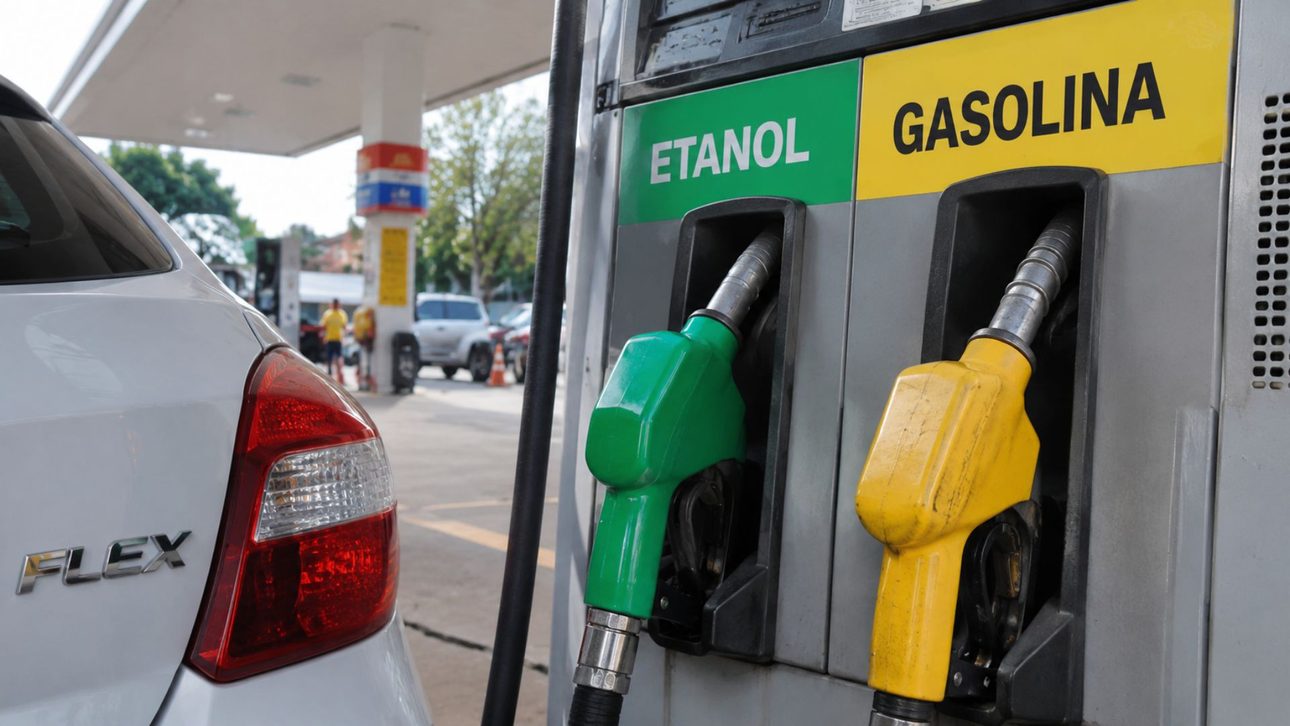
The difference is reflected in decisions made by countries across the region. Some have increased the share of renewable fuels in blends, while others have cut taxes to encourage consumption.
The shift, however, is not happening at the same pace across all sectors. Requirements are already in place for road transport. In aviation, future timelines and regulatory proposals predominate.
Indonesia moves ahead with B50 biodiesel and prepares to expand ethanol use
Indonesia introduced one of the region’s most significant changes when it launched its B50 biodiesel policy in July 2026.
The blend raises biodiesel’s share of diesel sold on the market from 40% to 50%. The president announced the policy on July 9.
The government said it had tested B50 in six sectors, including maritime and rail transport. The policy is reviewed every three months.
Gasoline is a different story. The country currently uses an E5 blend containing 5% ethanol, under Energy Ministry Decision No. 113 of 2026.
Plans call for a move to mandatory E10 in 2028. Official estimates put the timeline for adopting E20 between 2028 and 2029.
In November, President Prabowo also questioned whether the country was prepared for a possible shift from E20 to E50, a blend that would raise ethanol’s share to 50%. The main obstacle is the availability of feedstock.
Supplying the market with E20 would require approximately 4 million kiloliters of ethanol per year, equivalent to 4 billion liters.
The government also cited the need to bring between 1 million and 2 million hectares of new land into sugarcane cultivation.
The expansion prompted concerns from environmental organizations about land use and the risk of deforestation associated with expanding plantations.

Thailand cuts taxes as B20 biodiesel sales reach 10 million liters a day
In Thailand, the strategy combines tax cuts with changes to the fuel blends sold in the market.
On October 27, the government approved a three-month tax incentive to encourage consumption of gasohol E20, gasoline with 20% ethanol, and B20 biodiesel.
The excise tax cuts were set at 5.60 baht per liter for E20 and 5.50 baht per liter for B20.
The measure took effect on October 28 and is scheduled to end on January 27, 2027, when it will be reviewed. Early figures point to a shift in the market.
By October 30, B20 sales had risen from approximately 6 million to 10 million liters a day. It has not yet been confirmed whether that volume will be sustained.
The country also reinstated B7 as the standard diesel blend after reducing the blend to B5 in late 2024 because of high palm oil prices.
On November 19, the Department of Energy Business released a draft 2026 Oil Plan, with proposed guidelines through 2050.
The proposal aims to end sales of gasohol 91 by the end of 2027 and make 95-octane E20 the standard gasoline grade.
For diesel, the plan keeps B7 as the standard and encourages the use of B20.
The 2032 targets are for E20 to account for 50% of gasoline sales and B20 to make up 20% of diesel sales.
From August to October 2026, those shares stood at 20.5% and 9.8%, respectively.
The document remains open for public comment until November 27 and still requires approval by the Thai Cabinet.
Vietnam expands ethanol use as the Philippines and India face feedstock constraints
Vietnam has also made progress in ethanol use. Since June 1, 2026, the country has required a nationwide E10 blend.
However, domestic production meets only about one-quarter of monthly demand, estimated at 100,000 cubic meters of ethanol.
The rest must be imported, showing that expanding blends does not automatically eliminate reliance on foreign suppliers. The Philippines has followed a different path.
The country suspended the steps that would have raised the biodiesel blend to B4 in 2025 and B5 in October 2026, citing high coconut oil prices. The B3 blend remains in place for now.
Although the Department of Agriculture approved an immediate move to B5 in June, no decision confirming that the measure could proceed has been announced.
Producers say they have the capacity to supply enough biodiesel for a 7% blend.
Chemrez, a subsidiary of D&L Industries, plans to build a second coconut biodiesel plant in Batangas. Construction is scheduled to begin in the first quarter of 2027.
In India, the main challenge is sugar.
In October, the government restricted the use of sugarcane juice, syrup and B-grade molasses for ethanol production during the supply period that began in November.
The decision was linked to low sugar inventories.
The program is expected to use other feedstocks, including corn, damaged food grains, surplus rice and C-grade molasses.
Aviation prepares sustainable fuel blends for 2027 but faces high costs
While road transport already uses several mandated blends, most of Asia’s aviation requirements are still being prepared.
As of the time covered, no country in the region had a sustainable aviation fuel (SAF) blending mandate in force.
SAF is an alternative to conventional jet fuel, made from feedstocks and through processes that must meet specific sustainability criteria.
Starting January 1, 2027, Singapore will impose a levy on sustainable fuels for flights departing the country.
The model will use centralized procurement without directly requiring suppliers to blend the fuel.
The first auction is expected to procure between 20,000 and 30,000 metric tons of SAF, with deliveries scheduled to begin in June 2027.
The fuel will need to demonstrate a minimum 40% reduction in lifecycle emissions, compared with the 10% minimum required under the international CORSIA system.
South Korea also plans to require a 1% SAF blend for international flights starting in 2027, with higher percentages planned for 2030 and 2035.
Malaysia, meanwhile, has postponed from January 2027 to 2030 its initially planned requirement for a 1% SAF blend on international flights departing Kuala Lumpur International Airport.
The reasons include fuel prices and the time needed to develop regulations.
In India, a proposal calls for blends of 1% in 2027, 2% in 2028, 3% in 2029 and 5% in 2030.
The proposal has not yet been released for public comment.
Cost remains one of the main challenges. The Asia-Pacific Airlines Association says SAF costs two to five times as much as conventional jet fuel.
Shipping still depends on international regulation
In shipping, no Asian country has established a national requirement to use biofuels.
Even so, some companies have begun selling blends. In Thailand, Bangchak and PTT OR are already distributing B24 marine fuel.
Malaysia has set a target of reaching 40% low-carbon marine fuels by 2050.
The country also plans to introduce a single licensing system for vessel bunkering in February 2027.
Marine biofuel bunkering operations have begun at the Port of Kaohsiung in Taiwan. Singapore and Qingdao, China, are discussing pilot projects involving methanol.
The main uncertainty lies with the International Maritime Organization (IMO).
Its proposed global regulations to reduce emissions cleared an initial approval stage in April 2025, but adoption was postponed in October of that year.
The vote ended with 57 countries supporting the delay and 49 opposing it.
A new extraordinary session is scheduled for December 4, 2026, subject to confirmation during the organization’s environmental committee meeting, scheduled for November 30 to December 3.
If the regulations are adopted, the International Energy Agency (IEA) projects that demand for marine biodiesel could exceed 12 billion liters by 2031.
The projection assumes a significant increase in consumption at the region’s main marine bunkering hubs across Asia-Pacific.
With reporting from Eview.iffw.sg.


