






 Portuguese
 Spanish


CII and EY-Parthenon study sees potential for 62 million metric tons of renewable gas a year, but a lack of pipelines and delays are holding the sector back.
India could save up to $20.6 billion a year by replacing imported liquefied natural gas (LNG) with compressed biogas, but only 210 of the 838 projects registered in the country had been commissioned as of November 2, 2026. The estimate is part of a study released in New Delhi on November 17 that highlights the gap between the potential to produce renewable fuel and the infrastructure actually available.
According to a report published by BioEnergy Times on November 20, the study was prepared by the Confederation of Indian Industry (CII) in partnership with EY-Parthenon. Of the 838 registered projects, 255 were under construction and another 373 had not yet begun work, while limited access to gas pipelines was making it harder to distribute the fuel.
India estimates $20.6 billion in savings from replacing natural gas imports
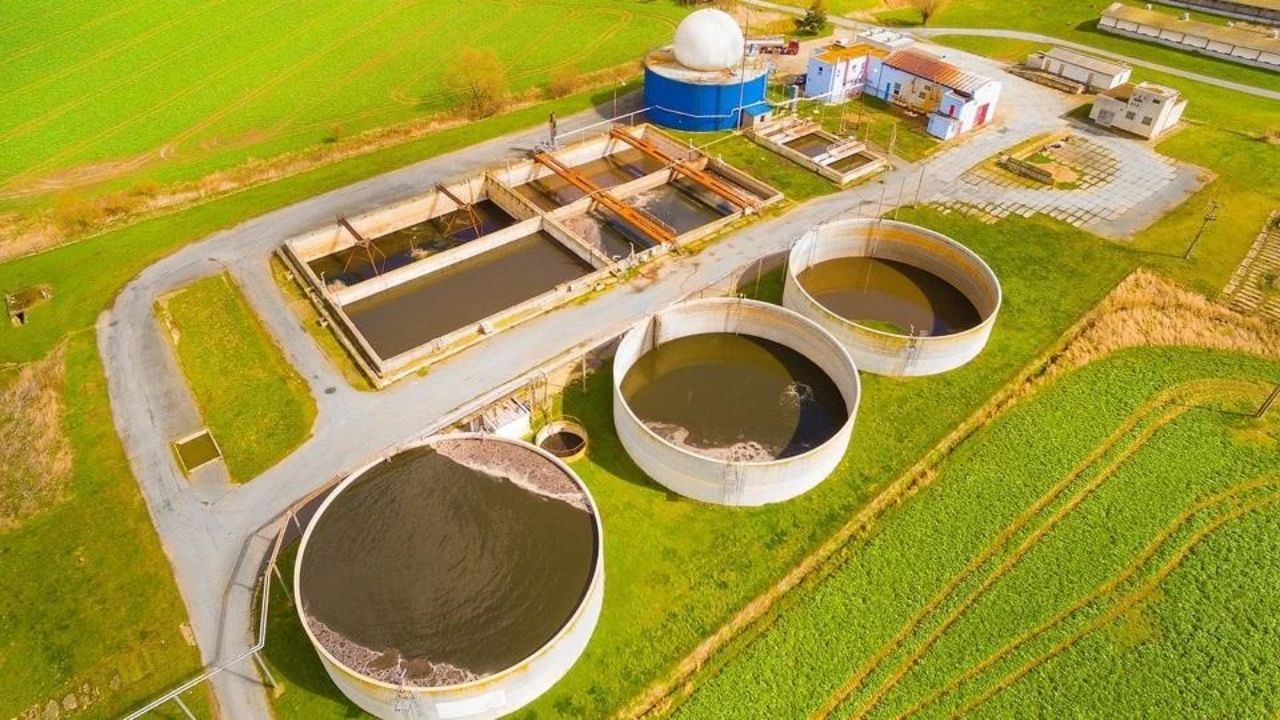
The report India’s Compressed Biogas Opportunity, released by CII and EY-Parthenon, estimates that the country has about 472 million metric tons of usable organic waste a year for producing compressed biogas, known as CBG.
-
India announces five biomethane plants with a 7.5 billion-rupee investment and output of 110 tonnes per day

-
German waste-to-hydrogen and bio-oil technology operates in Três Lagoas and wins award in Germany
-
Gasoline vs. Ethanol: Ethanol Prices Rise Again but Still Offer Better Value in 16 Brazilian States and the Federal District
-
Suape completes first renewable marine fuel ship bunkering, becoming the only port in Brazil’s North and Northeast to offer biobunker


This includes agricultural waste, animal manure and other biodegradable materials that can be processed industrially to produce fuel. The study estimates that this supply could support production of up to 62 million metric tons of CBG a year.
The projection is equivalent to about 80% of India’s expected natural gas demand in 2030, based on the institutions’ calculations. The potential also exceeds projected LNG imports of about 40 million metric tons in that year.
The maximum savings of $20.6 billion assume that all of those imports are replaced and use a benchmark price of $9.80 per million British thermal units (MMBtu), based on fiscal year 2025–2026.
That figure does not represent money already saved by the government or companies. It is a theoretical scenario that depends on production at industrial scale, the fuel’s energy equivalence and the availability of buyers able to absorb the output.
Only 210 of 838 registered plants had been commissioned by November
The challenge of turning announced projects into operating facilities is reflected in the report’s figures. As of November 2, 2026, only 25.1% of the 838 registered plants had been commissioned.
The other 628 facilities were either under construction or had not yet begun construction. This means that roughly three out of every four projects remained short of the commissioning stage.
The 210 commissioned units had combined installed capacity of approximately 1,946 metric tons of compressed biogas per day. Even at full utilization for 365 days, this infrastructure could produce about 710,000 metric tons a year, far below the country’s theoretical potential.
Installed capacity, however, does not necessarily correspond to actual output. Facilities need a steady supply of feedstock, maintenance, commercial contracts and suitable operating conditions.
In a report published on November 17, ETEnergyWorld said the survey also included 60 project developers. Challenges they reported included year-round availability of waste, financing and difficulties securing buyers.
The study was released as private investment in the sector was expanding, but the data indicate that approving new projects does not guarantee they will begin operating.
Only 24 plants were connected to gas pipelines, report says
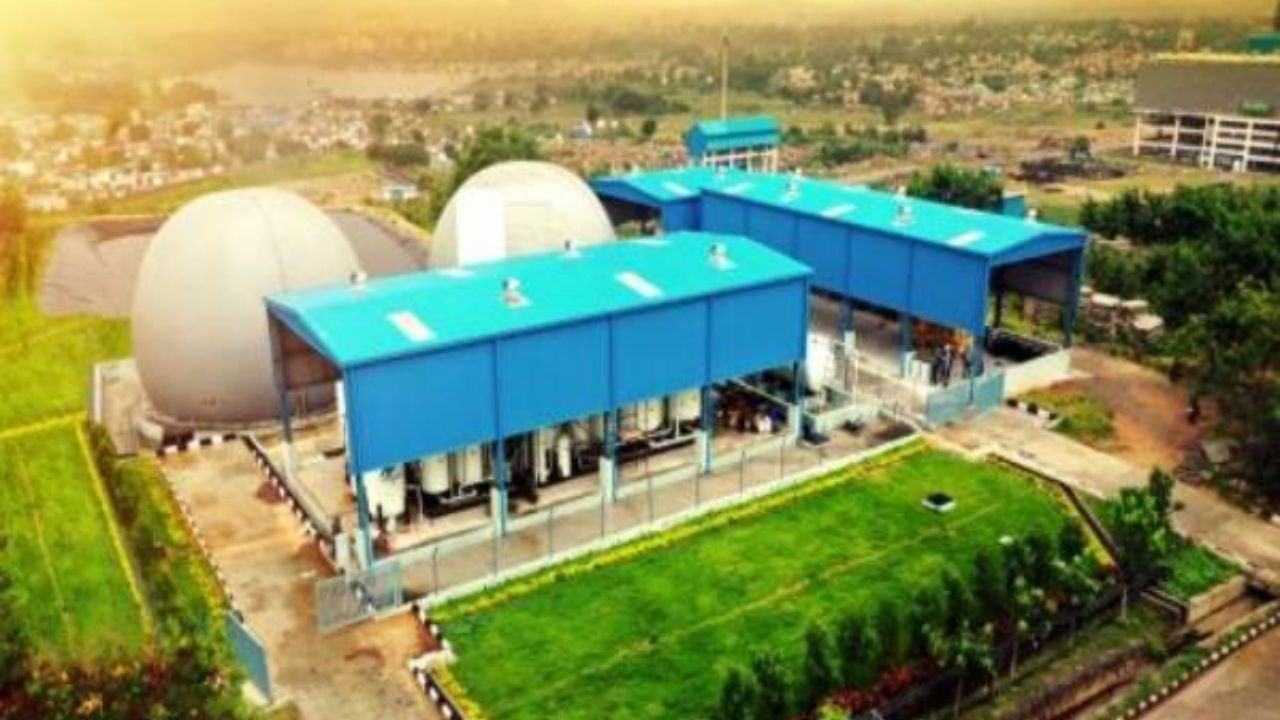
The research identified another challenge: the infrastructure needed to deliver the fuel to consumers. Of the 210 commissioned plants, only 24 were connected to gas pipelines, according to data compiled by CII and EY-Parthenon.
A connection allows biomethane, after purification and conditioning to meet network specifications, to reach industrial consumers, distributors and other buyers. Without one, supply may depend on road transport in cylinders or local contracts.
These alternatives are technically feasible, but they must be assessed based on distance, volumes transported and logistics costs. A plant located far from its buyers may face additional expenses to market its fuel.
Biogas is produced through anaerobic digestion, a process in which microorganisms break down organic waste in an oxygen-free environment. The gas then passes through purification systems to increase its methane content and remove unwanted components.
The resulting product can be compressed and used in applications compatible with natural gas. In India, this fuel is known as CBG and is included in government programs aimed at replacing fossil fuels.
Using waste to produce gas is also part of other international projects. CPG has already covered a renewable gas project using algae, developed in the United Kingdom to expand the use of alternative feedstocks.
India’s 15 million metric ton target could save $7.7 billion
In addition to the maximum scenario of $20.6 billion, the report presents a projection tied to the national target of the Sustainable Alternative Towards Affordable Transportation (SATAT) program.
The initiative aims to reach 15 million metric tons of CBG per year by 2030. The CII and EY-Parthenon say reaching that output would allow India to replace about 37% of the LNG it is expected to import that year.
In this scenario, estimated savings would amount to $7.7 billion per year, provided the fuel produced is sold and actually replaces imported gas.
The difference between $7.7 billion and $20.6 billion lies in the scope of the projections. The first figure corresponds to the national program’s production target, while the second assumes enough production to replace all projected imports.
A third estimate is tied to the requirement to blend CBG with conventional gas. With the planned 5% requirement taking effect in fiscal year 2028–2029, demand generated by the regulation would reach about 620,000 metric tons in 2030.
The study estimates that this volume could replace about 1.5% of projected LNG imports and generate annual savings of $320 million. That figure is significantly below the maximum potential, showing that the regulatory requirement accounts for only part of the necessary demand.
Indian government expands incentives, but waste supplies remain a concern


The Indian government has been taking steps to encourage the construction of plants and improve commercial conditions for producers. The GOBARdhan program brings together support measures for biogas production, waste recovery and related infrastructure.
The report acknowledges progress on pricing rules, financing and fuel purchase guarantees, Business Standard reported. However, it notes that commercial performance will depend on project execution and continued operations.
One challenge is biomass supply. Agricultural waste may be available only seasonally, while transporting it to plants requires logistical planning and costs that are compatible with production.
Use of the material also depends on its composition and on suitable conditions for anaerobic digestion. It is not enough for waste to be available in a given region; it must also be possible to collect and process it in an economically viable way.
In Brazil, the sector faces similar challenges. A report by CPG found that Brazil’s biomethane potential was estimated at 120 million cubic meters per day, compared with production of 1.36 million cubic meters per day, based on data released by Abiogás in September 2026.
Although the Brazilian and Indian markets have different characteristics, both need to turn available waste into a marketable fuel. The capacity figures reported by each country also use different units of measure, preventing a direct comparison without technical conversion.
Next steps include completing construction and expanding producers’ access to the gas network
The report was released during the 14th CII Bio-Energy Summit, held in New Delhi on November 17, 2026. It points to the need to accelerate projects already registered, improve feedstock supplies and expand connections between plants and consumers.
The study also identifies a need to develop markets for organic fertilizers produced through anaerobic digestion. Sales of these co-products could contribute to facility revenues, depending on the material’s quality and the availability of buyers.
As of November 2, 2026, the country had 373 registered projects for which construction had not begun, a figure that will be tracked in future program updates. Progress in gas pipeline connections and the volume of production actually sold will also show whether the sector is moving closer to its 2030 targets.


