Paleontologist Àngel Galobart and his team have pulled a 7-metre titanosaur neck, encased in a block of rock weighing more than 15 tonnes, out of a site near Isona in Catalonia, and the bones hint at an animal that may be larger than Europe’s previous record holder.
The find was announced on November 23 by the Conca Dellà Museum and the Miquel Crusafont Catalan Institute of Paleontology (ICP), whose researchers have been digging at the Molí del Piteu site in the Pallars Jussà region of Lleida province.
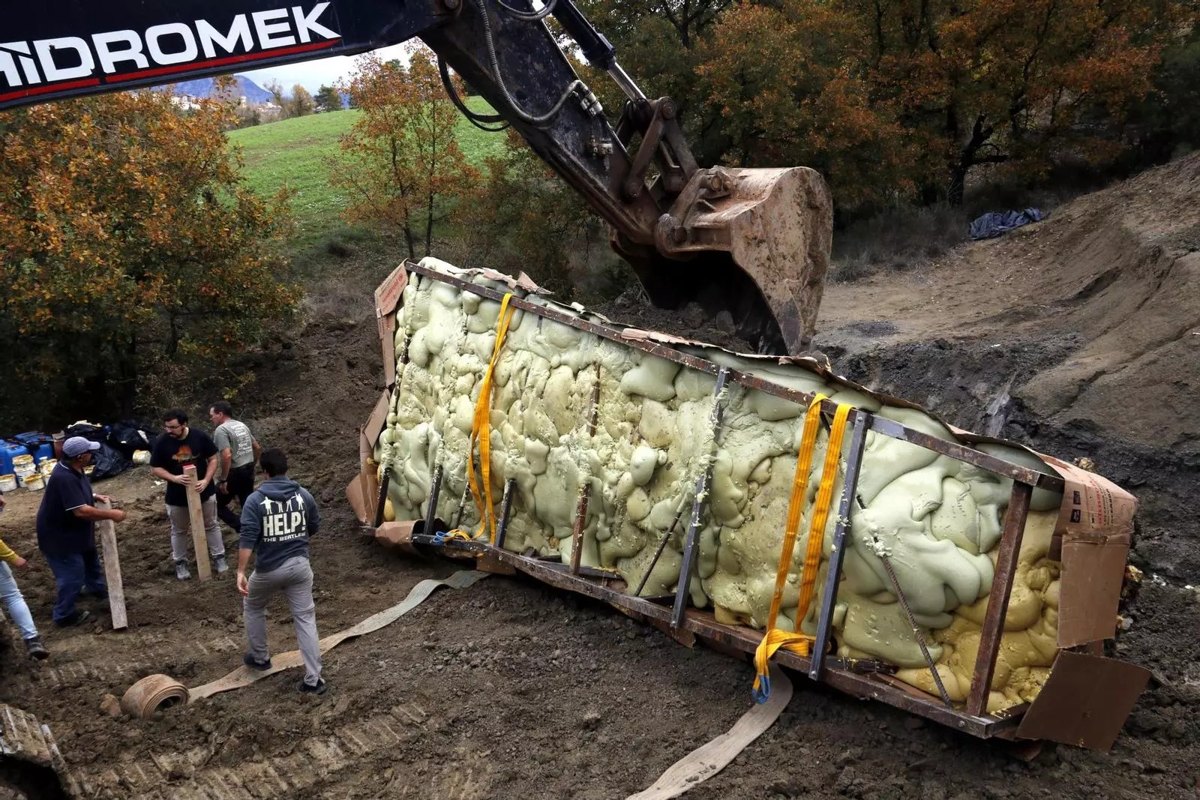
According to the Catalan newspaper Ara, which relied on reporting by the Catalan News Agency (ACN), the specimen measures seven metres in length and weighs more than fifteen tons. The operation to remove it lasted four hours.
Seven metres of neck in a block of rock and bone
Barcelona Secreta reported that the excavated block reaches up to seven metres long and two metres wide. RUSSPAIN, citing ACN, put the weight of the block at 18 tonnes and said it held about seven cubic metres of rock.
-
Starlink offers Mini kit to new customers in Brazil for R$49, with Residential Max plan at R$174.30/month until Nov. 30

-
KTM launches 2027 Macina Gran 830 e-bike with 120 Nm Bosch Performance Line CX motor, 800 Wh PowerTube battery, 10-speed Shimano Cues drivetrain, weighing 26.9 kg and priced around €3,330
-
Daikin EcoSwing Gold: The Most Energy-Efficient 9,000-BTU Inverter Air Conditioner on Inmetro’s Label
-
Home solar costs R$2.91 per watt for a 4 kWp residential system in 2026, R$7,200 for a 2 kWp system after kit price rise

Both figures describe the same block, and the difference comes from the outlets that reported them. What none of the sources disputes is the length of the fossil structure: about seven metres of neck vertebrae and surrounding bone.
The animal lived in the area some 70 million years ago, near the end of the age of dinosaurs, according to Galobart, who directs the Conca Dellà Museum and is a researcher at the ICP.
How the team found a neck instead of scattered bones
The site was discovered five years ago, but excavations only began two years after that. At first the paleontologists found fragments of bone, and larger remains appeared as the work went deeper.
“We removed some of these long bones and, finally, we realized that there was a part of the neck, or possibly the whole neck,” Galobart told ACN, in remarks published by Ara.
That realization changed the scale of the job. A loose bone can be lifted by hand, but a neck that may still be articulated has to come out in one piece, or the position of each vertebra is lost.
The “mummy” built to move 15 tonnes without breaking it
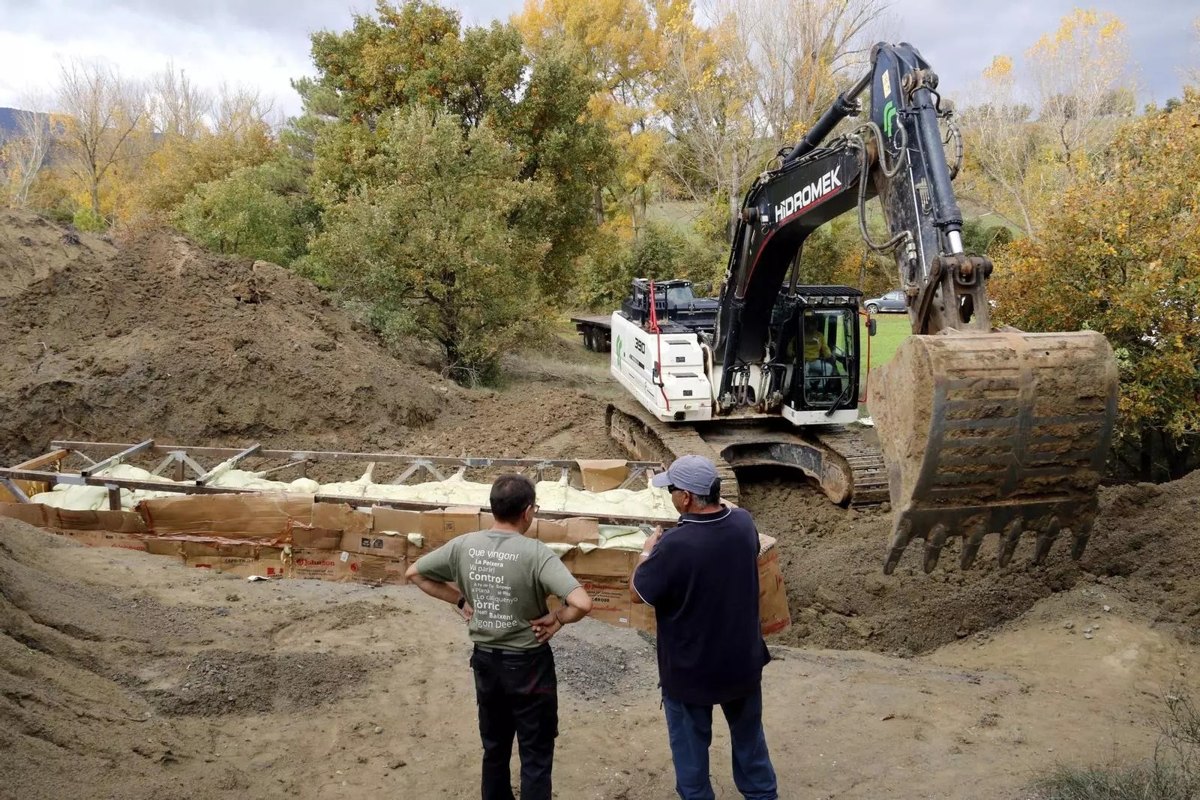
To get the neck out, the team coated the bones in acrylic resin and then built a frame of iron and polyurethane around the whole block, a field casing that paleontologists call a “mummy”.
Ara described the finished box as about six metres long. Barcelona Secreta reported that the capsule had to be turned over through complex maneuvers before it could be loaded onto a trailer.
The move was not entirely clean. RUSSPAIN reported that a fragment from the front section broke away during loading, while the rest of the block stayed intact, and that the effect on the bones still has to be assessed.
Why it may beat the Abditosaurus found in 2014
This is not the first giant neck from the area. In 2014, the same team excavated the neck of a titanosaur at nearby Orcau that was later named Abditosaurus and was considered the largest dinosaur neck excavated in Europe.
That animal is estimated to have measured 15 to 18 metres from head to tail. RUSSPAIN reported that the Orcau block weighed five tonnes, against the much heavier block that came out of Molí del Piteu.
Paleontological preparator Elena Nieto said the ribs of the Isona animal are longer than those of the Abditosaurus, one of the reasons the team thinks the new titanosaur could be larger, according to RUSSPAIN.
The researchers are careful with that claim. Ara reported that they prefer to wait for the results of studies on the bones before confirming that this is the largest neck found so far.
Skull, shoulder and forelimbs in the same block
Size is not the only thing that sets this fossil apart. Unlike the Orcau specimen, the new block preserves part of the pectoral region, the forelimbs and some cranial material, according to Barcelona Secreta and RUSSPAIN.
Nieto also said the vertebrae appear to be in anatomical connection, still in the position they had when the animal was alive. That would suggest the carcass was not moved much by water or scavengers after death.
RUSSPAIN added that many teeth from carnivorous dinosaurs were found at the site, which suggests the titanosaur may have been preyed upon or scavenged.
A giant that still has no name
The species of the new titanosaur has not been identified. Ara reported that the study will have to determine whether it is a different kind of titanosaur or another Abditosaurus like the one found in 2014.
That answer could take years. RUSSPAIN noted that preparing the Orcau neck took about six years, and that researchers concluded it belonged to a new species a decade after it was extracted.
Naming a dinosaur often runs on that kind of clock. In October, a PhD student in London gave a name to a dinosaur that had sat in the Natural History Museum for more than 25 years after it was dug out of a quarry.
Pallars Jussà keeps producing giants
The Conca Dellà record already includes plant-eating dinosaurs of different sizes, from animals around 12 metres long up to the Abditosaurus, according to RUSSPAIN.
Isona sits about two and a half hours by road from Barcelona, in the foothills of the Pyrenees. Barcelona Secreta described the area as one where the ground “still hides creatures of almost unimaginable size”.
For now, the block goes to the laboratory, where the bones will be freed from the rock, measured and compared before anyone can say how big the animal was or what to call it.
The work is described in detail by the Ara report on the Isona neck, which includes photos released by the museum and the ICP.
If the Isona titanosaur turns out to be a new species, should Europe’s biggest dinosaurs be looked for in the Pyrenees rather than Patagonia?