Portuguese
 Spanish


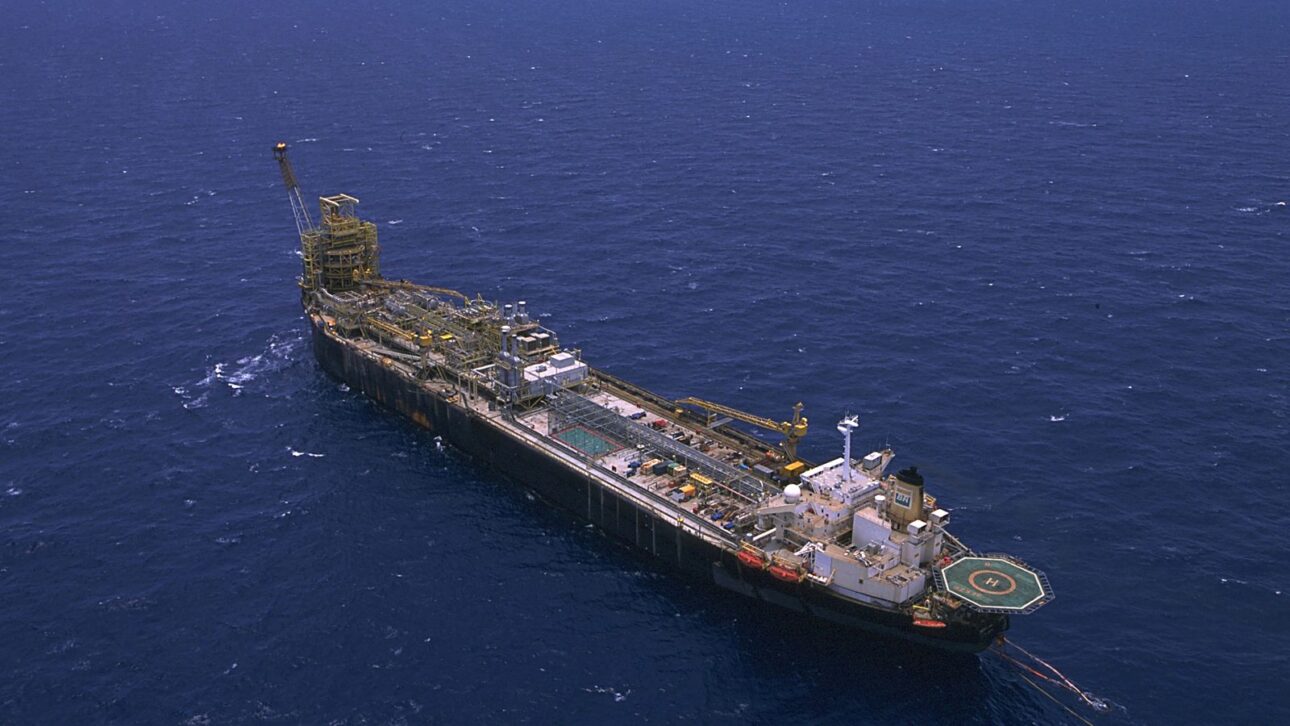
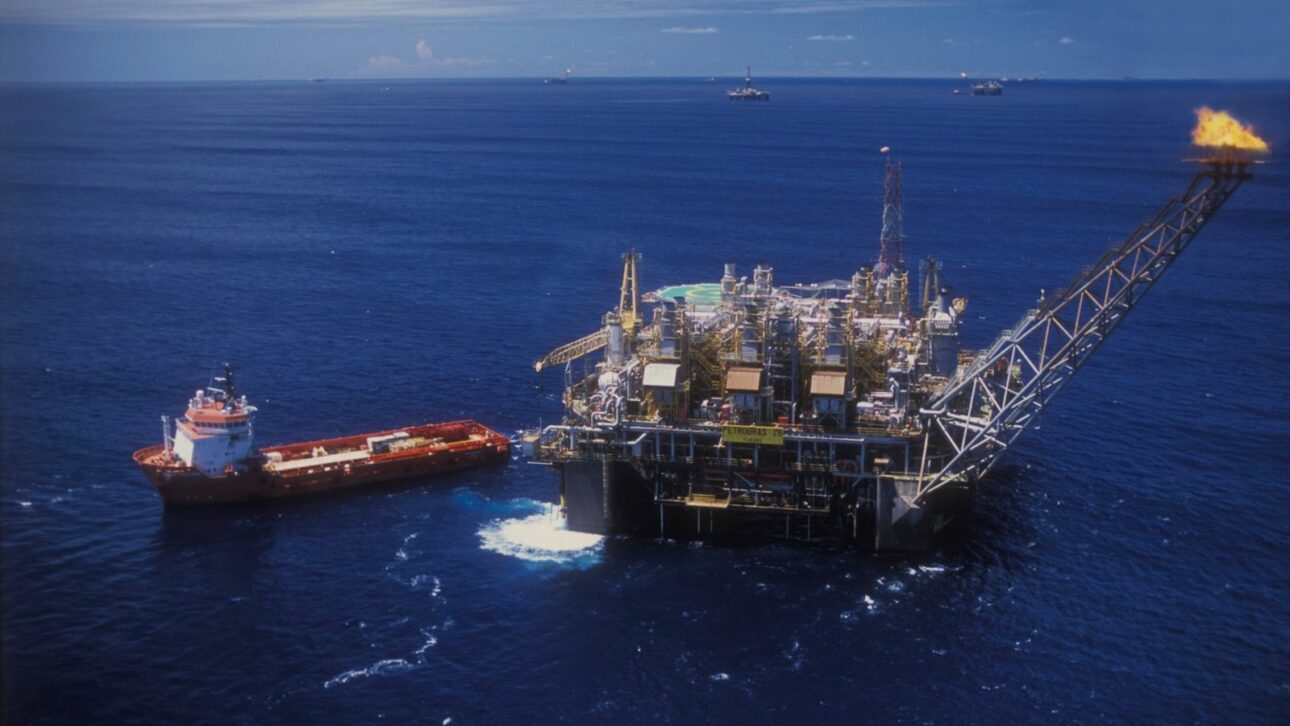
MODEC completed the hull joining for the Gato do Mato FPSO nearly a month ahead of schedule. The Shell unit will be able to produce 120,000 barrels of oil a day and store 850,000 barrels in the Santos Basin.
Japan-based MODEC completed the joining of the Gato do Mato FPSO’s hull nearly a month ahead of schedule. The floating production, storage and offloading vessel, ordered by Shell Brasil, will be able to produce up to 120,000 barrels of oil a day about 200 kilometers off the coast of Rio de Janeiro.
The milestone, announced by the manufacturer on November 26, 2026, marks the first use of a modular construction model in which different parts of the hull are built simultaneously at multiple shipyards. The unit will be installed at the Orca field in the pre-salt region of the Santos Basin.
Hull built in Japan and China was joined ahead of schedule
In July, MODEC completed construction of the hull’s forward section at the Sumitomo Heavy Industries Marine & Engineering shipyard in Yokosuka, Japan. The structure was shipped to China, where it was to be joined to the aft section.
-
Petrobras drillship to start drilling Mãe de Ouro well in December 2026, 52 km off Rio Grande do Norte in over 2,000 meters of water, after completing Morpho well

-
Petrobras to remove 27 offshore oil platforms by 2031, nine more than under the previous plan, including eight in the Campos Basin, at an estimated cost of $11.2 billion
-
Petrobras auctions Campos Basin platforms P-19 and P-26 online, with bidder qualification open through December 6, 2026, and bids accepted through December 18 on the Superbid portal
-
Helicopters to begin flying new route to Campos Basin platforms, reducing 97,000 nautical miles annually
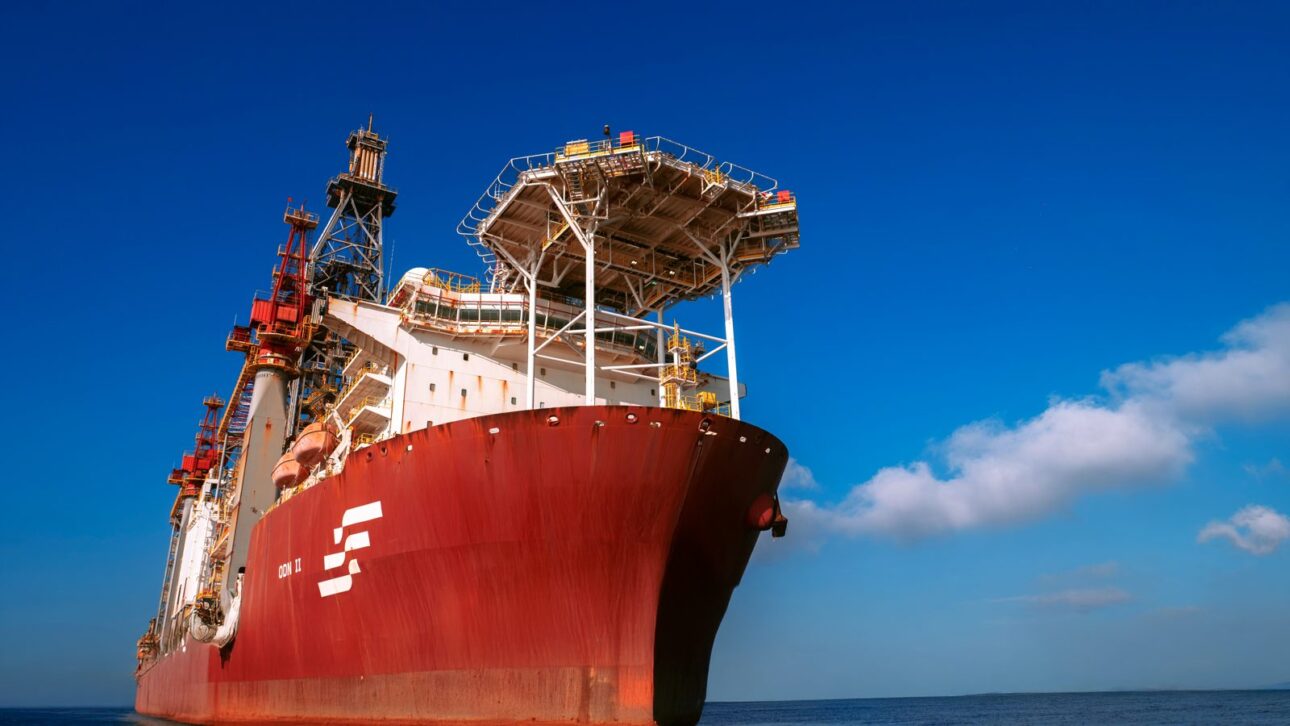
Hull joining and welding work with the vessel afloat began in October 2026. The work above the waterline finished a week ahead of schedule, with dimensional control checks receiving a 99% approval rating.

In late October, the vessel entered dry dock so workers could weld the lower part of the hull. Support structures for the risers, the pipes that will connect the subsea equipment to the platform, were also installed.
The team carried out dimensional checks and additional tests on the support systems. Soichi Ide, head of MODEC’s floating production solutions unit, said aligning structures built at different shipyards was among the biggest challenges during this stage.
The manufacturer credited the result to early preparation with suppliers, coordination with Shell and experience gained through its partnership with Chinese group COSCO, which has lasted two decades.
FPSO will have storage capacity for 850,000 barrels
The Gato do Mato was designed to operate in water about 2,000 meters deep. The unit will use a spread-moored system from SOFEC to keep it in position in the production area.
In addition to its daily oil processing capacity, the FPSO’s tanks will hold 850,000 barrels of oil. After treatment aboard the vessel, the oil will be stored until it is transferred to shuttle tankers, which will carry it to commercial destinations.
The MODEC data sheet indicates gas processing capacity of 384 million cubic feet per day, equivalent to about 10.9 million cubic meters. The structure will also include facilities for reinjecting gas and produced water.
Unlike projects that reuse existing oil tanker hulls, Gato do Mato will have a hull built specifically for the project, with a 25-year design life. MODEC signed a 20-year operations and maintenance contract with Shell.
Redesign cut equipment weight and project costs
Shell began reassessing the development of Gato do Mato after supplier and equipment costs surged in 2022. The review involved simplifying the FPSO (floating production, storage and offloading vessel)’s topside modules, which handle oil and gas processing and power generation.
According to a publication by Shell itself, engineering changes to the new version reduced the weight of these modules by 30%. One change moved individual well production metering to the seabed, eliminating the need for some surface equipment.
The project also came to include six smaller turbines instead of four larger ones to supply power to the unit and the gas compression system. Compared with the previous version, Shell reported a 20% increase in total production capacity and an almost 16% reduction in project costs.

Building large offshore structures in different countries is already part of other projects planned for the Santos Basin. For the P-79, for example, Petrobras said the topside modules were built in China, Brazil, South Korea and Indonesia, then integrated at South Korean shipyard Hanwha Ocean.
Orca field estimated to hold 370 million barrels of recoverable resources
Shell made the final investment decision in March 2025, about 15 years after oil was first discovered in the area. The project, previously called Gato do Mato, was renamed Orca and covers the BM-S-54 and Sul de Orca blocks.
The project combines an area under a concession agreement with another covered by a production-sharing agreement. The operator’s estimate is about 370 million barrels of recoverable resources.
On August 7, 2026, Brazil’s National Agency of Petroleum, Natural Gas and Biofuels (ANP) approved the development plan for the shared Orca and Sul de Orca reservoir. At the time, Shell Brasil said construction of the FPSO had passed the 50% completion mark.
MODEC is also involved in other Brazilian pre-salt developments, including the FPSO (floating production, storage and offloading vessel) Guanabara in the Mero field, whose consortium includes Shell. The field also has the FPSO (floating production, storage and offloading vessel) Marechal Duque de Caxias, another unit designed for deepwater production.
Shell prepares drilling campaign for 2027
Alongside construction of the FPSO (floating production, storage and offloading vessel), Shell hired the VALARIS DS-8 drilling rig to carry out deepwater operations. The contract announced in December 2025 is valued at an estimated US$300 million and is scheduled to begin in the first quarter of 2027, with a focus on drilling and completing the Orca wells.
Shell plans to install the FPSO in Brazil in 2028 and start production from the field in 2029, according to the schedule released by the operator. With hull joining complete, the project is moving on to equipment integration, testing and preparations for the vessel’s future pre-salt operations.