





 Portuguese
  English
  Spanish
  5 min of reading
  0 comments


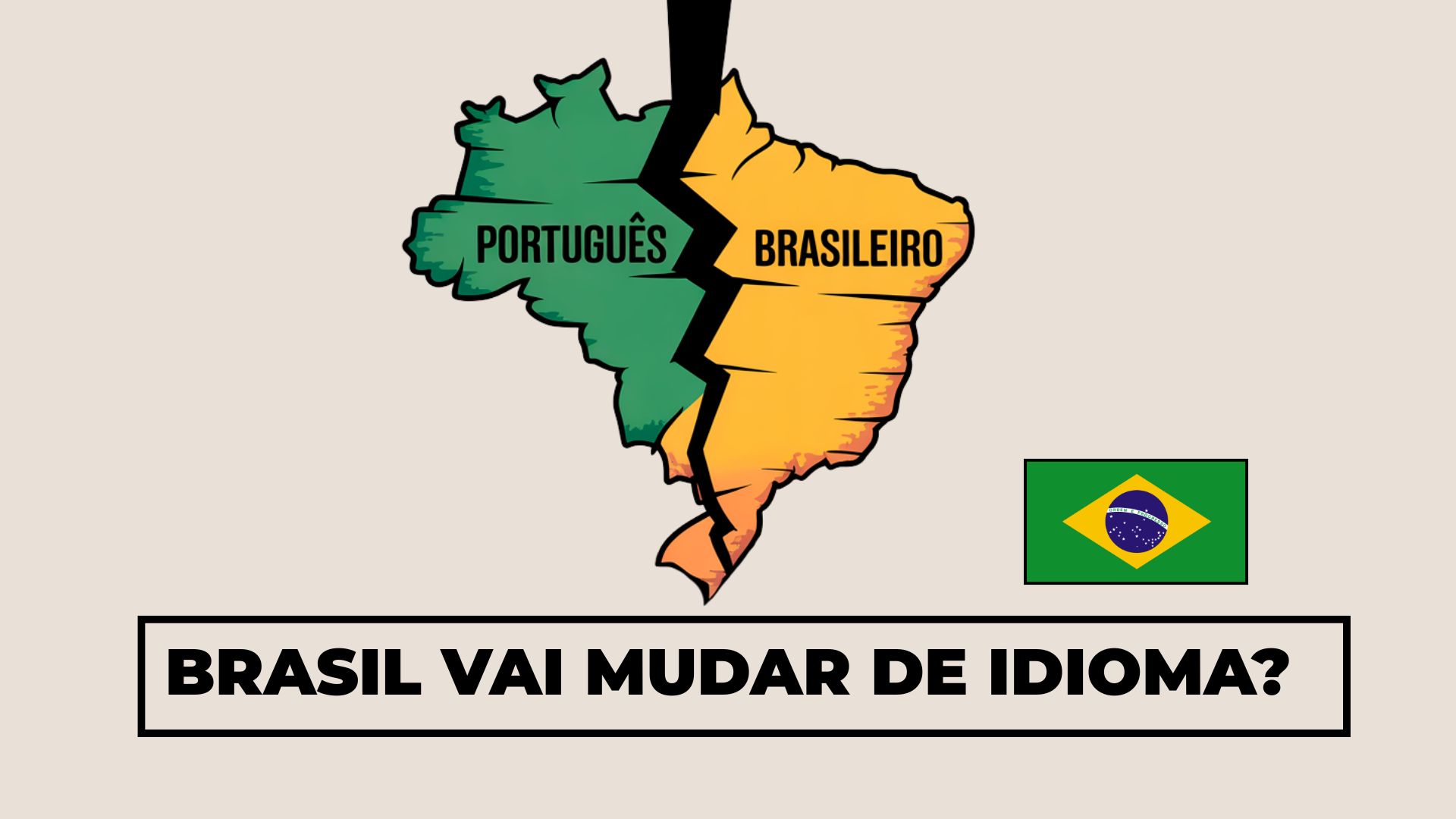
New Book Sparks Debate About the Origins of the Portuguese Language and the Possible Emergence of Brazilian Portuguese, Highlighting Historical and Cultural Influences Little Known to the General Public.
The discussion about the future of the Portuguese language in Brazil gained new momentum with the publication of the book “Assim Nasceu uma Língua” (“This is How a Language was Born”), by Portuguese linguist Fernando Venâncio, released in the country by the publisher Tinta da China.
Venâncio proposes that the language of Portugal did not originate exactly where that country is located today, and points to Brazil — the main former Lusitanian colony — as the protagonist of a transformation that may soon lead to the spoken language in the national territory being called “Brazilian”.
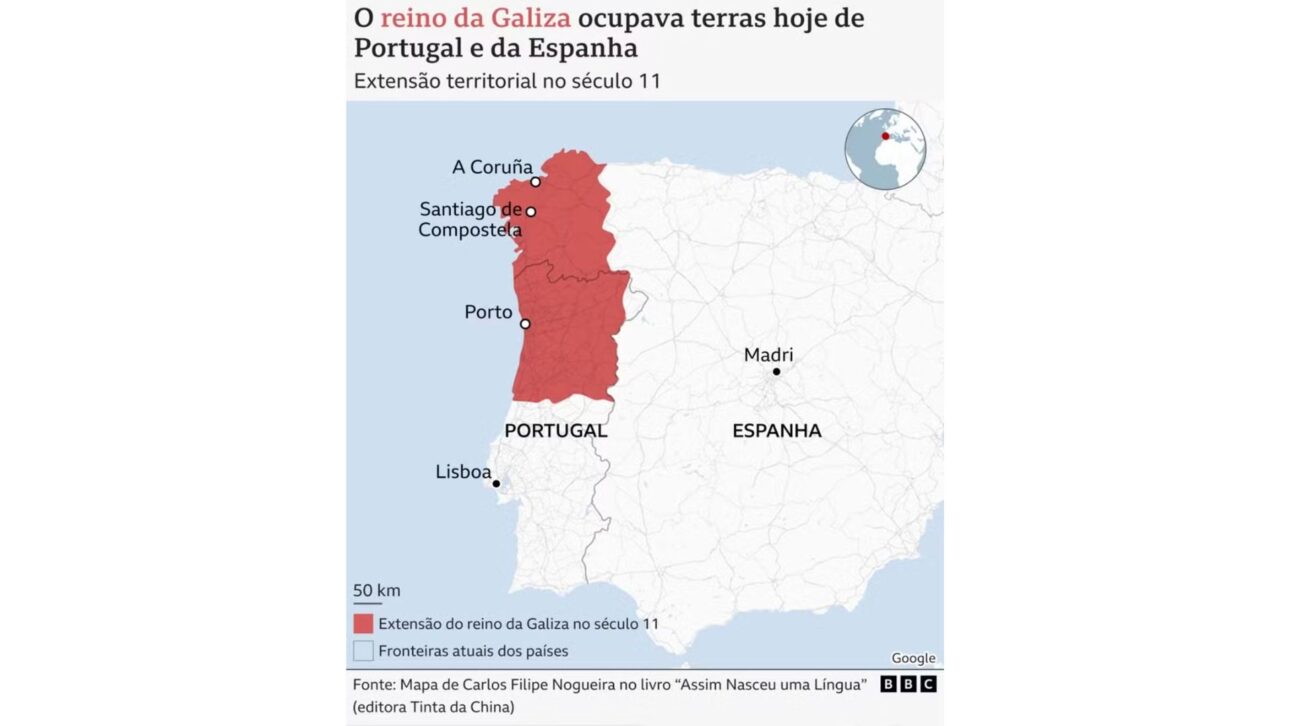
According to Venâncio, in an article published by BBC Brasil, the origin of the Portuguese language traces back to the ancient Kingdom of Galicia, created in the 5th century AD after the fall of the Roman Empire.
-
(Video): Italian pilot lands plane on moving train at 120 km/h and achieves unprecedented feat in aviation, even with a narrow runway and without direct visual contact.

-
It seems to have come out of a science fiction movie: A Brazilian city where it rains almost every day, recording over 4,000 mm per year, driven by climatic factors — a direct result of its strategic location in the Amazon.

-
The water crisis that could change everything this year has already begun; it’s not just about the climate, it affects technology, raises product prices, and can halt entire companies without warning.

-
A Japanese mason transforms raw granite into small cups and handcrafted utensils, collects giant stones, cuts with precision, and impresses with detailed manufacturing and finishing.


Only part of that territory corresponds to what is now Portugal, while the main region is today Galicia, an autonomous community in Spain known for cities like Santiago de Compostela, Vigo, and A Coruña.
“The mere idea that, at some point, a foreign language could have been the language of Portugal is unbearable to us,” writes the author.
The linguist also emphasizes that Lisbon, the capital and center of contemporary Portuguese life, remained under Arab rule for over 700 years.
During that time, the predominant language in the region was Mozarabic, a variety of Latin dialects heavily influenced by Arabic.
This context explains the presence of words like “almofada”, “açougue” and “fulano” in the current vocabulary of the Portuguese language.

Meanwhile, the Galician language was already developing, laying the groundwork for future Portuguese.
Today, cultural movements seek to preserve Galician in Galicia, despite the predominance of Castilian, the official language of Spain.
Fernando Venâncio states: “There are Galicians who do everything possible to reverse the process, but it is very difficult because it is Castilian that holds prestige”.
Galician, often associated with rural settings, loses ground especially in larger cities, unlike Catalan, which enjoys more adherence and importance in Catalonia.
The distancing from Galician roots in the language spoken in Portugal is linked to the construction of Portuguese national identity, starting in the 12th century.
Portugal, founded as a kingdom in 1139, sought to distinguish itself from other regions, especially after Galicia was incorporated into the Castilian sphere.
The term “galego-português”, used to describe the ancient phase of Portuguese and studied in works by authors such as Gil Vicente, reflects this process of masking Galician origins.
For Venâncio, the Portuguese language was born Galician and later consolidated in the south, acquiring its own characteristics while maintaining closer ties to Galician than to Castilian.
A relevant point cited by the linguist is the presence of the word “saudade” in both Portuguese and Galician, contradicting the idea of the term’s exclusivity in the Portuguese language.
Origin and Evolution of the Portuguese Language
Venâncio’s book also points out strongly Galician marks present in the so-called Brazilian Portuguese.
The diminutive “-inho,” an element associated with Brazilian affection in terms like “cafezinho” and “Ronaldinho”, has roots in the Galician language, whose formation predates the arrival of the Portuguese in Brazil.
Another emblematic expression, “oxente”, considered a symbol of Brazilian Northeast, also shows Galician influence, according to the author.
There is no definitive proof regarding the origin of the expression “oxente” in Northeast slang.
Although hypotheses circulate online suggesting a derivation from the English “oh shit,” supposedly brought by American soldiers during World War II, Venâncio argues that evidence points to the northwest of the Iberian Peninsula.
In Galician, “xente” means “people,” and the sound of “x” often replaces the phonemes “g” and “j” in proper names, such as “José,” which becomes “Xosé.”
Furthermore, the term “galego” is used in the Northeast to refer to blonde people, linking back to ancient migratory waves from Galicia.
Differences Between Portuguese and Brazilian Portuguese
Despite decades of study and teaching of the Portuguese language, Venâncio does not adopt a purist stance.
He recognizes the natural incorporation of Brazilian terms by Portuguese children, citing the example of the replacement of “frigorífico” by “geladeira”.
According to the linguist, this does not necessarily represent an abandonment of Portuguese in favor of Brazilian Portuguese, but rather a manifestation of Brazil’s cultural influence.
However, Venâncio argues that, despite this exchange of linguistic elements, the ongoing process is one of distancing, not unity, between the variants.
“There is no way to go back, there is no way to stop this process of distancing between Portuguese and Brazilian”, he asserts.
For him, Brazilian Portuguese can already be considered a distinct norm, highlighting the more spontaneous and everyday use of Portuguese spoken in Brazil.
Units and Linguistic Divergences
Still, linguists and grammarians on both sides of the Atlantic observe that there is unity in the grammatical and morphological norms of the two variants.
The main elements of the Portuguese language, such as articles, pronouns, and prepositions, remain the same in Brazil and Portugal, especially in the cultured variant.
This scenario prevents the technical assertion of a separate Brazilian language.
Venâncio, however, argues that spontaneous and informal speech in Brazil accelerates the differentiation process from European Portuguese.
The linguist believes that this phenomenon is irreversible and compares it to what happened with Latin, which eventually split into different languages.
“Portuguese is likely to divide — or multiply — into other languages, just as happened one day to the language of the Romans, who had no idea of these historical wanderings”, writes the author.
Do you believe that if the Portuguese language officially transforms into Brazilian Portuguese, it would change the cultural identity of the country?






-

-

2 pessoas reagiram a isso.