






 Portuguese
  Spanish


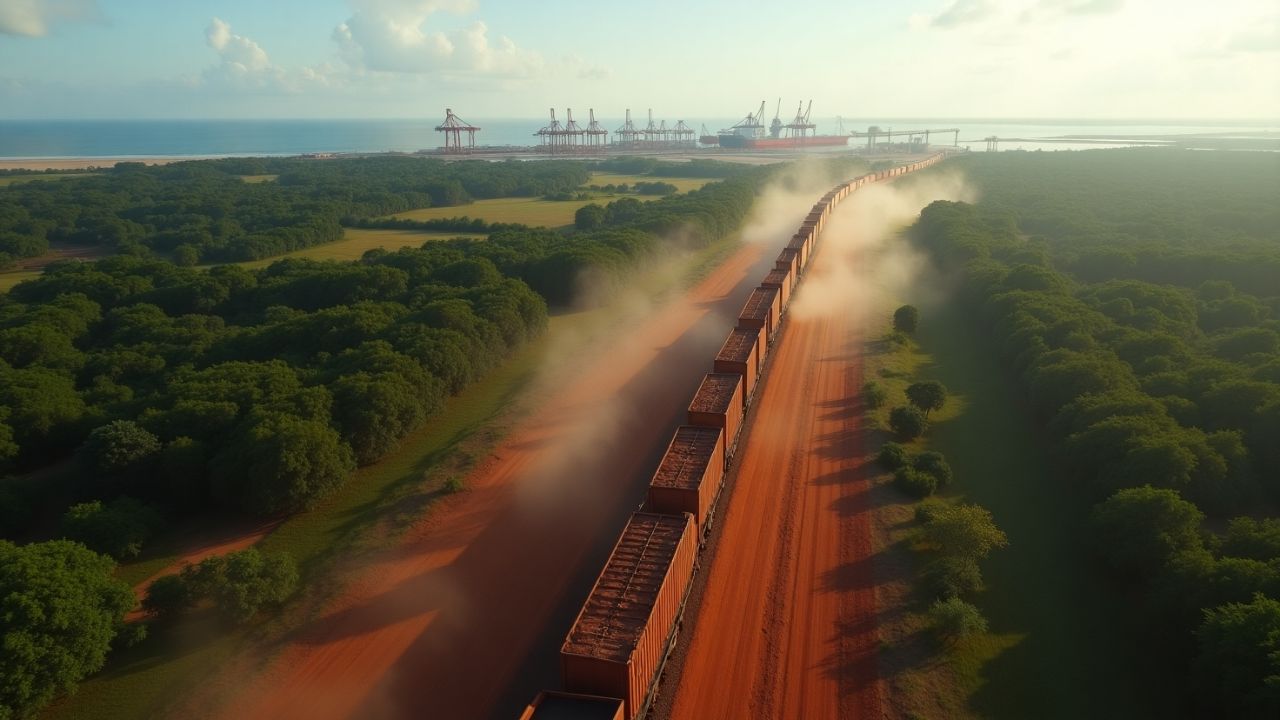


Carajás Railway Operates The Largest Train In Brazil With 330 Wagons, Covering 892 Km Between Carajás (PA) And São Luís (MA)
The Carajás Railway (EFC), operated by Vale, holds the record for the largest train in Brazil. With an impressive length of 3.5 kilometers and composed of 330 wagons, each train carries up to 40 thousand tons of iron ore from the mines of Carajás in Pará to the Port of Ponta da Madeira in São Luís, Maranhão. The operation of this giant railway composition is essential for the transport of Brazilian mineral production and the competitiveness of the sector in the international market.
Features And Operation Of The Largest Train In Brazil
The train is pulled by multiple locomotives distributed along its length, ensuring the efficiency of transporting heavy loads over long distances. The Carajás Railway has a total route of 892 kilometers, passing through several municipalities in the states of Pará and Maranhão, and is considered one of the most strategic railways in the country. According to the National Association of Passenger Transporters by Rails (ANPTrilhos), the railway was designed to serve both cargo transportation and passenger transport, facilitating logistics in the Northern region of Brazil.
The EFC’s control and monitoring system uses state-of-the-art technology to ensure safety and operational efficiency, as the operation of the largest train in Brazil requires meticulous planning to avoid impacts on the railway network and on loading and unloading terminals. According to Vale, investments in railway infrastructure have allowed for a gradual increase in the transportation capacity of the EFC, reinforcing its role in the export of iron ore to international markets, especially China.
-
Brazil Plans $160 Billion Investment to Revitalize Railways and Reduce Reliance on Long-Distance Trucking

-
Retired Railway Workers in Brazil Preserve Locomotive for 52 Years, Now See It Donated by the Government

-
Railway returns to prominence in Brazil after STF approval: a R$ 25.2 billion project promises to save R$ 9 billion in freight, transport 50 million tons per year, and transform Sinop into a logistics powerhouse for agribusiness.
-
Retired trains leave European tracks and become tons of steel, aluminum, and copper in dismantling yards where recycling exceeds 90%, but batteries, composites, and electronics create a new frontier of railway waste.


Economic Importance And Logistical Challenges
The operation of such large railway compositions represents a significant advancement for Brazilian railway logistics, allowing for the movement of large volumes of ore in a more sustainable and efficient manner than road transport. According to the National Land Transport Agency (ANTT), the use of railways reduces logistical costs and carbon emissions, contributing to a more balanced and less polluting transport matrix.
However, one of the major challenges of operating the largest train in Brazil lies in the railway infrastructure necessary to support the weight and length of these compositions. Vale has been investing in track doubling, improvements in automated braking systems, and traffic control to ensure that these trains can operate efficiently without compromising safety.
According to the mining company itself, the operation of large trains has been a decisive factor in increasing the competitiveness of Brazilian iron ore in the global market. Countries like Australia and Canada also use long railways for commodity transportation, but Brazil stands out for the volume transported in each railway composition.
Recognition And Impact On Railway Engineering
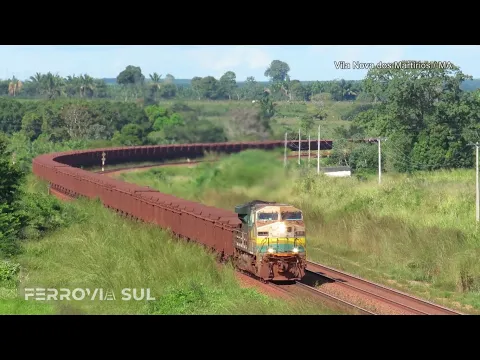

The Carajás Railway has already been highlighted in reports by the International Heavy Haul Association (IHHA), which evaluates the world’s leading freight railways. According to the organization, the Brazilian railway is an example of how rail transport can be expanded to reduce costs and increase industrial productivity. The expertise gained in operating the largest train in Brazil also contributes to future railway expansion projects in the country, such as Ferrogrão and the West-East Integration Railway (FIOL).
With operational records and a constantly improving infrastructure, the Carajás Railway and its fleet of giant 3.5 km long trains continue as one of the hallmarks of Brazilian railway engineering, ensuring the growth and competitiveness of national mining.


