Portuguese
  Spanish


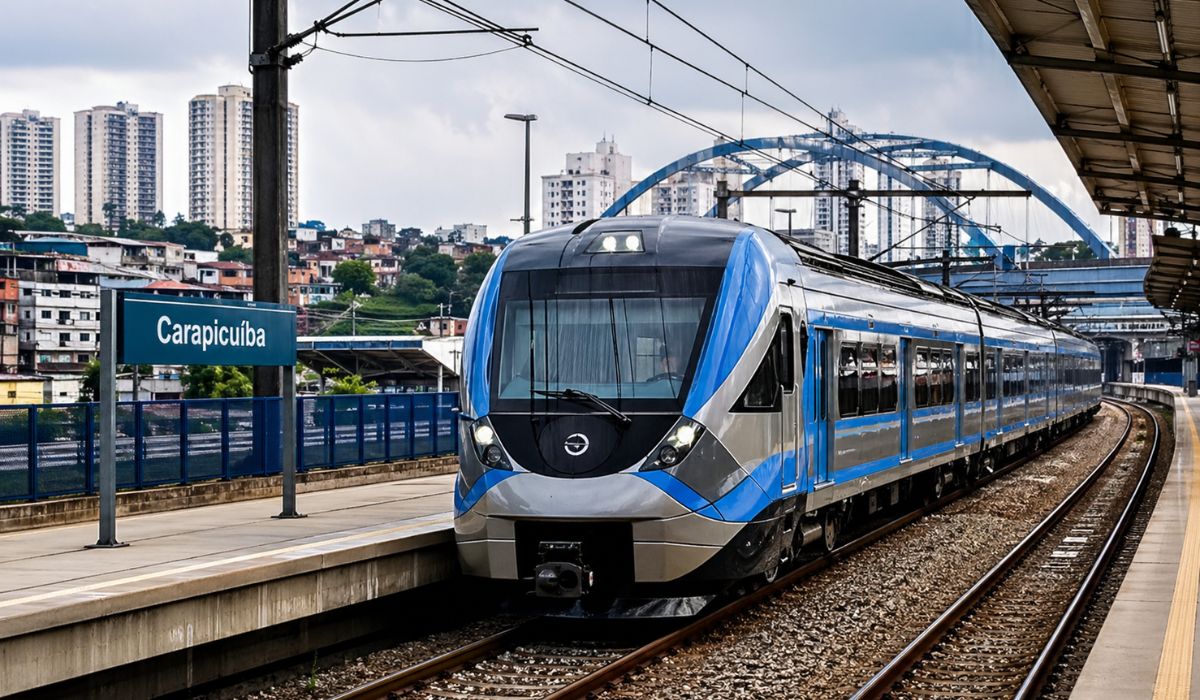

Agreement signed by the São Paulo government includes Carapicuíba in the preparation of the West Axis Intercity Train, a billion-dollar project that foresees a railway connection between the capital and Sorocaba, with new administrative stages before the works.
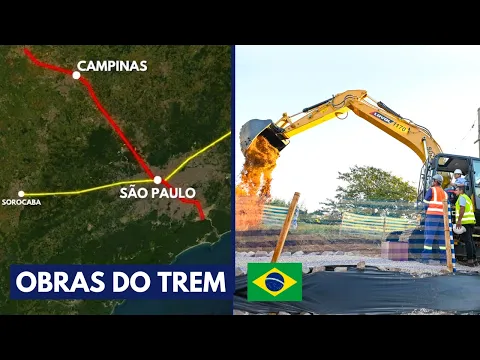
The Government of São Paulo signed an agreement with the Carapicuíba City Hall to allow the use of municipal areas for interventions related to the West Axis Intercity Train, a project estimated at R$ 11.9 billion that foresees a railway connection between Água Branca station, in the state capital, and Sorocaba, in the interior of the state.
With the signing of the agreement, Carapicuíba formally becomes part of the project’s territorial preparation stage.
The municipality appears in the planned route as one of the first stops after Água Branca towards the interior, according to information released about the agreement and the future railway concession.
-
She bought a used motorhome at 23, refused an expensive renovation, dismantled furniture from the old apartment, and created a home on wheels with compact carpentry and repurposed pieces.

-
At 7 years old, boy swaps toy cars for raising bantams, dreams of becoming a veterinarian, and conquers the internet with his routine in the countryside of Santa Catarina; meet Luiz Miguel, the “Piá do Garnizé”

-
New York removed the tracks from over 2,500 subway cars and dumped everything at the bottom of the Atlantic, and what seemed like trash turned into an artificial reef teeming with fish and divers.

-
From matches sold by bicycle at age 5 to a global furniture empire: the lumberjack’s son founded IKEA at 17 in his uncle’s kitchen and transformed a small company into the largest furniture retailer on the planet.



The term was signed by the state secretary of Partnerships in Investments, Rafael Benini, and by Mayor José Roberto da Silva.
The document authorizes the State to use municipal areas for expansion works, improvements around stations, and track implementation.
The authorization is valid for five years and provides for “irrevocable and irreversible” permission for interventions to be carried out in Carapicuíba areas, directly or indirectly.
The measure allows the state government to advance in administrative stages related to the implementation of the service, without, by itself, altering the contractual stage of the project.
Carapicuíba on the Intercity Train route
The West Axis Intercity Train, also called TIC Sorocaba, foresees a railway connection of approximately 100 kilometers between São Paulo and Sorocaba.
The estimate released by the São Paulo government is that the journey between the two cities will take about one hour when the service is in operation.
The proposal is part of the state program for concessions and partnerships for regional railway transport.
The foreseen model is a public-private partnership, with implementation and operation of the service by a future concessionaire, after the phases of tender, auction, contract, and execution of the works.
In the case of Carapicuíba, the agreement deals with areas necessary for urban and railway adaptations.
The signing does not represent the immediate start of works, but it releases a stage considered necessary to organize responsibilities between the State and the municipality within the implementation process.
Água Branca station is indicated as the starting point of the axis in the state capital.
From there, the route continues towards the western region of Greater São Paulo and the interior.
Carapicuíba appears on this route because it is in the railway corridor already used by Line 8-Diamante, operated by ViaMobilidade.
Municipal areas and foreseen works
Under the agreement, the State may carry out interventions in municipal areas related to the implementation, improvement, and requalification of the surroundings of the stations of the future railway connection between São Paulo and Sorocaba.
The document also mentions the possibility of track implementation and expansion of structures linked to the project.
The city hall, in turn, is responsible for releasing the necessary spaces and for acting on authorizations of municipal competence, including urbanistic and environmental procedures when applicable.
The cession of public areas necessary for the execution of the interventions is also foreseen, according to the conditions established in the agreement.
These stages are common in urban infrastructure projects, because railway works depend on compatibility with roads, land, public networks, existing stations, and passenger circulation.
In densely occupied areas, this process usually requires adjustments between different public bodies before the physical execution of the interventions.
In the material released about the agreement, the route in Carapicuíba uses the existing railway corridor as a reference.
This indicates partial use of the already consolidated urban infrastructure, although eventual works still depend on technical definitions, licensing, contracting, and official schedule.
Connection between São Paulo and Sorocaba
The TIC Sorocaba aims to create a railway alternative for passenger transport between the state capital and the interior.
According to information from the state government, traveling by train is expected to reduce travel time compared to routes currently taken by bus or car.
The investment forecast of R$ 11.9 billion includes structures necessary for the implementation of the service, railway adjustments, and interventions associated with the future operation.
The contract planned for the concession should cover the implementation and operation of the system, according to the guidelines of the state partnership program.
The estimated demand for the project is about 50,000 passengers per day, according to data released by the São Paulo government.
The number considers the future operation of the service and may be detailed in studies and official documents of the project’s next phases.
Although the agreement with Carapicuíba represents an administrative advance, the progress of TIC Sorocaba still depends on subsequent stages.
Among them are the publication of the tender, the holding of the auction, the signing of the contract with the concessionaire, and the start of the works.
Each phase can change deadlines and operational details of the project.
The implementation of a regional train also requires integration with the metropolitan railway network.
As the initial section of the axis approaches areas served by lines already in operation, the organization of the works and future operation will need to consider the functioning of existing services.

Contactless Payment on Lines 8 and 9
In addition to the administrative progress of TIC Sorocaba, lines 8-Diamante and 9-Esmeralda have started to accept contactless payment directly at the turnstiles.
The change began on April 19, 2026 at stations operated by ViaMobilidade.
With the update, passengers can use credit cards, debit cards, digital wallets, and devices compatible with NFC technology.
Payment is made by bringing the physical card, mobile phone, or smartwatch close to the readers installed at the gates.
The system accepts brands like Elo, Mastercard, and Visa, according to the information released about the operation.
The guidance for passengers is to bring only the card or device that will be used for payment close, to avoid reading errors or charges on another card stored in the same wallet or bag.
The new form of access does not fully replace transport cards in all situations.
In trips with fare integration, the use of Bilhete Único or an equivalent card may still be necessary, according to the rules of each journey.
The update at the turnstiles of lines 8-Diamante and 9-Esmeralda occurs in a context of gradual expansion of digital payment methods in rail transport in São Paulo.
In the same corridor, the Intercity Train project is still in the preparatory phase and depends on the next stages of the concession.
For Carapicuíba, the agreement places the municipality within the initial provisions related to the future railway axis between São Paulo and Sorocaba.
However, the effective execution of the works will be conditioned on the progress of the contracting process and the schedules that will be defined by the state government.