





 Portuguese
  English
  Spanish
  4 min of reading
  17 comments


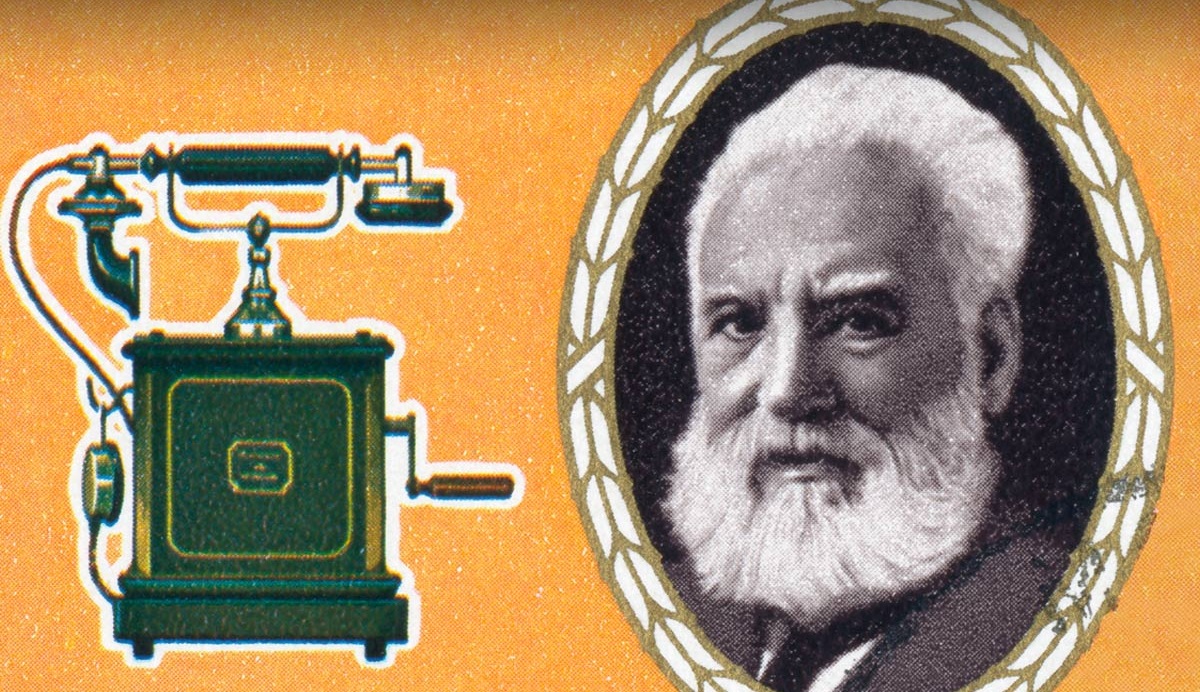


When The Telephone Was Created, “Hello” Was Not The First Option To Answer Calls. Discover The Word Suggested By Graham Bell.
Communication is one of humanity’s most fundamental needs. Today, we live connected by smartphones and digital networks, but it’s hard to imagine what the world was like before the telephone.
In the late 19th century, the fastest means to transmit messages was by letter. Even with the advent of railroads, which sped up delivery, it was still far from being instantaneous.
The arrival of the telegraph in the early century marked an important advancement. It allowed the transmission of messages over long distances, laying the groundwork for more agile communication.
-
Goodbye iron: new technology from Xiaomi promises to revolutionize the way we iron clothes with 500 kPa steam, continuous flow of 120 g/min, heating in 65 seconds, and six smart modes for different fabrics.

-
Rio Pardo, the most mysterious city in Rio Grande do Sul: untouched Pampas castle, the missing treasure of the Devil Boy, bride’s saint, invisible tunnels, and a 200-year curse today.

-
China retires the J-7 fighter after years of military protection and can now transform military items into drones, following more than 60 years of operation of the J-7, derived from the MiG-21, with thousands of units produced and strategic use in the PLAAF and PLANAF.

-
Volunteers are sought to live in the mountains for a month: a study pays people to stay at 2,500 meters, with 24-hour monitoring of sleep, metabolism, and blood pressure.


However, there was an obstacle: the telegraph only transmitted messages in code. But how did technology evolve to allow the transmission of sounds and later, human voices?
Alexander Graham Bell And The First Step Towards Telephony
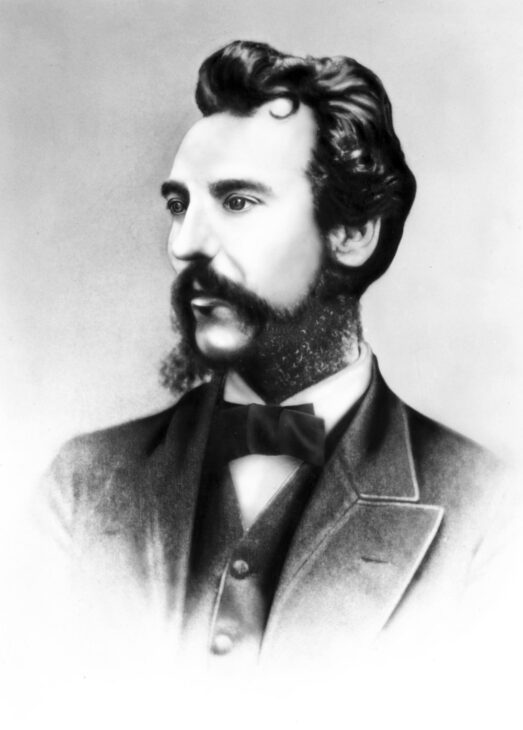
In the 1870s, Alexander Graham Bell, a Scotsman settled in the United States, was working at the Clarke Institute for Deaf Mutes in Massachusetts.
There, he met Gardiner Greene Hubbard, an influential lawyer and enthusiast of technological inventions. They shared an interest in developing new methods of communication.
Bell began working on what he called the “harmonic telegraph,” a device designed to transmit multiple messages over a single wire using different frequencies.
Although his initial intention was not to create a telephone, he began to envision the possibility of transmitting speech over long distances.
With funding from Hubbard, Bell made a crucial discovery: by using electromagnetic reeds tuned to different tones, it was possible to transmit complex sounds, including the human voice. This paved the way for the development of the telephone as we know it.
The Race For The Patent
In 1876, Bell was not alone in the race to create the telephone. Elisha Gray, another American inventor, was also working on a similar device.
Both submitted documents to the U.S. Patent Office on the same day: February 14, 1876.
The competition was fierce. Hubbard urged Bell to file his patent quickly. Despite controversies and claims that Bell had access to Gray’s information, the Patent Office granted the patent to Bell on March 7, 1876, officially recognizing him as the inventor of the telephone.
This decision, however, is still debated today. A 2020 study conducted by Benjamin Lathrop Brown revealed documents that reinforce the legitimacy of Bell’s patent, but it did not completely settle the discussion over who should receive credit for the invention.
The First Phone Call
Three days after the patent was granted, Bell made the first phone call in history. He called his assistant, Thomas Watson, with the phrase: “Mr. Watson, come here, I want to see you.”
Although the words arrived indistinctly and with noise, they marked a historic moment. It was the first time that the human voice was transmitted by an electronic device, something revolutionary for the time.
The Evolution Of The Telephone
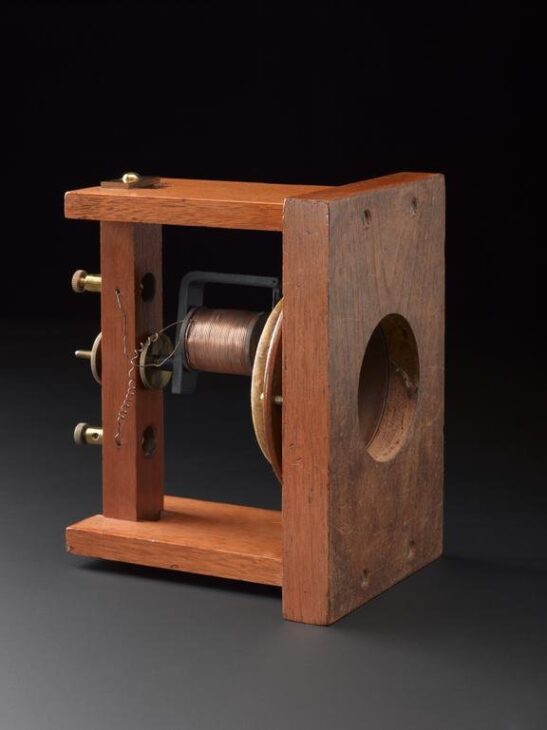
After the initial success, Bell continued to improve his invention. He went back to the original magnetic transmitters and receivers and transformed them into more robust and commercially viable devices.
In 1877, Hubbard founded the Bell Telephone Company, which would later become AT&T, one of the largest telecommunications companies in the world.
Other inventors also contributed to improving the telephone. Thomas Edison and David Hughes developed more sensitive microphones that facilitated the transmission and reception of calls.
Gradually, the telephone moved out of offices and began to be installed in homes, completely changing the dynamics of everyday communication.
Who Else Should Be Recognized?
Although Bell is widely recognized as the inventor of the telephone, other names deserve mention.
Antonio Meucci, an Italian inventor, managed to transmit his voice electromagnetically in 1856, two decades before Bell.
However, he could not secure financial resources to renew his patent in 1874. Therefore, in Italy, Meucci is considered the official inventor of the telephone.
Elisha Gray, who filed his patent on the same day as Bell, also claimed credit. Despite his significant contributions, American justice recognized Bell as the holder of the original patent.
Curiosities: “Ahoy” Or “Hello”?
According to the Science Museum Group, Alexander Graham Bell demonstrated the telephone to Queen Victoria in 1878, and that same year, the Telephone Company Ltd was formed to commercialize Bell’s invention.
Alexander Graham Bell then proposed the word “ahoy” as the standard greeting when answering the phone. However, it was Thomas Edison who popularized the use of “hello,” which remains today as the universal greeting when answering calls.
The telephone not only revolutionized the way we communicate but also paved the way for technologies that are now part of our daily lives, such as cell phones and the internet.
Bell’s invention was the starting point for global instant communication, allowing real-time connections between people separated by oceans and continents.
With information from the Science Museum Group.









” Quem leu o ensaio ‘Antes de Adão’, de Jack London, pode entender como foi laborioso o progresso da humanidade. “
Vira-latas materia incompleta. Dom pedro ll teve um grande papel nisso quando este em boston Massachusetts e ajudou na divulgaçao da invençao.
Entendo que o título da reportagem sirva pra chamar atenção, mas qual o sentido de não dar as explicações corretas?
No fim, disse que ahoy era a saudação mas não disse o porquê.
O jornalismo tá uma catástrofe