






 Portuguese
  Spanish


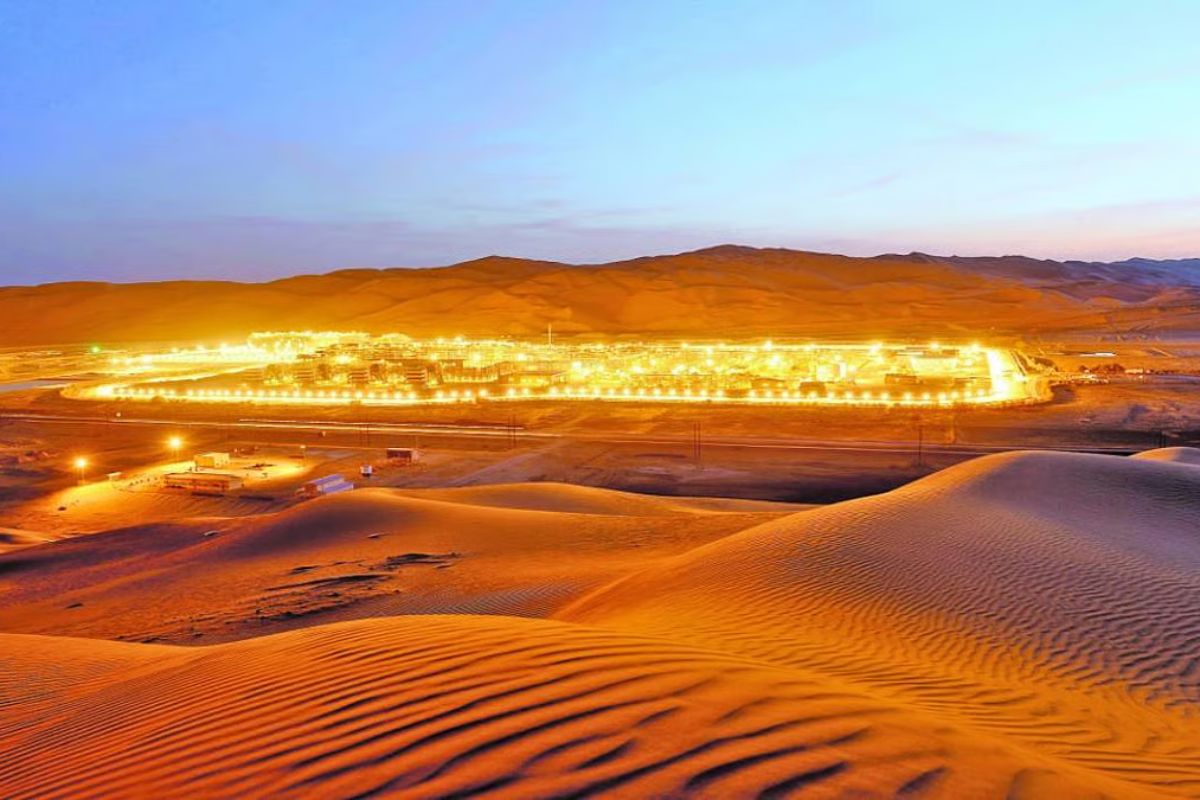


Operated by Saudi Aramco, the Ghawar Field Has Been the Cornerstone of Global Energy for Decades, but Its Decline Now Forces a New Era for Saudi Arabia.
For over 70 years, the global economy has been sustained by a sleeping giant in the Saudi Arabian desert: Ghawar, the largest onshore oil field in the world. Operated by the state-owned Saudi Aramco, this geological colossus alone provided the cheap energy that fueled post-war industrial growth and ensured the geopolitical influence of the Saudi Kingdom.
However, after decades of secrecy, the IPO of Aramco in 2019 revealed what many had suspected: the giant is in decline. By 2025, although still a formidable producer, the story of Ghawar is no longer about oil but about the strategic transition to gas, a move that defines the future of Saudi Arabia and the balance of the global energy market.
The Discovery in 1948 and the Rise of a Giant in the Saudi Desert
The saga of Ghawar began in 1948 when American geologists from Aramco’s predecessor drilled the ‘Ain Dar No. 1 well and confirmed the existence of a colossal reservoir. Commercial production began in 1951, and throughout the decade, new areas such as Shedgum, ‘Uthmaniyah, and Haradh were brought into operation.
-
US Navy Sinks USS Oriskany with 230 kg of C-4, Creating World’s Largest Artificial Reef in 37 Minutes

-
U.S. Dumped Tanks, Jeeps, and Coca-Cola into the Pacific in 1945 After British and French Lowball Offer, Creating “Million Dollar Point”
-
WHO Warns of Unnecessary Interventions in Natural Births Worldwide, Advocates for More Human-Centered Care, Reigniting Debate on Medicalization

-
World War II American Bombs Discovered in German City Prompt Evacuation of 20,500 Residents




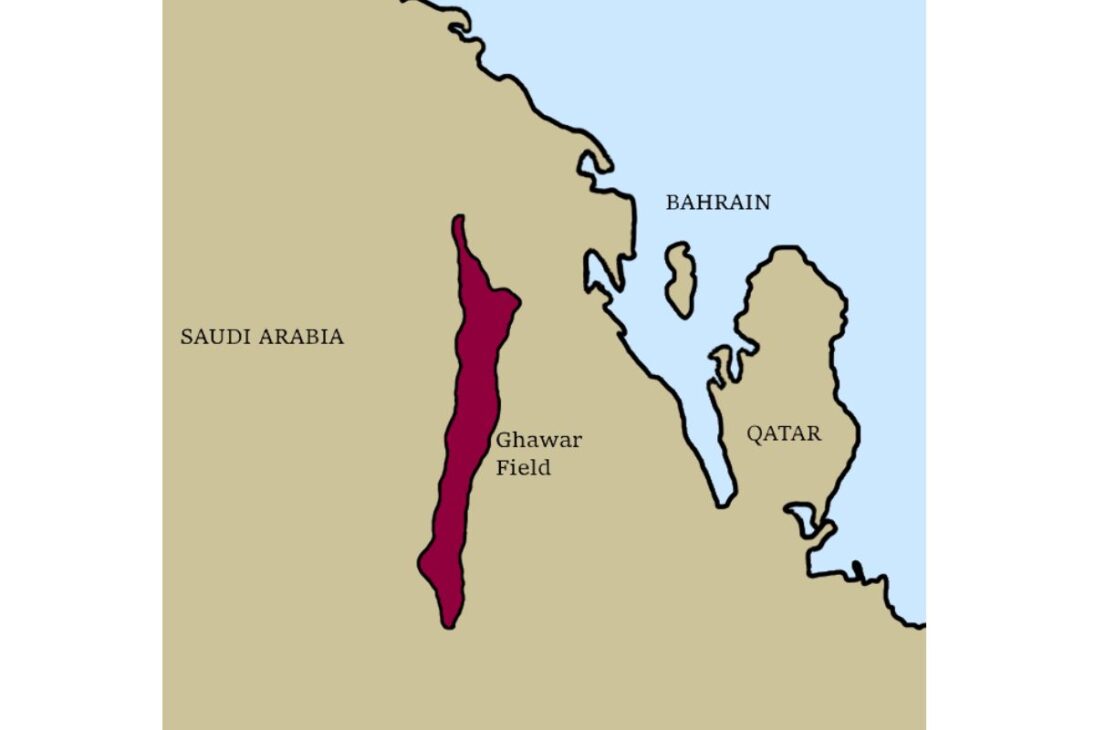
The methodical development revealed the true scale of the field: a single continuous structure measuring 280 km in length by 30 km in width. In 1981, Ghawar reached its historic production peak, averaging 5.7 million barrels per day, the highest rate ever achieved by a single oil field in history, consolidating itself as the planet’s most important asset.
How Saudi Aramco Managed Production for 70 Years
The productivity of Ghawar is the result of an almost perfect geology. Its main reservoir is a Jurassic limestone formation with high porosity and permeability at a relatively shallow depth, which facilitates extraction.
However, the longevity of the field is an engineering feat. Since the 1970s, Aramco has utilized a massive water injection program, pumping about 7 million barrels of seawater per day to the edges of the field. This technique, called “waterflooding”, pushes the oil towards the producing wells and maintains reservoir pressure. The management of this controlled “flooding”, combined with horizontal drilling and the use of “smart wells”, has been key to sustaining Ghawar’s production for decades.
2019: The Great Revelation of the True Capacity of the Largest Onshore Oil Field in the World
For 40 years, Ghawar’s production data was a state secret. That changed in April 2019 when Saudi Aramco, in preparation for its IPO, published a prospectus with audited data. The revelation was a shock to the market.
The document showed that the Maximum Sustainable Capacity (MSC) of Ghawar was 3.8 million barrels per day. This figure was much lower than market estimates, which believed the field could produce over 5 million barrels per day. The U.S. Energy Information Administration (EIA) itself listed Ghawar’s capacity at 5.8 million barrels in 2017. The disclosure confirmed that the largest onshore oil field in the world was indeed in a phase of managed maturity and decline.
Ghawar in 2025: The Decline of Oil and the New Bet on Gas
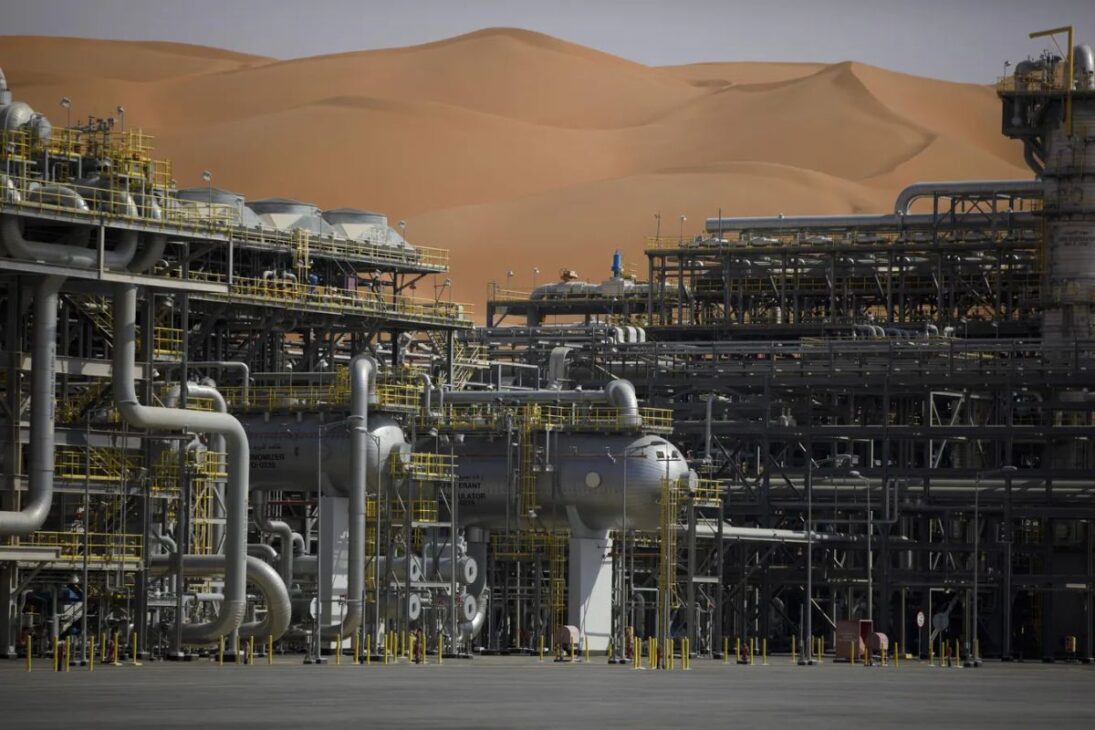
In 2025, Ghawar remains a pillar of Saudi production, but operates at a new pace. It is estimated that its oil production in 2023 was around 3.06 million barrels per day, well below its maximum capacity, reflecting OPEC+ production cuts and the need to manage the reservoir carefully.
The major strategic shift, however, is below oil. Aramco is heavily investing to develop the vast reserves of unconventional gas that exist in deeper formations of the field. In November 2023, the company announced the start of production at the South Ghawar gas project, with an initial capacity of 300 million cubic feet per day. The goal is to use this gas to meet growing domestic energy demand, freeing up more oil for export.
The Impact of Ghawar’s Decline on Saudi Arabia and the Global Market
The maturation of Ghawar marks the end of an era. For decades, the immense excess capacity of the field allowed Saudi Arabia to act as the world’s “swing producer”, capable of quickly ramping up production to balance the markets. With Ghawar’s capacity now limited, this role has become more complex and depends on a portfolio of several other fields.
The decline of the largest onshore oil field in the world has forced Saudi Arabia to adapt. The kingdom’s energy future no longer relies on a single geological anomaly, but on the sophisticated management of multiple assets and a strategic transition to gas. Ghawar, the crown jewel that built the modern world, now drives the transformation of its own guardians into a new era.




