






 Portuguese
  Spanish


In 1991, India was two weeks away from defaulting on its external debt, with zero reserves and the IMF knocking on the door. In the same year, Brazil’s GDP was almost double India’s. Three decades later, India is the world’s fourth-largest economy with an average growth of 6.5% per year, while Brazil occupies the 11th position and grows by 2.5%. The difference lies in the choices: India trained engineers, Brazil trained lawyers.
The Brazil and India started from similar positions in the early 1990s, but took such different paths that the comparison between the two countries has become a case study on what strategic choices can achieve in three decades. In 1991, Brazilian GDP was almost double India’s. Today, it is little more than half. India has become the world’s fourth-largest economy, while Brazil has fallen to 11th position. The growth difference is brutal: while India advanced by an average of 6.5% per year in real terms, Brazil grew by 2.5%.
The reasons for this divergence are not just in the numbers, but in the priorities each country defined. India opened its economy in 1991, and five prime ministers from three different parties maintained the course over decades, ensuring continuity in investment policies in technology, technical education, and infrastructure. Brazil, on the other hand, changed direction with each government, oscillating between economic models and prioritizing areas that generated less productive impact. Now, with bilateral trade around US$ 15 billion, Brazil seeks to strengthen ties with the Asian powerhouse and reach US$ 20 billion by 2030.
India trained engineers while Brazil trained lawyers
The phrase might sound like a provocation, but the data supports it. India heavily invested in technical higher education: 34% of Indian university students study science, technology, engineering, and mathematics, double the Brazilian rate. This choice fueled an information technology industry that today employs millions, exports billions, and positions the country as a global provider of digital services.
-
Retired Builder Constructs House Using Over 4,000 Milk Cartons in Brazil, Engineer Estimates Structure Could Last 100 Years

-
Brazilian Well Taps Guarani Aquifer, Sparking Debate on Water Supply and Security
-
Unique Neck Flexibility and Natural Echolocation Make Amazon’s Pink River Dolphin Extraordinary

-
Young Brazilian Woman Rescues 60 Animals, Faces $6,500 Debt, and Strives to Build Shelter for Dogs and Cats
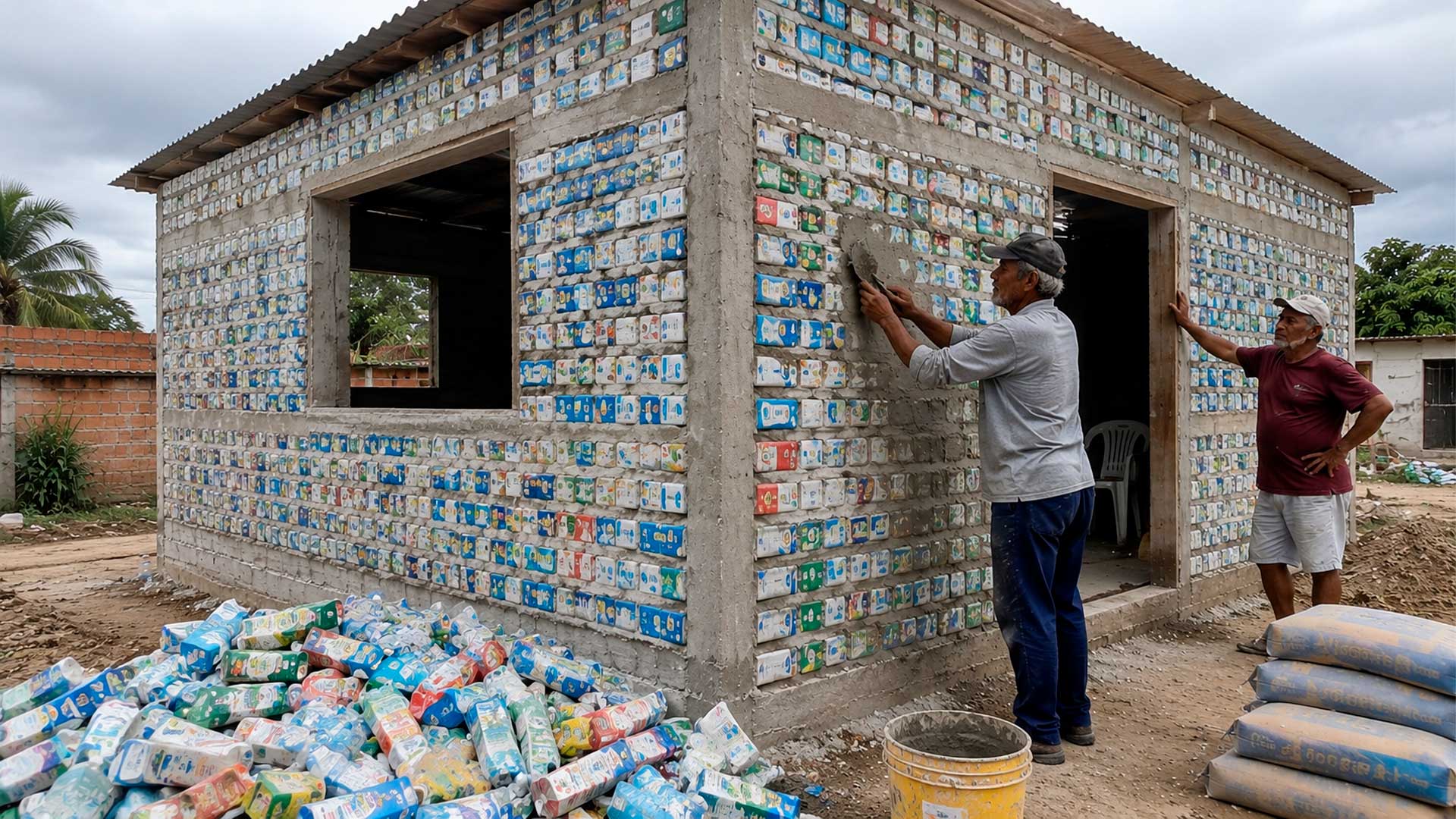



Brazil followed the opposite path, prioritizing education in areas such as law and administration which, although important, do not generate the same multiplier effect on the productive economy. The consequence is evident in growth: while India transformed technical education into an industrial competitive advantage, Brazil faced productivity stagnation and excessive dependence on commodities to sustain its trade surplus. The difference between training engineers and lawyers is not just academic, it is strategic.
How India went from near default to becoming the fourth global economy
In 1991, India experienced a crisis that could have destroyed it. International reserves were depleted, the IMF was called, and the country had to mortgage its gold to avoid default. The response was a radical economic opening led by then-Finance Minister Manmohan Singh, who liberalized entire sectors, reduced trade barriers, and attracted foreign investment on a scale the country had never experienced.
Most notably, the reform survived changes in government. Five prime ministers from three different parties maintained the reformist course over three decades, something Brazil failed to replicate. Each new Brazilian government brought economic policy revisions that interrupted investment cycles and generated uncertainty for national and foreign entrepreneurs. Indian continuity did not eliminate problems like poverty and inequality, but it created an environment of consistent growth that transformed the country’s GDP.
Where Brazil and India meet: from Nelore cattle to ethanol
According to information released by Band Jornalismo, despite economic divergence, cooperation between Brazil and India exists and is growing in areas where the two countries complement each other. The most emblematic case is that of Nelore cattle: the breed of Indian origin was transformed into a productive powerhouse in Brazil, and now Brazilian entrepreneurs are taking this genetic expertise back to India, selling semen and embryos from animals selected during almost a century of genetic improvement in the country.
India is also seeking Brazilian cooperation on ethanol. The country faces energy dependence, air pollution, and accidents with imported fuels, and sees the Brazilian biofuels program as a model to be adapted. Cooperation in renewable energy and water management brings the two giants closer, as they share challenges such as feeding enormous populations, generating clean energy, and modernizing agriculture on a continental scale.
India bets on renewable energy and attracts investors from Brazil
India is one of the world’s largest energy consumers, and coal still accounts for most of the electricity generated in the country. But investments in renewable sources, especially solar and wind, are growing at an accelerated pace and attracting capital from various countries, including Brazil. The clean energy sector is one of the fronts where bilateral cooperation can deepen in the coming years.
For Brazilian entrepreneurs, India represents a market of over 1.4 billion consumers with growing demand for food, energy, and technology. Bilateral trade of US$ 15 billion is considered modest for the size of the two economies, and the target of US$ 20 billion by 2030 reflects the ambition to expand trade ties. Tourism, agriculture, and the pharmaceutical sector are other areas where exchanges between the two countries can expand significantly.
What Brazil can learn from India’s trajectory


The harshest lesson the comparison offers is about continuity. India did not implement more brilliant reforms nor did it have more competent leaders than Brazil, but it stayed the course for three decades without interruption. The accumulated result of consistent 6.5% annual growth is an economy that quadrupled in size while Brazil’s grew erratically and lost positions in the global ranking.
Brazil does not need to copy India, but it can learn that investing in technical education, maintaining stable economic policies, and diversifying trade partnerships are decisions that produce results over time. The race to strengthen ties with the world’s fourth-largest economy is a step in the right direction, but Brazil’s true challenge is not external. It is internal: deciding whether the country will continue to change course with each government or if it will, finally, maintain a path long enough to reap the rewards.
Do you think Brazil can still catch up with India in economic growth, or has the difference in strategy between the two countries already defined who wins and who loses? Tell us in the comments what you think about the comparison and if you believe training more engineers would make a difference for Brazil’s future.


It’s hard for governments to change their stance. Although on paper it may look easy, but for governments to convince their voters it’s almost impossible to change their mindset.