





 Portuguese
  English
  Spanish
  4 min of reading
  1 comment


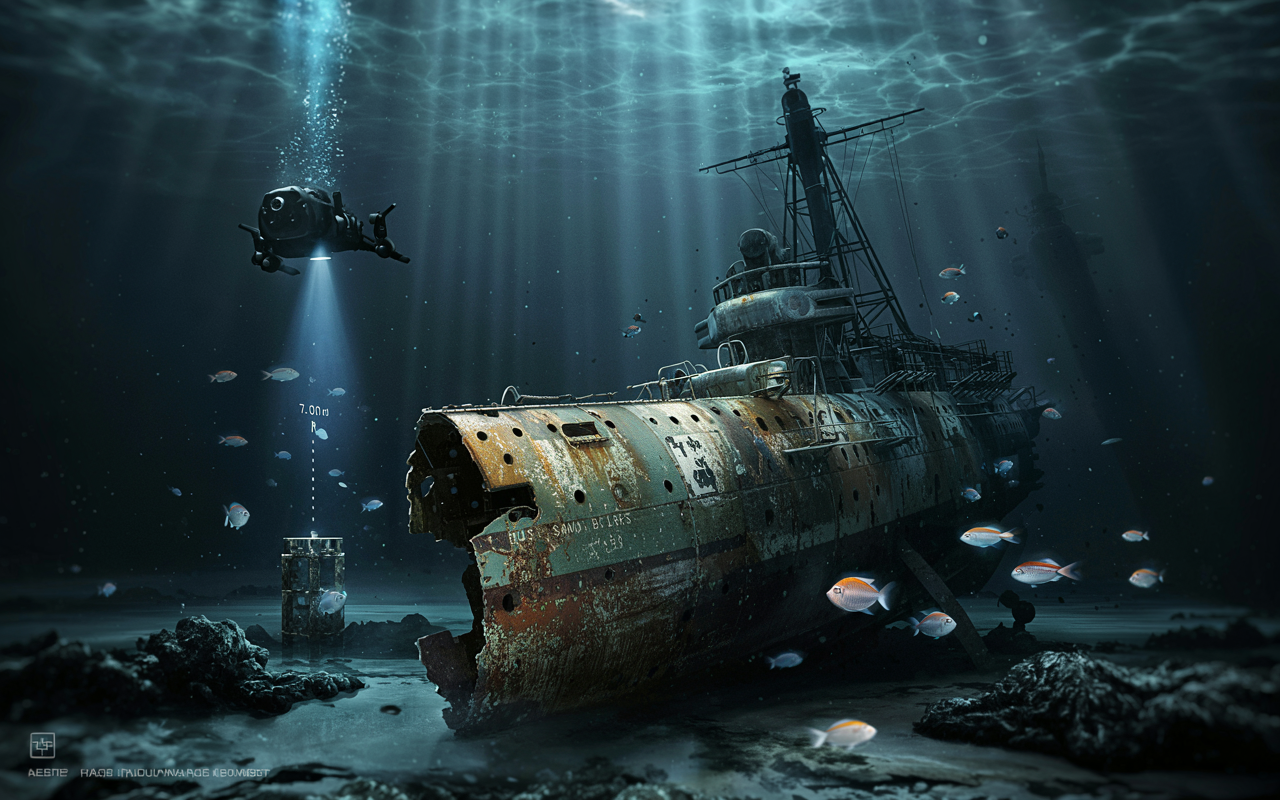


Despite The Fame Of The Titanic, The Depth Record Belongs To The USS Samuel B. Roberts, Sunken In Combat And Discovered At 6,800 Meters Below Sea Level In The Philippines.
When it comes to shipwrecks, the Titanic is often the first name that comes to mind. Enveloped in romance, tragedy, and decades of cultural fascination, the British ship that sank in 1912 after colliding with an iceberg still occupies a prominent place in the collective imagination. However, it is not the deepest. The title of the deepest recorded shipwreck in the world belongs to the USS Samuel B. Roberts, a United States warship resting at an impressive 6,800 meters deep on the ocean floor, according to an official statement from the United States Navy.
For comparison, the Titanic is about 3,800 to 4,000 meters deep, making the discovery of the USS Samuel B. Roberts a technical and historical achievement without precedent.
The History Of The USS Samuel B. Roberts
The vessel was a destroyer escort for the U.S. Navy and was named after sailor Samuel Booker Roberts Jr., who was killed in action during World War II.
-
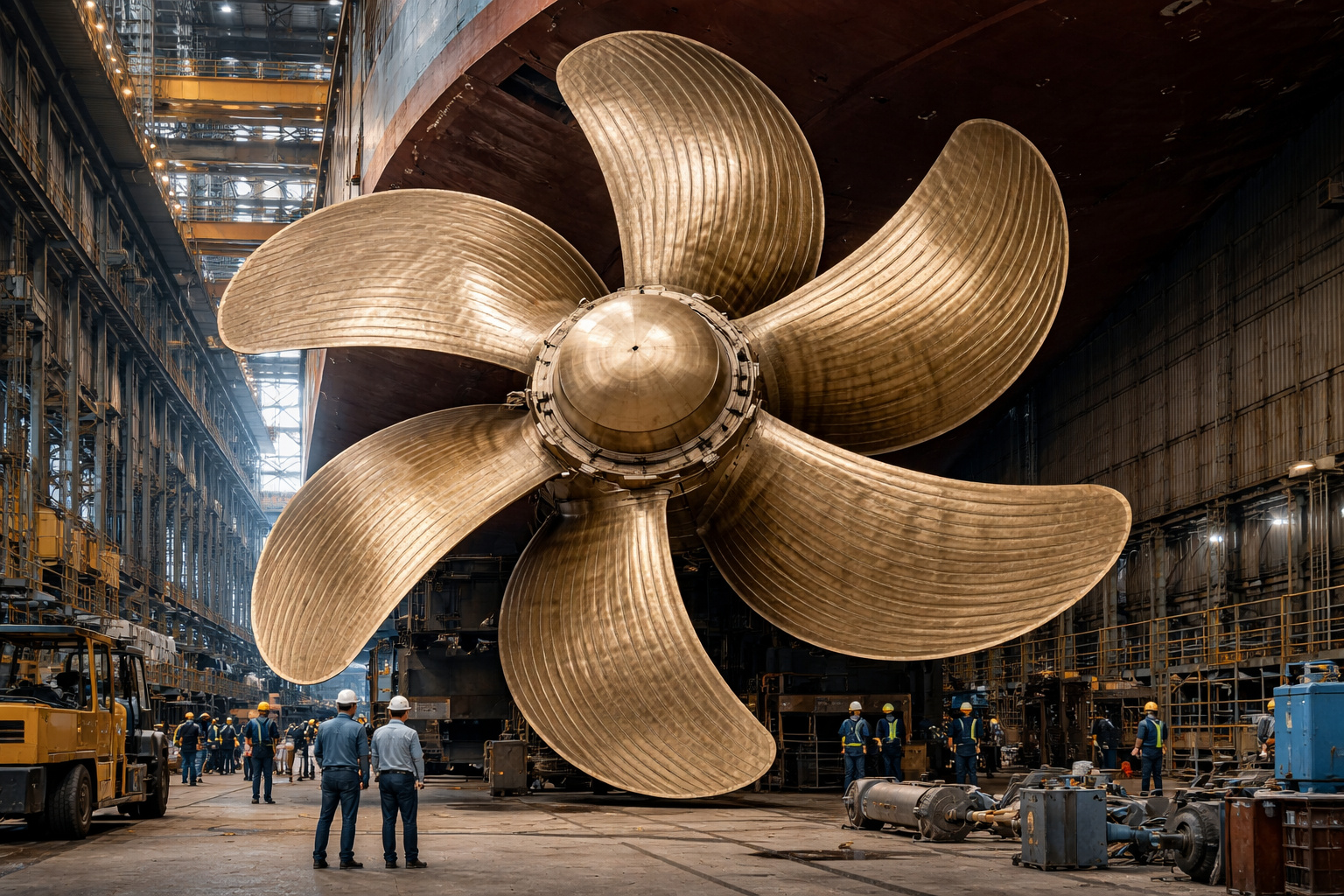
How a 131-ton, 11-meter propeller supports 90% of global trade and transforms the largest container ships on the planet.
-
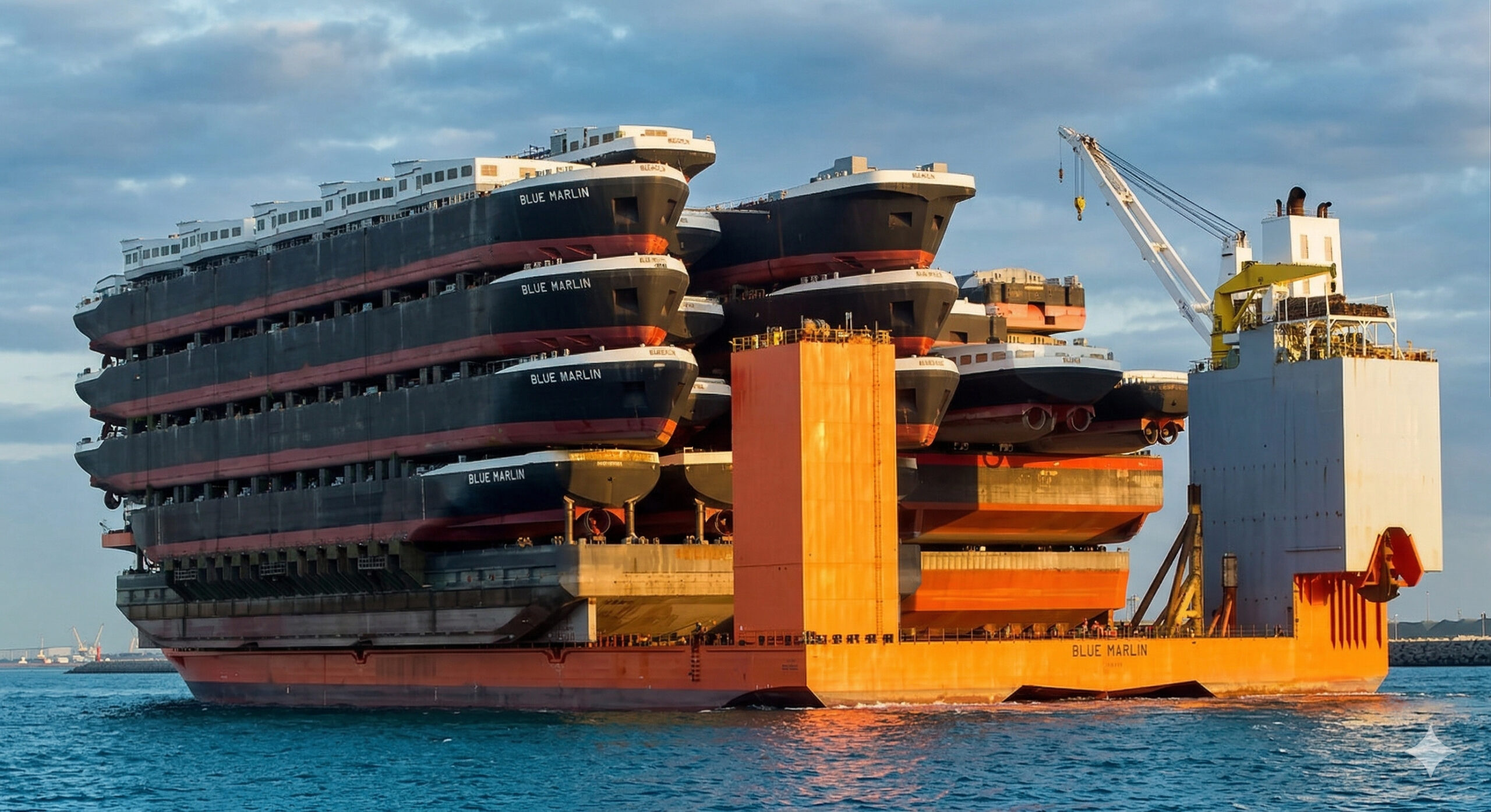
With a length of 225 meters and a capacity of 76 thousand tons, this ship “sinks” its own deck down to 28 meters deep to accommodate war destroyers, oil platforms, and giant radars floating above, and then emerges with everything intact on top like a colossal tray crossing oceans.
-
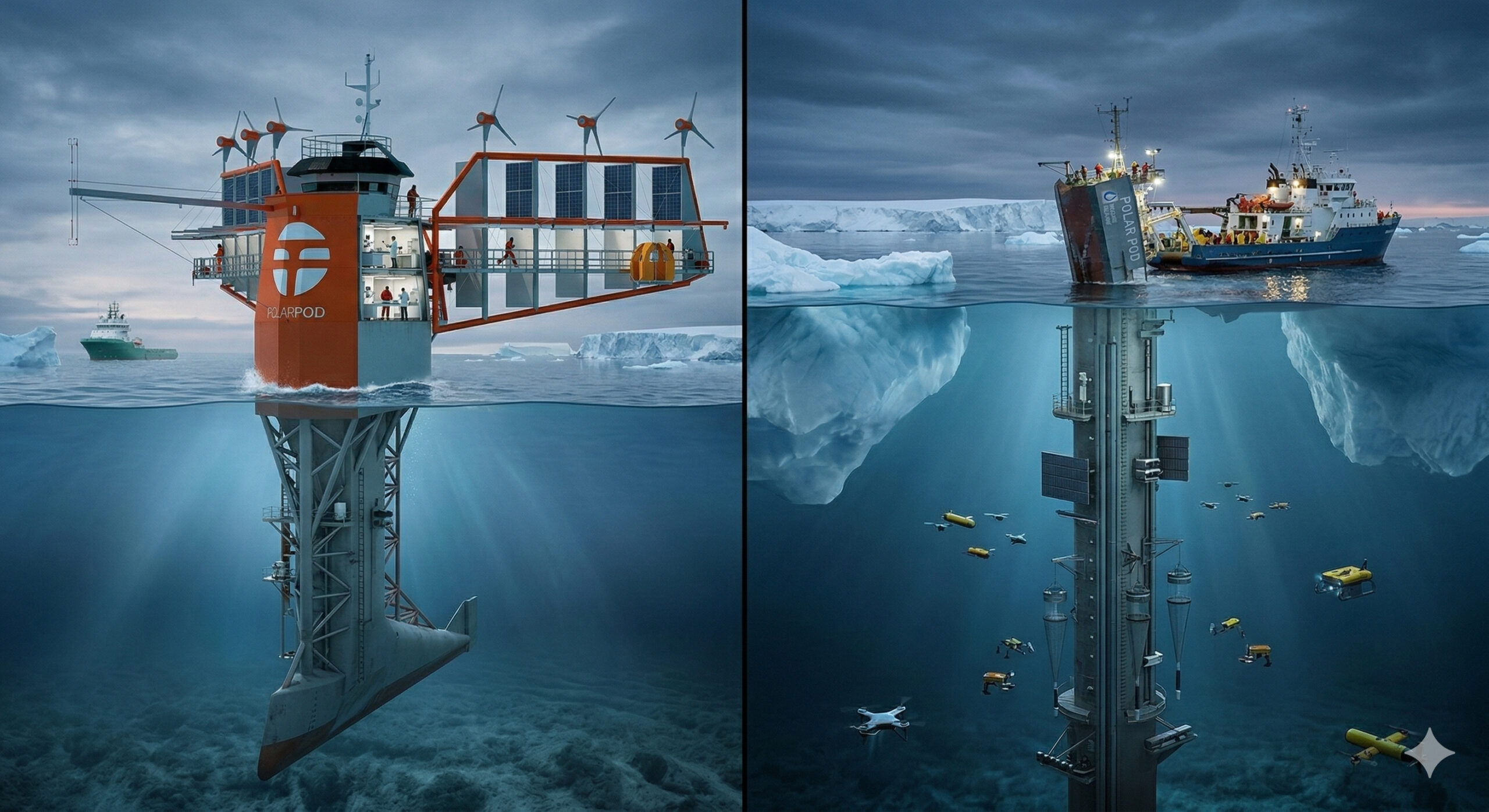
A 100-meter platform without a motor, without a keel, and operating upside down rotates 90 degrees in the ocean, sinks 75 meters, and drifts around Antarctica for two years driven by the planet’s most powerful current to study the largest carbon sink on Earth, still poorly understood by science for accurate climate modeling.
-
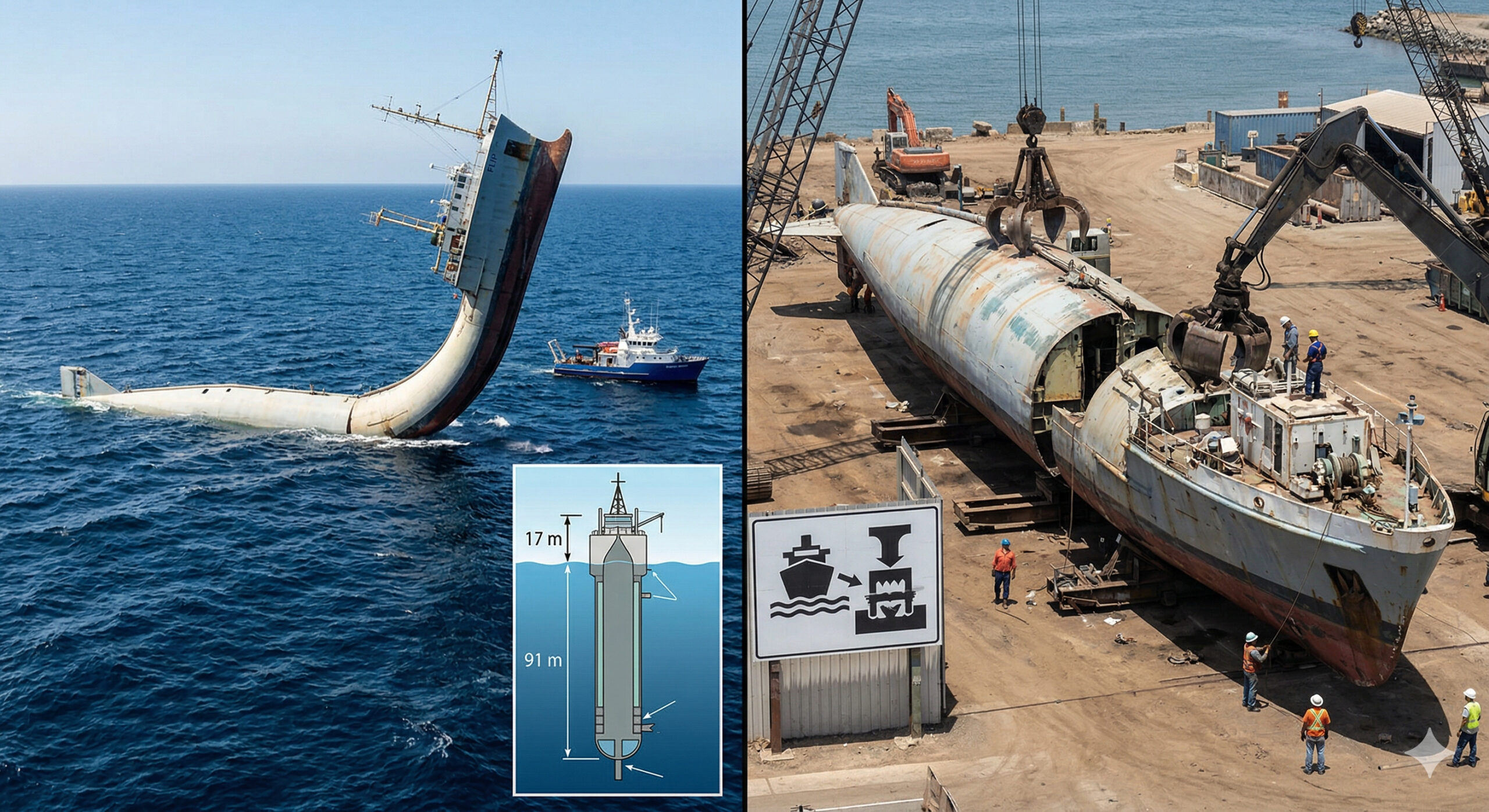
With a length of 108 meters and a giant spoon shape, the FLIP was the only ship in the world capable of rotating 90 degrees in the ocean and remaining vertical, with 91 meters submerged, operating for 60 years until it was retired and sent to the scrapyard in 2023.
The USS Samuel B. Roberts, affectionately known as “Sammy B,” bravely fought in the Battle of Samar, part of the larger Battle of Leyte Gulf, in 1944 — one of the largest naval confrontations of World War II.


Despite being a relatively small ship and less heavily armed than its opponents, “Sammy B” faced vastly superior Japanese forces off the coast of the Philippines. Even under heavy attack, it held out for hours, damaging enemy vessels and saving other American units from a similar fate.
Heroism And Tragedy
With 224 crew members on board, the USS Samuel B. Roberts fought until it could no longer. After exhausting its torpedoes and ammunition, the ship was hit by enemy shells and ultimately broke in half before sinking.
89 sailors lost their lives. The survivors drifted for over 50 hours in lifeboats and were rescued under extreme conditions. The episode is considered one of the most notable acts of bravery in U.S. naval history, and the ship’s name lives on in the memory of the U.S. Armed Forces as a symbol of courage and sacrifice.
Discovery At Almost 7 Thousand Meters
The wreck of the USS Samuel B. Roberts remained hidden in the depths of the ocean for nearly 80 years until it was located in June 2022, through a mission led by explorer and former U.S. Navy officer Victor Vescovo, known for his expeditions in abyssal zones.
The operation utilized robotic submarines and high-tech equipment to reach extreme depths and map the ocean floor in the region of the Philippines, where it was known that the ship had been lost.
The find was announced with great emotion by the U.S. Navy, which classified it as “one of the deepest shipwrecks ever found and documented,” and as a tribute to the heroes who served on board.
Below The Titanic: What Does The Depth Reveal?
While the Titanic is located about 4,000 meters deep in the North Atlantic Ocean, the USS Samuel B. Roberts rests 2,800 meters deeper, in the ocean basin near the Philippine archipelago.
This amounts to almost 7 kilometers below sea level — a depth so extreme that only highly specialized submersibles can safely operate in these environments.
The depth, in this case, is more than just an impressive number: it reveals the technological limitations of the time and the advancements that now allow humanity to explore the deepest corners of the ocean, where the pressure is hundreds of times greater than at the surface.
Could There Be Even Deeper Shipwrecks?
Despite holding the title of “deepest shipwreck in the world,” the case of the USS Samuel B. Roberts may not be unique. The vastness of the oceans and centuries of navigation suggest that other vessels, yet to be identified, may lie at even greater depths.
Victor Vescovo himself commented that there are unexplored areas of the oceans that likely hide shipwrecks from different historical periods, from military ships to commercial vessels.
Moreover, with the growth of underwater mapping technology and interest in underwater archaeology, new discoveries may emerge in the coming decades — including in hadal zones, those located at depths exceeding 6,000 meters.
More Than Wreckage: A Legacy
More than just the metallic remains of a vessel, the wreck of the USS Samuel B. Roberts represents a legacy of heroism and sacrifice. It harkens back to a time when young sailors risked their lives in defense of values and nations, amid the literal and symbolic darkness of war.
The discovery of its wreckage is also a reminder of the achievements of modern science, which now allows humanity to explore areas of the planet that were previously inaccessible — and, with that, to rewrite parts of history.
While the Titanic will remain the most iconic shipwreck in modern history, wrapped in glamour and tragedy, the USS Samuel B. Roberts is undoubtedly the deepest ever recorded — both in literal depth and in its symbolic impact on the U.S. Armed Forces.





Did the Roberts break in half when it impacted the ocean floor?