





 Portuguese
  English
  Spanish
  5 min of reading
  8 comments


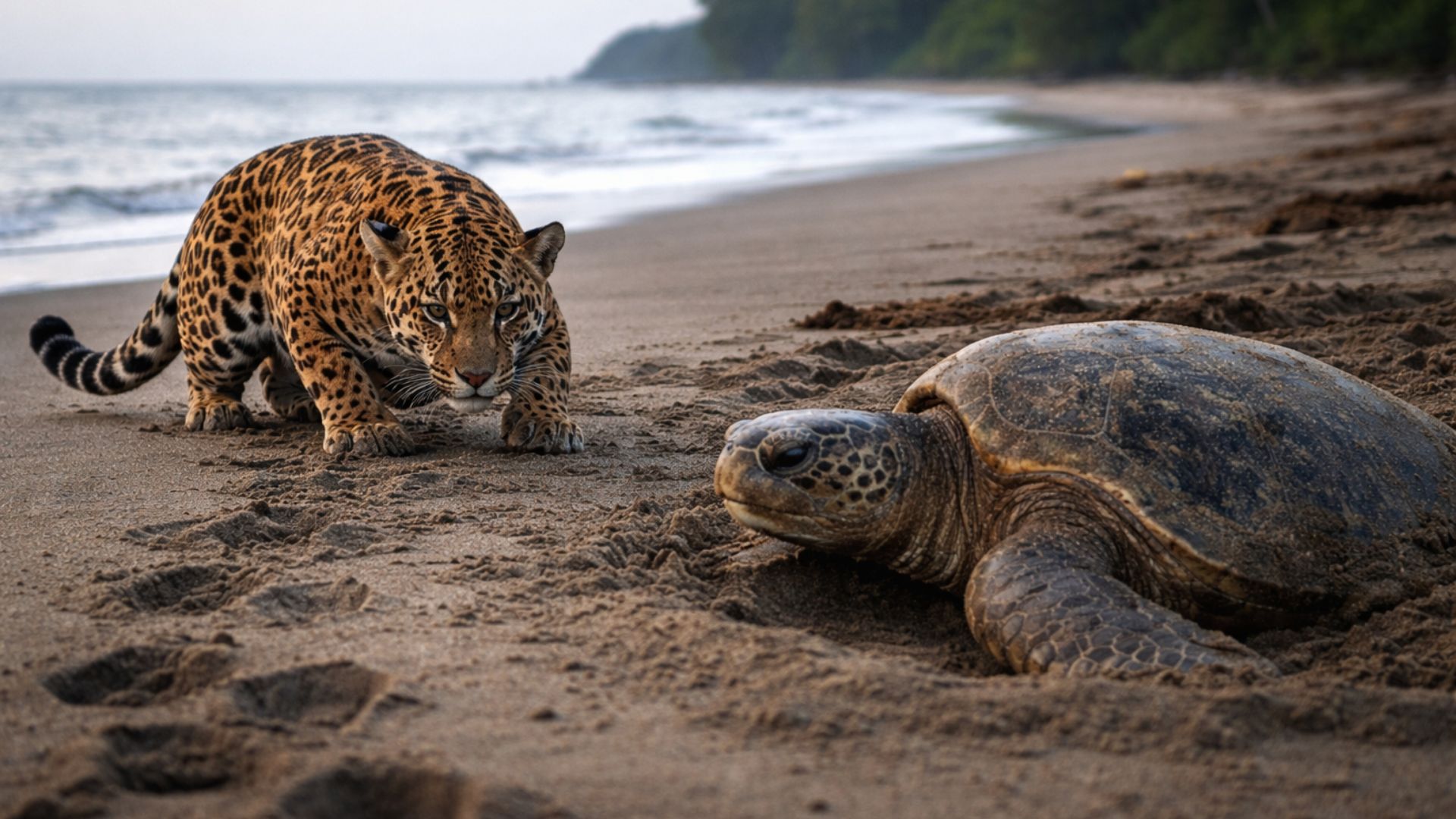


Sand Strip in Costa Rica Park Becomes Stage for Rare Adaptation, with Felines Exploring Predictable Turtle Nesting Patterns and Raising Debate on Conservation When Two Environmental Icons Interact in the Same Natural Space.
On the Caribbean coast of Costa Rica, the sand strip of Tortuguero National Park has come to host an interaction that catches the attention inside and outside of science.
Far from the dense forest, jaguars have begun to use the beach as a hunting corridor, with patrols primarily at night and attacks on sea turtles as they leave the sea to nest.
Recorded by monitoring teams and described in scientific studies, the behavior has gained emblematic status for involving two species associated with conservation and public imagination.
-
Goodbye iron: new technology from Xiaomi promises to revolutionize the way we iron clothes with 500 kPa steam, continuous flow of 120 g/min, heating in 65 seconds, and six smart modes for different fabrics.

-
Rio Pardo, the most mysterious city in Rio Grande do Sul: untouched Pampas castle, the missing treasure of the Devil Boy, bride’s saint, invisible tunnels, and a 200-year curse today.
-
China retires the J-7 fighter after years of military protection and can now transform military items into drones, following more than 60 years of operation of the J-7, derived from the MiG-21, with thousands of units produced and strategic use in the PLAAF and PLANAF.

-
Volunteers are sought to live in the mountains for a month: a study pays people to stay at 2,500 meters, with 24-hour monitoring of sleep, metabolism, and blood pressure.


At the same time, the phenomenon exposes a communication challenge when environmental icons find themselves in a natural predator-prey relationship.
In Tortuguero, thousands of turtles arrive seasonally to lay eggs on one of the most closely monitored nesting coastlines in the world.
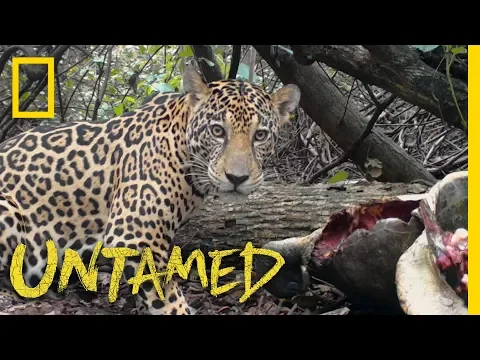

As they emerge from the water, these animals move slowly across specific segments and remain exposed for long minutes, sometimes hours, while choosing the spot, digging the nest, and returning to the sea.
This sequence creates a predictable vulnerability window, exploited by predators capable of recognizing patterns and efficiently repeating strategies.
Beach Stops Being a Border and Becomes Hunting Territory
Unlike a typical ambush in dense forest, hunting on the beach requires a different type of decision.
On the sand, cover is minimal, visibility increases, and the predator’s movements are more exposed than in the forest interior.
Still, the predictability of female turtles nesting can outweigh the risk, as long as the jaguar adjusts the timing of its approach and selects the most promising sections.
As a result, the beach stops being just an edge of the habitat and begins to function as an extension of the territory.
Instead of an occasional episode, researchers have observed a recurring use of the coastline in Tortuguero, sustained by consistent signals over time.
Among the field evidence are carcasses, drag marks, tracks in the sand, and records made during monitoring patrols, which traverse the coastal stretch to track nests and turtle activity.
This type of change does not depend on physical transformation of the predator.
The process relies primarily on learning and repetition, consolidating a routine that reduces unnecessary movements and concentrates effort where there is a greater chance of encounter.
Exploring the period when prey are on land, with limited mobility, becomes part of this strategy.
While in the ocean, an adult turtle can move with agility, out of the water, the body adapted for swimming becomes a disadvantage.
In these conditions, the distance to the waterline directly impacts the chance of escape.
Predation Concentrates on Specific Species and Periods
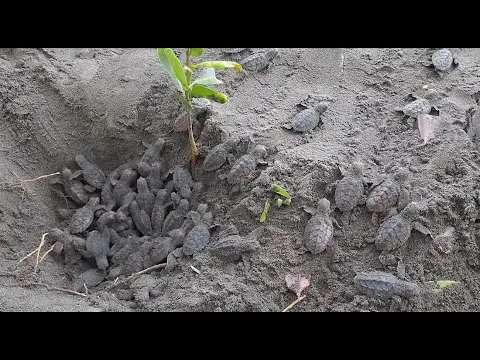
By systematizing data collected in Tortuguero, different studies point to a predominance of attacks on green turtles, with much rarer records involving leatherback turtles.
A study published in the Journal of Tropical Biology, based on a review of historical records and weekly surveys along about 29 kilometers of beach between 2005 and 2013, described an increase in predation over the analyzed period.
According to the historical series presented in the study, the number of sea turtles killed by jaguars in Tortuguero rose from a single record in the early 1980s to 198 in 2013, the last year of the evaluated period.
The authors also estimated much higher annual averages of consumption for green turtles than for leatherback turtles.
The data indicate about 120 green turtles per year, on average, compared to approximately two leatherback turtles.
The same analysis concluded that, given the size of the nesting site, the jaguar does not pose a threat to the population of green turtles nesting in the area.
The study adds that the predator would also not be the main cause of decline for leatherback and hawksbill turtles.
Still, the authors recommend continuous monitoring to guide management decisions and avoid isolated interpretations.
These results help contextualize the phenomenon without turning every carcass into a dramatic exception.
In breeding areas, the mortality of adult females often carries significant ecological weight.
On the other hand, interpreting this data relies on time series, sampling effort, and the context of other pressures affecting the populations.
Human Presence Influences Where Attacks Happen
In addition to the turtles’ pattern, the presence of people emerges as an important variable for understanding the distribution of predation along the beach.
A study published in the journal Oryx, which monitored spatial and temporal predation patterns for several years in Tortuguero, described fewer attacks occurring at the ends of the beach, precisely where human disturbance tends to be greater.
In contrast, records indicated a higher incidence in more remote areas.
This relationship does not mean that the beach transforms into exclusive territory for the predator.
However, the data suggest that the jaguar adjusts its behavior to reduce risk and increase efficiency.
Part of this adjustment involves patrolling and hunting during times of lower human traffic.
Darkness, in these conditions, decreases detection and favors surprise in an open environment.
Meanwhile, human monitoring itself needs to coexist with the necessity to minimize interference.
Tortuguero receives visitors drawn by the opportunity to witness nesting, a biological event known worldwide.
Conservation programs rely on this visibility to sustain decades of protection and research actions.
At the same time, the jaguar occupies a central place in land conservation policies.
It is a species considered key to maintaining ecosystems, which requires habitat connectivity and conflict reduction with human communities.
When Two Conservation Symbols Come Into Contact

When two charismatic species encounter one another in a predation relationship, public debate tends to fluctuate.
Some react with fascination. Others express indignation or call for immediate interventions.
From an ecological perspective, however, it is a natural relationship, albeit uncomfortable for part of the public.
In this scenario, the challenge becomes communicating the phenomenon without oversimplifying it or stimulating responses based solely on emotion.
The literature on Tortuguero highlights this recurring tension.
Conservation campaigns often rely on direct narratives, with one symbol representing the cause.
In natural dynamics, however, symbols also prey, compete, and adapt.
Studies also highlight that predation by jaguars is only one of the factors considered in the survival of sea turtles along the coast.
Other direct and indirect human pressures vary according to the region and the period analyzed.
For protected area managers, the case of Tortuguero does not provide an automatic response.
The central question shifts from preventing to consistently monitoring the phenomenon.
Ensuring comparable data over time and aligning conservation actions to what the evidence shows becomes a priority.
Without turning a natural interaction into the target of improvised policies.
If the beach can serve as an extension of the jaguar’s hunting territory and at the same time is a key piece for the reproduction of sea turtles, how to communicate and manage this coexistence without distorting ecology or fueling unrealistic expectations of total protection for two species at the same time?









Que triste…!😢 E tudo por culpa da única espécie que deveria ser extinta: a humana!😡
Eu até posso ser misantropo,mas se nós fossemos extintos o planeta colapsaria também
Pense em como nossas construções abandonadas, raças que criamos,e todas as mudanças e comportamentos aprendidos por outras espécies iriam deixar marcas duradouras sem nós
Isso é simples deixem o território das panteras onça que elas vão mudar os locais de predação.. plantar cana e colocar **** e ninguém faz nada pra resolver o problema só piora o cenário!
Triste que é culpa do ser humano