





 Portuguese
  English
  Spanish
  6 min of reading
  0 comments


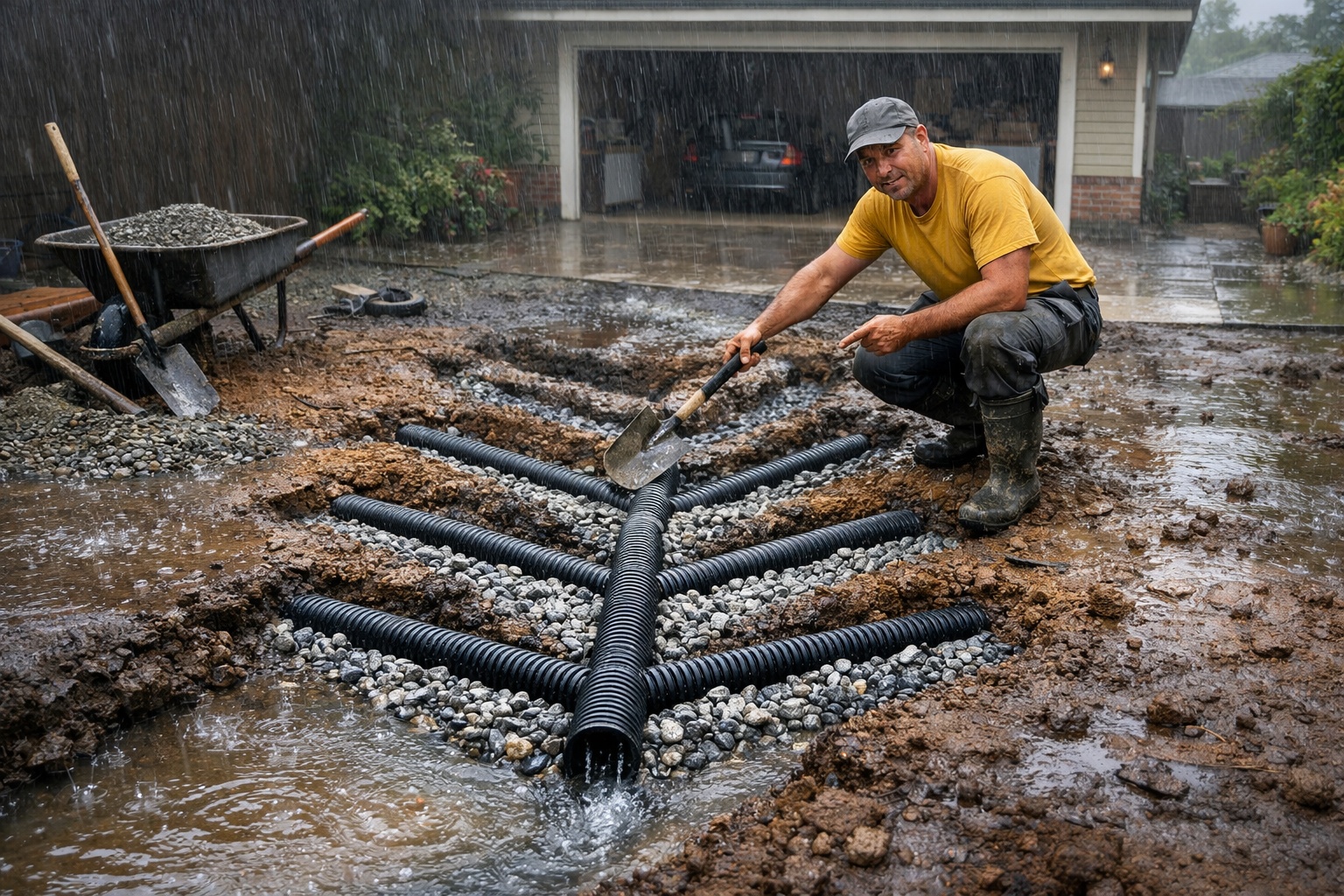
Mason Explains How to Create a Drainage System in the Backyard with Trenches, Gravel, and Drain Pipes in Fishbone Format, a Technique Used to Prevent Flooding in Garages and Outdoor Areas.
Flooding in backyards, garages, and outdoor areas is a common problem in many homes, especially in regions where rains can be intense during certain times of the year. When the soil cannot quickly absorb the volume of water, runoff accumulates in low points on the property, forming deep puddles and, in some cases, invading garages and indoor areas of the house. To resolve this type of situation, construction professionals and drainage technicians use a relatively simple solution known as subsurface drainage system with trenches, gravel, and drain pipes. The method is inspired by agricultural and civil engineering systems used to remove excess water from the soil and direct it to runoff areas. One of the most commonly used configurations is the so-called “fishbone system”, where several small drains converge into a main pipe that directs water out of the problem area.
According to technical drainage manuals used in civil works and landscaping projects, this type of structure can significantly improve the soil’s infiltration capacity and reduce the risk of flooding in residential areas. When installed correctly, the system acts as an underground network that collects and redistributes excess rainwater before it accumulates on the surface.
Why Backyards and Garages Tend to Flood
Flooding in residential areas typically occurs for three main reasons. The first is soil compaction. When the terrain is paved or subjected to constant traffic from vehicles and people, the natural pores of the soil are compressed. This reduces the water infiltration capacity.
-
This star-shaped fortified construction, hidden near the border of Spain, may be the largest fortress on the planet.

-
Congonhas receives the monorail promised for the 2014 World Cup after more than a decade of delays and becomes the first airport in Brazil with integrated subway.
-
Goodbye, concrete: a new trend in civil construction reduces the weight of the structure by up to 30%, accelerates projects by up to 40%, cuts costs on steel and labor, and improves thermal insulation with EPS.
-
Russian engineers create an innovative propeller blade for aircraft that could completely change the way airplanes and helicopters operate.

The second factor is excessive impermeability, common in backyards paved with concrete or ceramic tiles. When water cannot penetrate the soil, it starts to flow over the surface.
The third factor is the slope of the land, which can direct large volumes of water to specific points on the property, such as garages or backyards.
In heavy rains, these three combined factors can generate runoff that rapidly accumulates water. In some cases, just a few minutes of intense rain are enough to form water layers several centimeters deep.
How the Drainage System with Trenches and Drain Pipes Works
The residential drainage system utilizes the basic principle of capturing and conducting groundwater.
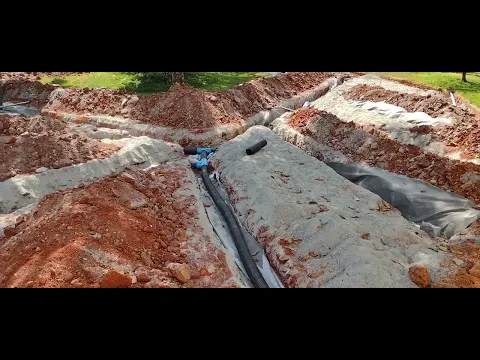

To do this, narrow trenches are dug into the soil, generally about 30 centimeters deep. Inside these trenches, a perforated drain pipe is installed, allowing water to enter the pipe. Before closing the trench, the space around the pipe is filled with gravel or drainage stone.
Gravel serves two important functions:
- creates empty spaces through which water can circulate
- prevents the soil from compacting directly over the pipe
When it rains, the water infiltrates the soil and reaches the gravel layer. From this point, it enters the holes in the drain pipe and is directed out of the area. This process prevents water from accumulating on the surface of the land.
What Is the Fishbone Drainage System
In larger plots of land or areas where water frequently accumulates, an arrangement known as fishbone drainage can be used. This name comes from the shape of the system.
A main pipe is installed along the land, functioning as the central axis of the drainage. From it, several smaller drains are installed laterally, forming a design similar to the skeleton of a fish.

This format allows water to be captured from different parts of the land and directed to a single exit point. This type of configuration is widely used in agricultural drainage and also in sports fields, precisely because it increases the efficiency of water capture in the soil.
Basic Steps to Install the System in the Backyard
Although the ideal drainage project depends on the characteristics of the terrain, the method usually follows some main steps. The first step is to identify the spots where water typically accumulates after rain. These locations usually indicate where the drains should be installed.
After that, trenches about 30 centimeters deep and wide enough to accommodate the drain pipe are dug. Next, an initial layer of gravel is placed at the bottom of the trench. The perforated drain pipe is installed over this layer.
Then, more gravel is placed around the pipe to form the drainage layer. Finally, the trench can be covered with soil or topped with geotextile fabric to prevent dirt particles from entering the system.
The result is an underground structure capable of collecting and transporting excess rainwater.
Where the Drained Water Is Directed
After being collected by the system, the water needs to be directed to a safe disposal point. Depending on the property, this point can be:
- a soakaway
- a rain garden
- a natural drainage area
- stormwater network
The goal is to ensure that the water is absorbed by the soil or directed to a location where it does not cause new flooding. This planning is essential for the system to function correctly.
Benefits of Subsurface Drainage in Residences
The installation of drainage systems in backyards offers various benefits to the property’s structure. One of the main benefits is the reduction of flood risks in garages and outdoor areas.
Another important benefit is the protection of the house’s foundations. Excess moisture in the soil can affect the stability of structures over time.

Furthermore, proper drainage helps prevent problems such as:
- wall infiltrations
- mud formation in backyards
- damage to outdoor flooring
When water is correctly directed, the land remains drier and more stable even after heavy rains.
Technique Used Also in Engineering and Agriculture
Although many people associate this type of system solely with domestic solutions, subsurface drainage is widely used in various fields. In agriculture, for instance, similar systems are employed to prevent soil saturation in crops.
Soccer fields and sports areas also utilize subsurface drainage to keep the grass in good condition even after heavy rains. In civil engineering, the technique is applied to protect foundations and structures from soil water pressure.
These examples show that the principle used in residential backyards is the same as that employed in large-scale projects.
Maintenance of the Drainage System
Once installed, the drainage system requires little maintenance. Nevertheless, some periodic checks help ensure proper functioning. Recommended care includes:
- avoiding soil or debris from clogging the drain outlets
- checking if the water is flowing correctly after heavy rains
- keeping the system’s outlet areas clear of debris
When these precautions are maintained, the system can function for many years without the need for significant interventions.
A Simple Solution to a Common Problem
The use of trenches with gravel and drain pipes demonstrates how relatively simple solutions can resolve recurring problems in homes. By properly directing rainwater away from critical areas of the land, the system helps prevent flooding and improves soil infiltration.
Moreover, the method uses relatively accessible materials and can be adapted for different types of terrain.
This type of drainage shows how traditional hydraulic engineering techniques can be applied on a small scale to protect backyards, garages, and outdoor areas from the effects of heavy rains.








-

-

-

-

-

-

102 pessoas reagiram a isso.