





 Portuguese
  English
  Spanish
  5 min of reading
  0 comments


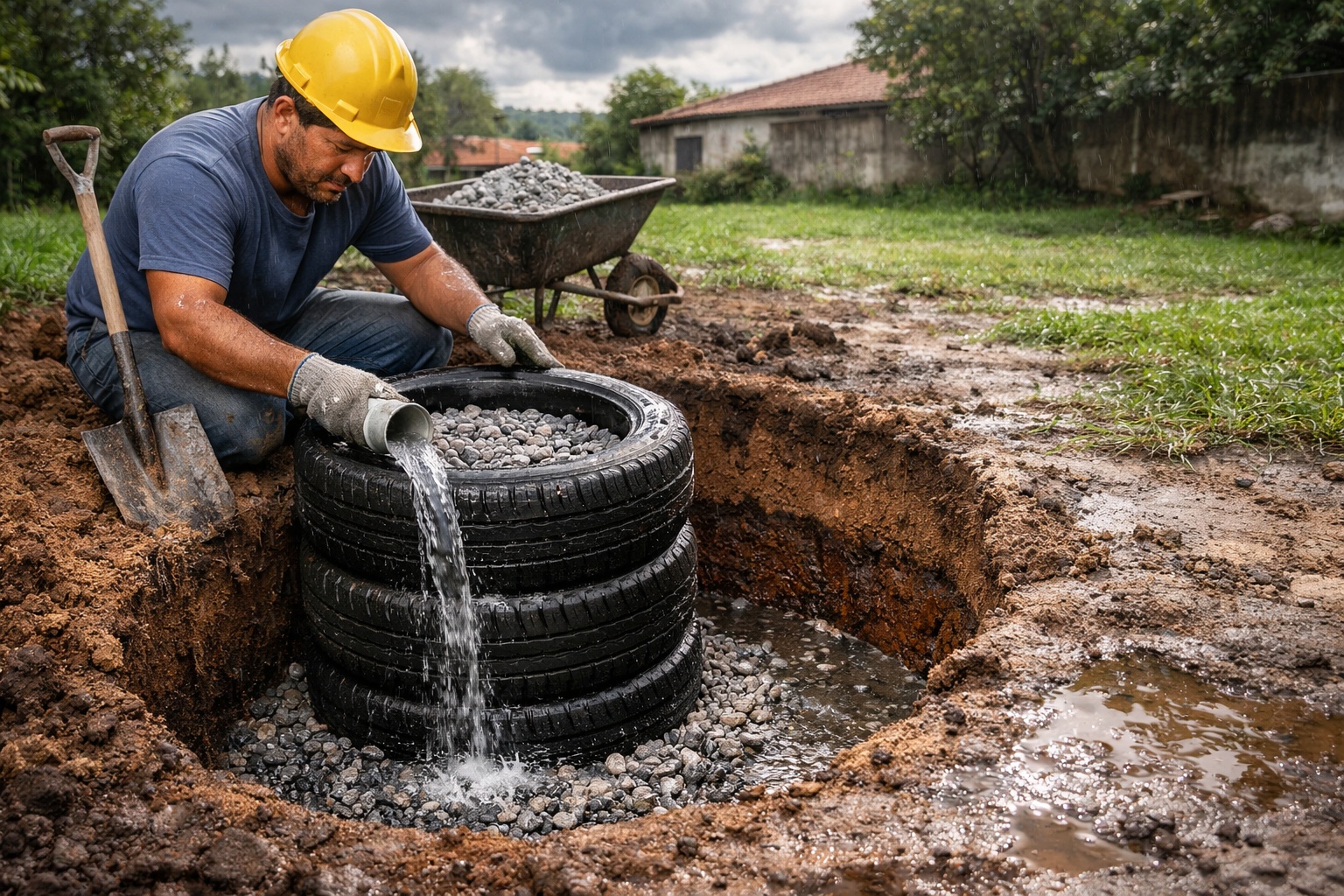
Well Pit with Used Tires and Gravel Is a Simple Drainage Solution that Helps to Infiltrate Rainwater into the Soil and Reduce Water Accumulation in the Backyard.
The accumulation of rainwater in backyards, gardens, and outdoor areas is a common problem in many homes. When the soil fails to quickly absorb large volumes of water, persistent puddles form, which can lead to infiltration, soil erosion, and even structural damage near walls and foundations. In places where there is no efficient urban drainage system, simple domestic engineering solutions can help solve the problem. One of them is the well pit built with used tires and gravel, an underground structure that allows rainwater to gradually infiltrate the soil.
This technique is used in rural drainage and small projects to facilitate the absorption of water by the ground, preventing it from remaining accumulated on the surface.
What Is a Well Pit and Why Does It Help to Prevent Flooding
The well pit is an excavated structure in the ground that functions as a temporary water reservoir. Instead of rainwater spreading across the surface of the land, it is directed to this reservoir, where it can slowly infiltrate into the surrounding soil.
-
This star-shaped fortified construction, hidden near the border of Spain, may be the largest fortress on the planet.

-
Congonhas receives the monorail promised for the 2014 World Cup after more than a decade of delays and becomes the first airport in Brazil with integrated subway.

-
Goodbye, concrete: a new trend in civil construction reduces the weight of the structure by up to 30%, accelerates projects by up to 40%, cuts costs on steel and labor, and improves thermal insulation with EPS.
-
Russian engineers create an innovative propeller blade for aircraft that could completely change the way airplanes and helicopters operate.


This process helps to reduce the volume of water accumulated on the surface and diminishes the formation of puddles after heavy rains. In simpler systems, the well pit can be directly connected to:
- roof gutters
- surface drains from the yard
- drainage ditches
- rainwater runoff pipes
Water enters the underground structure, is stored for a period, and gradually infiltrates the ground.
Why Are Tires Used in the Construction of the Well Pit
Tires serve as a support structure inside the excavated hole in the ground. When stacked, they form a kind of hollow column that keeps the internal space open and prevents the walls of the soil from collapsing.
Additionally, tires have a circular shape and cavities that create internal spaces capable of temporarily storing water.
Another important factor is the reuse of materials. Discarded tires are often abundant and frequently lack a suitable destination. Utilizing them in drainage systems can help to give new purpose to this material.
How the Well Pit with Tires and Gravel Works
The operation of the structure is based on the natural infiltration of water into the soil. After a heavy rain, water is directed into the well pit.
Inside the excavation, the stacked tires form a central cavity that serves as a temporary reservoir. Around this structure, gravel or stones are usually placed, which increases the empty spaces and improves drainage capacity.
The accumulated water slowly infiltrates into the soil through the sides and bottom of the excavation. This process can take several hours or even days, depending on the permeability of the ground.
While infiltration occurs, the system prevents water from remaining spread across the yard.
Basic Steps to Build a Tire Well Pit
The construction of a simple well pit usually follows some fundamental steps.
First, the hole in the ground is excavated. The depth may vary according to the expected volume of water and the characteristics of the terrain. In many cases, excavations between one and two meters are sufficient for small residential areas.

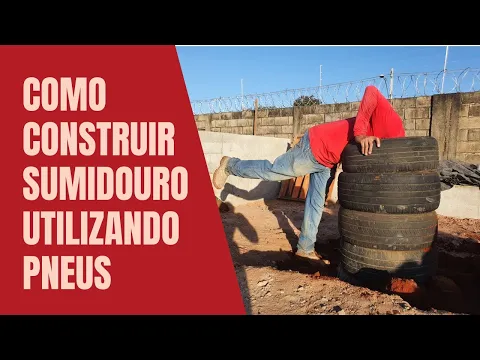
After excavation, the tires are stacked inside the hole forming a central column. This structure keeps the internal space open and allows for the temporary storage of water.

Next, the space around the tires is filled with gravel or stones. This material helps to improve drainage and prevents the soil from blocking infiltration.

Finally, a pipe can be installed to direct rainwater into the well pit.
Where the System Is Typically Used

Well pits of this type are mainly used in:
- residential backyards
- small rural properties
- roof water drainage
- areas with frequent puddle formation
- land without public drainage networks
The system tends to work better in more permeable soils, such as sandy soils or less compacted clay. In highly impermeable soils, infiltration may be slower, requiring larger structures.
Benefits of Water Infiltration into the Soil
In addition to reducing puddles and flooding, the well pit can bring other benefits to the land. By infiltrating rainwater into the soil, the system helps recharge the natural moisture of the land and contributes to the balance of the local hydrological cycle.
This infiltration also reduces surface water runoff, which is often responsible for erosion in sloped terrains.
In urban environments, infiltration solutions also help alleviate pressure on public drainage systems.
Important Care in Installation
Although it is a simple solution, some precautions are important when installing a well pit. The structure must be built a safe distance from foundations and walls of the house to avoid structural infiltrations. It is also important that the system be used only for rainwater.
Well pits of this type are not designed to receive domestic sewage or contaminated water. Another important point is to observe the permeability of the soil. If the terrain is extremely compact or rocky, the infiltration may be limited, and the system will have reduced efficiency.
The well pit built with used tires and gravel is a simple drainage solution that can help reduce rainwater accumulation in backyards and outdoor areas. By creating an underground reservoir that allows for the gradual infiltration of water into the soil, the system decreases the formation of puddles and helps improve rainwater runoff on the land.
Using accessible and repurposed materials, this technique has been applied in rural properties and residential areas as a low-cost alternative to improve soil drainage and prevent minor flooding.







-

-

-

-

-

-

115 pessoas reagiram a isso.